The National Institute of Neurological Disorders and Stroke, part of the National Institutes of Health (NIH), has awarded a $3.9 million grant to a multi-institutional team led by scientists at Sanford Burnham Prebys Medical Discovery Institute to develop a non-opioid pain therapeutic and advance it into a Phase 1 clinical trial.
The effort is headed by Steven H. Olson, PhD, executive director of medicinal chemistry at Sanford Burnham Prebys, in collaboration with co-principal investigators Ru-Rong Ji, PhD, Distinguished Professor of Anesthesiology at Duke University, and Lauren M. Slosky, PhD, assistant professor at the University of Minnesota.
The award was made under the NIH Helping to End Addiction Long-term (HEAL) Initiative, which funds research to develop safe and effective treatments for pain and opioid use disorder.
The team will refine their current lead molecule, SBI-810, to identify a second-generation drug candidate through iterative medicinal chemistry, receptor signaling and efficacy testing, guided by cryo-electron microscopy structural data and artificial intelligence. If initial milestones are met, NIH may award an additional $4 million to complete preclinical development and conduct a Phase 1 first-in-human safety trial.
“Uncontrolled pain is one of the most pressing unmet needs in medicine and the opioid epidemic has made the search for non-addictive alternatives more urgent than ever,” said Olson. “This grant gives us the resources to take a molecule that has shown remarkable promise in preclinical studies and rigorously optimize it into a drug that could one day help millions of patients.”
A New Approach to Pain Relief
Approximately 80% of the 19 million patients who undergo major surgery in the United States each year experience significant postoperative pain, and more than 25 million Americans live with chronic pain. Current treatments, including opioids, are often inadequate and carry serious risks of addiction and overdose. There is a critical need for new pain medications that are both effective and non-addictive.

Steven Olson, PhD, is the Executive Director of Medicinal Chemistry at Sanford Burnham Prebys. Image credit: Sanford Burnahm Prebys.
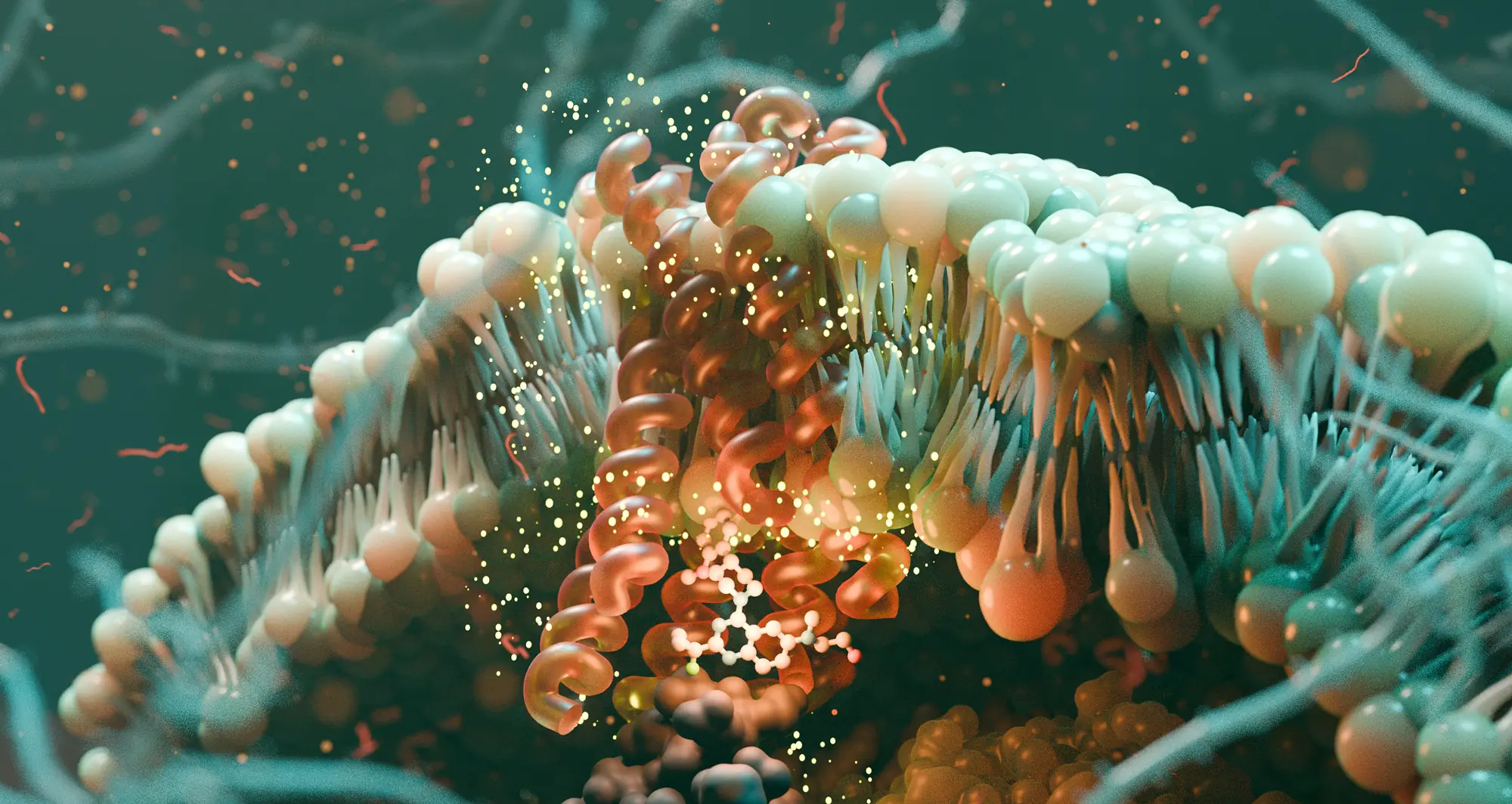
SBI-810 works by targeting a receptor in the brain and nervous system called neurotensin receptor 1 (NTR1). Rather than binding to the receptor’s main active site — the approach taken by most drugs — SBI-810 binds to a hidden pocket on the inside of the receptor, acting as a biased allosteric modulator (BAM). This unique mechanism selectively activates a specific signaling protein, β-arrestin-2, while blocking pain-promoting G protein pathways. The result is potent pain relief without the side effects, such as dangerous drops in blood pressure and body temperature, which have historically derailed NTR1-targeting drugs.
“Neurotensin, the natural molecule that activates NTR1, was shown decades ago to produce pain relief more potent than morphine,” said Ji. “The challenge has been harnessing that power without the side effects. Our compounds solve that problem by selectively engaging only the beneficial arm of the receptor’s signaling.”
Breakthrough Science Behind the Grant
The grant builds directly on two recent important publications from the research team. A 2025 study published in Cell demonstrated that SBI-810 produces potent antinociceptive effects in multiple rodent models of postoperative, inflammatory, and neuropathic pain, acting through both peripheral and central nervous system mechanisms. Critically, the compound suppressed pain signaling in human sensory neurons, a key indicator of translational potential. The study also showed that SBI-810 reduced opioid-induced side effects, including constipation and withdrawal symptoms, suggesting it could complement existing pain management strategies.
A second 2025 study published in Nature revealed the molecular blueprint for how this class of compounds works. The researchers showed that SBI-553 — the parent compound of SBI-810 — binds at the intracellular interface between NTR1 and its signaling partners, physically redirecting which proteins the receptor activates. This structural insight enabled the rational design of new analogs with precisely tuned signaling profiles, opening a new paradigm for GPCR drug discovery that could be applied broadly across the receptor superfamily.
GPCRs or G protein-coupled receptors are the largest, most diverse family of membrane receptors, acting as cell surface sensors for external signals like hormones, neurotransmitters and light. These receptors translate, or transduce, extracellular ligands into intracellular responses through G-protein activation, making them prime targets for therapeutic drug development.
“Understanding how these compounds change receptor behavior at a molecular level is a gamechanger,” said Slosky. “It means we can design better drugs with greater precision, rather than relying on trial and error.”
A Phased Path to the Clinic
The grant is designed to move promising compounds efficiently from the laboratory to human trials. In the first two-year phase — funded by the current award — the team will use structure-based drug design and machine learning to optimize lead compounds, focusing on maximizing pain relief while eliminating a residual cardiac safety liability. Compounds will be evaluated in mouse and rat models of postoperative and neuropathic pain, with careful attention to sex as a biological variable.
If key milestones are achieved, the project will advance to the next phase when a selected clinical candidate will undergo the full battery of studies required for an Investigational New Drug (IND) application to the U.S. Food and Drug Administration, followed by a Phase I clinical trial in healthy volunteers to assess safety, tolerability and pharmacokinetics.
The multidisciplinary team brings together expertise in medicinal chemistry, GPCR structural biology, pain neuroscience and translational pharmacology. In addition to co-principal investigators Olson, Slosky and Ji, the team includes Lawrence S. Barak, PhD, and William C. Wetsel, PhD, at Duke University; and Changlu Liu, PhD, and Michael R. Jackson, PhD, at Sanford Burnham Prebys.
“This is exactly the kind of collaborative team science that the HEAL Initiative was designed to support,” said Olson. “By combining our strengths in chemistry, structural biology and in vivo pharmacology across three institutions, we have the best possible chance of delivering a new medicine to patients.”
Research reported in this press release is supported by the National Institute of Neurological Disorders and Stroke of the National Institutes of Health under Award Number UG3NS141745.
About the NIH HEAL Initiative
The Helping to End Addiction Long-term Initiative, or NIH HEAL Initiative, is an aggressive, trans-NIH effort to speed scientific solutions to stem the national opioid public health crisis. Launched in April 2018, the initiative is focused on improving prevention and treatment strategies for opioid misuse and addiction and enhancing pain management. For more information, visit: heal.nih.gov.
About Sanford Burnham Prebys
Celebrating its 50th anniversary, Sanford Burnham Prebys Medical Discovery Institute is an independent nonprofit biomedical research institute dedicated to understanding the fundamental biology of human health and disease and translating discoveries into advances that improve lives.
Sanford Burnham Prebys has four disease-focused centers: NCI-designated Cancer Center; Center for Cardiovascular and Muscular Diseases; Center for Neurologic Diseases; and Center for Metabolic and Liver Diseases; as well as two enabling technology centers: Center for Data Science and Artificial Intelligence and Center for Therapeutics Discovery.
The Institute’s scientists have driven breakthroughs across cancer, neuroscience and aging, as well as diseases of the heart, muscle, metabolism and liver. Our research is strengthened by drug discovery capabilities, data science and artificial intelligence and global collaborations that help move discoveries toward real-world impact. A strong culture of collaboration, paired with a commitment to education through our graduate school to train the next generation of scientists, brings together researchers, partners and philanthropists in a shared mission to advance biomedical science and improve human health. Learn more at sbpdiscovery.org.