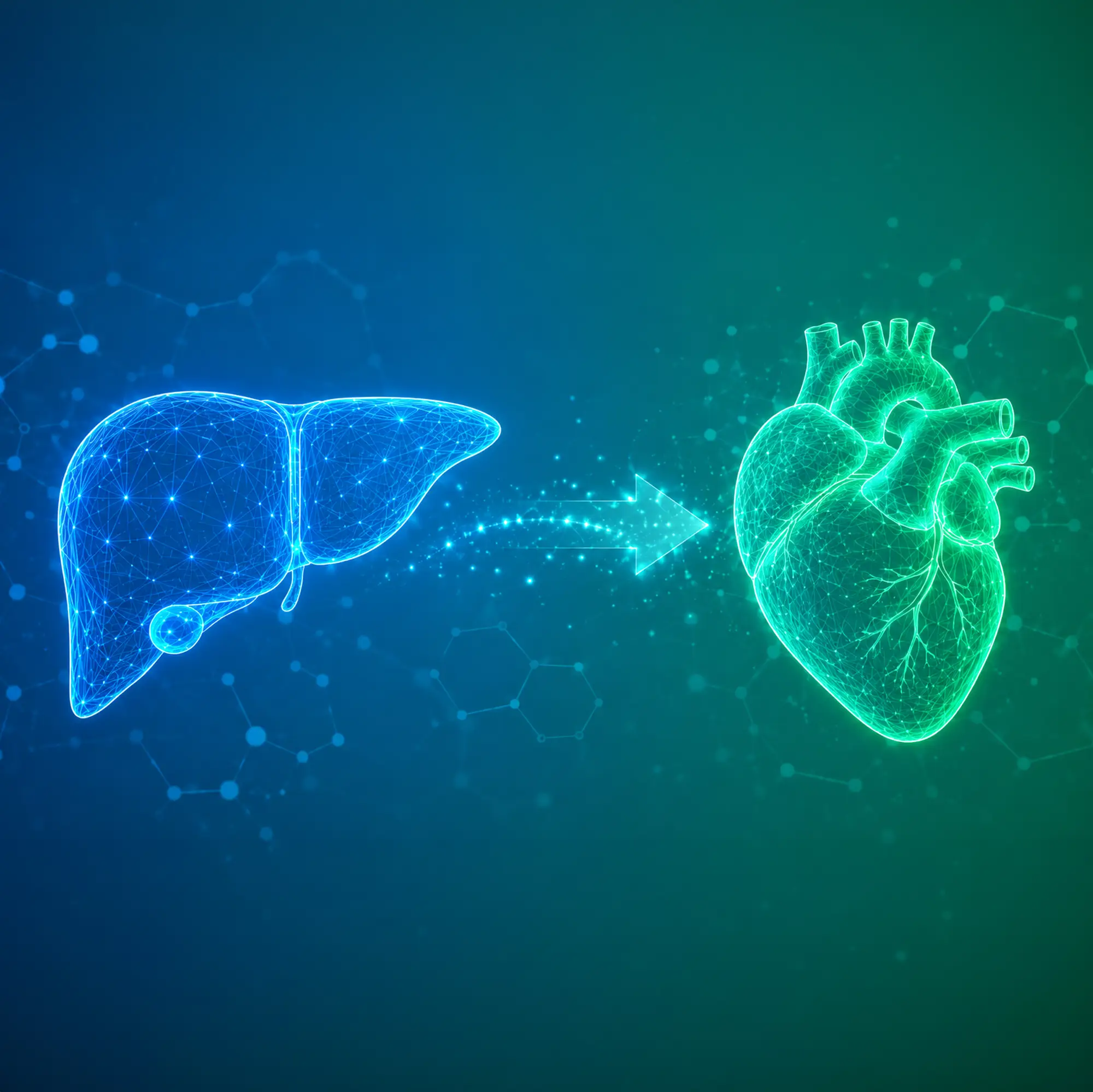
Scientists develop a translational model that begins to answer one of the major mysteries in cardiometabolic disease
Metabolic dysfunction-associated steatotic liver disease (MASLD) and its progressive form, metabolic dysfunction-associated steatohepatitis (MASH), affect nearly one-third of adults worldwide. Although MASLD is primarily considered a liver disease, cardiovascular disease, particularly heart failure with preserved ejection fraction (HFpEF), is the leading cause of death among affected patients.
Despite this well-established clinical association, researchers have lacked experimental models that faithfully reproduce both advanced liver disease and heart failure in the same system, limiting efforts to understand the liver-heart axis.
Now, researchers at Sanford Burnham Prebys Medical Discovery Institute and the University of California San Diego have developed a translational mouse model that closely mirrors the progression of MASLD-associated HFpEF observed in patients. The findings, published June 22, 2026 in Metabolism, provide a new platform for studying how metabolic liver disease and heart dysfunction progress together and for identifying therapeutic strategies to treat both conditions.
The study was led by Debanjan Dhar, PhD, associate professor at Sanford Burnham Prebys, with collaborators at UC San Diego.
Using a diet-induced Foz/Foz mouse model that develops advanced liver fibrosis, cardiac dysfunction and increased mortality, the researchers reproduced key features of MASLD-associated HFpEF. The model also revealed substantial changes in cardiac gene expression, tissue remodeling and mitochondrial function, providing new opportunities to study how chronic metabolic disease affects multiple organs simultaneously.

Debanjan Dhar, PhD, is an associate professor in the Center for Metabolic and Liver Diseases at Sanford Burnham Prebys. Image credit: Sanford Burnham Prebys.

David A. Brenner, MD, is president and CEO of Sanford Burnham Prebys and a professor in the Center for Metabolic and Liver Diseases. Image credit: Sanford Burnham Prebys.
“Patients with advanced MASLD do not simply develop liver disease in isolation;” said Dhar. “They frequently experience systemic complications that affect the heart and other organs, such as the kidneys.
“Our findings underscore the importance of viewing MASLD as a multisystem disease driven by chronic metabolic stress. This model provides an unprecedented opportunity to investigate how inflammatory signaling, tissue remodeling, altered secreted factors and mitochondrial dysfunction contribute to communication between organs and disease progression.”
A key finding of the study was that the severity of liver fibrosis strongly correlated with worsening cardiac dysfunction, suggesting that progressive liver disease may actively contribute to declining heart health.
“Patients with MASLD are significantly more likely to develop cardiovascular disease, yet we still do not fully understand why,” said David A. Brenner, MD, a study co-author and president and CEO of Sanford Burnham Prebys. “A major challenge has been the lack of experimental models that faithfully reproduce both liver disease and cardiac dysfunction. This study establishes a clinically relevant platform that will allow us to investigate the mechanisms connecting these diseases and identify new therapeutic opportunities.”
“The Foz/Foz mouse is a unique preclinical model that captures MASH associated advanced liver fibrosis and HFpEF developing together in the same animal, closely reflecting what clinicians observe in patients,” said Souradipta Ganguly, PhD, the study’s first author and a staff scientist at Sanford Burnham Prebys. “This gives us an innovative opportunity to study how disease in the liver influences the heart over time and to evaluate therapies that target both organs.”
Importantly, the researchers noted that many disease features in the mouse model improved following dietary intervention. Mice switched from a Western-style diet rich in fats and sugars to standard chow showed improved liver health, reduced cardiac dysfunction, increased survival and restoration of mitochondrial health. Cardiac mitochondria, which displayed signs of structural damage and impaired energy metabolism during disease progression, recovered substantially after dietary intervention, highlighting mitochondrial dysfunction as a potentially reversible feature of MASLD-associated heart disease.
“Perhaps most encouraging was the remarkable degree of recovery and survival benefit we observed following dietary intervention,” said Ganguly. “Even after significant disease had developed, both the liver and heart retained the capacity to improve, highlighting the plasticity of the liver-heart axis.”

Souradipta Ganguly, PhD, is a staff scientist in the Dhar lab at Sanford Burnham Prebys.
The researchers believe the model will accelerate efforts to understand how metabolic stress in the liver affects cardiovascular health and help identify therapies capable of preventing or reversing disease progression.
“This model gives us a roadmap for understanding how chronic liver disease reshapes the heart,” Dhar said. “Our next goal is to identify the molecular signals that drive communication between these organs and determine whether targeting those pathways can prevent or even reverse cardiovascular disease in patients with MASLD.”
Additional authors include:
- Betul Gunes, Yusu Gu, Jorge Suarez, Kei Ishizuka, Tatiana Kisseleva, Wolfgang Dillmann, Kirk Peterson and Eric Adler at UC San Diego
- Rabi Murad and Gautam Gupta at Sanford Burnham Prebys
The study was supported by the National Institutes of Health, the San Diego Digestive Diseases Research Center and the Sanford Burnham Prebys Medical Discovery Institute NCI Cancer Center.
The study’s DOI is https://doi.org/10.1016/j.metabol.2026.156682.