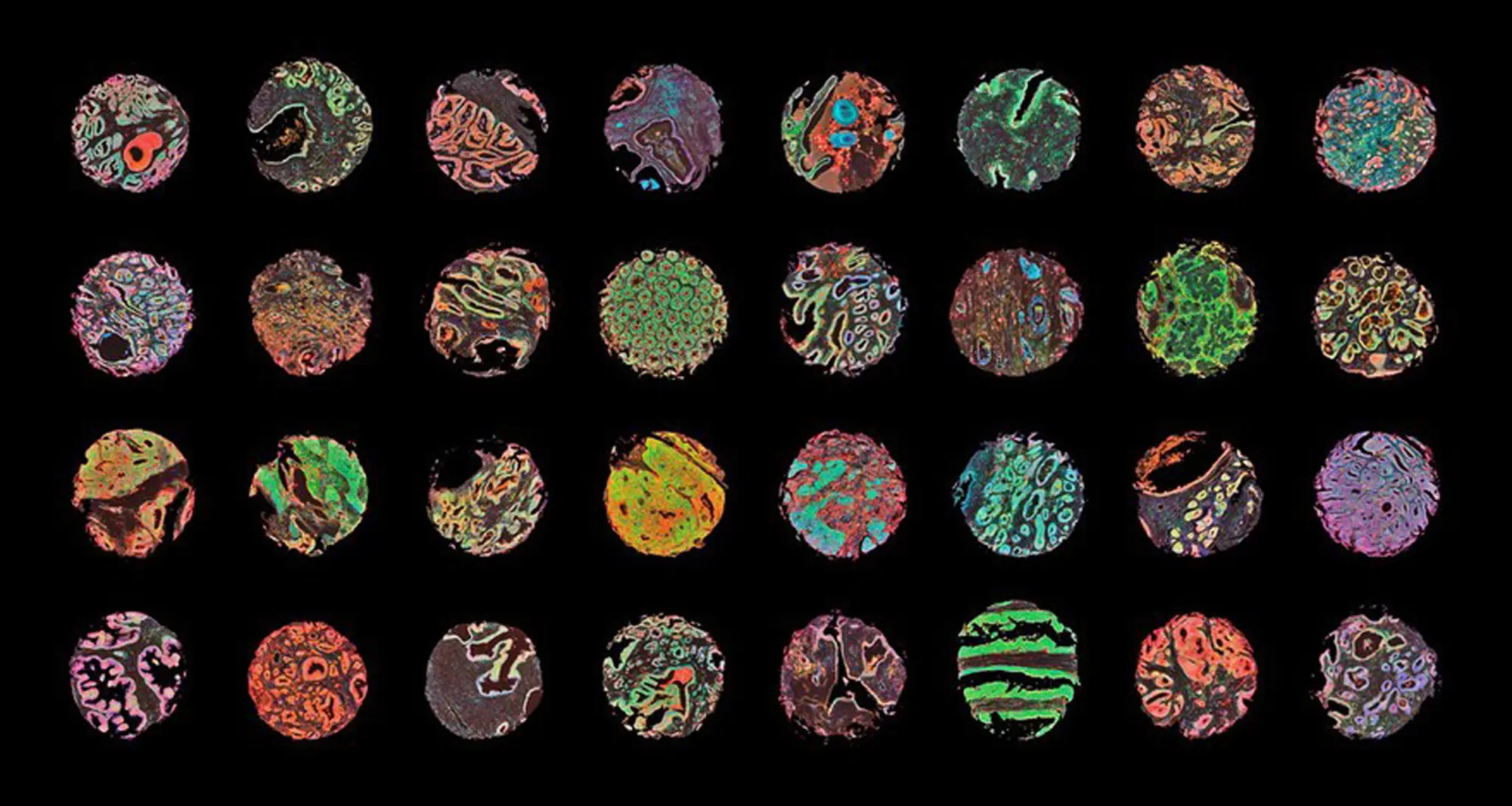
MYC gene is implicated in more than half of cancers; researchers now have a better idea of how and why
In a rare pair of papers published back-to-back in the journal Genes & Development, research teams led by senior author Anindya Bagchi, PhD, associate professor in the Cancer Genome and Epigenetics Program at Sanford Burnham Prebys Medical Discovery Institute, establish a unified framework that governs one of cancer’s most powerful master regulators.
The MYC gene is among the most frequently altered driver genes in human cancer, with its deregulation implicated in more than half of all cases. It acts as a master regulator controlling cell growth, division and metabolism. When overactive, MYC forces cells into rapid, uncontrolled tumor growth and drives aggressive, treatment-resistant cancers across virtually all tumor types, from solid tumors like breast and lung to blood cancers like leukemia.
Historically, MYC has been considered “undruggable” because the MYC protein lacks the typical binding pockets targeted by traditional small-molecule drugs, leaving clinicians with few direct ways to shut down MYC‑driven tumors.
“These paired, back-to-back publications tell a remarkable story about untangling a long-standing mystery in cancer biology, a mystery I tried to solve as part of my own PhD two decades ago!,” said Paul Boutros, PhD, MBA, director of the National Cancer Institute-designated cancer center at Sanford Burnham Prebys. “It’s an incredible achievement by Dr. Bagchi, and really reflects the caliber and impact of discovery science that defines our cancer center.”
The new studies focus on a region adjacent to MYC on human chromosome 8q24, known as the Plasmocytoma Variant Translocation 1 (PVT1) locus. Previous work in the Bagchi lab had shown that PVT1 is essential for MYC-driven tumor growth, but the mechanism was unknown.
The paired papers solve this puzzle with an unexpected answer: PVT1 is an active regulatory hub for MYC activity encoding two novel proteins that play key roles in enabling MYC in these cancers.
“These two studies show that you do not have to hit MYC directly to control MYC‑driven cancers,” said Bagchi. “By uncovering key molecules that MYC depends on, we are opening up a new set of therapeutic entry points for tumors that have long been considered beyond the reach of targeted therapies.”
In the first paper, published on August 19, 2026, in Genes & Development, Bagchi and colleagues focused on PVT1, until now considered a long non-coding RNA adjacent to MYC and frequently co-amplified with MYC in many cancers.
Previous research had shown PVT1 increases MYC activity, but the new study revealed that PVT1 does so by generating a circular RNA (CircPVT1) that encodes a novel protein the researchers named Firefox and which they determined is essential for MYC-mediated oncogenic signaling—the cascade of molecular events that drive the uncontrolled growth, survival and spread of cancer cells.
When researchers depleted Firefox, MYC protein abundance and transcriptional output declined. In animal models of MYC-driven cancers, induced depletion of Firefox significantly impaired tumor growth.

Anindya Bagchi, PhD, is an associate professor in the Cancer Genome and Epigenetics Program at Sanford Burnham Prebys Medical Discovery Institute. Image credit: Sanford Burnham Prebys.
“Firefox behaves like a critical helper that MYC needs in order to fully transform a cell into a cancer cell,” Bagchi said. “If you remove Firefox, MYC loses much of its power, which makes Firefox a very attractive potential drug target in MYC‑driven tumors.”
In the second paper, also published on August 19, 2026, in Genes & Development, Bagchi and colleagues examined a second kind of structural rearrangement at PVT1, and discovered that a segment of PVT1 is consistently deleted due to translocation, which happens with a segment of DNA breaks away from one chromosome and attaches to a different chromosome.
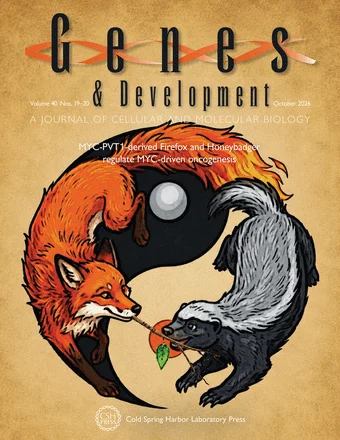
Anindya Bagchi, PhD’s, pair of papers were featured as the cover ofGenes & Development, October 1, 2026. Illustration by Jianhua Zhao.
Full cover image caption.
The researchers found that the affected segment encodes a novel micropeptide, which they dubbed Honeybadger. The micropeptide, they said, acts as a built-in brake on cancer growth.
Honeybadger directly binds KRAS—a key signaling protein in cancer. Mutated forms of KRAS are major drivers of tumor growth and are implicated in roughly 25 to 30% of all human cancers.
By binding KRAS, Honeybadger dampens the RAS‑MAPK signaling pathway under normal conditions. When PVT1 translocations delete the Honeybadger-encoding region, the brake is removed, allowing wild-type KRAS to hyperactivate MAPK signaling. This in turn stabilizes MYC protein and amplifies its cancer-driving output – even in tumors that lack KRAS mutations. The result is a dual hit: gain of the Firefox oncoprotein and loss of the Honeybadger tumor suppressor, which synergistically boosts MYC output and helps explain the particularly poor prognosis of PVT1‑rearranged cancers.
“The surprising lesson from these two papers is that PVT1 is not just a passive neighbor of MYC. It is an active regulatory hub that can either fuel or restrain MYC‑driven cancers, depending on which of its products are present,” Bagchi said.
“Together, the papers establish a “dual-hit” mechanism: a single structural alteration at PVT1 simultaneously preserves an oncogene (Firefox) and eliminates a tumor suppressor (Honeybadger), with both changes converging to amplify MYC activity. This makes PVT1 and its encoded proteins an especially rich source of new biomarkers and potential therapeutic targets.”
Bagchi said the research team next plans to investigate how Firefox and Honeybadger behave in additional cancer types and to work with collaborators to begin developing prototype therapeutic strategies.
“Our goal is to translate these basic discoveries into first‑in‑class therapeutic approaches that could ultimately benefit patients with MYC‑driven tumors, which currently have very limited targeted treatment options,” he said.
Firefox, a Protein Encoded by Circular PVT1, Is Essential 1 for MYC-Driven Oncogenesis
Additional authors include:
- Ashutosh Tiwari, Utkarsha Paithane, Kojiro Tashiro, Bryan Hall, Jordan Friedlein, Mayank Saraswat, Karina Barbosa, Shrawantee Saha, Aditi Soni, Rabi Murad, Svetlana Maurya, Owen S. Chapman, Brian James, Lukas Chavez, Jianhua Zhao, Aniruddha J. Deshpande and Robert J. Wechsler-Reya, all at Sanford Burnham Prebys
- Olivier Saulnier at Institut Curie, PSL University
- Quang Trinh at Ontario Institute for Cancer Research
- Takuma Nakashima, Hiromichi Suzuki at National Cancer Center Research Institute, Tokyo
- Anders Erickson at The Hospital for Sick Children, Toronto
- Jashua T. Lange, Lincoln Stein at Stanford University School of Medicine
- Robyn Leary, Jyotika Varshney, Badrinath Konety, Scott M. Dehm, Yasuhiko Kawakami, David A Largaespada at University of Minnesota
- William A Weiss, Sihan Wu at University of California San Francisco
- Michael D. Taylor at Columbia University Medical Center
This study was supported by the National Institutes of Health and the National Cancer Institute, the Department of Defense, the American Cancer Society, Curebound, the Cancer Prevention and Research Institute of Texas, Gilead’s Research Scholars Program in Solid Tumors, CPRIT Scholar in Cancer Research, Texas Children’s Cancer and Hematology Center, the Pediatric Brain Tumour Foundation, the Terry Fox Research Institute, the Canadian Institutes of Health Research, The Cure Search Foundation, the Matthew Larson Foundation, Meagan’s Walk, SWIFTY Foundation, the Victory Foundation, the Brain Tumour Charity, Genome Canada, Genome BC, Genome Quebec, the Ontario Research Fund, Worldwide Cancer Research, V-Foundation for Cancer Research, the Ontario Institute for Cancer Research through funding provided by the Government of Ontario, the Canadian Cancer Society Research Institute, a Cancer Research UK Brain Tumour Award, Stand Up To Cancer (SU2C), St. Baldrick’s Pediatric Dream Team and SU2C Canada Cancer Stem Dream Team through the Government of Canada and the Canadian Institutes of Health Research.
The study’s DOI is 10.1101/gad.353355.125.
Honeybadger, a Micropeptide Encoded by an Alternative PVT1 1 Transcript, is a Critical Negative Regulator of RAS–MAPK Signaling in MYC-Driven Tumors
Additional authors include:
- Utkarsha Paithane, Ashutosh Tiwari, Bryan Hall, Kojiro Tashiro, Aditi Soni, Andrey A. Bobkov, Lynn Miya Fujimoto, Mayank Saraswat, Meher Beigi Masihi, Shrawantee Saha, Srija Ghosh, Brian James, Tanja Eisemann, Theophilos Tzaridis, Lukas Chavez, Jianhua Zhao and Robert J. Wechsler-Reya, all at Sanford Burnham Prebys
- Olivier Saulnier, Anders Erickson at The Hospital for Sick Children, Toronto
- Quang Trinh, Lincoln Stein at Ontario Institute for Cancer Research, Toronto
- Takuma Nakashima, Hiromichi Suzuki at National Cancer Center Research Institute, Tokyo
- Shahab Sarmashghi, Rameen Beroukhim at Dana-Farber Cancer Institute
- Liam D. Hendrikse at University of Toronto
- Badrinath Konety, Scott M. Dehm, David A. Largaespada at University of Minnesota
- William A Weiss at University of California San Francisco
- Johannes Yeh at Cold Spring Harbor Laboratory
- Michael D. Taylor at Baylor College of Medicine
This study was supported by the National Institutes of Health, the National Cancer Institute, the American Cancer Society, the Tobacco-Related Disease Research Program, Curebound, CPRIT Scholar in Cancer Research, the Texas Children’s Cancer and Hematology Center, the Pediatric Brain Tumour Foundation, the Terry Fox Research Institute, the Canadian Institutes of Health Research, the Cure Search Foundation, the Matthew Larson Foundation), Meagan’s Walk, SWIFTY Foundation, the Victory Foundation, The Brain Tumour Charity, Genome Canada, Genome BC, Genome Quebec, the Ontario Research Fund, Worldwide Cancer Research, V-Foundation for Cancer Research, the Ontario Institute for Cancer Research through funding provided by the Government of Ontario, the Canadian Cancer Society, a Cancer Research UK Brain Tumour Award, the Stand Up To Cancer (SU2C), St. Baldrick’s Pediatric Dream Team and SU2C Canada Cancer Stem Cell Dream Team.
The study’s DOI is 10.1101/gad.353356.125.