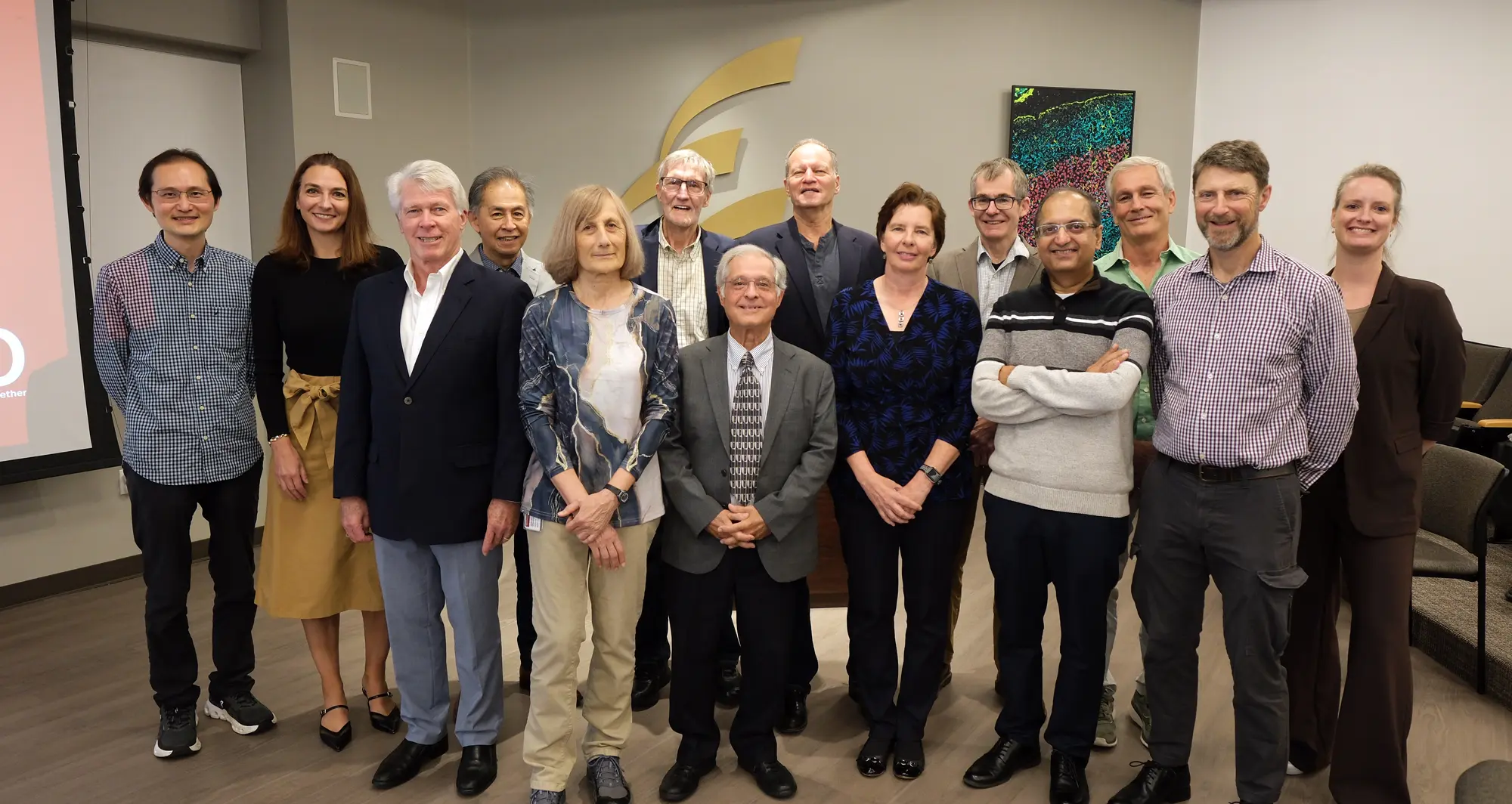
The event featured speakers reflecting on the past five decades—and giving predictions for the next 10 years and beyond
Sanford Burnham Prebys Medical Discovery Institute wrapped up a series of events marking its 50th anniversary with a Mini Symposium on November 12, 2026, titled, “50 Years of Discovery.”
David A. Brenner, MD, president and CEO of Sanford Burnham Prebys, welcomed attendees by saying that while the Institute’s name has evolved over the years, the mission has remained steadfast.
“We take the most devastating diseases and try to understand them better with the goal of improving human health.”
Humble beginnings (1976-1986)
Following Brenner’s introduction, he introduced José Luis Millán, PhD, as the first of two speakers representing the Institute’s first decade of operation.
Millán said he became familiar with the Institute’s founder after encountering a cancer patient in Argentina with an enzyme that appeared to be of placental origin. William Harold Fishman, MD, PhD, was a thought leader in what was then an emerging field of onco-developmental biology, the study of how cancer exploits basic embryonic processes.
Millán asked to work with Fishman, and Fishman said he was moving from Tufts University in Boston to build a new research institute in La Jolla, CA.
“I didn’t know the difference between Tufts and La Jolla,” admitted Millán. “And I’m glad I didn’t ask.”
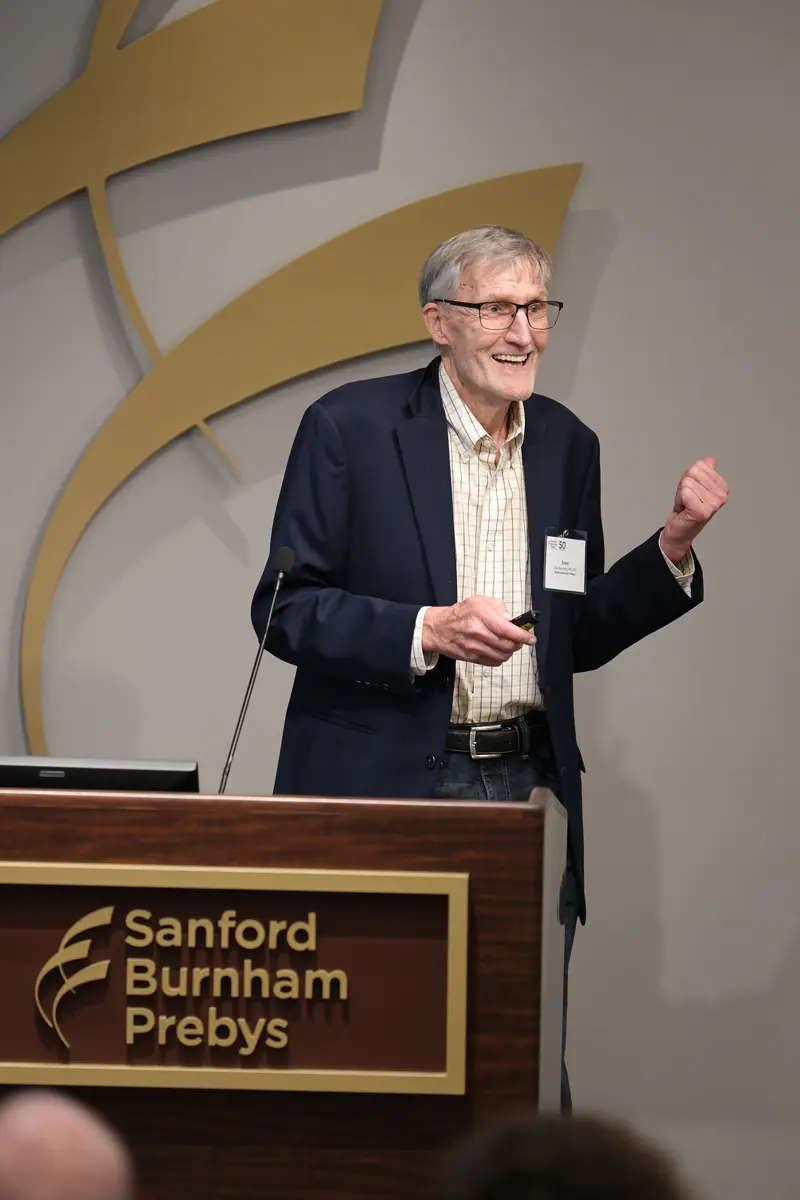
Erkki Ruoslahti, MD, PhD, who joined as the Institute’s scientific director in 1979 and served as president and CEO from 1989 to 2002, was one of two speakers representing the organization’s first decade. Image credit: Sanford Burnham Prebys.
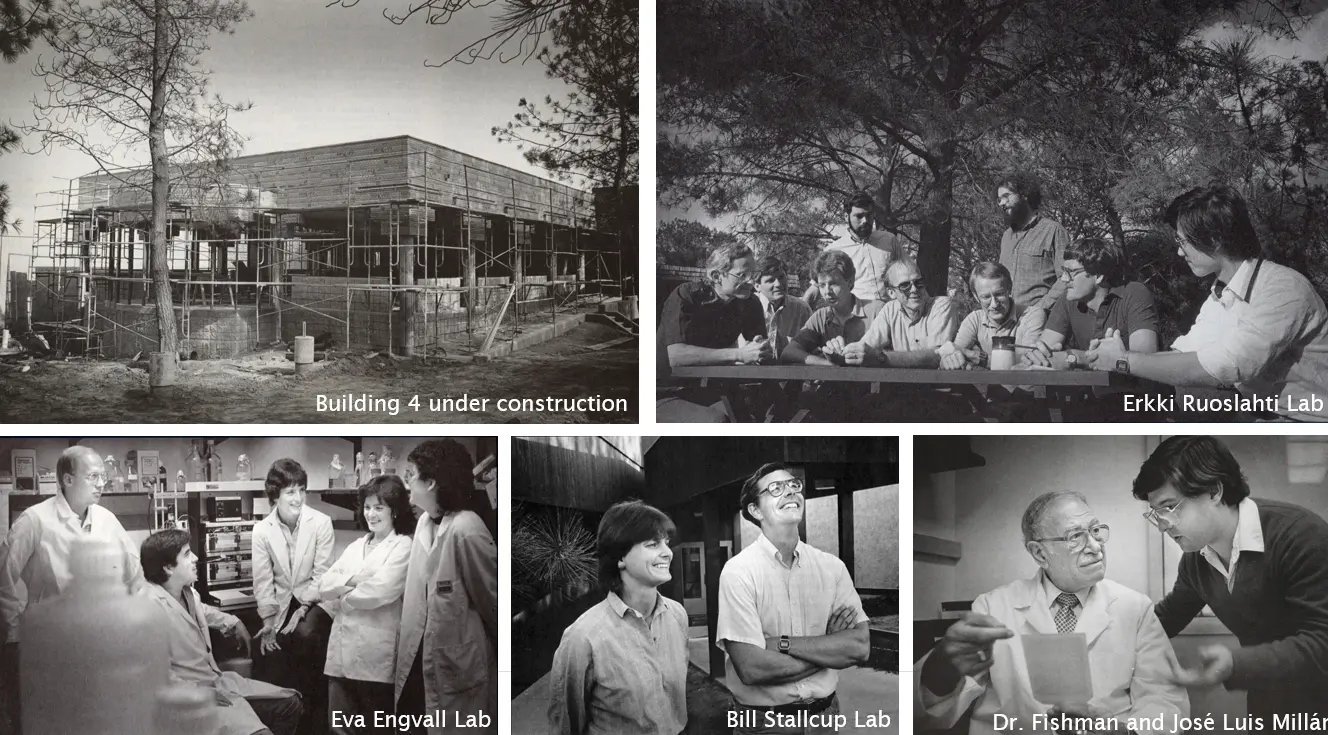
When he joined the Institute in August 1977, it had five employees.
“Why have I stayed? It was the freedom to pursue my science,” said Millán. “We were founded on the concept of having an administration that focused on serving the science and the scientists.”
Erkki Ruoslahti, MD, PhD, who joined as the Institute’s scientific director in 1979 and served as president and CEO from 1989 to 2002, then discussed early recruits to the faculty that laid a successful scientific foundation, including developmental biologists Eileen Adamson, PhD, and Elwood Linney, PhD, as well as carbohydrate chemists Michiko Fukuda, PhD, and Minoru Fukuda, PhD.
Ruoslahti also discussed the four institutional pillars he and the Fishmans focused on to build the Institute: provide appropriate laboratory space; develop shared services with the latest technologies at a time when a core research facility was a new concept; leverage indirect costs to sustain the infrastructure and a lean administration; and emphasize collaboration that leads to program project grants and other team science opportunities.
“In these early years, I felt that my task was to get the science here to a level that would be worthy of recognition,” said Ruoslahti.
Growing the faculty and culture (1986-1996)
Yu Yamaguchi MD, PhD, began his discussion of the second decade noting that the Institute’s strengths were well-represented among major areas of advancement in cell and molecular biology at that time. These topics included cell adhesion and programmed cell death.
Yamaguchi also described how this successful research paved the way for overall growth at the Institute. The faculty more than doubled from 15 to 34 independent principal investigators. He noted that the Institute received $4.3 million in grants from the National Institutes of Health (NIH) in 1987. He explained that this was a strong per-investigator level of funding support compared with similar institutions with greater NIH funding but also much larger workforces.
Hudson Freeze, PhD, said he misunderstood the Institute during his time as an early-career investigator at the University of California San Diego (UCSD). When Minoru Fukuda, the “guru of glycobiology,” invited Freeze to take a look at the Institute, Freeze found more than a few familiar faces.
“I thought this was a scientific outpost only to find that all my old buddies were here!” recalled Freeze upon finding kindred spirits he had met as a graduate student and postdoctoral fellow in San Diego.
Freeze also described how the Institute’s newsletter, published by Lillian Fishman, reminded him of his small hometown’s newspaper in Indiana, as did the culture nurtured by the Fishmans.
“One of the privileges of my life was getting to know Bill and Lil Fishman,” said Freeze. “They ran this place like a family and took care of everyone.”
Emphasizing education and translational research (1996-2006)
Pier Lorenzo Puri, MD, said he brought a unique perspective to the third decade due to being nearby at UCSD and the Salk Institute until 2004. As a postdoc at UCSD, he said he recognized Institute faculty members as authors on seminal papers he was reading.
Puri expressed gratitude to Eva Engvall, PhD, for recruiting him to the Institute in 2004 to apply the techniques of the stem cell and regenerative medicine revolution to the study of muscular dystrophies. He also gave special mention to the founding of the Graduate School of Biomedical Sciences at the end of the third decade.
“This is one of the operations I’ve seen grow the most during my time here, and much of its success is thanks to the leadership of deans Guy Salvesen and Alessandra Sacco,” said Puri.
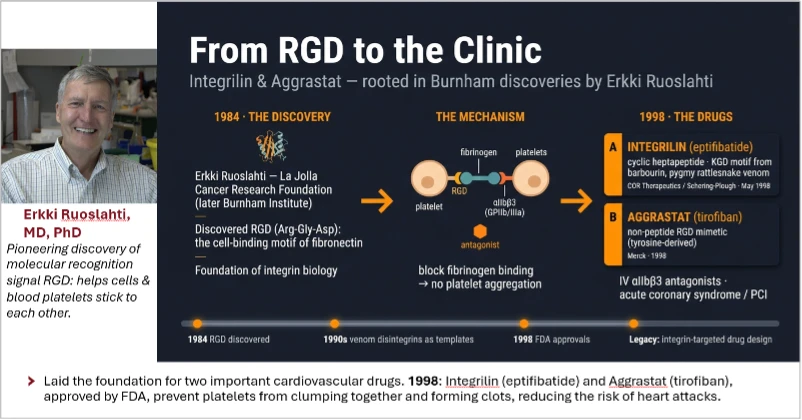
Nicholas Cosford, PhD, then focused on how the third decade was marked by a growing emphasis on translating fundamental research discoveries into treatments. This included the example of two cardiovascular drugs based on cell adhesion research at the Institute. Integrilin (eptifibatide) and Aggrastat (tirofiban) were approved by the Food and Drug Administration (FDA) to prevent platelets from clumping together and forming blood clots, reducing the risk of heart attacks.
Near the end of the decade, the Institute was selected for a national NIH high-throughput screening initiative that would lead to the creation of the Conrad Prebys Center for Chemical Genomics and the Institute’s growth as a leading academic drug discovery and development organization.
“The modern organization we see today with both fundamental research and drug discovery took shape during these years,” said Cosford.
Embracing the moment of Big Science (2006-2016)
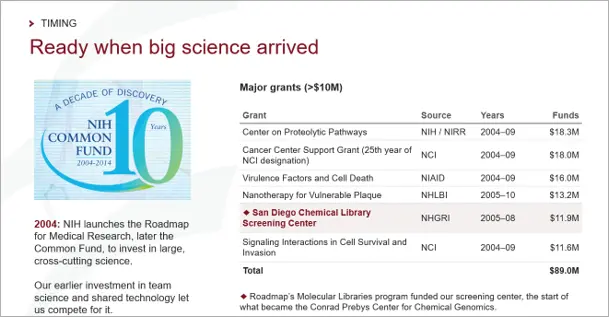
Kristiina Vuori, MD, PhD, focused on how the institution’s growth, expansion of its research portfolio beyond cancer and investment in core research facilities positioned it as national funding trends changed in the fourth decade. Buoyed by the success of the Human Genome Project, the NIH offered more large-scale, multi-institution grants. The Institute succeeded at joining many of these projects, including 18 such awards being active in 2010.
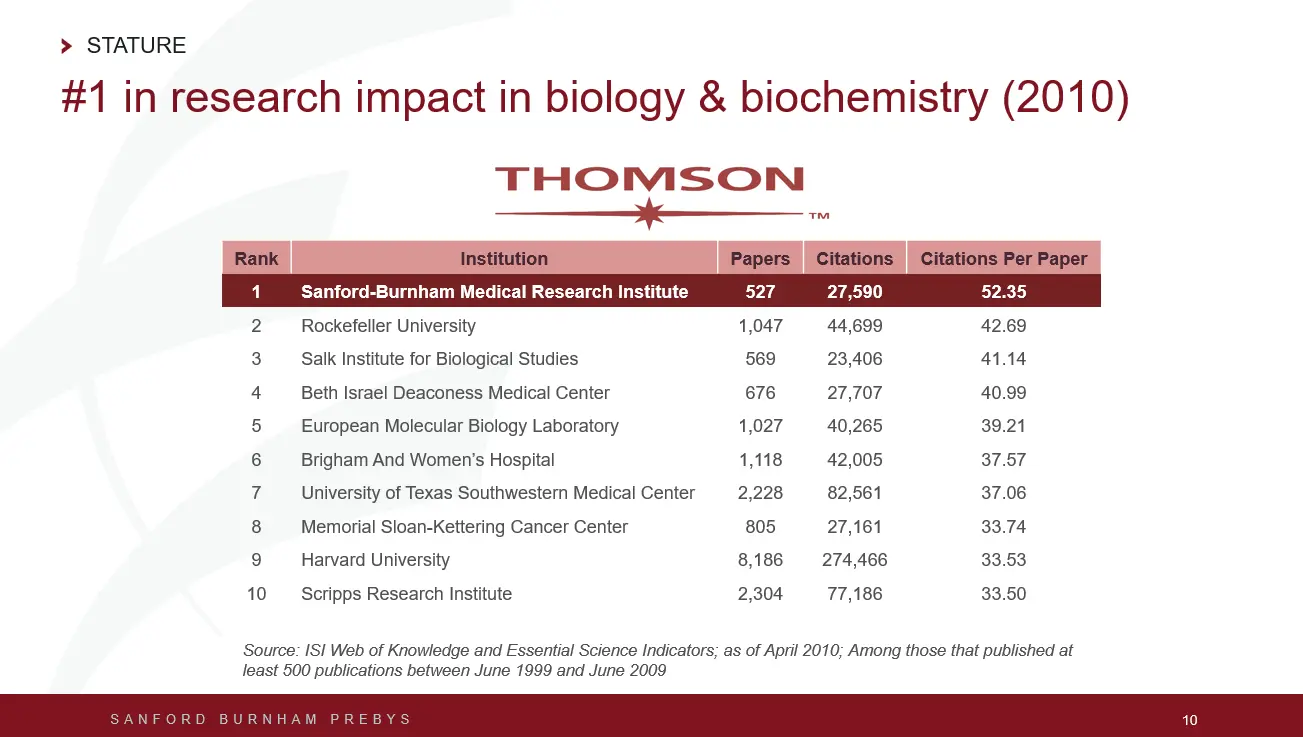
In addition to garnering federal funding support, these achievements were also reflected in the creation and dissemination of new knowledge. Also in 2010, the Institute ranked number one in the world for research impact in biology and biochemistry as measured by citations per paper.
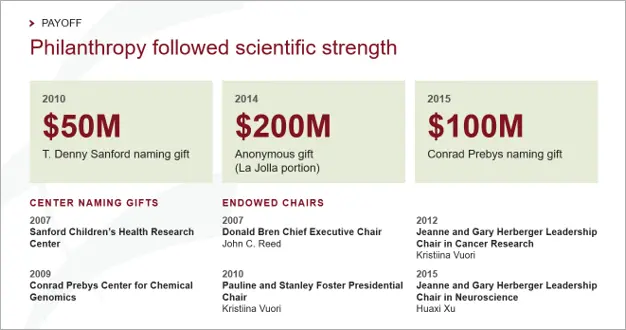
“Our core facilities and team science approach were a perfect fit for these new and ambitious NIH initiatives,” said Vuori. “And then philanthropic support followed from our scientific strength.”
Caroline Kumsta, PhD, shared a summary of her scientific journey, including from a trainee at the Institute to joining the faculty. She discussed her time as a postdoctoral fellow during the fourth decade, when she co-led the predecessor to today’s Sanford Burnham Prebys Science Network, which provides social and professional networking opportunities for students and postdocs.
After a period of time when the postdocs planned all their own professional development events, Kumsta credited Diane Klotz, PhD, with rebooting an improved institutional postdoctoral training environment through the Office of Learning and Development.
Kumsta concluded with her reflections on how to age well throughout a career in research.
“Preserve curiosity and connection. Let experience become the basis for mentorship. And renew yourself and your lab through new people and ideas.”
Functional genomics and the biology of aging (2016-2026)
Ani Deshpande, PhD, shared his experience of co-founding a Chromatin Club to bring together epigenetics researchers in San Diego. To his surprise, the epigenetics company Active Motif would make the idea “go viral,” and now there are Chromatin Clubs meeting across the globe.
Deshpande also discussed helping to advance functional genomics at the Institute, including by bringing CRISPR to the functional genomics core. The core now collaborates with more than 30 labs.
He described his efforts to use these functional genomics capabilities to find a potential treatment strategy that would broadly work on many acute myeloid leukemia (AML) subtypes.
“After collaborating with our drug discovery experts, clinical trials have now started based on our work and that of other labs as well,” said Deshpande.
Peter D. Adams, PhD, detailed how he arrived at the Institute in 2016 after building his career in cancer research. He had a growing interest in studying the biology of aging due to it being the biggest risk factor for disease.
Joining the Institute provided Adams the freedom to pursue these interests. He showed how aging research has evolved as a theme at Sanford Burnham Prebys with labs studying topics including how aging affects heart and muscle repair, and how to rejuvenate brain cells to prevent diseases of aging.
Adams reflected that he feels one of his major roles is to find ways to bring the varied experts at the Institute together to apply for funding opportunities requiring a bold vision and multidisciplinary approach. He gave the example of studying how aging makes liver cells more vulnerable to damage and disease, including liver cancer, and how this might be prevented in the future.
The immunotherapy revolution and team-based translational science (2026-2036)
Kelly Kersten, PhD, began her presentation on the future of cancer immunotherapy by detailing the more than 100-year journey that led to the FDA approval of the first immune checkpoint inhibitor in 2011. This breakthrough kicked off the immune oncology revolution that continues today.
Kersten’s goal is to make immunotherapy more effective for more forms of cancer. Her lab does this by studying interactions between immune cells that influence anti-tumor immune responses.
She believes that the Institute is well-positioned to contribute to advancing the cancer immunotherapy revolution due to its commitment to integrating state-of-the-art technology for collecting data with computational approaches to analysis. Kersten noted that the multidisciplinary and collaborative culture at Sanford Burnham Prebys is critical for discovery of new immunotherapies.
Steven Olson, PhD, opened with his belief in the future-facing strengths of the Institute’s organizational structure with disease-focused centers, enabling technology centers and cross-cutting themes. He thinks it will enable the Institute to evolve and adapt to trends and new technologies, including the increasing importance of team science.
Olson presented the neurotensin receptor 1 project as a template for future translational research given its collaboration of 10 principal investigators across seven institutions and its innovation in revealing new knowledge about G protein-coupled receptors. In addition to producing findings that have been shared in Nature, Cell and other prestigious journals, the team is excited to see the project’s potential benefits to human health with a first-in-human Phase 1 clinical trial scheduled to begin in early 2027.
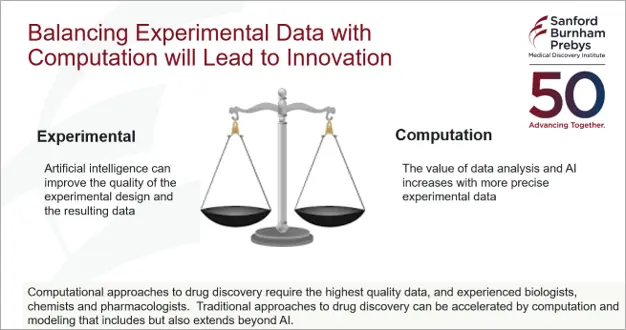
Olson concluded with his view that those who succeed in the next era of biomedical research will properly balance excellence in experimentation with cutting-edge computational techniques. He said that Sanford Burnham Prebys is poised to walk this tightrope for the next decade and beyond.
Concluding remarks
Yuk-Lap (Kevin) Yip, PhD, began his summation by observing that the leading technologies of each era drove what research was done and determined what data could be collected. Moving forward, he emphasized the importance of integrating computational and artificial intelligence-based tools into experimental design and data analysis.
Yip also reflected on the importance of multiple levels of collaboration throughout the Institute’s history, including with patients and families as well as among basic science and translational research. For the future, he sees extensive collaboration being even more critical, highlighting the Cilento Initiative on Aging Outcomes (CIAO) study of centenarians that needs many complementary experts on each of the hallmarks of aging.
Yip concluded with several questions for attendees to ponder, including how to create synergy between the Institute’s traditional strengths and new approaches, as well as what the role of human scientists will be in the age of AI.
Mini Symposium planners and sponsors
The Sanford Burnham Prebys 50th anniversary Mini Symposium was made possible by the Academic Affairs team led by Elena Pasquale, PhD, as well as sponsors HUB International San Diego, Johnson and Johnson, the Marsh Agency and the Meketa Investment Group.
For more on the 50th anniversary
Explore five decades of discovery on the Institute’s 50th anniversary website, which earned third place in the General Interest Website category at the 2026 San Diego Press Club Excellence in Journalism Awards.
An interactive timeline traces the discoveries, milestones and philanthropy that have shaped the Institute’s evolution—from the La Jolla Cancer Research Foundation to today’s global biomedical research enterprise.
The anniversary photo gallery provides a behind-the-scenes look at the people behind the discoveries.
The Biomarkers series recognizes Sanford Burnham Prebys scientists whose work, here and elsewhere, has measurably changed and improved human health and the world.
Almost every scientist is driven by at least one big question. During 2026, faculty members shared the scientific questions they most wanted to answer.
The Fifty for 50 series highlights landmark discoveries that have shaped biomedical research over the past five decades.