jshort, Author at Sanford Burnham Prebys - Page 6 of 13
Institute News

Unraveling the mystery of muscle regeneration could lead to effective treatment for muscular dystrophies

Authorsgammon
Date

September 22, 2015

By shedding light on the distinct functions of a protein complex that controls the formation of skeletal muscle tissue, SBP researchers could pave the way for the development of novel therapies for neuromuscular diseases.

Continue reading “Unraveling the mystery of muscle regeneration could lead to effective treatment for muscular dystrophies”

Institute News

Hearts build new muscle with this simple protein patch

Authorsgammon
Date

September 15, 2015

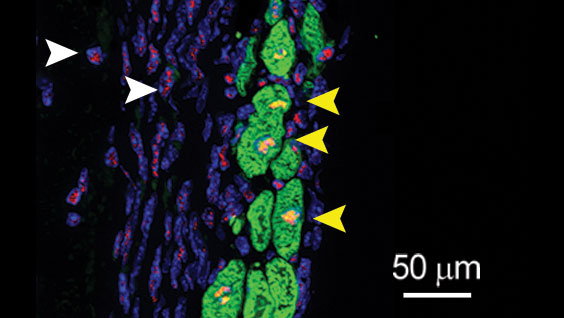
An international team of researchers has identified a protein that helps heart muscle cells regenerate after a heart attack. Researchers also showed that a patch loaded with the protein and placed inside the heart improved cardiac function and survival rates after a heart attack in mice and pigs. Continue reading “Hearts build new muscle with this simple protein patch”

Institute News

Researchers reawaken sleeping HIV in patient cells to eliminate the virus

Authorsgammon
Date

September 9, 2015

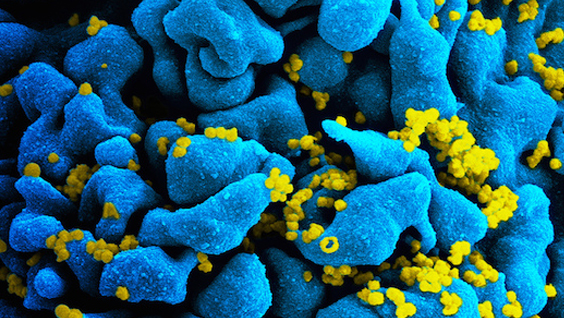
Researchers at Sanford Burnham Prebys Medical Discovery Institute (SBP) have identified a new class of drugs that may be used to purge pockets of dormant HIV from a patient’s body, eliminating the virus once and for all. Fortuitously, these agents are already being explored in clinical trials for treating cancer, which could speed up the route to approval for treating HIV.

Antiretroviral therapies have made it possible for people to live with AIDS for decades. However, small reservoirs of a patient’s cells hide the virus. That is, HIV’s genes live in the cells, but its genetic code is never read to make protein, and so the virus goes undetected by the immune system.

“If you take people off the antiretroviral therapies, some of these dormant cells reawaken to make more virus,” said lead author Lars Pache, PhD, a postdoctoral fellow in the lab of Sumit Chanda, PhD, director of the Immunity and Pathogenesis Program at SBP. “The key for a cure for HIV is to purge these cells that have dormant HIV.”

Reactivating latent HIV-infected cells so that they can be killed off once and for all is called ‘shock and kill.’ The approach has remained elusive so far, because drugs that reawaken the virus could also trigger massive immune system activation, which itself could be deadly, Chanda said.

The new study, published September 9 in the journal Cell Host & Microbe, “uses a class of drug called Smac mimetics to tap into a cell pathway that can be used to wake up the virus but, based on clinical studies and our data, doesn’t appear to activate the immune system,” Chanda added.

The study started with a broad search of genes within the host cells that help keep the virus silent. Chanda’s group identified 651 genes. They then created batches of cells in which each one of those genes was silenced, and they measured how much HIV the cells produced after they were exposed to the virus.

The scientists whittled the list of candidate genes down to 139, to 24, and then 12 using increasingly stringent criteria. The absence of one gene in particular, BIRC2, boosted the activity of HIV. Even better, Smac mimetics—already proven safe in early-stage clinical trials for cancer—works by inhibiting BIRC2 and related molecules.

“These experiments led us to develop a strategy of using Smac mimetics to reawaken dormant HIV so that we could then kill it with anti-viral therapy,” said Chanda.

Chanda’s colleague at SBP, Nicholas Cosford, PhD, professor in the Cell Death and Survival Networks Program, had recently described a potent BIRC2 inhibitor, SBI-0637142. “This drug is about 10-100 times more potent than the small molecules currently in clinic development, making it a promising candidate to tackle HIV latency,” says Chanda.

Part of the reason that HIV’s genes stay hidden in its host is that they cover themselves with tightly wound DNA. A class of drugs called histone deacetylase inhibitors, which unfurls the DNA, is used to treat a variety of conditions. Although most of these inhibitors haven’t worked well on their own to reactivate latent HIV, they might work well with Smac mimetics including SBI-0637142, Chanda’s group reasoned.

The key question was whether they could reactivate the virus in cells from HIV-infected patients undergoing antiretroviral therapy. They combined SBI-0637142 with a histone deacetylase inhibitor (panobinostat) and saw signs that the virus had reawakened without triggering immune cell death.

“We anticipated that we would see a synergy because the drugs work along parallel pathways. What we didn’t expect was the level of activation—the potency and efficacy with which we were able to reverse latency in patient samples,” Chanda said.

They saw similar results in patient cells treated with a combination of LCL161—a Smac mimetic that is already in phase 1 and 2 trials for treating cancer—and panobinostat. “This is a one-two punch for HIV,” said Chanda, adding that ultimately, a cocktail of drugs will be necessary to cure HIV.

The scientists hope to partner with a pharmaceutical company to develop these molecules for testing in animal models of HIV and then move them into the clinic if they meet the safety and efficacy criteria.

In addition to SBP, the study consortium included the University of Utah School of Medicine, The Salk Institute for Biological Studies, the Perelman School of Medicine at the University of Pennsylvania, the Icahn School of Medicine at Mount Sinai, the Paul-Ehrlich-Insitut, and the German Center for Infection Research.

This post was written by Kelly Chi, a freelance science writer. 

Institute News

How protein tangles accumulate in the brain and cause neurological disorders

Authorsgammon
Date

September 2, 2015

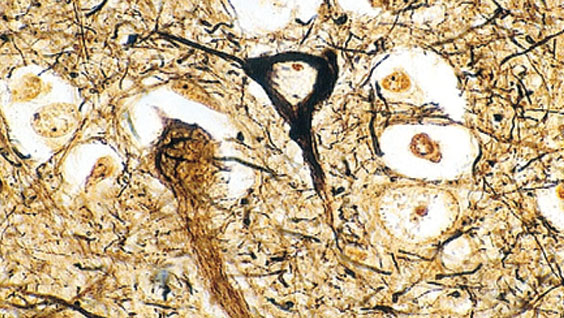
A new Sanford Burnham Prebys Medical Discovery Institute (SBP) study takes a step forward in understanding how similar, yet genetically unrelated neurodegenerative diseases, such as Alzheimer’s disease, frontal temporal dementia, and progressive supranuclear palsy (PSP) are caused by the protein tau. The findings, published today in Neuron, create new opportunities to target this key protein that leads to the brain lesions found in patients with impaired motor functions and dementia. Continue reading “How protein tangles accumulate in the brain and cause neurological disorders”

Institute News

Will your autoimmune disease be cured?

Authorsgammon
Date

August 25, 2015

More than 23 million Americans have an autoimmune disease. And although there are more than 80 different types of autoimmune diseases, they all have three things in common:

  1. The immune system is attacking healthy cells
  2. The cause of the disease is unknown
  3. There is no cure

No cure. No cure. No cure. That’s not good news. Given that I have a 1 in 12 chance of getting an autoimmune disease in my lifetime (if you are a man your chance is 1 in 20), and those chances increase with every birthday (and mine is next month), I asked SBP experts in immunology what makes them hopeful that we are on the road to better treatments for these chronic, debilitating, and sometimes deadly diseases. Below are their forward-looking answers.


Continue reading “Will your autoimmune disease be cured?”

Institute News

10 years of studying metabolism, nutrition, and human energy—what have we REALLY learned?

Authorsgammon
Date

August 17, 2015

Every day we read or hear something about a food that is bad for us, a fruit that will help us lose weight, or a supplement that will extend our lives beyond their natural endpoint. Unquestionably, every year a significant amount of money, research, and time is spent exploring the cause and prevention of obesity, diabetes, heart disease, and the myriad of other metabolic conditions that affect our health and well-being. But what do scientists think are the truly important things we have learned about our metabolism, diet, and exercise over the last decade?  And how is this leading to the next-generation of medicines to treat metabolic disorders? Continue reading “10 years of studying metabolism, nutrition, and human energy—what have we REALLY learned?”

Institute News

Pathway that controls cancer cell proliferation discovered

Authorsgammon
Date

August 13, 2015

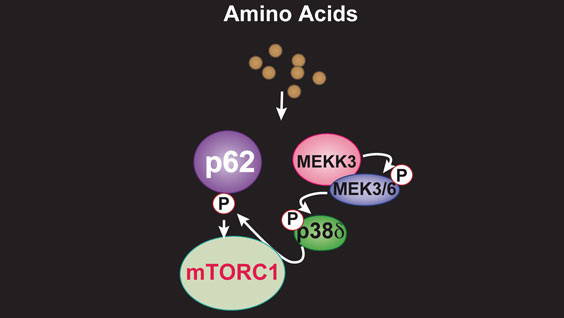
In a new study by SBP, researchers have identified a novel kinase cascade that regulates mTORC1, a protein complex implicated in the control of cancer cell growth in response to nutrients. The study, published in Cell Reports, provides further insight into the control of mTORC1 activation, and highlights several new potential drug targets to treat human pathologies linked to mTORC1 deregulation. Continue reading “Pathway that controls cancer cell proliferation discovered”

Institute News

Scientists solve structure of important protein for tumor growth

Authorsgammon
Date

August 5, 2015

In a collaborative study between SBP and the Argonne National Laboratory, scientists have used a highly specialized X-ray crystallography technique to solve the protein structure of hypoxia-inducible factors (HIFs), important regulators of a tumor’s response to low oxygen (hyopoxia). The findings, published today in the journal Nature, open the door to search for new drugs to treat tumors by cutting off their supply of oxygen and nutrients. Continue reading “Scientists solve structure of important protein for tumor growth”

Institute News

SBP Graduate School of Biomedical Sciences receives WASC accreditation

Authorsgammon
Date

July 30, 2015

Sanford Burnham Prebys Medical Discovery Institute (SBP)  is proud to announce that its Graduate School of Biomedical Sciences has received accreditation by the Western Association of Schools and Colleges (WASC). This is an important milestone for the Graduate School, a distinction that assures the public that our school has the resources, policies, and practices in place to achieve its educational goals.

The SBP Graduate Program began in 2006. Today, we have 25 students with a unique opportunity to carry out their studies in an environment of collaborative research, with access to the most-sophisticated minds and technologies in biomedical sciences. The Program gives graduate students fluency in biology, chemistry, bioinformatics, and engineering to integrate research into meaningful applications that will advance medicine. Their education comes at a time when research has never been more intellectually exciting and critically important to society.

The effort was led by Guy Salvesen, PhD, dean of the Graduate School, who has been dedicated to providing the best learning opportunities for SBP students to become the next-generation of pioneers in biomedical research. Dr. Salveson has overseen the recruitment of talented students from around the world—Europe, Asia, Australia and the United States—and engaged our faculty to teach, train and mentor. He has been accountable to WASC during an eight year systematic process of scrutiny that left no stone unturned. At the same time, he has managed his own research laboratory of staff scientists, postdocs, graduate students and interns, exploring the principles of proteolysis in humans.

In addition to Dr. Salveson, Malene Hansen, PhD, associate dean of Student Affairs; Alessandra Sacco, PhD, associate dean of Curriculum; Robert Rickert, PhD, associate dean of Admissions, and Stacey Smith, manager of the Graduate Program, have helped achieve the goal through their passion for education, and creating an environment that supports the highest-quality learning in biomedical research.

Many congratulations to everyone at SBP that works to support the Graduate School, including the faculty, staff, and the students, for creating and fostering a program that is now officially recognized for its excellence.