New computational toolkit helps researchers identify and study cancer-driving DNA alterations, with a public repository of more than 15,000 samples
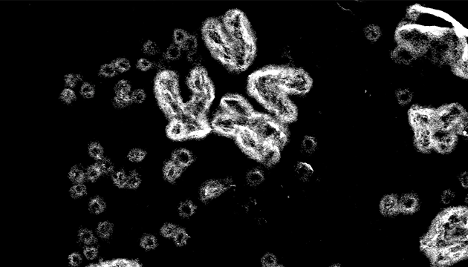
Extrachromosomal DNA (ecDNA) consists of circular, double-stranded DNA molecules that have separated from chromosomes. They frequently carry multiple copies of cancer-driving oncogenes that are then highly expressed. Thus, ecDNA is increasingly recognized as a particularly worrisome driver of cancers and treatment resistance.
Now, a multi-institutional research team co-led by Jill Mesirov, PhD, Distinguished Professor in the Cancer Genome and Epigenetics Program at Sanford Burnham Prebys, has released AmpliconSuite, a computational toolkit for identifying and characterizing ecDNA and other focal DNA amplifications in cancer genomes, along with Amplicon Repository for hosting and sharing the community’s samples and ecDNA analyses. The repository currently provides public access to results for more than 15,000 samples.
“The combination of these two resources democratizes both the complicated bioinformatic approaches required for identifying ecDNA and elucidating their structure, along with openly communicating the results of employing them,” said Mesirov.
The work is described in the October 16, 2026 online issue of Nature Methods.
Mesirov and colleagues, including co-senior study authors Vineet Bafna, PhD, a professor of computer science and engineering at UC San Diego, and Paul S. Mischel, MD, a professor of pathology at Stanford University, developed computational methods to identify ecDNA and distinguish it from other forms of DNA amplification, and the informatics workflow and platform to share them.
The researchers validated the toolkit using 175 genes examined through fluorescence in situ hybridization across 72 cancer cell lines. The latest classifier achieved 91 percent precision and 95 percent recall in the study’s ecDNA validation analysis. An analysis of 6,506 cancer samples from patients also revealed patterns in which cancer-promoting genes tend to be amplified together on ecDNA.

Jill Mesirov Image credit: Sanford Burnham Prebys.
AmpliconSuite is only the latest of Mesirov’s contributions to advancing biomedical research tools and capabilities. Mesirov has also played a leading role in developing widely used computational biology resources, including Gene Set Enrichment Analysis, the Molecular Signatures Database, and the Integrative Genomics Viewer. Together, these tools help researchers analyze, interpret, and visualize complex genomic data. These resources are used by researchers worldwide in cancer biology and other areas of biomedical science.