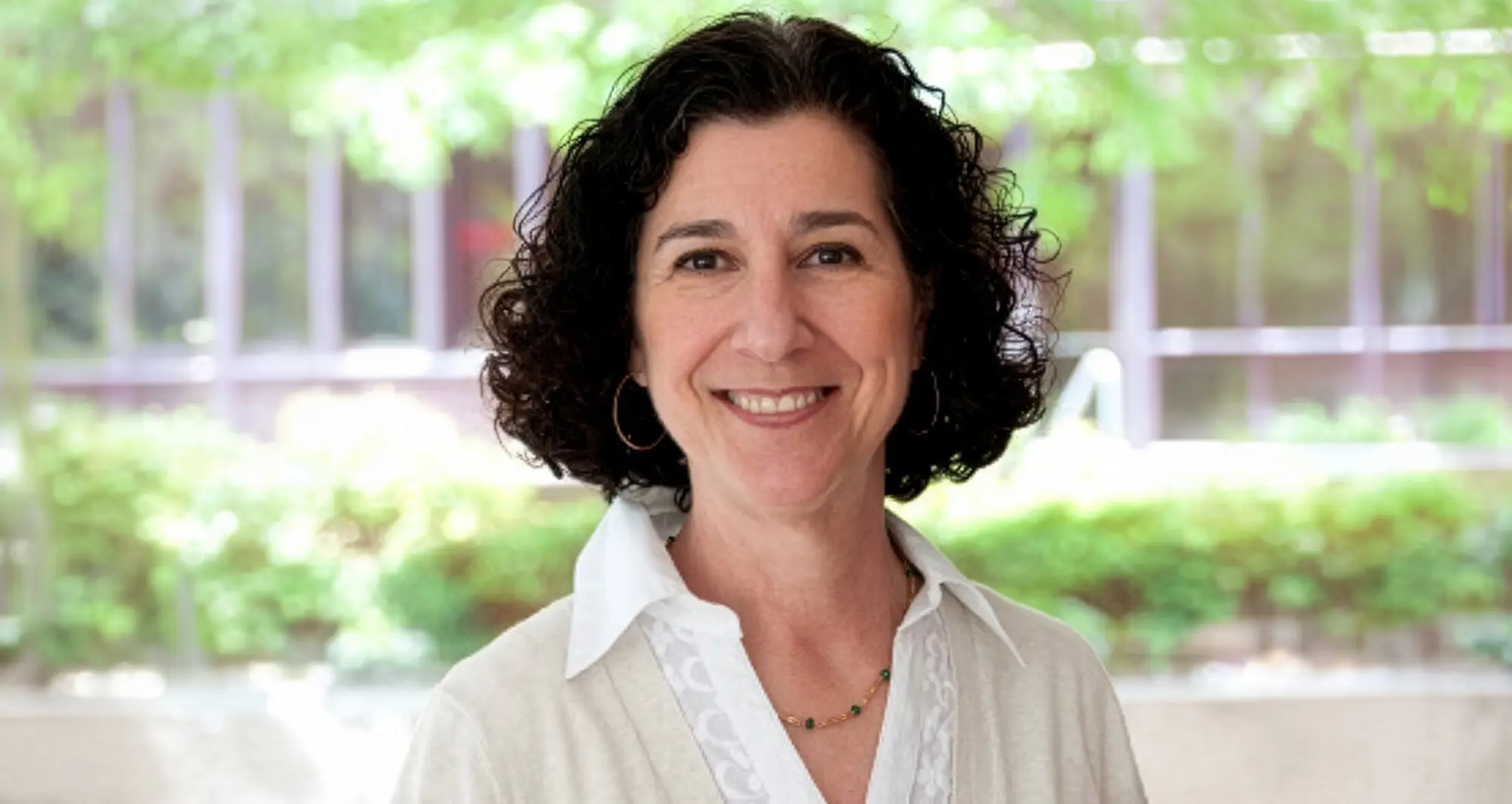
Jill P. Mesirov, PhD, a pioneering mathematician and computational biologist whose work has dramatically broadened and deepened the use of advanced computing tools to develop and implement new cancer strategies and treatments, has joined Sanford Burnham Prebys Medical Discovery Institute as a Distinguished Professor and Senior Vice President for Computational Science, beginning July 1, 2026.
“At this stage of my career, I’m really interested in mentoring the next generation of computational biologists,” said Mesirov. “Sanford Burnham Prebys has made major investments in resources and people to advance the use of information technologies in biomedical research. I can help further build that infrastructure and show what the new generative AI tools look like from a scientific point of view and how to most effectively use them. That includes helping young, outstanding computational scientists as they develop their careers.”
Mesirov’s duties at Sanford Burnham Prebys will include working with Institute leadership to develop overall computational science strategies, coordinating projects among the Institute’s four disease-specific centers and two technology-enabling centers and advancing overall progress and implementation of computational sciences, including the rapid development and use of artificial intelligence.
“Dr. Mesirov’s skills and achievements are long renowned,” said David Brenner, MD, president and CEO of Sanford Burnham Prebys. “She has been a leading force in computational science and biology for years. She has helped transform it into the powerful force it has become, and she will help make it even more powerful, more beneficial in our search for new therapeutic discoveries.
“In that sense, Dr. Mesirov profoundly and indisputably matches our institutional mission to leverage the best tools and minds to translate science into health. No one embodies that goal more personally and professionally than Jill.”
Prior to Sanford Burnham Prebys, Mesirov was associate vice chancellor for computational health sciences at UC San Diego and co-lead of the Structural and Functional Genomics Program at UC San Diego Moores Cancer Center, which emphasizes the development and use of high throughput structural genomic data to guide basic cancer research and clinical applications.
Mesirov also serves on the pediatric neuro-oncology tumor board at Rady Children’s Hospital, which matches children with brain and spinal cord tumors with the most effective, targeted, genome-based therapies.
Mesirov is a mathematician by training, with a B.A. from the University of Pennsylvania and master’s and doctoral degrees from Brandeis University in Massachusetts. After early exposure and experience in high-performance computing, she joined the Broad Institute of Massachusetts Institute of Technology and Harvard to study and advance the use of genomics data, which at the time was an emerging discipline, ultimately becoming associate director and chief informatics officer.
Indeed, Mesirov’s work is widely regarded as groundbreaking, producing widely used open-access platforms such as GenePattern, Gene Set Enrichment Analysis with its Molecular Signature Database, and the Integrative Genomics Viewer, which allow researchers worldwide to analyze and visualize complex and massive genomic datasets without needing advanced programming skills. It is estimated that more than 1 million users in 100 countries employ her software in cancer research.
“Early on, I found the questions about cancer to be really interesting. How can we understand these diseases better? How can we get to the underlying mechanisms of different cancers to find better ways to treat them?
“And over the years, I’ve had many rewarding collaborations with cancer scientists and physicians, some still going on decades later. I’ve had experience with cancer in my own family. Cancer remains compelling.”
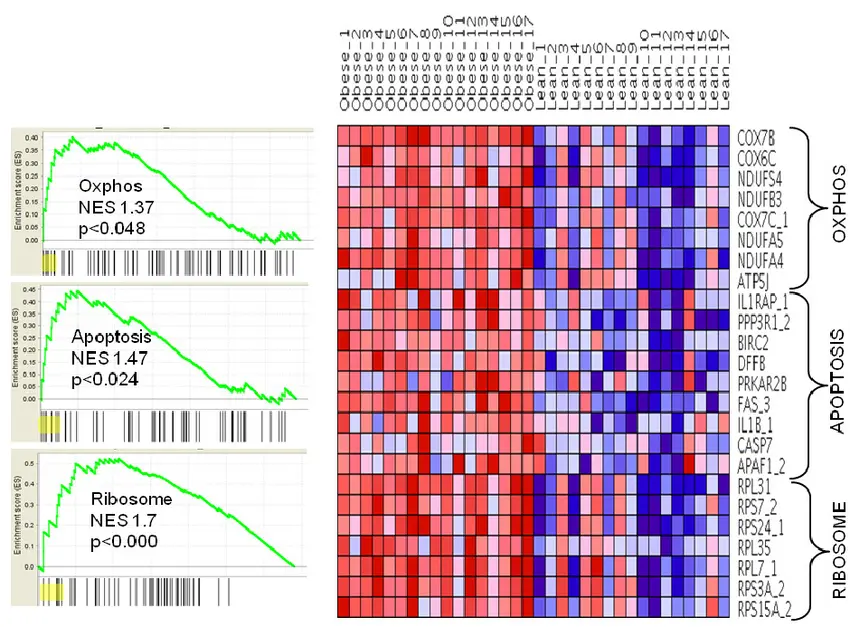
Developed by Jill Mesirov and colleagues, Gene-Set Enrichment Analysis is a computational method used in genomics to determine whether a predefined group of genes (such as a biological pathway) shows statistically significant differences between two biological states. It looks at the collective behavior of genes rather than analyzing individual genes in isolation. In the above illustrative example, GSEA shows differentially enriched pathways in whole blood between obese and lean subjects.
Mesirov’s specific research focuses on applying machine-learning methods to functional, molecular data derived from patient tumors to determine underlying biological mechanisms linked to specific tumor subtypes.
“The goal is to personalize treatment, to identify candidate compounds that promise the greatest therapeutic potential and recognize relative risks of relapse,” said Mesirov. “Every cancer in every patient is different, and a big part of our mission is creating the practical, accessible software tools that allow scientists and physicians to create and deliver unique, effective therapies.”
Previous to Broad, Mesirov served as manager of computational biology and bioinformatics in the Healthcare/Pharmaceutical Solutions Organization and as director of research at Thinking Machines Corporation. She also held positions in the mathematics department at UC Berkeley and at the Institute for Defense Analyses, where she conducted work in cryptology and speech and designed and implemented efficient computer algorithms.
Mesirov is former president of the Association for Women in Mathematics; served as associate executive director of the American Mathematical Society and is a fellow of the American Association for the Advancement of Science, the American Mathematical Society and the International Society for Computational Biology.
She has also served on several advisory boards and as an editor on journals in computational science and applied mathematics. She has authored or co-authored more than 300 journal articles and technical reports.