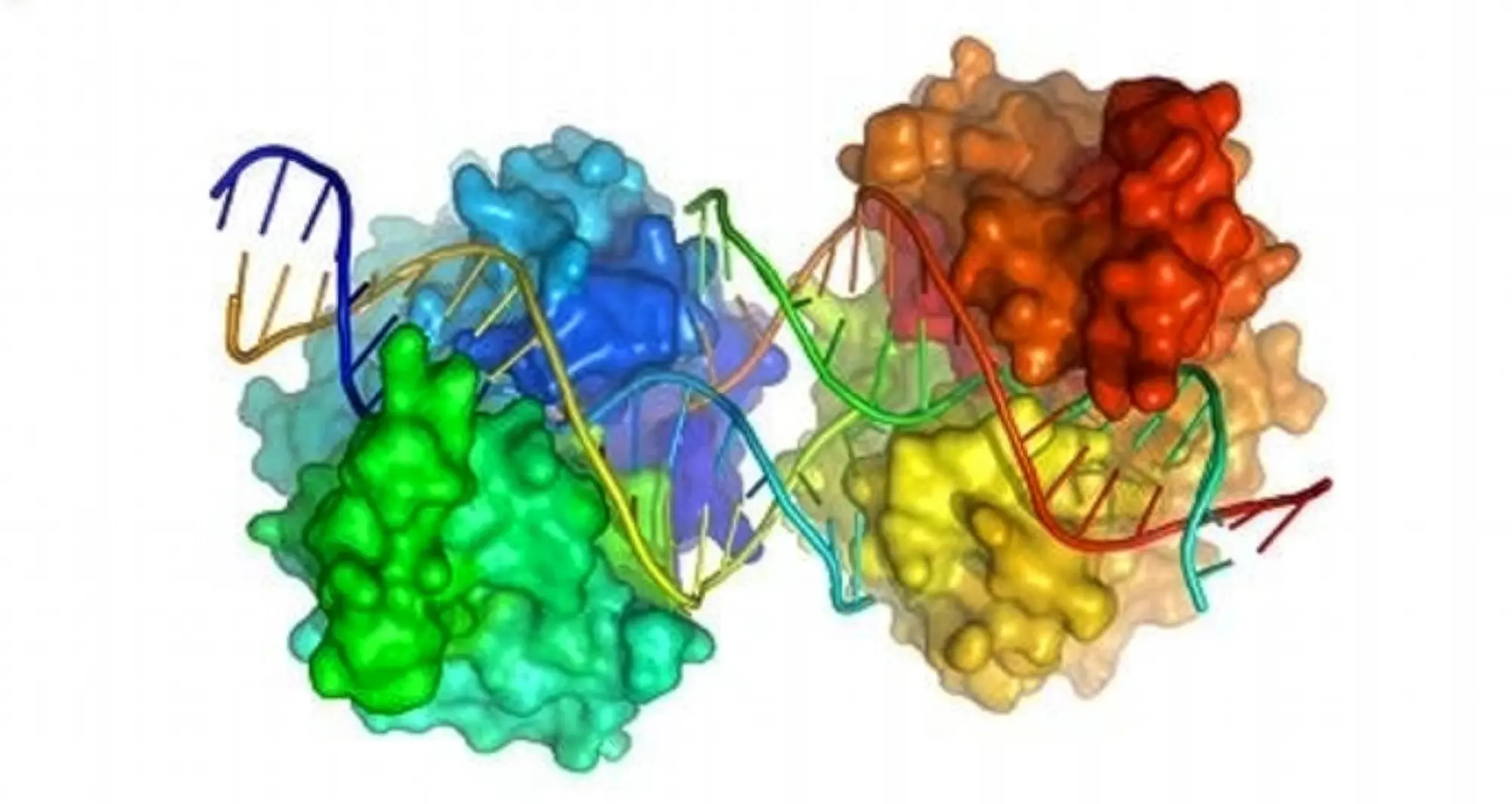
Researchers at Sanford Burnham Prebys Medical Discovery Institute will be part of a new, ambitious project to transform the drug discovery process by developing computational models to predict human toxicity, potentially cutting years off development timelines and reducing costs.
On December 4, 2025, the Advanced Research Projects Agency for Health (ARPA-H), part of the U.S. Department of Health and Human Services, announced a multi-institution, $31.7 million contract to fund a project called Pharmacological Research and Evaluation through Digital Integration and Clinical Trial Simulation, or PREDICTS. The goal is to trim years from drug development, reduce the need for laboratory animal models and catch safety problems with new drugs before they are tested in people.
“It is a transformational goal,” said David A. Brenner, MD, president and CEO of Sanford Burnham Prebys. “Success could potentially fast-track getting drugs to market, reduce the use of animals in toxicology and preclinical studies and help reduce potential liabilities earlier in the drug development process.”
The challenges of getting a drug from discovery through pre-clinical and clinical trials to the clinic are well-known, characterized by the so-called “valley of death” — the harrowing chasm between aspiration and accomplishment.
Currently, it takes 10 to 15 years of continuous effort and $2 billion to get a new drug to market. More than 90 percent of drug candidates fail, a rate that has not changed in decades, even with major advances in research and technologies.
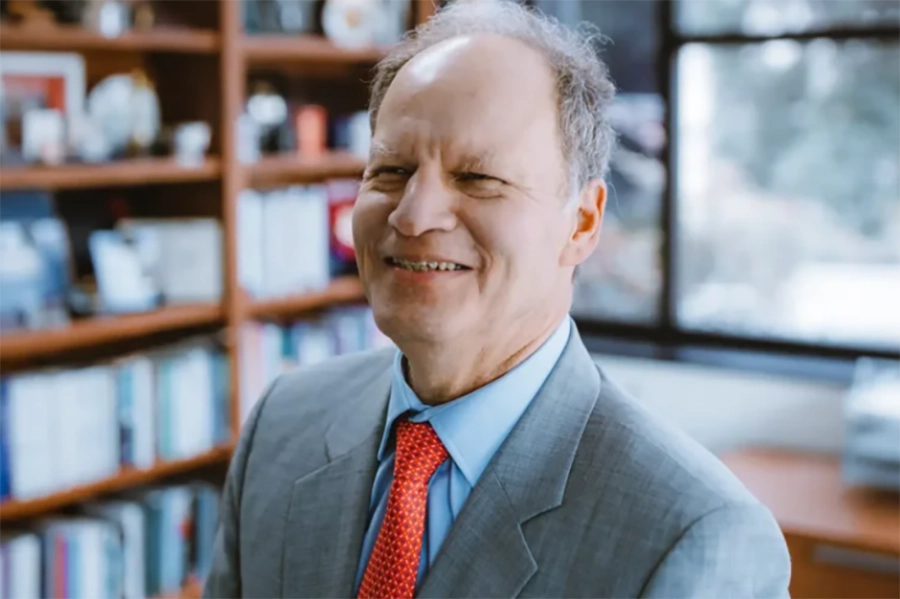
David A. Brenner, MD. Image credit: Sanford Burnham Prebys.
“Drug development has two fundamental parts: a preclinical component that typically uses animal models to demonstrate a new drug is efficacious and safe and a clinical component in which first-in-human studies focus on safety, with subsequent trials in patients to demonstrate efficacy,” said Michael Jackson, PhD, director of the Center for Therapeutics Discovery and senior vice president for drug discovery and development at Sanford Burnham Prebys.

Michal Jackson, PhD. Image credit: Sanford Burnham Prebys.
But animals such as mice, rats, dogs, pigs and non-human primates aren’t perfect models of people, and many promising drugs fall short when they reach the clinical trial phase. What appears safe in an animal may prove to be ineffective or even toxic in a person. Optimizing this process is a big opportunity to both reduce the risk to those participating in trials of new drugs but also for cost savings as human clinical trial are extraordinarily expensive, costing millions to hundreds of millions of dollars.
“Computer models that leverage the abilities of artificial intelligence, machine learning and computational biology have the potential to reduce the time to the clinic and improve the quality of the drugs on the marker. But they’re not there yet.”
Enter the ARPA-H Computational ADME-Tox and Physiology Analysis for Safer Therapeutics or CATALYST program, intends to create human physiology-based computer models to accurately predict safety and efficacy profiles for Investigational New Drug (IND) candidates. The CATALYST program is led by ARPA-H Health Science Futures Mission Office Acting Deputy Director Andy Kilianski, PhD.
Part of that effort is the PREDICTS project, led by the San Francisco-based biotech Deep Origin and funded with $31.7 million from ARPHA-H. It is a consortium of participating research institutes, including Sanford Burnham Prebys, that is charged with building the first “virtual human safety platform” to predict how any small molecule/drug candidate behaves in the body.
“We want to build tools that accurately anticipate where a molecule will travel in the body, how it is eliminated and whether and which organs might be harmed — all without using animal models,” said Steven Olson, PhD, executive director of medicinal chemistry at the Center for Therapeutics Discovery.
Three components will power the PREDICTS platform:
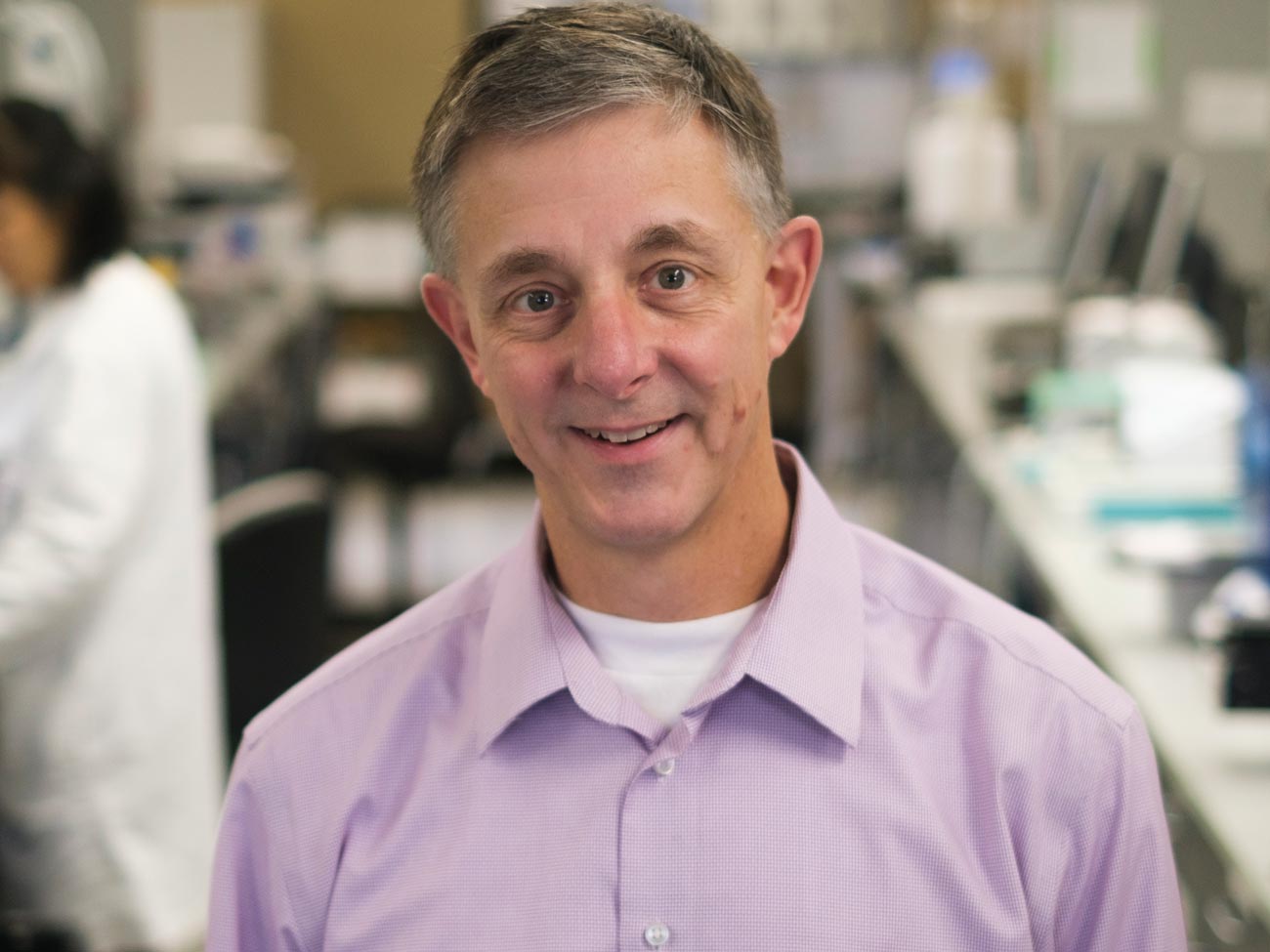
Steven Olson, PhD. Image credit: Sanford Burnham Prebys.
- A cloud repository hosting scores of rich datasets covering drug absorption, distribution, metabolism, excretion and toxicity. These datasets can be combined with other proprietary datasets to provide a broad, deep and relevant foundation of biological information.
- Machine learning models will utilize the highly variable datasets and be trained to identify safety liabilities. After training the algorithm, read-outs of key safety liabilities of newly designed chemicals will then be tested at the bench for accuracy, and these data will be fed back into the model during iterative phase of learn-predict-test.
- The predictions of machine learning models will be combined with other models that evaluate outcomes across scales, from atomic interactions to organ level, from genomic to population-specific. The resulting Virtual Human Avatars of Toxicology (VHATs) will then be tested in in silico clinical trials mimicking how real-world patients of different ages, genders and disease states would respond to treatment. Those findings would inform sponsors and regulators in advance of actual human trials.
About Deep Origin
Based in San Francisco, Deep Origin is a biotechnology company that creates integrated life sciences platforms and software tools to accelerate drug discovery and research and development, merging physics-based computational modeling with artificial intelligence.
About Advanced Research Projects Agency for Health
The Advanced Research Projects Agency for Health (ARPA-H) is an agency within the United States Department of Health and Human Services. Its mission is to “make pivotal investments in break-through technologies and broadly applicable platforms, capabilities, resources, and solutions that have the potential to transform important areas of medicine and health for the benefit of all patients and that cannot readily be accomplished through traditional research or commercial activity.”