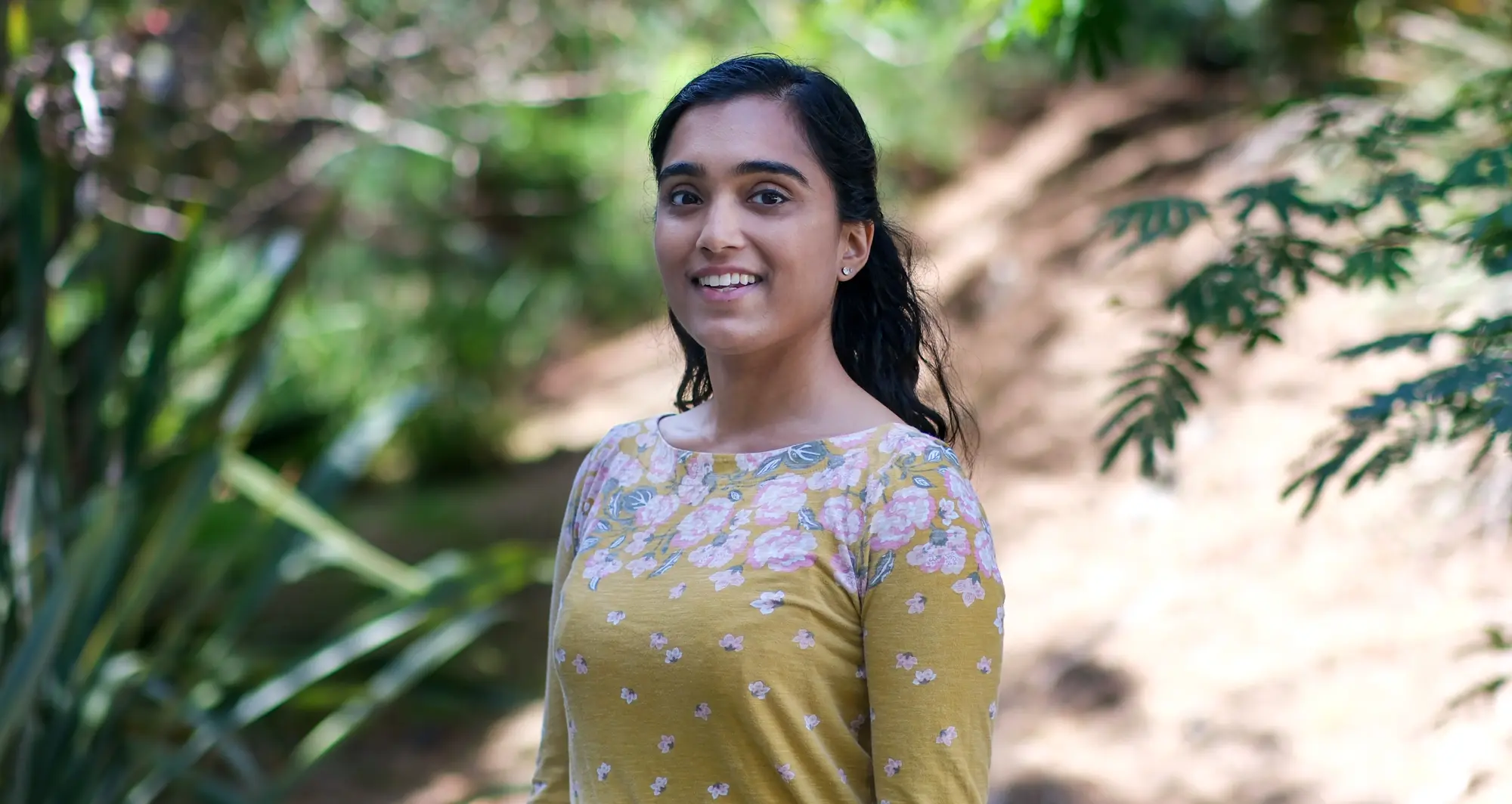
Meet one of our early-career scientists at Sanford Burnham Prebys Medical Discovery Institute: Kokila Shankar, PhD, a postdoctoral researcher in the lab of Douglas Sheffler, PhD. Shankar studies the brain stress signaling system to develop potential treatments for drug addiction.
When and how did you become interested in science?
My dad works in science, so I grew up seeing a little bit of that world. Within science, he works on the industry side which provided me with a perspective on how drug discovery works.
While I always liked science growing up, what really hooked me is when I learned about the field of neuroscience. You have to incorporate a lot of different types of knowledge to really understand neuroscience and neurobiology. And it’s one of the fields where I think that no matter how much we study it, there’s always going to be room to learn more and more.
What are the key areas of research you focus on?
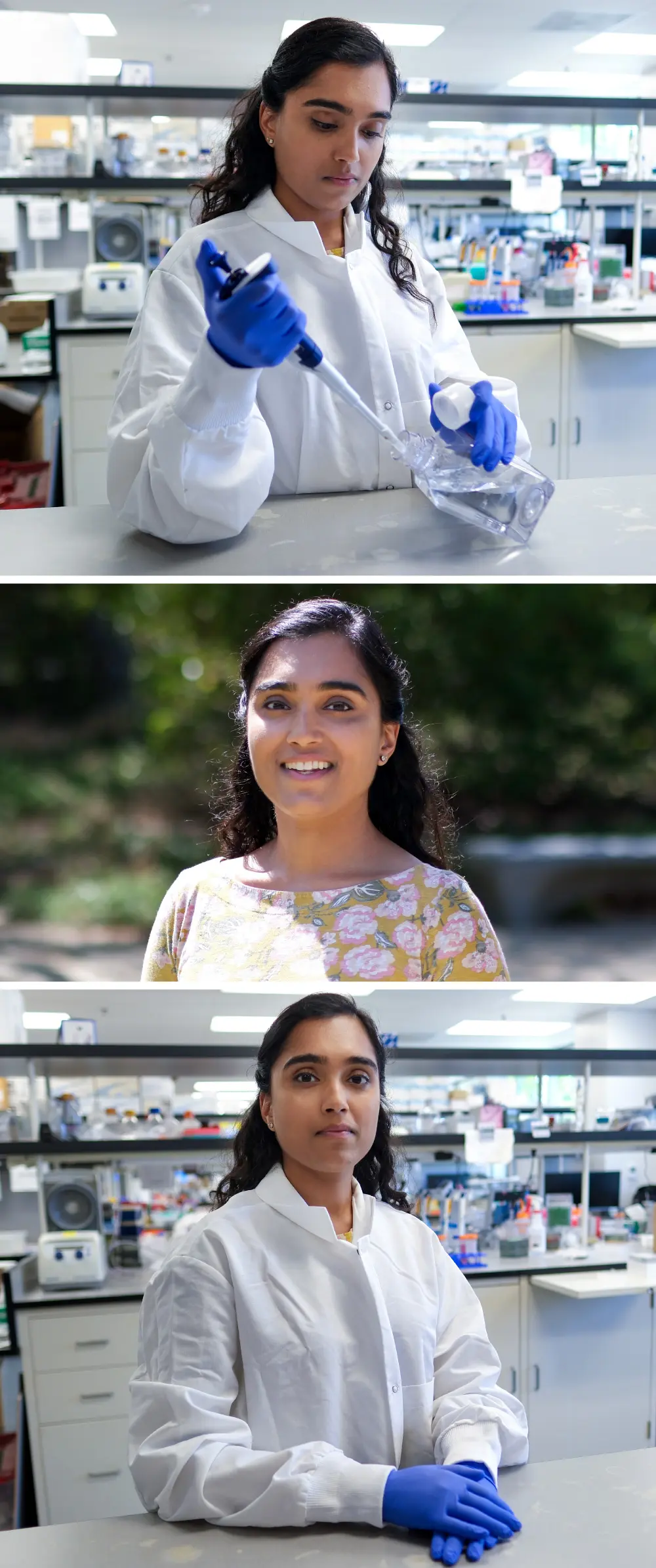
I am really excited about the fact that I get to work in small molecule drug discovery for neurological and psychiatric disease. Currently, my focus is on treating drug addiction.
We use a drug discovery workflow to be able to take biological targets we’ve identified and develop small molecule chemicals that modify these targets. Essentially, we’re working on ways to either increase or decrease the activity of these targets as a strategy to potentially mitigate drug addiction symptoms.
More specifically, my main project is targeting the brain stress signaling system. By developing a small molecule that modulates a stress signaling receptor and some of its associated proteins, our goal is to change stress signaling in the brain. This is important because stress signaling is very involved in addiction. It can play a large role in people becoming addicted to substances and making their addiction worse and harder to quit.
What motivates you about your research?
I think in the field of drug discovery, people tend to portray making new medicines as a linear path. We have a small molecule identified through a screen that we know has some effects on a biological target. Then we just have to make it better, put it in cells, then in animals and finally we get it approved to put into people.
The reality is that there are so many things that can affect every single stage of that workflow. And there’s a lot of troubleshooting and interdisciplinary collaboration involved in keeping things on track. So even when things aren’t going smoothly, I remember that what I signed up to do as a scientist is solve problems. Each time we solve one, we also learn something new and that keeps me very motivated.
What do you like about working here?
Sanford Burnham Prebys feels like a very focused place to do research. Everyone’s goal is to work together to drive research forward. And you really feel that through the resources that are available, whether that’s the core facilities or the number of people that are available to collaborate or share reagents.
On top of that, the community here is very welcoming. Everyone is collaborative and wants to see each other succeed. And that’s rare to find in an academic research environment.
What are your career goals?
My goal is to transition to a role in biotech or the pharmaceutical industry. And it would be even better if I was able to work in neuroscience therapeutics development.
Beyond that, I think a special aspect of being in science, earning a PhD and completing postdoctoral training is that it all prepares you for so many different types of careers. That could mean staying at the bench in R&D or moving into areas such as business, communications and marketing or science policy.
I feel like I’m very fortunate that there’s a lot of opportunities, and I don’t want to close the door on any of them.
What do you enjoy doing when you’re not in the lab?
I am an active volunteer with the Fleet Science Center, so I love doing their K-12 and their adult outreach programs to get more people excited about science.
Also, I used to be a competitive ballroom dancer. Right now, I’m enjoying the opportunity to work with students at the University of California San Diego to help them improve. And hopefully one day I’ll step back into competition.
Postdocs at Sanford Burnham Prebys are pushing the boundaries of science every day through curiosity, collaboration, and innovation. This series highlights their unique journeys, what inspires their work, and the impact they’re making across our labs.