
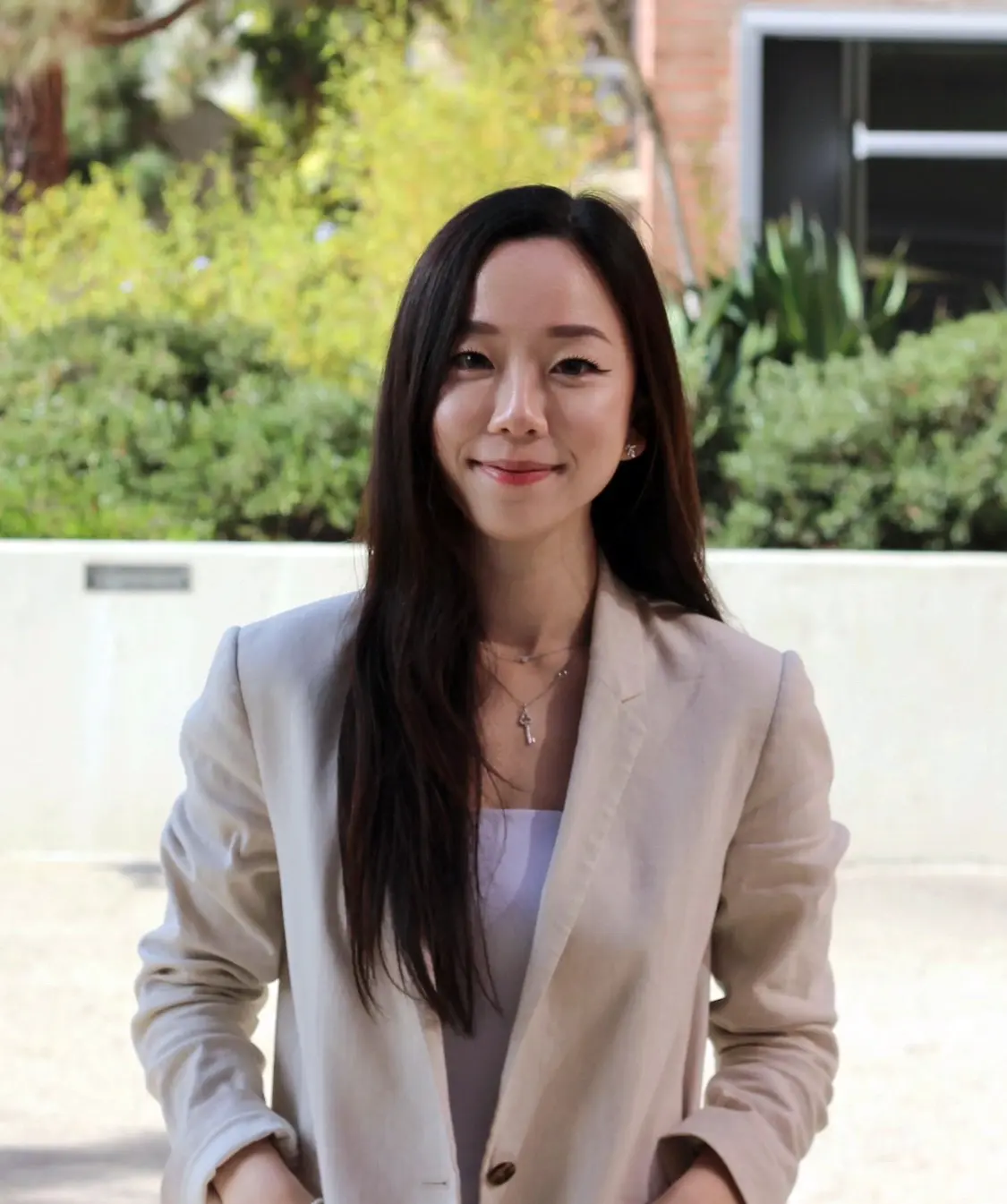
Dr. Sandy Lee discovered her passion for cancer research at age 14 at the University of Manitoba, where she investigated the role of Claudin 1 in breast cancer. She earned her PhD in Medical Science at the University of Toronto, where she studied oxygen-dependent enzymes in solid tumors and was recognized as a Vanier Scholar. She subsequently trained at University of California, Los Angeles (UCLA) as a Jonsson Comprehensive Cancer Center Postdoctoral Fellow. At UCLA, she investigated the role of bioenergetics and mitochondrial RNA metabolism in lung cancer. Dr. Lee brings in expertise in tumor hypoxia and multiple imaging modalities, including PET/CT and 3D serial block-face electron microscopy (SBEM) to better understand the tumor microenvironment.
Education and Training
2023-2026: Postdoctoral Fellow, University of California, Los Angeles, David Geffen School of Medicine, Los Angeles, CA, USA with Dr. David Shackelford
2017-2023: PhD, University of Toronto, Institute of Medical Science, Toronto, ON, Canada with Dr. Marianne Koritzinsky
2013-2017: Honors Bachelor of Science, University of Toronto, Toronto, ON, Canada
Research Report
The Lee lab is determined to resolve how KRAS mutant tumors adapt to their microenvironments with a focus on oxygen availability and reactive oxygen species (ROS). We aim to understand how changes in oxygen levels and redox state overtime shape tumor metabolism, behavior, and treatment sensitivity. The three major research pillars of the lab are the following:
- Defining the temporal dynamics of hypoxia responses in KRAS mutant tumors.
- We aim to distinguish early responses to hypoxia from adaptations to prolonged or intermittent hypoxia. By integrating time-resolved measurements of gene expression, mitochondrial metabolism and reactive oxygen species, we will define how these responses shape tumor phenotypes and treatment sensitivity. Here, we aim to identify critical windows which hypoxia-associated vulnerabilities can be therapeutically targeted.
- In vivo imaging of reactive oxygen species in KRAS mutant tumors
- We aim to visualize and quantify reactive oxygen species (ROS) in KRAS mutant tumors using complementary chemiluminescent and PET imaging approaches. We will examine how tumor ROS levels vary across space and type and relate these patterns to hypoxia, mitochondrial metabolism and tumor histology. Here, we aim to identify redox states that predict therapeutic sensitivity and reveal opportunities for ROS-directed therapies.
- Identifying novel metabolic vulnerabilities and therapeutic targets in KRAS mutant tumors.
- We will integrate findings from time-resolved hypoxia studies and in vivo ROS imaging studies to identify metabolic dependencies in KRAS mutant tumors. We will investigate how distinct oxygen and redox states influence reliance on pathways that support mitochondrial function and antioxidant defenses. Through genetic and pharmacological approaches, we aim to validate new molecular targets and determine when targeting these dependencies is the most effective.