diabetes Archives - Page 2 of 3 - Sanford Burnham Prebys
Institute News

The science of crowdfunding

Authorkcusato
Date

March 3, 2016

He doesn’t need money to produce an album. He’s not raising funds to start a new business in his hometown. And he’s not asking for cash because he’s a famous rapper who suddenly finds himself “bankrupt.” He is a young scientist who needs money to conduct research aimed to save lives, so he is turning to crowdfunding.

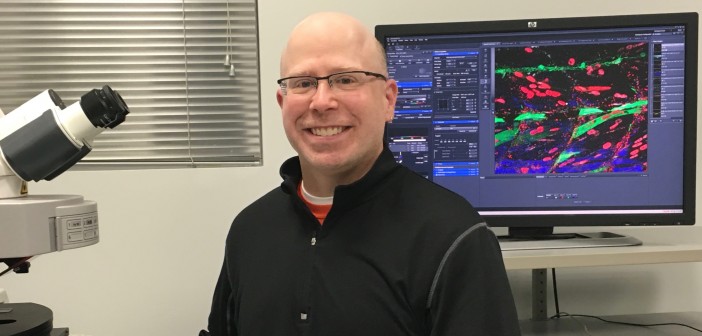
Joseph Lancman, PhD, is a scientist in the organogenesis lab of Duc Dong, PhD, at Sanford Burnham Prebys Medical Discovery Institute (SBP) in La Jolla. Lancman’s crowdfunding site just went live on Diabetes Research Connection (DRC), a San Diego-based company that created a platform to connect donors directly with early-career scientists. In the next 90 days, Lancman hopes to generate $50,000 for his research project that may provide the scientific breakthrough needed to find a cure for type 1 diabetes. Watch his video here.

“We recently discovered a way to reprogram cells and change their identity without removing them from the body,” Lancman said. “We believe this breakthrough will have great implications for people with degenerative diseases, like diabetes.”

As many as three million Americans have type 1 diabetes.  Millions of children and adults struggle with this disease, yet funding has decreased dramatically for research. In fact, the head of the National Institutes of Health (NIH)  said last year that young scientists in this country now face the worst funding in 50 years.

So, if you are a young scientist with a great idea, where do you go? Alberto Hayek, MD, co-founder and president of the DRC and world-renowned diabetes expert, says some go away. “Due to the limited funding available, scientists just starting out in their career are forced to leave the field of diabetes and go to fields that have more funding. We are giving scientists the funding needed to test and validate research that departs from conventional thinking,” Hayek said.

Dong says his lab heard about DRC from others in the field. “The DRC is committed to funding innovative projects that may not be considered mainstream approaches. The crowdfunding model itself is highly innovative, by making sure that 100% of donations will go directly into specific labs and projects chosen by the individual donors,” Dong said.

And it works. Since DRC launched its platform in 2014, six research projects from all over the country have been 100% funded. Every dollar of the money raised goes directly to the scientist. The power to fund projects has been given to the people.

Lancman has a total of 90 days to make it happen. He needs 5,000 people to donate $10 each in order to reach his goal. He’s excited to be able to continue to work towards a cure for diabetes, and allow people to live full lives without painful daily insulin injections.

Come on, social media.
Institute News

New links between heart hormones, obesity, and diabetes

AuthorGuest Blogger
Date

February 17, 2016

New research from SBP’s Sheila Collins, PhD, and Richard Pratley, MD, has revealed an important relationship between proteins secreted by the heart and obesity, glucose intolerance, and insulin resistance. The findings, published in Obesity, offer a new approach to treating metabolic disorders, including type 2 diabetes, by targeting the pathway that controls the proteins’ concentration in the blood. Continue reading “New links between heart hormones, obesity, and diabetes”

Institute News

SBP’s Sheila Collins’ diabetes research featured in Orlando Sentinel

Authorsgammon
Date

December 21, 2015

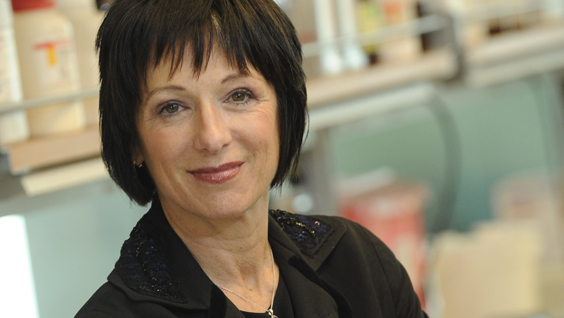
“Obesity has reached epidemic proportions in the United States. Over 60 percent of the population can be classified as overweight or obese, placing them at risk for a large number of chronic diseases, including insulin resistance, cardiovascular disease, and type 2 diabetes,” says Sheila Collins, PhD, professor at SBP’s Lake Nona campus.

“There is a critical need for novel approaches to treating obesity—in particular, agents acting to increase energy expenditure would be valuable.”

Read the article in the Orlando Sentinel by Naseem S. Miller about how Collins is studying hormones produced by the heart to prevent obesity and possibly the myriad of disorders that come with it.

Institute News

Can your heart prevent diabetes?

AuthorGuest Blogger
Date

November 19, 2015

This article was written by guest blogger Crystal Woodard, PhD

Can your heart prevent diabetes? Being overweight or obese is currently deemed the single best predictor of type 2 diabetes. With the prevalence of obesity on the rise, estimates suggest that one in three American adults could have type 2 diabetes by 2050. Weight loss is key to preventing this epidemic. At SBP, scientists are investigating how hormones released by the heart may help the body burn more calories to prevent obesity and type 2 diabetes.

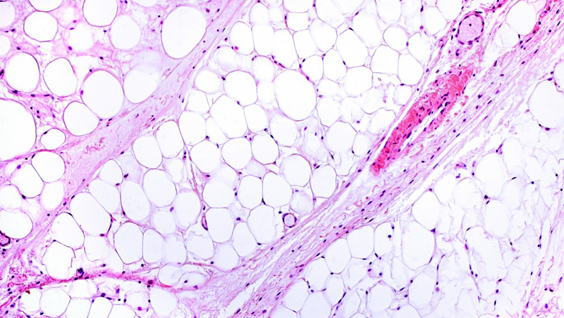
What color is your fat? All fat is not created equal. Excess weight is held in energy-storing fat cells called white adipose tissue as well as energy-burning fat cells called brown adipose tissue. Increasing a person’s brown fat could improve the risks associated with obesity.

Two compounds released by the heart in response to high blood pressure—human atrial natriuretic peptide (ANP) and B-type natriuretic peptide (BNP)—have been found to play a direct role in “browning” white adipose tissue. By browning, white fat starts to burn more calories, mimicking what occurs in brown fat. Sheila Collins, PhD, professor in the Integrative Metabolism Program and her research team, are investigating how these natriuretic peptides activate fat browning with the goal of tapping into the process to help promote weight loss and prevent diabetes.

In collaboration with Dr. Richard Pratley at the Florida Hospital – SBP Translational Research Institute for Metabolism and Diabetes, the teams are conducting clinical trials with obese and lean volunteers to test whether BNP can increase energy expenditure and improve glucose tolerance. Since recombinant human BNP is an FDA-approved drug prescribed for acute heart failure patients, the costs, and development and approval times for using BNP for these conditions may be reduced.

How does BNP work? Investigators in Italy almost 20 years ago discovered that binding sites for BNP, called natriuretic peptide receptors (NPRs), were expressed in human adipose tissue. The natriuretic peptide ‘signaling’ receptor, NPRA, binds the natriuretic peptides, while the natriuretic peptide ‘clearance’ receptor, NPRC, removes them from circulation. Since then, several studies have reported that BNP levels are lower in the blood of obese patients compared to their lean counterparts. Additional research suggests BNP can lead to increased release of adiponectin, an insulin-sensitizing hormone produced by fat cells and that low levels of BNP in the bloodstream might contribute to insulin resistance.

According to Collins, “Early studies proposed that increased clearance is responsible for the lower peptide levels observed in obese individuals in comparison to lean individuals; however, there are no definitive studies to actually prove this or not. Important efforts are currently underway to understand how NPRs are regulated and how the peptides can be best used for their fat-burning capacity.”

Dr. Sheila Collins is a professor at Sanford Burnham Prebys Medical Discovery Institute (SBP) in Lake Nona, Fla. and a recipient of an American Diabetes Association research award. Dr. Richard Pratley is a senior investigator at the Florida Hospital – SBP Translational Research Institute, Medical Director of the Florida Hospital Diabetes Institute, and adjunct professor at SBP in Lake Nona. This post was written by Crystal Woodard, PhD, a post-doctoral fellow in Dr. Collins’s lab.

Institute News

Antioxidant-rich diet could help stave off type 2 diabetes

AuthorGuest Blogger
Date

November 12, 2015

Type 2 diabetes affects about 8% of all adults and is a leading cause of death worldwide. Despite its prevalence, relatively little is known about underlying molecular causes of the disease. SBP researchers now show that defects in a major cell stress pathway play a key role in the failure of pancreatic beta cells, leading to signs of diabetes in mice. The findings, published recently in PLOS Biology, also suggest that a diet rich in antioxidants could help to prevent or treat type 2 diabetes.

“The findings open new therapeutic options to preserve beta cell function and treat diabetes,” said senior study author Randal Kaufman, PhD, director of the Degenerative Diseases Program at SBP. “Because the same cell stress response is implicated in a broad range of diseases, our findings suggest that antioxidant treatment may be a promising therapeutic approach not only for metabolic disease, but also neurodegenerative diseases, inflammatory diseases, and cancer.”

Excess cell stress

Type 2 diabetes is caused by the failure of pancreatic beta cells to produce enough insulin—a hormone that helps to move a blood sugar called glucose into cells to be stored for energy. A major cause of type 2 diabetes is obesity, which can lead to abnormalities in insulin signaling and high blood glucose levels. Beta cells try to compensate by producing up to 10 times the usual amount of insulin, but this puts extra stress on a cell structure called the endoplasmic reticulum to properly fold, process, and secrete the hormone.

An increase in protein synthesis in beta cells also causes oxidative stress—a process that can lead to cell damage and death through the build-up of toxic molecules called reactive oxygen species. If the stress is too great, the beta cells will eventually fail. Approximately one-third of individuals with abnormal insulin signaling eventually develop beta cell failure and diabetes.

In the new study, Kaufman and his collaborators discovered that beta cell failure is caused by deficiency in a protein called IRE1α, which would otherwise help to protect cells against the stress of increased insulin production. Mice that lacked IRE1α in pancreatic beta cells did not produce enough insulin and developed high blood glucose levels, similar to patients with type 2 diabetes. IRE1α deficiency also caused inflammation and oxidative stress, which was the primary cause of beta cell failure. But treatment with antioxidants, which prevented the production of reactive oxygen species, significantly reduced metabolic abnormalities, inflammation and oxidative stress in these mice.

Taken together, the findings suggest that IRE1α evolved to expand the capacity of beta cells to produce insulin in response to increases in blood glucose levels. The study also implicates this major cell stress pathway in the development of type 2 diabetes and suggests that a diet rich in antioxidants could help to prevent or reduce the severity of the disease.

“Currently, we are testing the effects of antioxidants on glucose levels and beta cell function in mice,” Kaufman said. “If these studies prove successful, they could pave the way for clinical trials in humans and eventually lead to a new therapeutic approach for dealing with a major pandemic of the 21st century.”

This post was written by guest blogger Janelle Weaver, PhD

Institute News

Is there a type 3 diabetes?

AuthorGuest Blogger
Date

November 10, 2015

This article was written by guest blogger Jessica Frisch-Daiello, PhD

People with type 2 diabetes are twice as likely to develop Alzheimer’s disease—a type of dementia affecting behavior, memory, and cognitive functions. According to the Centers for Disease Control and Prevention, in 2013 Alzheimer’s ranked sixth and diabetes was seventh as the leading causes of death in the United States. Recent studies are suggesting a link between insulin resistance in the brain and Alzheimer’s disease, prompting some researchers to consider a new classification for the disease: type 3 diabetes.

People with diabetes can’t effectively break down blood sugar. Either their bodies don’t produce enough insulin (type 1 diabetes) or their bodies become desensitized to insulin (type 2 diabetes).

The exact mechanisms between insulin resistance and Alzheimer’s disease are not well understood and research is on-going. However, studies suggest that insulin resistance in the brain leads to the formation of two pathological hallmarks of Alzheimer’s disease—the formation of tau tangles and the build-up of clusters of beta amyloid peptides called plaques in the brain. The degree of insulin resistance is correlated with the amount of plaques deposited between nerve cells. Plaques create a blockade that inhibits cell-to-cell signaling in the brain. Additionally, insulin dysfunction has also been shown to affect the formation of tau tangles by mediating the activity of an important enzyme in the body, GSK-3β (glycogen synthase kinase 3).

Juan Pablo Palavicini, PhD, an SBP postdoctoral fellow in the lab of Xianlin Han, PhD, is studying the role of a particular class of molecules found in the body that might give more clues to the mechanisms connecting these two seemingly disparate diseases. According to Palavicini, “We have found that a specific lipid class called sulfatide is severely deficient in the brains of both Alzheimer’s disease patients and type 2 diabetics. Moreover, our research shows that when sulfatide is removed, there is a dramatic change in insulin levels, beta amyloid peptides, and tau tangles. We are currently exploring therapeutic techniques to restore sulfatide content as a treatment for both diseases.”

Sulfatide serves many functions in the body, including aiding neural plasticity and memory. It also plays a role in insulin secretion. A change in the expression of sulfatide has been associated with a number of conditions, including Alzheimer’s disease, Parkinson’s disease, and diabetes.

Given the association between Alzheimer’s disease and diabetes, it is important for people to incorporate healthy habits in everyday life. Both the American Diabetes Association and the Alzheimer’s Association say that daily exercise, social interaction, and a diet emphasizing fruits, vegetables, and whole grains may reduce the risk of developing, or slowing the progression of, these diseases.

Dr. Palavicini and Dr. Han are pursuing this research as part of a mentor-based postdoctoral fellowship awarded by the American Diabetes Association. This article was written by Dr. Jessica Frisch-Daiello, a postdoctoral associate in Dr. Han’s laboratory at SBP.

Institute News

The Diabetes Story: Will new treatments lead to novel weight loss drugs?

AuthorGuest Blogger
Date

November 3, 2015

Written by Jing Ping Lu, PhD

November is American Diabetes Month. Throughout the month, we will be highlighting our research contributions to this increasingly prevalent disease.

The growing epidemic of diabetes presents significant challenges for health care. It ranks 7th among the leading causes of death, and about one tenth of all health care dollars are spent on diabetes and its complications. According to the American Diabetes Association, 29.1 million Americans have been diagnosed with this metabolic disorder, and 1.4 million new cases were reported in 2013. With these statistics, the burden diabetes has on the health care system will continue to rise.

Opportunities to research the disease have also increased with the growing diabetic population. One particular area of emphasis is in understanding how glucose—a type of sugar—is broken down, or metabolized, in diabetic patients. Glucose is the major energy source our body uses to carry out activities. Glucose levels in the blood are kept constant by a hormone called insulin. After eating, the glucose level in the blood rises and signals insulin release. Insulin is like a key that opens up the locks on our cells so that glucose can enter. Glucose can then be stored in the form of glycogen and used later for energy. If our body does not make enough insulin, or insulin is not well recognized by the cell, then glucose levels will build up in the blood stream causing diabetes and other long-term complications.

Treating Diabetes Diabetic treatments are primarily developed to lower the amount of blood glucose by restoring the secretion of insulin or enhancing how well insulin works to promote the entry of glucose into cells. Another hormone called glucagon-like-peptide-1(GLP-1) has been shown to increase glucose-dependent stimulation of insulin release, and GLP-1 based drugs are used to treat diabetes. Julio Ayala, PhD, and his research team are working on projects that utilize GLP-1 based drugs to stimulate insulin secretion. These drugs come in two categories, GLP-1 analogs that mimic the action of GLP-1 and dipeptidyl peptidase 4 (DPP-4) inhibitors that prevent the breakdown of GLP-1 made in the body. Although both drugs can effectively lower glucose levels, one promotes weight loss while the other does not.

A new avenue for weight loss? Preliminary research performed in Ayala’s lab confirmed that the two drugs have different effects on food intake. “Interestingly, when targeted to specific regions in the brain, GLP-1 analogs reduce food intake to a greater degree than does native (natural) GLP-1. This may partly explain why GLP-1 analogs promote weight loss while DPP-4 inhibitors that increase native GLP-1 levels do not,” Ayala explained. “This leads us to speculate that even though both drugs bind to the same receptor in the feeding centers of the brain, they activate different molecular mechanisms in cells of the brain and this eventually results in different effects on food intake, and therefore, weight loss.”

As Ayala’s team continues to explore the mechanism of action, they hope to identify the critical steps that lead to the reduction in food intake. “Obesity is a leading risk factor for developing Type 2 diabetes. If we can discover the steps that GLP-1 analogs engage to promote weight loss, then drugs can be designed to specifically target these steps. This would provide a new avenue for designing drugs to treat obesity,” Ayala added, “and that could deliver a greater benefit to diabetes patients and contribute to decreasing the rise in Type 2 diabetes. We are excited to see the possibilities.”

Dr. Julio Ayala is an assistant professor at Sanford Burnham Prebys Medical Discovery Research Institute in Lake Nona, Fla and a recipient of an American Diabetes Association research award.

This post was written by Jing Ping Lu, PhD, a post-doctoral associate in Dr. Rastinejad’s lab in Lake Nona.

Institute News

Potential drug targets could improve treatment of vascular disease in diabetic patients

Authorsgammon
Date

July 15, 2015

The newly discovered role of a vascular protein in diabetes-induced hardening of the arteries could lead to better treatments that reduce the risk of heart attack, stroke, and death, according to research spearheaded by SBP investigators. The study, published recently in Circulation Research, reveals that a receptor called LRP6 inhibits molecular signals that drive diet-induced hardening of the arteries, also known as arteriosclerosis. Continue reading “Potential drug targets could improve treatment of vascular disease in diabetic patients”

Institute News

Protecting pancreatic cells from stress could hold promise for treating diabetes

Authorsgammon
Date

April 21, 2015

Type 2 diabetes is a chronic disease that affects about eight percent of adults worldwide, significantly increasing the risk of heart disease and stroke. This disease interferes with the body’s ability to make or use a hormone called insulin, which is produced by beta cells in the pancreas. These cells eventually fail in many patients with type 2 diabetes, making insulin replacement therapy a necessity for survival. However, this treatment is imprecise, onerous and often promotes weight gain, highlighting the strong need for better treatment options. Continue reading “Protecting pancreatic cells from stress could hold promise for treating diabetes”

Institute News

Science on Screen: Join us in Orlando on January 24

Authorpbartosch
Date

January 9, 2015

We’re excited to announce that Sanford-Burnham’s Sheila Collins, PhD, professor in the Metabolic Disease Program, will be participating in the Enzian Theater’s “Science on Screen” event on January 24 in Orlando (Maitland), Fla. Dr. Collins will discuss her work studying metabolic disease and how far we’ve come in finding treatments for diabetes and its complications. After her 15-minute talk, the audience will watch the movie “Steel Magnolias,” featuring Julia Roberts, Sally Field, and Dolly Parton. After the movie, attendees will have the opportunity to ask questions, either related to diabetes in the movie or the topic of metabolic disease as a whole. Continue reading “Science on Screen: Join us in Orlando on January 24”