drug development Archives - Page 3 of 3 - Sanford Burnham Prebys
Institute News

Scientists identify promising new melanoma drug

Authorsgammon
Date

November 25, 2015

A new drug discovered by scientists at Sanford Burnham Prebys Medical Discovery Institute (SBP) may show promise for treating skin cancers that are resistant or unresponsive to today’s leading therapies.

In the United States, 5 million people are treated annually for skin cancer, and 9,000 people die from the deadliest form—melanoma—according to the US Department of Health and Human Services.

The new compound, named SBI-756, targets a specific molecular machine known as the translation initiation complex. These structures are in every cell and play the critical role of translating mRNA into proteins. In cancer cells the complex is impaired, producing extra protein and providing a growth advantage to tumors. SBI-756 causes the translation complex to dissociate, and was shown to inhibit melanoma cell growth in the study, published today in Cancer Research.

“The unique target of SBI-756 makes it especially promising for use in combination therapy,” said Ze’ev Ronai, senior author and scientific director of SBP’s La Jolla campus. “A major issue limiting the effectiveness of current melanoma therapies is that tumors become resistant to treatment. Combining drugs that come at a melanoma from different angles may help overcome the problem of drug resistance.”

About 50% of melanomas are caused by mutations in a specific gene called BRAF. Patients with these tumors are commonly prescribed vemurafenib, a BRAF inhibitor that shrinks tumors. However, many patients experience a relapse within weeks, months, or even years because tumors evolve and become resistant to the drug. A similar phenomenon is seen in mice, where treatment of BRAF melanomas results in an initial response, but 3-4 weeks later the tumors return.

The team found that if SBI-756 is co-administered with vemurafenib, the tumors disappeared and most importantly, they did not reoccur. Even in mice with advanced/late stage BRAF driven cancer, the reappearance of . These data suggests that SBI-756 provides a significant advantage in overcoming tumor resistance.

“The ability of this compound to delay or eliminate the formation of resistant melanomas is very exciting,” said Ronai.

In other forms of melanoma, caused by mutations in the genes NRAS and NF1—which are known as unresponsive to BRAF drugs—administering SBI-756 alone significantly the scientists found. The team is now testing whether combining SBI-756 with existing drugs used for treating these types of melanomas can make the tumors disappear.

Drugs that target the translation initiation complex have been intensely pursued in the past few years, not just for melanoma, but for a wide array of cancers. SBI-756 is considered a first-in-class drug because it is the first successful attempt to target a specific part of the complex called eIF4G1.

In fact, SBI-756 is the culmination of seven years of work in Ronai’s group—testing and tweaking the drug’s features to help it bind to the target more readily and to make it easier to formulate. The resulting compound is a significant improvement over the initial version.

“It appears that the dose we need to administer is very low. Even in the experiments where the drug was administered to mice with tumors over a significant period of time, we have not found any toxicity,” Ronai said.

“The finding of SBI-756 is also exciting for the possible treatment of diseases other than cancer, such as neurodegenerative diseases, where the activity of the translation initiation complex is reported to be higher,” said professor Nahum Sonenberg of McGill University, a world renowned leader in the field of protein translation.

“We hope that we’re going to come up with the next generation of the compound that can go into clinical trials—first in melanoma but likely in other tumors,” Ronai said.

The study was performed in collaboration with the Conrad Prebys Center for Chemical Genomics at SBP, Lady Davis Institute for Medical Research, Sir Mortimer B. Davis-Jewish General Hospital, McGill University (Canada), the National Cancer Institute, MD Anderson Cancer Center, and Yale University.
Institute News

Researchers reawaken sleeping HIV in patient cells to eliminate the virus

Authorsgammon
Date

September 9, 2015

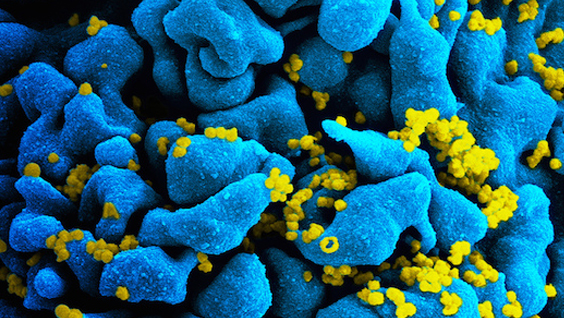
Researchers at Sanford Burnham Prebys Medical Discovery Institute (SBP) have identified a new class of drugs that may be used to purge pockets of dormant HIV from a patient’s body, eliminating the virus once and for all. Fortuitously, these agents are already being explored in clinical trials for treating cancer, which could speed up the route to approval for treating HIV.

Antiretroviral therapies have made it possible for people to live with AIDS for decades. However, small reservoirs of a patient’s cells hide the virus. That is, HIV’s genes live in the cells, but its genetic code is never read to make protein, and so the virus goes undetected by the immune system.

“If you take people off the antiretroviral therapies, some of these dormant cells reawaken to make more virus,” said lead author Lars Pache, PhD, a postdoctoral fellow in the lab of Sumit Chanda, PhD, director of the Immunity and Pathogenesis Program at SBP. “The key for a cure for HIV is to purge these cells that have dormant HIV.”

Reactivating latent HIV-infected cells so that they can be killed off once and for all is called ‘shock and kill.’ The approach has remained elusive so far, because drugs that reawaken the virus could also trigger massive immune system activation, which itself could be deadly, Chanda said.

The new study, published September 9 in the journal Cell Host & Microbe, “uses a class of drug called Smac mimetics to tap into a cell pathway that can be used to wake up the virus but, based on clinical studies and our data, doesn’t appear to activate the immune system,” Chanda added.

The study started with a broad search of genes within the host cells that help keep the virus silent. Chanda’s group identified 651 genes. They then created batches of cells in which each one of those genes was silenced, and they measured how much HIV the cells produced after they were exposed to the virus.

The scientists whittled the list of candidate genes down to 139, to 24, and then 12 using increasingly stringent criteria. The absence of one gene in particular, BIRC2, boosted the activity of HIV. Even better, Smac mimetics—already proven safe in early-stage clinical trials for cancer—works by inhibiting BIRC2 and related molecules.

“These experiments led us to develop a strategy of using Smac mimetics to reawaken dormant HIV so that we could then kill it with anti-viral therapy,” said Chanda.

Chanda’s colleague at SBP, Nicholas Cosford, PhD, professor in the Cell Death and Survival Networks Program, had recently described a potent BIRC2 inhibitor, SBI-0637142. “This drug is about 10-100 times more potent than the small molecules currently in clinic development, making it a promising candidate to tackle HIV latency,” says Chanda.

Part of the reason that HIV’s genes stay hidden in its host is that they cover themselves with tightly wound DNA. A class of drugs called histone deacetylase inhibitors, which unfurls the DNA, is used to treat a variety of conditions. Although most of these inhibitors haven’t worked well on their own to reactivate latent HIV, they might work well with Smac mimetics including SBI-0637142, Chanda’s group reasoned.

The key question was whether they could reactivate the virus in cells from HIV-infected patients undergoing antiretroviral therapy. They combined SBI-0637142 with a histone deacetylase inhibitor (panobinostat) and saw signs that the virus had reawakened without triggering immune cell death.

“We anticipated that we would see a synergy because the drugs work along parallel pathways. What we didn’t expect was the level of activation—the potency and efficacy with which we were able to reverse latency in patient samples,” Chanda said.

They saw similar results in patient cells treated with a combination of LCL161—a Smac mimetic that is already in phase 1 and 2 trials for treating cancer—and panobinostat. “This is a one-two punch for HIV,” said Chanda, adding that ultimately, a cocktail of drugs will be necessary to cure HIV.

The scientists hope to partner with a pharmaceutical company to develop these molecules for testing in animal models of HIV and then move them into the clinic if they meet the safety and efficacy criteria.

In addition to SBP, the study consortium included the University of Utah School of Medicine, The Salk Institute for Biological Studies, the Perelman School of Medicine at the University of Pennsylvania, the Icahn School of Medicine at Mount Sinai, the Paul-Ehrlich-Insitut, and the German Center for Infection Research.

This post was written by Kelly Chi, a freelance science writer. 

Institute News

New compound shows promise for safe, effective treatment of heart attack and stroke

AuthorGuest Blogger
Date

February 17, 2015

Heart attack and ischemic stroke affect hundreds of thousands of Americans every year and are leading causes of death in the United States. Both of these conditions are caused by blood clots that block vessels and interrupt blood flow to the heart or the brain, respectively. Antiplatelet therapies such as aspirin prevent clotting by decreasing the activity of blood cells called platelets, thereby lowering the risk of dying from a heart attack or having a stroke. But these drugs can cause serious side effects, such as gastrointestinal toxicity, abnormally low blood cell counts, and bleeding. Therefore, there is a strong need for research aimed at better understanding the molecular mechanisms leading to platelet activation in order to develop improved therapies.

Continue reading “New compound shows promise for safe, effective treatment of heart attack and stroke”