events Archives - Page 9 of 10 - Sanford Burnham Prebys
Institute News

Cancer immunology symposium highlights hot area in cancer research

AuthorSusan Gammon
Date

March 19, 2018

The Cancer Immunology and Tumor Microenvironment Symposium held at Sanford Burnham Prebys Medical Discovery Institute (SPB) on March 8, 2018 attracted a full house of international attendees.

Its success likely stems from the impressive roster of speakers invited by Carl Ware, PhD, director of the Infectious and Inflammatory Diseases Center and Linda Bradley, PhD, also a professor in that program. The presenters included many thought leaders in the field from such prestigious institutions as University of Pittsburgh, University of Ontario Fred Hutchinson Cancer Research Center, the Mayo Clinic, Moores Cancer Center at UC San Diego and University of Washington School of Medicine.

Today, immunotherapy is one of the most exciting areas of new discoveries and treatments for many types of cancer. Although huge strides have been made—some patients experience complete remission—more breakthroughs are needed. Some patients do not respond at all, some relapse and others experience undesirable, often life-threatening side effects. And some cancers, such a pancreatic, brain, breast and prostate, have shown very limited benefit.

“This symposium brings experts in the fields of cancer and immunology together to promote scientific exchange and collaboration,” says Ware. “It’s meetings like this that will help us accelerate the understanding and development of new immune system-based therapies for cancer patients.”

Institute News

SBP brings science to San Diego community at STEM

AuthorSusan Gammon
Date

March 8, 2018

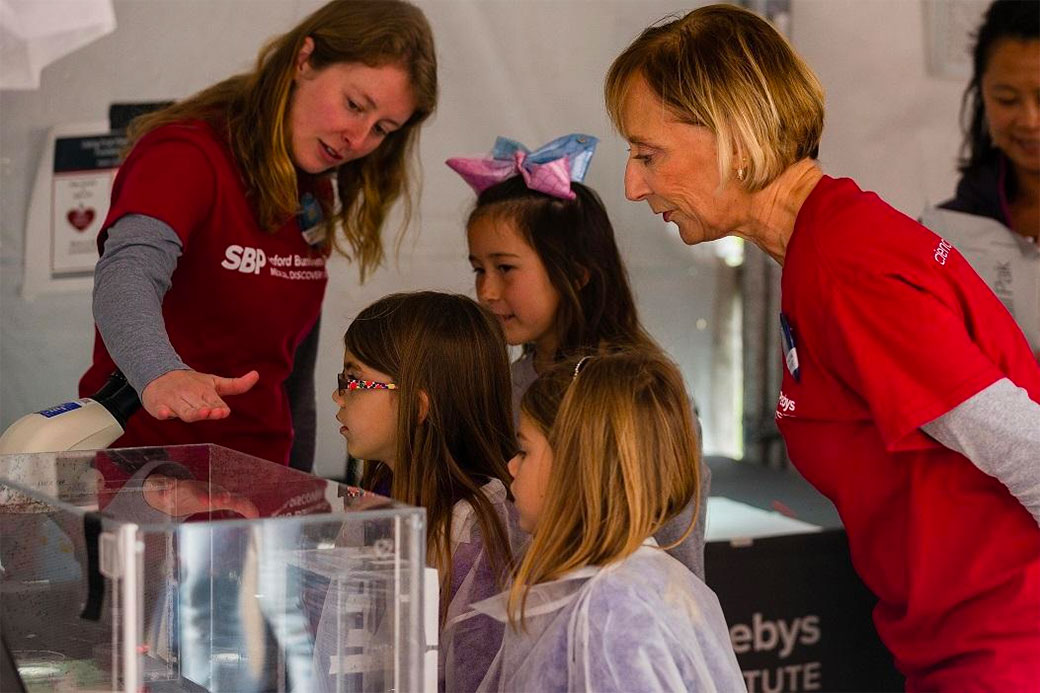
STEM Expo Day kicked off a week-long festival on Saturday, March 3, 2018 at Petco Park. The event marked the 10th annual San Diego Festival of Science and Engineering Expo Day—one of the largest STEM (Science, Technology, Engineering and Math) festivals in the U.S. The community outreach event provided learning and hands-on activities for students in grades kindergarten through 12th grade, as well as adults and families to ignite their passion for STEM education.

“STEM Expo is a great way to get our future researchers excited about science, and I believe that’s why SBP’s involvement continues to expand,” said Karen Ocorr, PhD, an SBP faculty member who organized a research demonstration for the exhibit booth.

About 40 SBP volunteers, including faculty, postdocs, staff and graduate students, worked in three shifts throughout the day to talk with visitors and guide them through two sets of interactive programs.

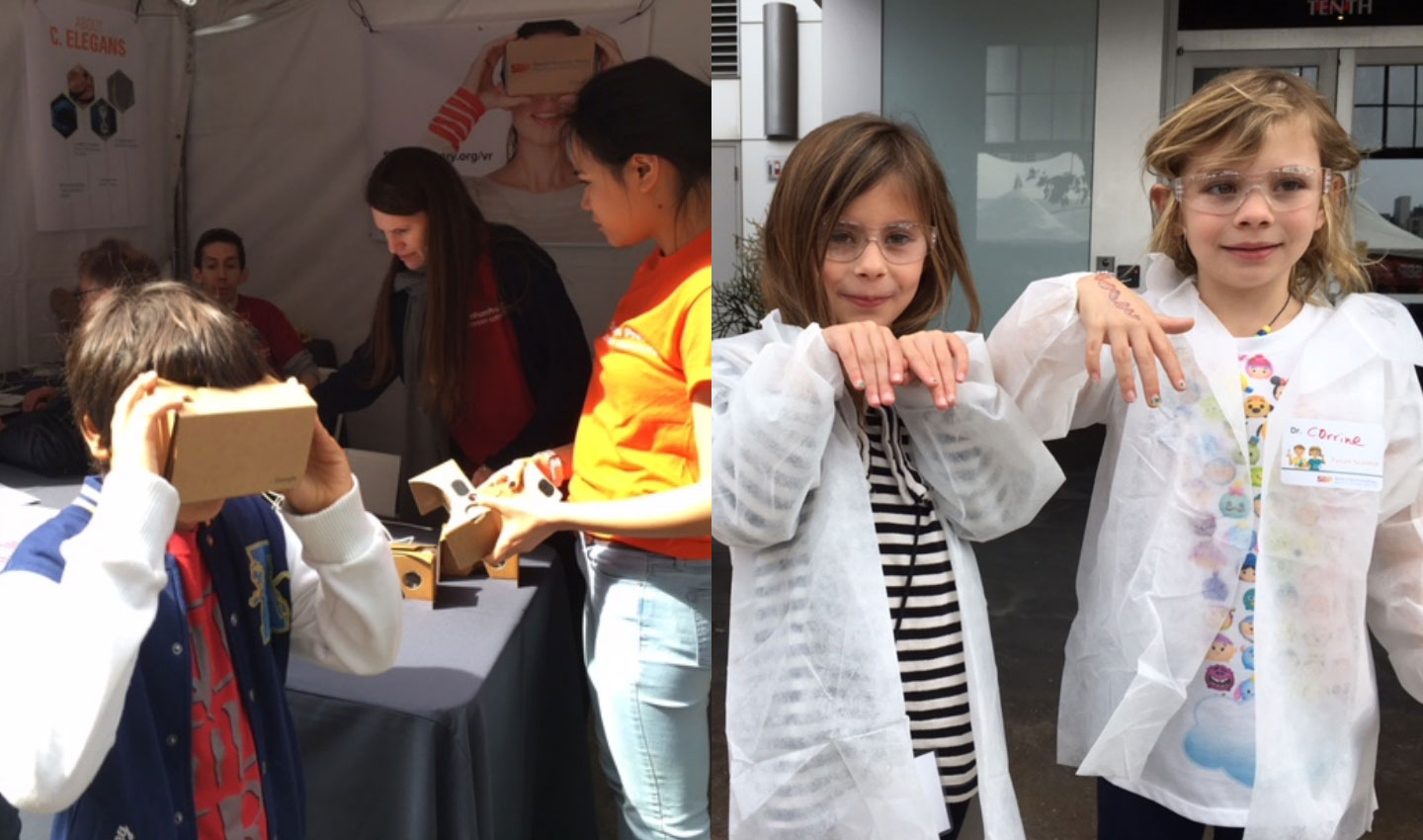
Ocorr set up a station where children received paper lab coats with personalized name tags to explore the food preferences of fruit flies and how it affects their heart health. Visitors used microscopes and high-powered LED magnifying glasses to look at fly abdomens to see if they had eaten sugar (dyed red) or fat (dyed blue). Not surprisingly, the fruit flies prefer a high sugar diet. Ocorr shared videos of beating fly hearts showing that both high sugar and high fat are bad for heart function.

The second station gave visitors an opportunity to interact with models of drugs and human proteins made by a 3D printer, courtesy of Adam Godzik, PhD, director of the Bioinformatics and Structural Biology Program at SBB. Godzik’s lab also brought glasses for viewing a virtual reality program showing how protein folding configurations are used to design drugs.

The event, which was free and open to the public, had more than 130 interactive exhibits with hands-on learning activities.

In spite of rain an estimated 25,000 people participated in EXPO Day at Petco Park.

Institute News

Spectacular 2017 SBP annual Gala celebrates “Sights Set on Discovery”

AuthorHelen Hwang
Date

October 18, 2017

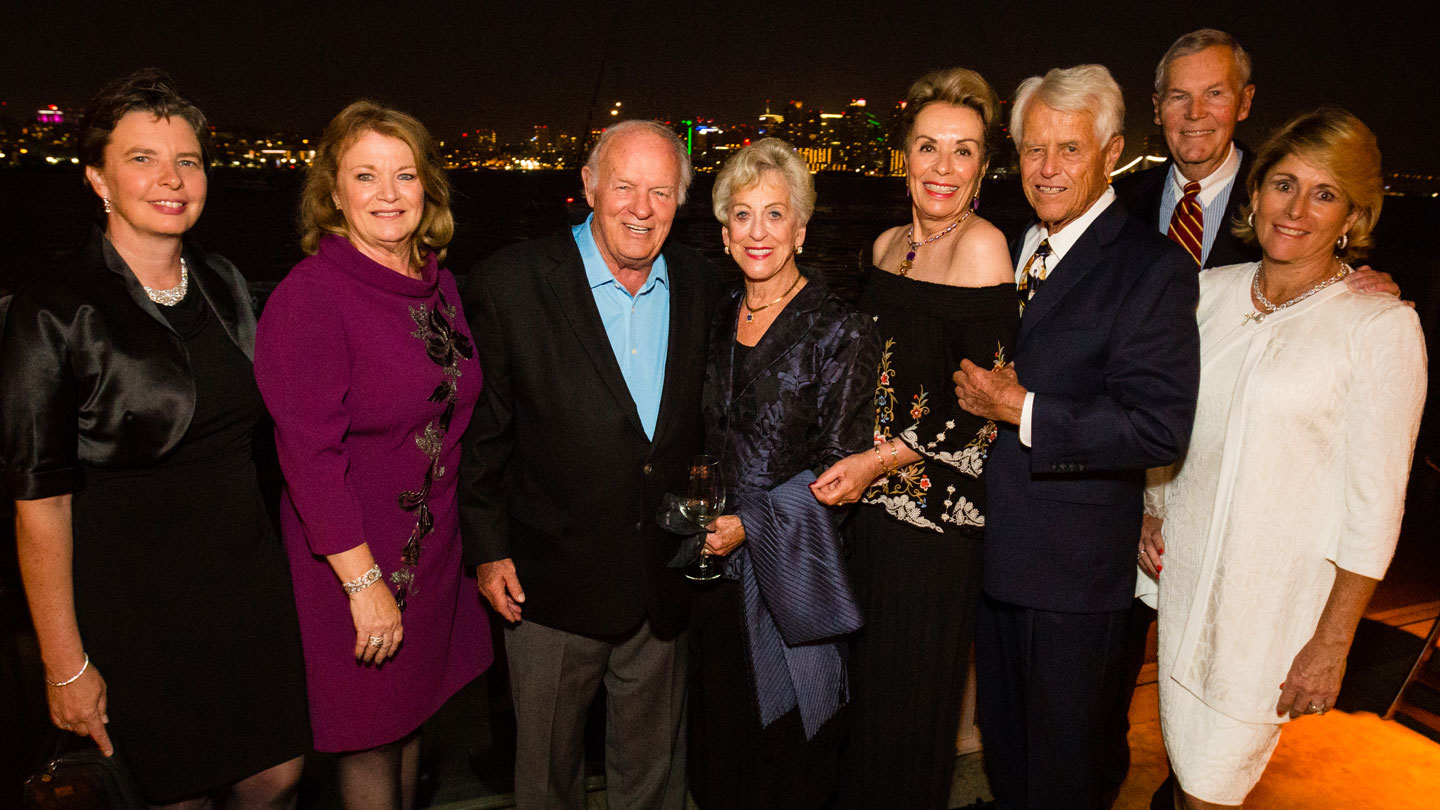
Friends and supporters of Sanford Burnham Prebys Medical Discovery Institute (SBP) gathered under the stars on Harbor Island in downtown San Diego for our spectacular Annual Gala, themed “Sights Set on Discovery.” Raising money to advance biomedical research inspired a warm, jubilant evening as guests celebrated SBP’s many scientific accomplishments. 

In a unique setting, supporters enjoyed a jazz trio in an outdoor reception on a glittering barge on the water. Then, guests moved inside to an elegant ballroom for the program. Guests included the Institute’s namesakes T. Denny Sanford and Malin Burnham.

SBP President Kristiina Vuori, MD, PhD kicked off the program with an inspirational speech about SBP’s reputation as a global leading research Institute. She also honored the outstanding career of one of SBP’s longest-serving scientists José Luis Millán, PhD, whose research on calcification is leading to therapies for heart disease, kidney failure and other devastating disorders. His work resulted in the discovery of a new drug at our own on-site Conrad Prebys Center for Chemical Genomics and is now being tested in humans.

Three of SBP’s preeminent scientists spoke about how philanthropy bridges the gap between basic biomedical research, drug discovery and patient therapeutics.

The researchers introduced a touching video about how their own personal experiences—whether as patients themselves or first-hand witnesses to the devastating effect on loved ones—drives them to work tirelessly on the research they do at SBP. Guests then raised their paddle for a successful Fund-A-Need.

Following the dinner, the party continued on the outdoor patio, boogying to music from The Mighty Untouchables.

The Gala raised around $500,000 for biomedical research. SBP guests had a marvelous time, dancing under the stars and raising money for a noble cause—to “transform the future of human health,” as Dr. Vuori put it.

Click the SBP Facebook album to see photos from the event.  

Click on the SBP YouTube channel to see the touching video guests watched at the Annual Gala.

If you would like to donate to SBP, click Donate now

Institute News

2017 Fishman Fund Award Ceremony celebrates postdoctoral scholars

AuthorHelen I. Hwang
Date

September 20, 2017

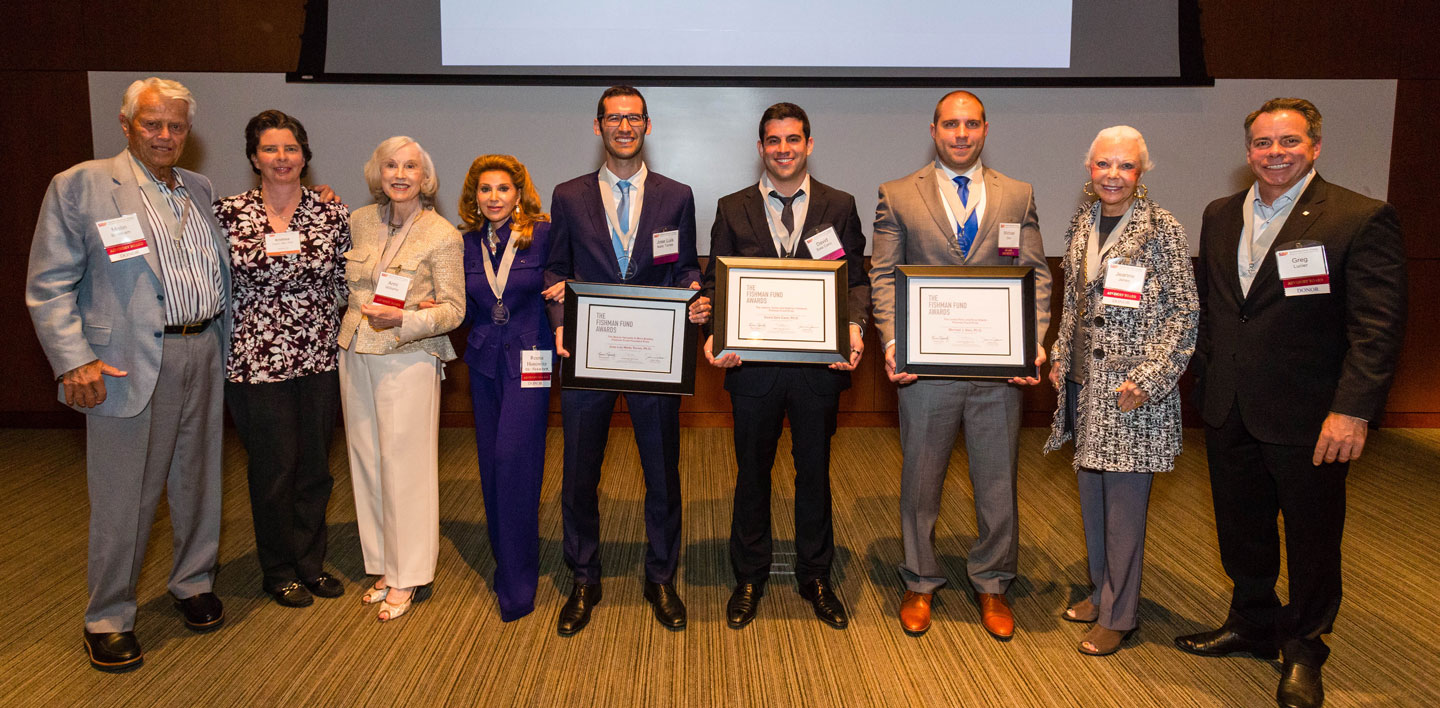
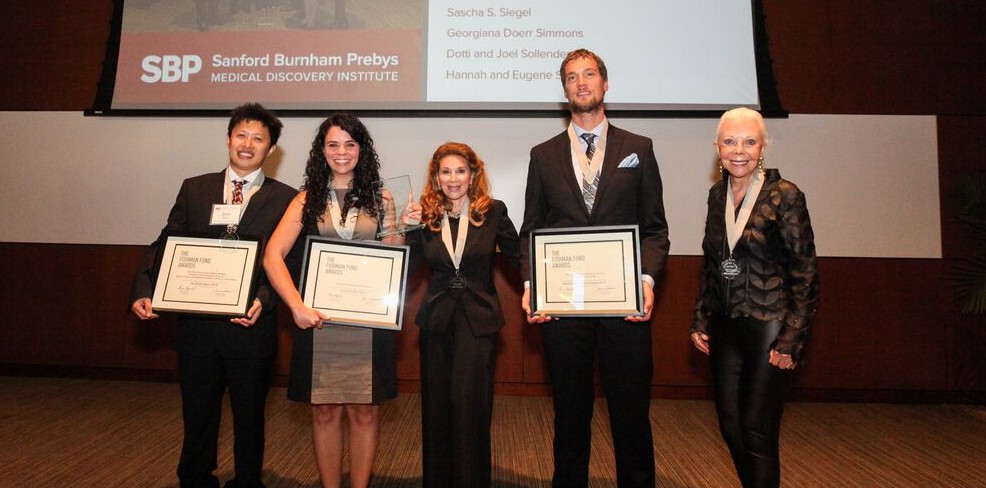
More than 100 supporters of Sanford Burnham Prebys (SBP) Fishman Fund Awards came out to honor this year’s Fishman Fund Award recipients: David Sala Cano, PhD, Michael J. Stec, PhD, and Jose Luis Nieto Torres, PhD, at the Sanford Consortium on Tuesday evening.

Malin Burnham, SBP’s Honorary Board Trustee, spoke about SBP exemplifying collaboration as part of its DNA. He also said that of all the organizations he works with, he gets the most satisfaction from being involved with SBP. Dr. Torres received the award and Fishman Fund medallion from Burnham, while Torres’ parents watched on with pride. They flew in from Spain, visiting the United States for the first time.

Fishman Fund co-founders and SBP supporters Reena Horowitz and Jeanne Jones led the ceremonies as they spoke about the founding of the Fishman Fund Award in 2001. The Fishman Fund Career Development Awards have grown from a $1,500 allowance to $10,000 stipends for each recipient so they can attend workshops, network and travel to national and international scientific conferences to learn about the latest developments in their research fields. The generosity of Fishman Fund donors enables such important career advancement opportunities for future scientific leaders.

Greg Lucier, former SBP board member and CEO of NuVasive, Inc., also spoke on the topic of “we versus me,” emphasizing the importance of teamwork. SBP supporters Dr. Andrew Viterbi, co-founder of Qualcomm, and Armi Williams, Fishman Fund Advisory Board member and former SBP trustee, presented Fishman Fund awards and medallions to Drs. Stec and Cano, respectively.

This year’s recipients gave short presentations on their work, each of which dealt with aging, including muscle stem cells, muscle regeneration and autophagy (body’s ability to eliminate waste and recycle). Read more about their work below.

Your contributions provide vital support for the Fishman Fund. Please donate now.

2017 Fishman Fund Awardees:

David Sala Cano, PhD, a postdoctoral scholar in the laboratory of Alessandra Sacco, PhD, is working on muscle stem cells. He focuses on muscle wasting, a major health problem that leads to poor quality to life, and is associated diseases such as diabetes, chronic kidney disease, cancer and aging. He is working on identifying new targets for drugs that may prevent skeletal muscle degeneration.

Dr. Cano comes to La Jolla from a small town of Abrúcies, Spain. He holds degrees from the University of Barcelona, including a BS degree in biochemistry, a MS degree in physiology and a PhD in biomedicine. His goal is to become a principal investigator in an academic setting, combining his passion for research and teaching.

Michael J. Stec, PhD, focuses on understanding the mechanisms regulating stem cell function and skeletal muscle regeneration; he is also in the laboratory of Alessandra Sacco, Ph.D. He aims to develop novel therapies for improving muscle function in aged and diseased individuals.

Dr. Stec hails from Whippany, New Jersey. He holds a BS degree in health and exercise science from the College of New Jersey, a MS degree in exercise science from Bloomsburg University of Pennsylvania and a PhD in pathobiology and molecular medicine from the University of Alabama in Birmingham. Ultimately, his career goal is to obtain a position in the biotech industry.

Jose Luis Nieto Torres, PhD, is a postdoctoral scholar in the laboratory of Malene Hansen, PhD He conducts research on autophagy—a process our bodies use to eliminate cell waste by recycling debris into usable sources of energy. Our bodies need to be able to eliminate debris that accumulates over time and make new components for proper functioning. Autophagy declines with aging, and is associated with many age-related diseases.

Dr. Torres joined SBP from Palencia, Spain. He obtained his BS degree in biochemistry and biology from the University of Salamanca and MS and PhD degrees in molecular biology from the Universidad Autonoma de Madrid. In the future, Dr. Torres aims to become a principal investigator of his own lab in an academic setting.


Institute News

Showing kids why mutants matter at the STEM Expo

AuthorJessica Moore
Date

March 7, 2017

Want to see some mutant worms? If you do, you’re like the hundreds—or possibly thousands—of children and their parents who visited the Sanford Burnham Prebys Medical Discovery Institute (SBP) booth at the STEM Expo, held Saturday, March 4 to kick off the San Diego Festival of Science and Engineering.

Those families got to watch live C. elegans—tiny worms used at SBP to study the biology of aging—move under a magnifying glass. By comparing normal worms to mutants that don’t move as well, they learned about how a single change to DNA can have a huge impact on how a whole body works. Scientists from the lab of Malene Hansen, PhD, associate professor at SBP, who provided the worms, explained how mutations in the same gene also cause human diseases like Ehlers-Danlos syndrome, which involves hyperflexible joints and skin.

They also had the chance to use virtual reality headsets to look at the shapes of proteins—the machines that make things happen inside cells—and how they can change as a result of a mutation. The 3D visualization tool was created by the lab of Adam Godzik, PhD, professor and director of the Bioinformatics and Structural Biology Program at SBP. Researchers from Godzik’s group told visitors about how they use similar computer modeling to find new mutations that could be important in cancer.

Kids left the SBP booth with temporary DNA tattoos on their hands (or sometimes their faces), mini lab coats personalized on the spot so they could pretend to be scientists at home and, maybe, a newfound interest in biology, thanks to the enthusiasm of the Institute’s many volunteers.

Institute News

First scientific meeting on Alagille syndrome sparks hope for a cure

AuthorKristen Cusato
Date

February 28, 2017

“My child is 4 years old. Can we have a playdate?” said one parent of a child with Alagille syndrome to another.

That kind of connection was a bonus of the 8th Annual Rare Disease Day symposium, held on February 24th at Sanford Burnham Prebys Medical Discovery Institute (SBP) in La Jolla.  The focus this year was Alagille syndrome (ALGS), a genetic disorder that affects one in 30 thousand births. ALGS primarily affects bile ducts in the liver, but can also damage the heart, kidney and other parts of the body. It can cause painful body itching as toxins are released into the bloodstream because they’re not absorbed and processed by the liver. Many patients require a liver transplant to survive.

Symposium chair Duc Dong, PhD, assistant professor at SBP, created an event that brought researchers and medical doctors from all over the world together for the first time to talk about new perspectives, ideas and collaborations that offer fresh hope for these patients and their families.

“We want patients and families to know there are a lot of people working on this,” Dong said. “When all these researchers and clinicians come together, we see hope that this disease can be conquered.”

Scientists shared two decades of Alagille syndrome research, including the advances and challenges. Cindy Luxhoj, executive director of the Alagille Syndrome Alliance talked about the Alagile Warriors, a group of patients with the disorder. Some have passed away, and others battle the disease every day. A young woman who has Alagille shared what it’s like to live with the disorder, and how important it is to bridge the gap between patients and researchers.

“That’s what this was all about,” Dong said. “We hope the information that comes out of this meeting pushes us over the edge and help us find a cure for Alagille.”

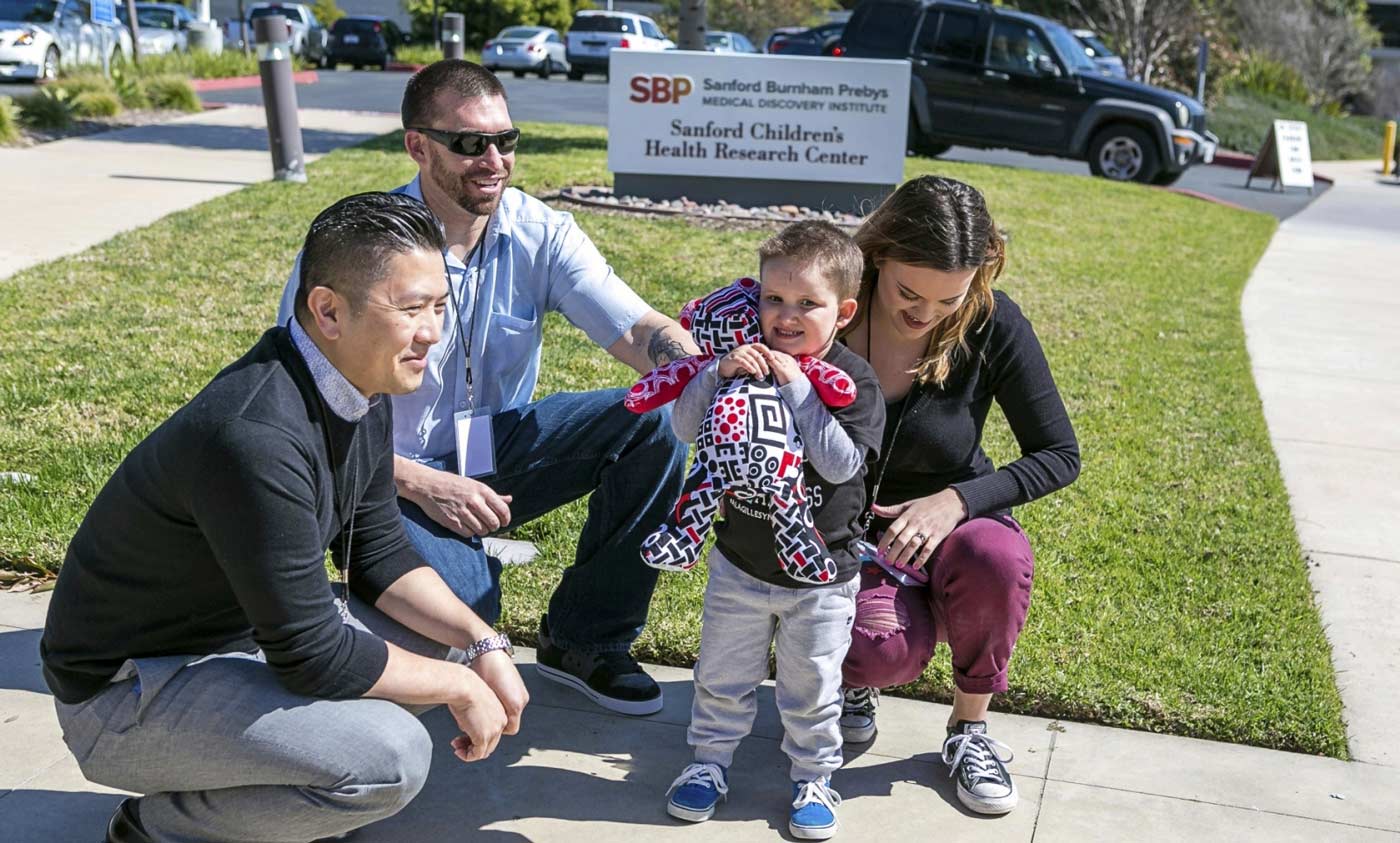
In photo: Assistant Professor Duc Dong, PhD, (left) with Alagille syndrome patient Kashton (center) and his parents

Institute News

Reena Horowitz honored at Sanford Burnham Prebys Medical Discovery Institute

AuthorHelen I. Hwang
Date

December 13, 2016

During a special end-of-the-year gathering, Reena Horowitz was honored for her hard work and dedication to Sanford Burnham Prebys Medical Discovery Institute (SBP). Held in the Fishman Auditorium at SBP, friends and staff thanked Horowitz with a bouquet of flowers, applause and a speech from Kristiina Vuori, PhD, president of SBP. Vuori thanked Horowitz for being a “leading ambassador for the Institute.”

In Vuori’s speech, she explained how Horowitz became involved with the Institute through her friendship with her neighbor Lillian Fishman. Dr. William T. Fishman and his wife, Lillian Fishman, founded SBP forty years ago. “Reena’s friendship with Lillian provided the Institute with a champion in the community, as well as the development of two of SBP’s institutional programs, the Fishman Fund Awards and the Group of 12 & Friends. Reena co-founded and has managed both of these extraordinary programs for over a decade,” said Vuori.

To nurture the careers of future scientific trailblazers at SBP, the Fishman Fund was established by SBP supporters Mary Bradley and Reena Horowitz to honor the founders of the Institute, Dr. William and Lillian Fishman. Over 55 postdoctoral students have been supported by the Fishman Fund, which awards postdoctoral fellowships and career development grants.

Horowitz co-founded G12 & Friends, a lecture and get-together with friends hosted monthly at SBP. What started out as Horowitz, Lillian Fishman and a few friends has ballooned into a group that usually draws over 100 guests, curious about a wide range of topics from science, medicine and the arts.

The celebration was an occasion to thank Horowitz for being a passionate supporter of SBP’s scientific programs within the community.

To find out more about the Fishman Fund and how to support it, click here.

Institute News

SBP supporters Dr. Tom and Cindy Goodman host SBP’s postdocs for the holidays

AuthorHelen I. Hwang
Date

December 9, 2016

For the last ten years, Cindy and Dr. Tom Goodman have a tradition of inviting Fishman Fund winners, past and present, for a holiday celebration. “It’s a delight to see everyone in a social setting – listening, learning and sharing.” Conversations range from the latest and greatest on melanoma research to cultural discussions about what Thanksgiving is about.

The Goodmans have been supporters of Sanford Burnham Prebys Medical Discovery Institute (SBP) and the Fishman Fund for the last decade or so. Every year, they’ve invited the winners of the Fishman Fund to their own home to share a holiday dinner. Cindy Goodman’s family always had a tradition of having students over for big meals when she was growing up in Ohio. She wanted to continue the tradition here with SBP’s community.

The Fishman Fund provides funding for exceptional postdoctoral researchers with a Fishman Fund Fellowship and Fishman Fund Career Development Awards. Founded in 2001, the Fishman Fund was established by SBP supporters Mary Bradley and Reena Horowitz, to honor the Fishmans. In 2010, Jeanne Jones became the co-founder designee. SBP introduced the Fishman Fund Awards in honor of the Institute’s founders, Dr. William and Lillian Fishman. So far, the Fishman Fund has funded over 55 postdoctoral researchers.

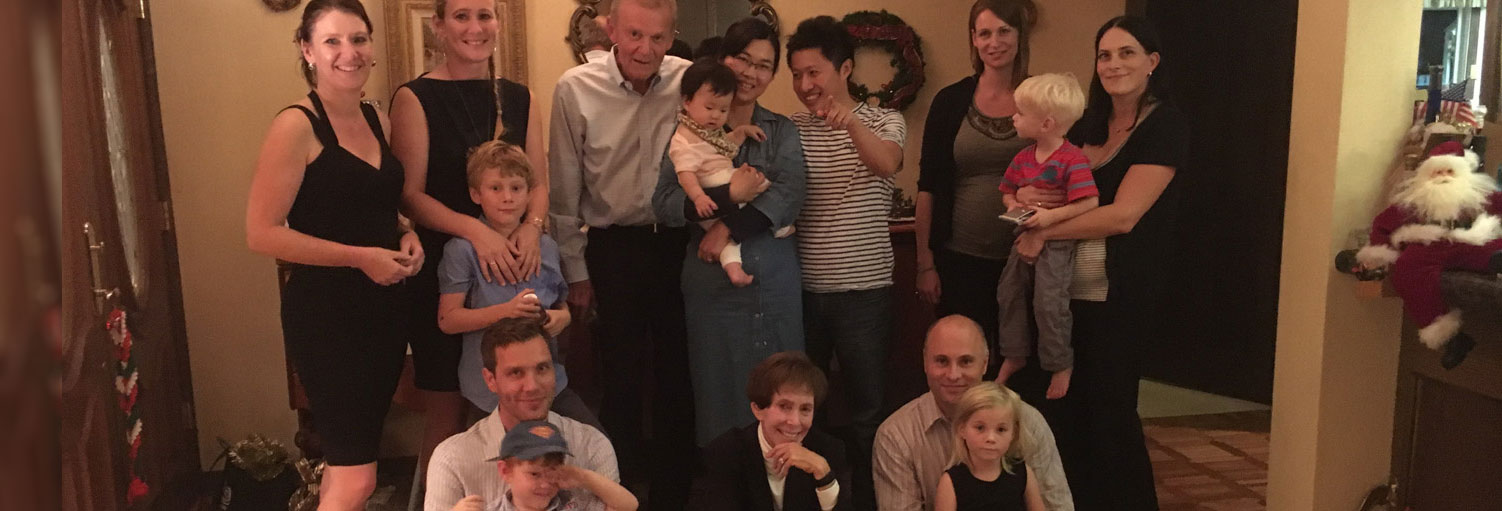
Recently, the families of four Fishman Fund recipients went to the Goodmans’ home to share Thanksgiving dinner. Fishman Fund awardees Stefan Grotegut, Melanie Hoefer, Petrus de Jong, Bernhard Lechtenberg and Jia (Zack) Shen all enjoyed a holiday celebration with the Goodmans. Former Fishman Fund winner Karthik Bodhinathan also called from the Boston area, where he now works for a pharmaceutical company, after spending six holidays with the Goodmans.  In fact, they’ve grown so close that they met Bodhinathan’s sister on a trip to Singapore.

The appreciation we feel “magnifies in unexpected ways,” says Cindy. This year, there were 16 people in their home, including children, ranging from age 1 to 8 years old. The Goodmans made turkey, potatoes and cranberry sauce for some guests who’ve never enjoyed such a feast before.

For Shen and his family, it was their first American Thanksgiving and he wasn’t quite sure what to expect. “We really enjoyed the fantastic Thanksgiving dinner at Cindy and Tom’s home. The house was so cozy. Cindy and Tom just treated us like family members. During the dinner, we talked about life in San Diego, my plans for the near future and the funny things about my baby Olivia. Also, we had nice conversations with the other winners’ families. And all of us gave our thanks to Goodman family. It was a wonderful evening!”

“I would be delighted if others opened their houses and hearts to one student or family,” says Cindy Goodman. Their experiences have been so delightful that she hopes someone else will also gain from the gift of sharing as the Goodmans have benefitted for the last decade.

For more information about the Fishman Fund, click here.

Institute News

Meet the 2016 Fishman Fund awardees

AuthorHelen I. Hwang
Date

September 16, 2016

When Joana Borlido, PhD, got the call that she won the inaugural Fishman Fund Fellowship late on a Friday afternoon, she called her parents, who had been waiting up past midnight in her native Portugal to find out if she had won the prestigious two-year postdoctoral fellowship along with a $5,000 career-development cash grant.

After all, her mother, a science teacher, had inspired Borlido to go into science by bringing home props of human body parts and subscribing to an immunology comic series. Yes, those biology cartoons do exist.

On September 15, the Fishman Fund ceremony honored Borlido and Fishman Fund Career Development recipients Bernhard Lechtenberg, PhD, and Jia (Zack) Shen, PhD

In celebration of SBP’s 40th anniversary, the significance of the Fishman Fund has been elevated with the addition of a two-year postdoctoral award called the Fishman Fund Fellowship. The Fishman Fund Fellowship is an incredible award that not only compensates exceptional postdocs at a higher income level than a typical fellowship, but also comes with a one-time $5,000 flexible career-development award, which they can use to further their professional endeavors. The established Fishman Fund Career Development awards of $10,000 will continue to be awarded as well.

Since the Fishman Fund’s inception in 2001, the Fishman Fund has grown from $1,500 cash awards. It was first established by Horowitz and Mary Bradley in honor of founders Dr. William and Lillian Fishman. In 2010, Jeanne Jones became the co-founder designee.

During the ceremony, Fishman Fund co-founder Reena Horowitz discussed the importance of supporting “the next generation of biomedical trailblazers.” She also said that the “Fishmans believed passionately in cultivating early-stage scientific talent. They knew that young investigators must focus intently on honing research skills and gaining professional experience.” Horowitz also took a moment to honor friends and supporters who have passed: Mary Bradley, Erna Viterbi, Pauline Foster, and Conrad Prebys.

Nina Fishman, daughter of SBP founders Dr. William and Lillian Fishman, read from a speech her father gave at the Institute. He said, “Each is encouraged to develop original ideas, which can be tested experimentally and subsequently qualify for grant support. Together we have the ‘critical mass’ of intellectuals and skills to accelerate progress in sciences.” She added that the Institute has demonstrated that a “relatively small but highly focused group can provide a nucleus where the whole is greater than the sum of its parts.”

Past winner Petrus de Jong, MD, PhD, shared how the Fishman Fund has boosted his career. With the grant, de Jong attended a drug delivery systems symposium with biotech entrepreneurs, participated in a research symposium in pancreatic cancer and received tailored career advice from senior scientists. “These events have been crucial for my personal career development, which would not have been possible without the Fishman Fund Award,” he said.

Fishman Fund Fellowship Awardee:

Joana Borlido, PhD, explores the mechanisms through which the channels that connect the cell nucleus (where the genome is stored) affect the immune system. She works in the laboratory of Maximiliano D’Angelo, PhDHer work will help elucidate the molecular basis for the onset and development of leukemia.

She completed her PhD in Oncology at the University of Cambridge in the U.K. and her BS in Biology at the University of Porto in Portugal.

If Borlido is not in the lab, she can usually be found playing foosball, which she admits she would play during all her free time if she could.

Fishman Fund Career Development Recipients:

Bernhard Lechtenberg, PhD, studies cellular signaling networks in normal human physiology and diseases in the laboratory of Stefan Riedl, PhDLechtenberg uses protein X-ray crystallography to study diseases such as cancer and ALS (Lou Gehrig’s disease). He received his BS and MS from the University of Luebeck in Germany and his PhD from the University of Cambridge in the U.K.

In his spare time, he and his wife Anne Hempel, also a SBP postdoc, participate in Ragnar Relay races, in which a team runs nonstop day and night to complete a course of almost 200 miles.

Jia (Zack) Shen, PhD, develops functional screens of for drugs that inhibit ubiquitin ligases (enzymes that tag proteins with a small protein called ubiquitin). Such drugs, alone and in combination with current chemotherapies, are considered important advances in the therapy of breast cancer patients. Shen works in the laboratory of Charles Spruck, PhD, and received his BS from Zhejiang Sci-Tech University and his PhD from the Chinese Academy of Sciences.

He and his wife love taking their 6-month-old daughter Olivia for walks in San Diego. Shen also plays soccer twice a week with a team at the Salk Institute.

With the generous support of the Fishman Fund, this stellar group of postdocs will benefit tremendously from well-earned rewards for their hard work and vision for “Science Benefiting Patients.”
Institute News

Conrad Prebys (1933-2016)

AuthorCommunications
Date

July 29, 2016

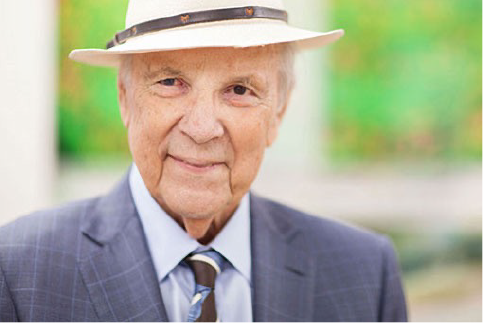
Conrad Prebys passed away on July 24, 2016 at the age of 82 after a protracted battle with cancer.

He was prominent real estate developer who began his portfolio in the 1960s with just $500. In time, he would become even more widely renowned as a philanthropist with many causes and interests. Most notably, in 2008 he donated $10 million to establish the Prebys Center for Chemical Genomics at then-Burnham Institute for Medical Research.

Five years after T. Denny Sanford donated $50 million in 2010 to the Institute (with the name changed to Sanford-Burnham Medical Research Institute), Prebys gave $100 million and the name was changed to Sanford Burham Prebys Medical Discovery Institute.

Both Sanford and Prebys became honorary directors in 2009. Like Sanford, Prebys was a strong advocate for biomedical science and translating the discoveries of basic research into new treatments, drugs and cures. 

At the renaming of the Institute, Prebys said, “I’ve been involved with the excellent researchers at the Institute for many, many years. They’re the best there is, and that excites me. If, through my support, I can shorten people’s suffering, or extend their quality of life, that would give me unlimited pleasure and joy.”

Over the years, Prebys would make additional regular gifts to the Institute to support research.

His interests and philanthropic support were expansive. He made significant gifts to UC San Diego, San Diego State University, the San Diego Zoo, Scripps Mercy Hospital, the Boys and Girls Clubs, the Old Globe Theatre, the La Jolla Music Society, the Salk Institute and the San Diego Museum of Art. Many buildings, research centers and scholarships in the region bear his name.

He also donated $20 million to his alma mater—the Indiana University Kelley School of Business—to fund construction of a new campus amphitheater and the Kelley School of Business Conrad Prebys Career Services Center in 2015.

In 2012, he was named one of the 25 most generous people in the United States by Business Insider.

Born in South Bend, Indiana, Prebys was raised in a blue collar, ethnic, working class neighborhood where the mindset was to complete high school and then work in the local factories of Studebaker or Bendix. When he was eight years old, he developed a heart condition which doctors said would force him to lead a sedentary life and leave him unable to do manual labor. His parents decided that he should learn to play the piano as a way to make a living as an adult.

The turning point in his life was meeting an inspirational high school drama teacher who exposed him to culture and the arts. The teacher was also influential in encouraging Prebys to further his education. He was the first of five brothers to attend and graduate from Indiana University. He was also the first in his neighborhood to go beyond high school.

Prebys moved to San Diego in 1965 and founded Progress Construction Company to build homes, eventually diversifying to build, own or rent thousands of apartment units. Ultimately, these resources were transferred to his estate’s charitable organization, the Conrad Prebys Foundation, which sold the real estate portfolio to The Blackstone Group for more than $1 billion in 2021. The Prebys Foundation is now among the largest and most active charitable organizations in the San Diego region, with interests in health care, medical research, visual and performing arts, higher education and youth development.