events Archives - Page 8 of 10 - Sanford Burnham Prebys
Institute News

Nobel laureate Michael Rosbash presents his latest fruit-fly research at Sanford Burnham Prebys

AuthorMonica May
Date

February 8, 2019

You may want to reconsider swatting that pesky fruit fly: Despite appearances, we share more than half of our genes with the tiny insect. For this reason—and their shorter life span and simpler genome—researchers often use the flies as models for human health and disease. 

Nobel laureate Michael Rosbash, PhD, is one such scientist. A self-described “fly chauvinist,” this month he visited SBP to present his latest research on the circadian rhythm of fruit flies. The event quickly became standing room only. 

Rosbash received the 2017 Nobel Prize in Physiology or Medicine, along with Jeffrey Hall and Michael Young, for their work uncovering the molecular timekeepers behind circadian rhythm. Their work was conducted in fruit flies, but has since unlocked new discoveries in animals and plants. 

Rolf Bodmer, PhD (pictured left), who introduced Rosbash (pictured right), is using fruit flies to uncover how our heart develops and ages, with a particular focus on a heart rhythm disorder called AFib. Nearly 10 percent of people over the age of 65 develop the condition, a leading cause of stroke, but we don’t know its cause, and there is no cure. By studying AFib in fruit flies, Bodmer and his team, which includes a cardiologist at Scripps Clinic, are hoping to learn the cause of the disorder and find effective treatment(s). 

While he has all the reason in the world to have an ego, Rosbash remains humble and down-to-earth. He ended his presentation by thanking his lab, without whom he would “not have a job and such prizes.” 

Interested in keeping up with SBP’s latest discoveries, upcoming events and more? Subscribe to our monthly newsletter, Discoveries.

Institute News

SBP scientist presents at Fleet Science Center to help the public better understand precision medicine

AuthorMonica May
Date

January 29, 2019

From how much coffee we can tolerate to the amount of weight we can lift, our bodies differ from one another in myriad ways. But when it comes to medicine, historically every patient with the same disease or condition has received the same treatment—even though individual responses vary wildly. 

Now, technological advances are enabling medicine to move from “one size fits all” to tailored treatments based upon one’s specific genes. This approach is called precision medicine. 

This December, under the dome of the Fleet Science Center’s IMAX theater, Jessica Rusert, PhD, a postdoctoral researcher in the lab of Robert Wechsler-Reya, PhD, explained the promise and potential of precision medicine to a crowd of nearly 100 people as part of the museum’s Senior Monday presentation series (if interested, check out the 2019 schedule). 

We caught up with Rusert to learn more about the goals of precision medicine and her work in the Wechsler-Reya lab. 

Before the advent of precision medicine, how did doctors typically treat patients? 
In the past, all patients who had the same disease—say, breast cancer—received the same treatment, which was most likely surgery followed by chemotherapy and radiation. Your treatment might change if you have more advanced disease—in which case the approach would be more aggressive. But typically treatment was based upon physical criteria: the location of the tumor, your symptoms or how the tumor looks under a microscope. That’s not to say this is a bad approach; it was simply the only information doctors and scientists had to work from. 

What catalyzed the movement from one size fits all to personalized treatment?
The invention of DNA sequencing has revolutionized personalized medicine. As the cost of sequencing decreases and the use of the technology swells, we will glean even more information from the genome, and personalized medicine will expand further to new areas. 

What is the ultimate goal of precision medicine? 
Precision medicine aims to treat the right patient, with the right drug, at the right time.

How far away is precision medicine from this goal? 
We are making inroads, but it is still early days for precision medicine. Currently, we are making the most progress in cancer. But despite these advances, the vast majority of cancers—including the pediatric brain cancer our lab studies—are treated with surgery, chemotherapy and radiation. 

As scientists learn more about the underlying cause of disease(s), precision medicine will expand to new cancers and new disease areas. These advances are happening now, and for some cancers, the outlook is already much better than it used to be. Perhaps one day we will have personalized treatments for schizophrenia and autism. The approach is mostly limited by how much we know about a disease. 

What is an example of a precision medicine? 
The breast cancer treatment Herceptin® is a great example of a precision medicine. 

Cells in our body use molecular antennae called receptors to sense and respond to their environment. One receptor, called HER2, controls cellular growth, and is involved in the development of breast cancer. 

Herceptin works by blocking the HER2 receptor. Then, the receptor can’t tell cells to grow, and tumor growth stops. 

However, this medicine only works if your tumor cells have this receptor. HER2-positive breast cancer means your cells have this receptor. HER2-negative breast cancer means you do not have the receptor, and thus Herceptin wouldn’t work for you. So people with breast cancer are tested to ensure they have the HER2 receptor before receiving Herceptin. 

Herceptin has saved thousands of lives. It is a true testament to the power of precision medicine. 

What was a popular question from the audience?
A lot of people wondered if there’s a way to prevent cancer. This is understandable—cancer is scary, and we want to do all we can to stop it. But it’s a difficult question to answer. The science isn’t there yet. We are only just now starting to understand how to help people who have acute disease. We may understand how to prevent cancer one day—but that will take decades, not years. 

How do you use precision medicine in your work?
In the Wechsler-Reya lab, we are working to find personalized treatments for children with brain cancer. We are studying the most common malignant pediatric brain cancer, called medulloblastoma. 

Children with medulloblastoma undergo surgery to remove the tumor and then undergo chemotherapy and radiation treatment. This treatment is hard for adults to go through—and even more devastating for a developing child. The treatment leaves long-term effects, including cognitive impairment and increased risk of other cancers due to the DNA damage caused. A treatment that reduces or eliminates these side effects is urgently needed. 

Scientists are learning that medulloblastoma is not one cancer, but actually four clearly defined subgroups. We are working to better understand these subgroups so we can develop targeted treatments that are customized to each cancer type (read the lab’s recent discovery). 

Where is precision medicine heading in the future? 
Right now, most precision medicine focuses on our DNA, but there are many other ways we differ from one another. But increasingly, scientists are working toward precision medicine that also takes into account RNA, proteins, our metabolism, the epigenome (molecular tags on DNA) and more.

Interested in keeping up with SBP’s latest discoveries, upcoming events and more? Subscribe to our monthly newsletter, Discoveries.

Institute News

World-renowned scientists speak at SBP’s symposium on a booming research area: epigenetics

AuthorMonica May
Date

November 28, 2018

DNA contains more information than scientists previously thought. A booming field of research called epigenetics is uncovering DNA alterations that affect whether genes are turned on or off—without changing a single base pair. 

These epigenetic changes may be physical, such as winding or unwinding DNA to change its accessibility—akin to opening or closing a door. Other changes can be chemical, such as adding molecular tags that turn genes on or off—like a highlighter calling out special text to a reader. 

On October 29, 2018, more than 300 scientists gathered at SBP’s 39th Annual Symposium to hear the latest connections between epigenetics and development, aging, and diseases such as cancer. Researchers are particularly interested in this field because modifying epigenetic changes could be easier than editing the body’s underlying genetic code—and advances are leading to new medicines. 

Organized by SBP professors Peter Adams, PhD; Ani Deshpande, PhD; and Lorenzo Puri, MD, PhD, the event’s speakers hailed from Harvard Medical School, Massachusetts Institute of Technology, Stanford University and other world-renowned institutions. 

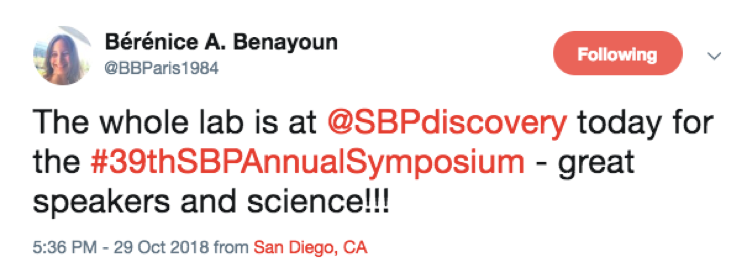
Tweet by scientists praising the symposium
  USC assistant professor Bérénice A. Benayoun, PhD,
  praised the symposium on Twitter

After a welcome by SBP’s President Kristiina Vuori, MD, PhD, talks commenced on topics ranging from the role of epigenetics in prostate cancer, development of the heart and aging. Unpublished work was frequently presented, meaning that attendees received the most up-to-date results available. 

A full list of speakers is listed below. To read more insights, follow #SBPsymposium on Twitter. And be sure to look out for next year’s symposium, which will focus on neurodegenerative diseases.

  • Anne Brunet, Stanford University – Epigenetic and metabolic regulation of aging 
  • Chris Glass, University of California, San Diego – Nature and nurture of tissue resident macrophages 
  • Cigall Kadoch, Dana-Farber Cancer Institute and Harvard Medical School – Structure and function of mammalian SWI/SNF complexes in human cancer 
  • Manolis Kellis, Massachusetts Institute of Technology – From genomics to therapeutics: dissection and manipulation of human disease circuitry at single-cell resolution 
  • Peter Lewis, Wisconsin Institute for Discovery – Mechanistic dissection of oncogenic histone mutations 
  • Barbara Meyer, University of California, Berkeley – Dynamic control of X-chromosome topology and gene expression during development via chromatin modification and condensing 
  • Raul Mostoslavsky, Harvard Medical School – Linking epigenetics, metabolism and cancer: new clues from SIRT6
  • Bing Ren, University of California, San Diego – Remodeling of chromatin organization during human cardiomyocyte differentiation 
  • Peggy Farnham, University of Southern California – CRISPR-mediated deletion of prostate cancer risk elements identifies repressive chromatin loops 
Institute News

2018 Fishman Award Ceremony honors postdoctoral scholars

AuthorSusan Gammon
Date

September 26, 2018

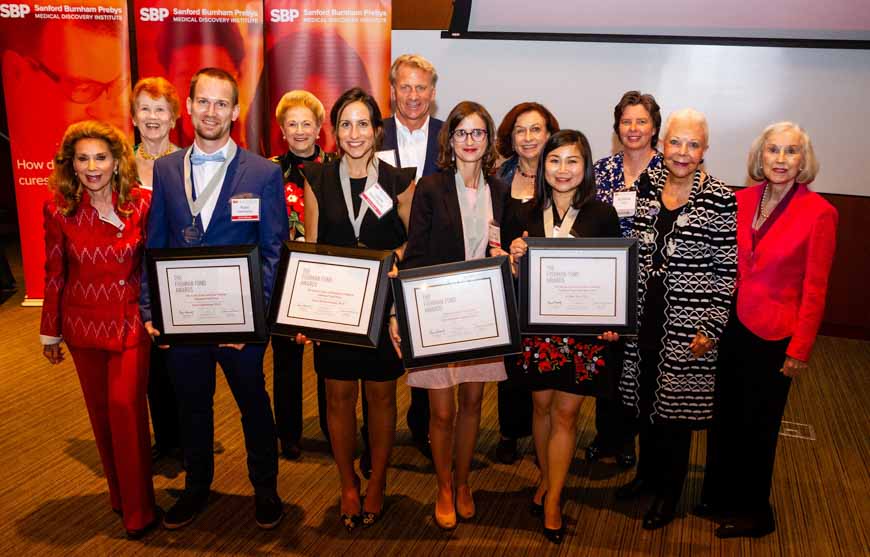
More than 100 supporters of SBP came out to celebrate this year’s Fishman Award recipients: Usue Etxaniz Irigoien, PhD, Koen Galenkamp, PhD, Laura Martin-Sancho, PhD, and Ee Phie Tan, PhD The annual awards ceremony, held September 20 at the Sanford Consortium, recognizes postdocs who have made extraordinary efforts and encourages their passion for careers in science.

The evening began with a warm welcome from founder Reena Horowitz, who described how she began the Fishman Fund with the late Mary Bradley (her dear friend) to honor Dr. William and Lillian Fishman. The Fishmans were the founders of SBP and firmly believed in helping young postdoctoral scientists become great principal investigators—and these awards help boost young researchers to meaningful careers in science.

Jeanne Jones, the Fishman Fund’s co-founder designee, shared that since the fund’s inception, 64 recipients have been awarded. The career development awards—bestowed annually to three postdocs—provide a generous $10,000 stipend to allow them to attend workshops and travel to national and international conferences to learn the latest developments in their research fields. Additionally, a Fishman Fund Fellowship Award, which provides salary support for two years in addition to benefits and a career-development stipend, was awarded this year for the second time in SBP history.

The keynote speaker was Aman Mann, PhD, who won the Fishman Award in 2011. Today, Mann is a research assistant professor at SBP and an entrepreneur and founder of AivoCode, a neuroscience company that licenses technology originally developed at SBP. Mann reflected on how the award gave him added confidence and resources to pursue his career goals—and he encouraged this year’s recipients to similarly follow their dreams.

If you are interested in donating to the Fishman Fund, click here.

The 2018 Fishman Fund Fellowship winner, Usue Etxaniz Irigoien, PhD, was presented with her award by Reena Horowitz. Irigoien, originally from the Basque region of Spain, is the first in her family to pursue a graduate degree in science. She is currently a postdoctoral researcher in the laboratory of Lorenzo Puri, PhD, and is studying the communication between nerves and muscles. Irigoien’s research is providing insights that may lead to improved therapies for neuromuscular diseases such as ALS. In the future, she hopes to become a principal investigator of her own lab.

The Fishman Fund Awardees:

Koen Galenkamp, PhD, was presented with his award by Andrew Viterbi, a distinguished scientist and former SBP trustee. Galenkamp works in the laboratory of Cosimo Commisso, PhD, and specializes in seeking ways to starve pancreatic tumors of the food they need to survive and grow. Originally from Amsterdam, Galenkamp thanked his colleagues and wife—who is also a postdoc in San Diego—and shared his plans to use the funds to attend a comprehensive pancreatic cancer conference at Cold Spring Harbor Laboratories.

Laura Martin-Sancho, PhD, a postdoc in the lab of Sumit Chanda, PhD, received her Fishman Fund Award from Armi Williams, a Fishman Fund Board member and longtime SBP supporter. Martin-Sancho is working to develop antiviral medicines that will combat infectious diseases such as influenza, dengue, and West Nile and Zika viruses. Martin-Sancho’s career goal is to be an independent investigator in an academic organization. She will use her stipend to attend a Keystone RNA virus conference in Dublin, Ireland.

Ee Phie Tan, PhD, originally from Malaysia, joined SBP in 2016 to work in the lab of Malene Hansen, PhD Tan is studying autophagy—a cell process that tidies up cell debris and recycles parts to maintain health. Defects in autophagy are linked to many aging-related diseases such as Alzheimer’s and Parkinson’s disease, and even cancer. Tan received her award from Reena Horowitz and will use the funds to attend a Gordon Research Conference in Texas and a Keystone Symposium in Santa Fe, New Mexico. 
 

Institute News

Duc Dong honored at Alagille Syndrome Alliance Gala

AuthorSusan Gammon
Date

July 10, 2018

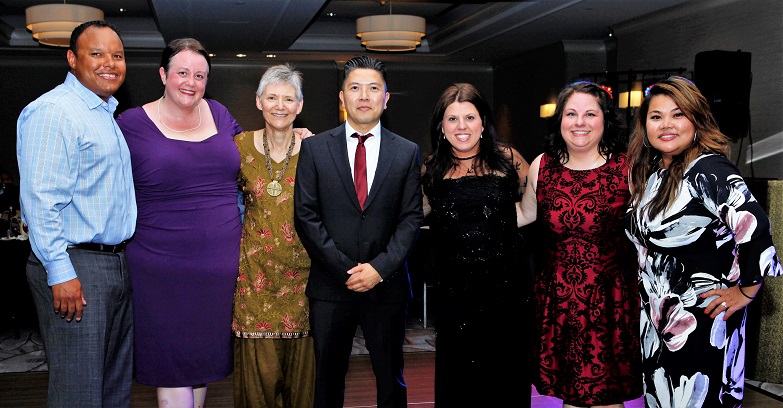
Associate Professor Duc Dong, PhD, was the guest of honor at the Gala of Dreams, the inaugural fundraiser for the Alagille Syndrome Alliance held June 30 at the San Diego Marriott Del Mar. Dong is a trailblazer in the field of Alagille syndrome research—he is working toward a cure for the extremely rare genetic condition that affects approximately one in 30,000 births.

Babies born with Alagille syndrome have too few bile ducts—which are essential for the transport of waste out of the liver. This causes toxins build up in the liver and throughout the body, leading to constant severe itching, and more critically, liver damage and failure. Alagille syndrome patients also have many other life-threatening developmental defects in other parts of their bodies, including the heart, kidneys, vertebrae, and blood vessels. There is no cure for this debilitating disease, and up to 50 percent of patients eventually need a liver transplant, often during childhood.

Dong and his team have been studying JAGGED1, the gene implicated in Alagille syndrome. Taking advantage of an unusual animal model, the zebrafish, he has been able to uncover a novel genetic mechanism for the disease—opening new potential therapeutic avenues. Further, his team has surprisingly discovered that the bile ducts lost can be regenerated after turning the affected gene back “on.”

“The implication is that these developmental defects in Alagille syndrome patients could potentially be reversible and therefore curable,” says Dong. “We will now start screening for drugs that may be used to restore the function of this genetic pathway and hopefully allow for these lost bile ducts to regenerate. We will continue to challenge the science of Alagille syndrome to move closer to a cure.”

The theme of the event, “The Dawn of a Dream,” signified new advances in Alagille syndrome research and the anniversary of the organization’s 25th year in existence. The evening gave advocates, families, doctors and pharma representatives an opportunity to interact in a fun, casual setting and participate in a silent auction to raise money for research. Dong’s lab was presented with the Champion of Alagille Syndrome Award and funds raised by the Alliance through crowd sourcing.

Institute News

Highlights from the 2018 Faculty Retreat

AuthorSusan Gammon
Date

June 4, 2018

SBP’s annual Faculty Retreat was held May 30–31 in beautiful Carlsbad, California.

This year’s theme was “Fundamental Cellular Processes in Health and Disease,” and featured 20 speakers from SBP areas of expertise:

·         Development and Aging — Malene Hansen, PhD, Lorenzo Puri, MD, PhD, Karen Ocorr, PhD, Alexey Terskikh, PhD, and Rolf Bodmer, PhD

·         Immunity and Inflammation Rob Weschler-Reya, PhD, Linda Bradley, PhD, Scott Peterson, PhD, and Jeff Smith, PhD

·         Technology Platforms — Dorit Hanein, PhD, Sumit Chanda, PhD, and Niels Volkmann, PhD

·         Drug and Disease Targets — Michael Jackson, PhD, Garth Powis, PhD, Wanda Reynolds, PhD, Elena Pasquale, PhD, and Matt Peroski, PhD

·         Share Resources Update — Craig Hauser, PhD

Special congratulations to Duc Dong, PhD, and Crystal Zhao, PhD, both of whom were officially promoted to associate professors.

Faculty promotion
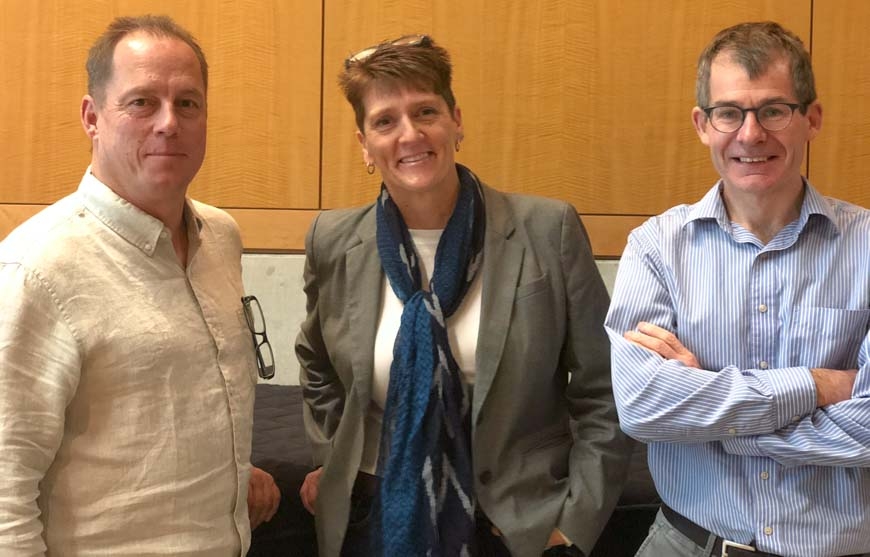
Pictured (left to right): Duc Dong, PhD, Elena Pasquale, PhD and Crystal Zhao PhD

Dong, in the Human Genetics Program, is advancing research in cell/organ replacement therapy that may ultimately benefit patients with diabetes and Alagille syndrome—a genetic disorder that can affect the liver, heart and other parts of the body.

Zhao, in the Tumor Initiation and Maintenance Program, is studying the regulation of neural stem cells—research that may lead to therapies for neurological diseases, including Alzheimer’s disease, Parkinson’s disease, and mental health disorders that affect cognitive abilities.

A highlight of the annual retreat is the presentation of the “WOW” award, which stands for Wonderful Original Work. This year, the WOW was given to Robert Wechsler-Reya, PhD, who won for his presentation titled “Overcoming Immune Evasion in Pediatric Brain Tumors.”

Wechsler-Reya’s research goal is to advance immunotherapy for medulloblastoma tumors—the most common malignant brain tumor in children. By increasing certain cell surface molecules called MHC on these cancer cells, he believes he can improve the ability of T cells to recognize the tumors and kill them.

Wechsler-Reya is a professor in the Tumor Initiation and Maintenance Program at SBP and is also the program director for the Joseph Clayes III Research Center for Neuro-Oncology and Genomics at Rady Children’s Institute for Genomic Medicine.

Cosimo Commisso, PhD, and Crystal Zhao, PhD, served as faculty organizers.

And many thanks to Wendy Lyon and Nelson, the research administrative specialists who organized the event.

Institute News

Cancer immunology symposium highlights hot area in cancer research

AuthorSusan Gammon
Date

March 19, 2018

The Cancer Immunology and Tumor Microenvironment Symposium held at Sanford Burnham Prebys Medical Discovery Institute (SPB) on March 8, 2018 attracted a full house of international attendees.

Its success likely stems from the impressive roster of speakers invited by Carl Ware, PhD, director of the Infectious and Inflammatory Diseases Center and Linda Bradley, PhD, also a professor in that program. The presenters included many thought leaders in the field from such prestigious institutions as University of Pittsburgh, University of Ontario Fred Hutchinson Cancer Research Center, the Mayo Clinic, Moores Cancer Center at UC San Diego and University of Washington School of Medicine.

Today, immunotherapy is one of the most exciting areas of new discoveries and treatments for many types of cancer. Although huge strides have been made—some patients experience complete remission—more breakthroughs are needed. Some patients do not respond at all, some relapse and others experience undesirable, often life-threatening side effects. And some cancers, such a pancreatic, brain, breast and prostate, have shown very limited benefit.

“This symposium brings experts in the fields of cancer and immunology together to promote scientific exchange and collaboration,” says Ware. “It’s meetings like this that will help us accelerate the understanding and development of new immune system-based therapies for cancer patients.”

Institute News

SBP brings science to San Diego community at STEM

AuthorSusan Gammon
Date

March 8, 2018

STEM Expo Day kicked off a week-long festival on Saturday, March 3, 2018 at Petco Park. The event marked the 10th annual San Diego Festival of Science and Engineering Expo Day—one of the largest STEM (Science, Technology, Engineering and Math) festivals in the U.S. The community outreach event provided learning and hands-on activities for students in grades kindergarten through 12th grade, as well as adults and families to ignite their passion for STEM education.

“STEM Expo is a great way to get our future researchers excited about science, and I believe that’s why SBP’s involvement continues to expand,” said Karen Ocorr, PhD, an SBP faculty member who organized a research demonstration for the exhibit booth.

About 40 SBP volunteers, including faculty, postdocs, staff and graduate students, worked in three shifts throughout the day to talk with visitors and guide them through two sets of interactive programs.

Ocorr set up a station where children received paper lab coats with personalized name tags to explore the food preferences of fruit flies and how it affects their heart health. Visitors used microscopes and high-powered LED magnifying glasses to look at fly abdomens to see if they had eaten sugar (dyed red) or fat (dyed blue). Not surprisingly, the fruit flies prefer a high sugar diet. Ocorr shared videos of beating fly hearts showing that both high sugar and high fat are bad for heart function.

The second station gave visitors an opportunity to interact with models of drugs and human proteins made by a 3D printer, courtesy of Adam Godzik, PhD, director of the Bioinformatics and Structural Biology Program at SBB. Godzik’s lab also brought glasses for viewing a virtual reality program showing how protein folding configurations are used to design drugs.

The event, which was free and open to the public, had more than 130 interactive exhibits with hands-on learning activities.

In spite of rain an estimated 25,000 people participated in EXPO Day at Petco Park.

Institute News

Spectacular 2017 SBP annual Gala celebrates “Sights Set on Discovery”

AuthorHelen Hwang
Date

October 18, 2017

Friends and supporters of Sanford Burnham Prebys Medical Discovery Institute (SBP) gathered under the stars on Harbor Island in downtown San Diego for our spectacular Annual Gala, themed “Sights Set on Discovery.” Raising money to advance biomedical research inspired a warm, jubilant evening as guests celebrated SBP’s many scientific accomplishments. 

In a unique setting, supporters enjoyed a jazz trio in an outdoor reception on a glittering barge on the water. Then, guests moved inside to an elegant ballroom for the program. Guests included the Institute’s namesakes T. Denny Sanford and Malin Burnham.

SBP President Kristiina Vuori, MD, PhD kicked off the program with an inspirational speech about SBP’s reputation as a global leading research Institute. She also honored the outstanding career of one of SBP’s longest-serving scientists José Luis Millán, PhD, whose research on calcification is leading to therapies for heart disease, kidney failure and other devastating disorders. His work resulted in the discovery of a new drug at our own on-site Conrad Prebys Center for Chemical Genomics and is now being tested in humans.

Three of SBP’s preeminent scientists spoke about how philanthropy bridges the gap between basic biomedical research, drug discovery and patient therapeutics.

The researchers introduced a touching video about how their own personal experiences—whether as patients themselves or first-hand witnesses to the devastating effect on loved ones—drives them to work tirelessly on the research they do at SBP. Guests then raised their paddle for a successful Fund-A-Need.

Following the dinner, the party continued on the outdoor patio, boogying to music from The Mighty Untouchables.

The Gala raised around $500,000 for biomedical research. SBP guests had a marvelous time, dancing under the stars and raising money for a noble cause—to “transform the future of human health,” as Dr. Vuori put it.

Click the SBP Facebook album to see photos from the event.  

Click on the SBP YouTube channel to see the touching video guests watched at the Annual Gala.

If you would like to donate to SBP, click Donate now

Institute News

2017 Fishman Fund Award Ceremony celebrates postdoctoral scholars

AuthorHelen I. Hwang
Date

September 20, 2017

More than 100 supporters of Sanford Burnham Prebys (SBP) Fishman Fund Awards came out to honor this year’s Fishman Fund Award recipients: David Sala Cano, PhD, Michael J. Stec, PhD, and Jose Luis Nieto Torres, PhD, at the Sanford Consortium on Tuesday evening.

Malin Burnham, SBP’s Honorary Board Trustee, spoke about SBP exemplifying collaboration as part of its DNA. He also said that of all the organizations he works with, he gets the most satisfaction from being involved with SBP. Dr. Torres received the award and Fishman Fund medallion from Burnham, while Torres’ parents watched on with pride. They flew in from Spain, visiting the United States for the first time.

Fishman Fund co-founders and SBP supporters Reena Horowitz and Jeanne Jones led the ceremonies as they spoke about the founding of the Fishman Fund Award in 2001. The Fishman Fund Career Development Awards have grown from a $1,500 allowance to $10,000 stipends for each recipient so they can attend workshops, network and travel to national and international scientific conferences to learn about the latest developments in their research fields. The generosity of Fishman Fund donors enables such important career advancement opportunities for future scientific leaders.

Greg Lucier, former SBP board member and CEO of NuVasive, Inc., also spoke on the topic of “we versus me,” emphasizing the importance of teamwork. SBP supporters Dr. Andrew Viterbi, co-founder of Qualcomm, and Armi Williams, Fishman Fund Advisory Board member and former SBP trustee, presented Fishman Fund awards and medallions to Drs. Stec and Cano, respectively.

This year’s recipients gave short presentations on their work, each of which dealt with aging, including muscle stem cells, muscle regeneration and autophagy (body’s ability to eliminate waste and recycle). Read more about their work below.

Your contributions provide vital support for the Fishman Fund. Please donate now.

2017 Fishman Fund Awardees:

David Sala Cano, PhD, a postdoctoral scholar in the laboratory of Alessandra Sacco, PhD, is working on muscle stem cells. He focuses on muscle wasting, a major health problem that leads to poor quality to life, and is associated diseases such as diabetes, chronic kidney disease, cancer and aging. He is working on identifying new targets for drugs that may prevent skeletal muscle degeneration.

Dr. Cano comes to La Jolla from a small town of Abrúcies, Spain. He holds degrees from the University of Barcelona, including a BS degree in biochemistry, a MS degree in physiology and a PhD in biomedicine. His goal is to become a principal investigator in an academic setting, combining his passion for research and teaching.

Michael J. Stec, PhD, focuses on understanding the mechanisms regulating stem cell function and skeletal muscle regeneration; he is also in the laboratory of Alessandra Sacco, Ph.D. He aims to develop novel therapies for improving muscle function in aged and diseased individuals.

Dr. Stec hails from Whippany, New Jersey. He holds a BS degree in health and exercise science from the College of New Jersey, a MS degree in exercise science from Bloomsburg University of Pennsylvania and a PhD in pathobiology and molecular medicine from the University of Alabama in Birmingham. Ultimately, his career goal is to obtain a position in the biotech industry.

Jose Luis Nieto Torres, PhD, is a postdoctoral scholar in the laboratory of Malene Hansen, PhD He conducts research on autophagy—a process our bodies use to eliminate cell waste by recycling debris into usable sources of energy. Our bodies need to be able to eliminate debris that accumulates over time and make new components for proper functioning. Autophagy declines with aging, and is associated with many age-related diseases.

Dr. Torres joined SBP from Palencia, Spain. He obtained his BS degree in biochemistry and biology from the University of Salamanca and MS and PhD degrees in molecular biology from the Universidad Autonoma de Madrid. In the future, Dr. Torres aims to become a principal investigator of his own lab in an academic setting.