grants Archives - Page 5 of 6 - Sanford Burnham Prebys
Institute News

Getting to the bottom of potentially fatal heart rhythm defects

AuthorJessica Moore
Date

February 6, 2017

Imagine your otherwise healthy child fainted while playing soccer and was diagnosed with long QT syndrome, a heart rhythm problem that can cause the heart to stop. You’d probably want something major done to keep that from happening, but that may not be necessary. Fewer than 10 percent of long QT syndrome patients ever experience cardiac arrest—figuring out which 10 percent could save lives.

“In patients with long QT syndrome, implanted defibrillators are becoming more widely used, but that’s a major surgery, and the devices aren’t perfect. Cardiologists would prefer to only use them in patients most at risk of dying, but right now, they can only approximate that risk using clinical measures and medical history,” says Karen Ocorr, PhD, an assistant professor at SBP. “The research I’m doing now could help doctors make better recommendations in the future.”

In long QT syndrome, which affects about 1 in 5,000 people, the heart is slow to return to its normal electrical state after contracting. The inherited form of the condition is caused by mutations in proteins called ion channels that are responsible for moving ions back out of heart muscle cells after they contract to restore their normal resting charge.

Ocorr is modeling long QT syndrome using fruit flies, which have a similar heart rate to that of humans and analogous ion channels controlling their hearts’ electrical activity. Her lab studies flies that lack the ion channels in which mutations cause long QT—in humans, those ion channels are called KCNQ and hERG.

“We’re looking at how the absence of the fly equivalents of KCNQ or hERG influences electrical activity and heart rhythm in different genetic backgrounds, our goal is to identify cellular interactions and genetic variants that make the effects of long QT worse or better,” explains Ocorr. “As genetic sequencing becomes more common in the clinic, our results could translate to a way of identifying which patients are most at risk of cardiac arrest.”

“We’ve seen that the hearts of flies without these ion channels change structurally,” Ocorr adds. “Understanding why that happens will have implications for preventing sudden cardiac arrest.”

Ocorr was recently awarded an R01 grant from the National Heart, Lung, and Blood Institute (NHLBI). This is the first R01 of her career, which hasn’t been typical—rather than moving directly from postdoctoral training to a faculty position, she first worked in industry and then spent many years teaching and developing internet learning tools at the University of Michigan.

“It’s unusual, but it is possible to start an independent scientific career later in life,” Ocorr says. “I hope my example shows others that they can come back to academia after other pursuits.”

Institute News

Scott Peterson receives grant to discover gut microbiome-targeted therapies

AuthorJessica Moore
Date

January 17, 2017

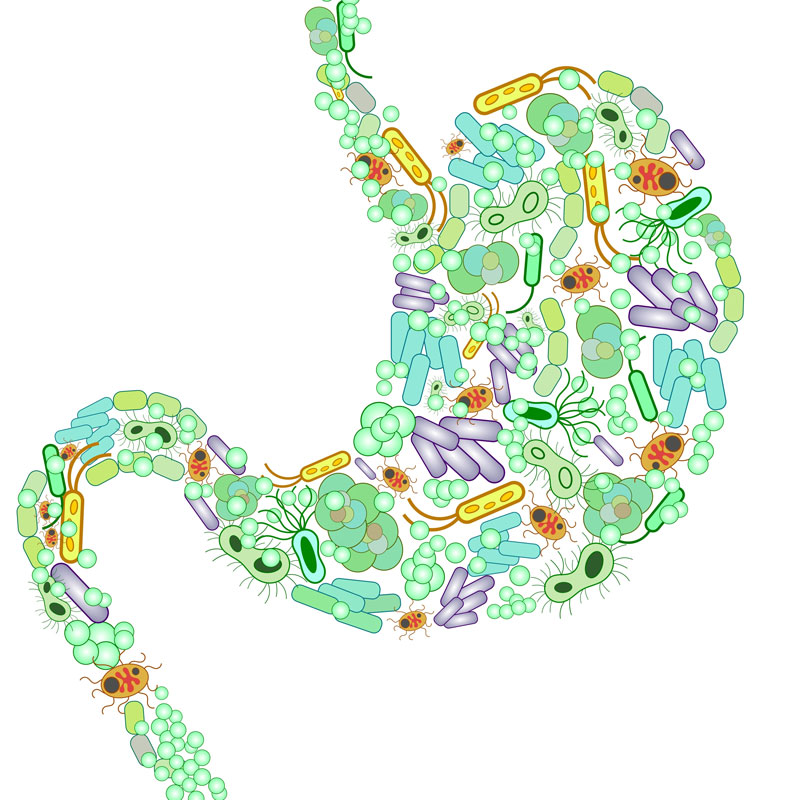
The gut microbiome—the trillions of bacteria and other microscopic bugs in your intestine—is a hot topic in medical research. The number scientific studies showing that the balance of microbes affects health not just in the GI tract, but throughout the body is growing rapidly. Motivated by these findings, Scott Peterson, PhD, professor at Sanford Burnham Prebys Medical Discovery Institute, is searching for ways to manipulate the microbiome to treat disease.

Because his work is so pioneering, he recently won a grant from the William Randolph Hearst Foundation to support a graduate student, Lisa Elmén, to carry out some very ambitious research. She’s looking for prebiotics—compounds that affect the makeup of the microbiome because they’re metabolized by some bacteria more than others—that can address underlying drivers of inflammatory diseases like obesity, type 2 diabetes, Crohn’s and colitis, autoimmune conditions and food allergies.

Despite their diversity, these diseases all have a connection to the gut—they’re associated with increased inflammation and permeability, or leakiness, of the intestine. That’s bad because it means foreign molecules from food and microbes can get into the bloodstream, which can trigger or worsen inflammation and cause the immune system to go awry. The main question Elmén will address is whether prebiotics effectively improve barrier function and whether this slows or even reverses disease progression.

“We’ve already identified a number of compounds that alter the gut microbiome in a way that we believe correlates with better intestinal integrity,” says Peterson. “This award will let us move on to the next steps, including examining whether these prebiotics alter disease severity.”

“It would have been very challenging to get this work funded through more traditional avenues, so this award is critical to advancing our research,” Peterson adds. “Leaky gut isn’t a widely recognized condition, and few clinicians test for it despite evidence that it contributes to disease. The prebiotics we hope to find could improve the health of millions of Americans.”

Institute News

Bret Goodpaster to lead part of $170M NIH effort to understand the molecular effects of exercise

AuthorJessica Moore
Date

January 9, 2017

Everyone knows that physical activity is good for your health, but we’re far from understanding all the details of how exercise improves the function of the cells and organs of the body. To make up for this gap in knowledge, the National Institutes of Health (NIH) has funded a nationwide consortium that aims to construct a molecular map of the changes caused by exercise. Bret Goodpaster, PhD, professor at Sanford Burnham Prebys Medical Discovery Institute (SBP), and director of the Exercise and Metabolism Core at the Translational Research Institute for Metabolism and Diabetes (TRI-MD) at Florida Hospital, will co-lead one of the seven clinical centers involved in the consortium, called Molecular Transducers of Physical Activity, or MoTrPAC.

“This is a huge undertaking that’s guaranteed to advance our insight into how physical activity improves and preserves health,” says Goodpaster. “It’s great that the NIH is making this a priority. Along with research on how diseases develop, there should be just as much work looking at the other side—prevention.”

To build the molecular map, clinical investigators will recruit thousands of active and sedentary volunteers with a range of fitness levels and body compositions, who will perform resistance and aerobic exercises. Biological samples will be collected before and after physical activity, allowing scientists to analyze changes in thousands of molecules.

“We know from epidemiology that exercise has a myriad of health benefits—from diabetes and cardiovascular disease prevention to mitigating cancer and Alzheimer’s disease risk, but those kinds of studies provide limited information,” adds Goodpaster. “To really draw conclusions about cause and effect, we have to do experiments in humans, and that requires a large number of study participants because people are so diverse. This investment is exactly what we need, especially now that sequencing and ‘omics’ technologies can be used efficiently on a big scale.”

Institute News

V Foundation grant to Ani Deshpande, PhD, supports pioneering research toward better leukemia treatments

AuthorJessica Moore
Date

December 2, 2016

Patients with a rare type of leukemia called acute promyelocytic leukemia (APL) have better outcomes than most leukemias because they can be treated with a very effective drug that converts their cancer cells back to normal. This success has convinced many cancer researchers that there’s a way to do the same for other leukemias. And with his recently awarded funding from the V Foundation, Ani Deshpande, PhD, assistant professor at Sanford Burnham Prebys Medical Discovery Institute, can now find targets for future drugs to do just that.

“We’re aiming to rehabilitate the cancer cells, in a sense, instead of destroying them,” said Deshpande. “The advantage to this approach is that, unlike conventional chemotherapy, it doesn’t harm normal cells, so it should have far fewer toxic side effects.”

Deshpande aims to make a big impact with this work—he’s first focusing on a group of acute myeloid leukemia (AML) with very poor survival outcomes. Worse, these leukemias, characterized by fusions of chromosome 11 with another partner chromosome, are especially common among children and infants.

This subgroup of AML is trickier than APL, where the product of the gene created by the chromosomal rearrangement directly blocks the cancer cells from becoming their normal type. In contrast, in the leukemias that Deshpande’s lab studies, the change in the cells’ programming is more complex. The mutation they carry alters the regulation of other genes, but which of these prevent AML cells from becoming normal blood-forming cells is largely unknown.

Fortunately, Deshpande is an expert in studying leukemic gene regulation. His lab specializes in epigenetics—analyzing the chemical tags on genes that influence their activity. The V Foundation funds will allow Deshpande’s team to apply an advanced sequencing-based approach to identify and validate potential targets for drugs that restore cancer cells’ epigenome to normal.

“This grant not only lets me expand my lab by hiring a new postdoc, but it also means I can take risks that wouldn’t be possible if I were proposing research to the NIH,” commented Deshpande. “I’m confident that we’ll get exciting results. The tools we’re using have gotten exponentially better over the last few decades, so we’re poised for a breakthrough.”

About the V Foundation

The V Foundation for Cancer Research was founded by ESPN and legendary basketball coach Jim Valvano with one goal in mind: to achieve victory over cancer. Since its start in 1993, the V Foundation has awarded over $170 million in cancer research grants nationwide.

Watch Dr. Deshpande talk about why foundation funding is important:

Institute News

MDA grant speeds research toward better treatments for Duchenne muscular dystrophy

AuthorJessica Moore
Date

September 8, 2016

Pier Lorenzo Puri, MD, PhD, professor in the Development, Aging, and Regeneration Program, has focused his career on finding treatments to counter the progression of Duchenne muscular dystrophy (DMD). A new grant from the Muscular Dystrophy Association, totaling nearly $300,000 for three years of support, will help his team figure out how to improve on a drug that they helped advance to clinical trials.

DMD, which affects hundreds of thousands of boys and young men worldwide, causes progressive muscle weakness that is usually first apparent as a child learns to walk. All patients eventually rely on a wheelchair by their high school years, and few live past their early 20s.

In DMD, the absence of a structural protein called dystrophin leads to the progressive loss of muscle fibers, as they cannot maintain their integrity following contraction. The damage triggers both repair—generation of new muscle cells—and formation of fibrous deposits, which make the muscle stiff. At first, regeneration keeps pace with the damage so the muscle continues to work, but as time goes on, the balance tips to favor scarring.

Whether the muscle regenerates or becomes fibrotic is determined by specialized cells that reside between muscle fibers, called fibro-adipogenic progenitors. The drugs that were first shown to work by Puri’s lab, histone deacetylase inhibitors (HDACis), encourage the pro-regenerative activity of these cells, while preventing them from forming fibrotic scars and promoting fat infiltration.

One HDACi, called givinostat, is in a small clinical trial in Europe. Of the 19 patients enrolled, almost all are responding with more regeneration and less fibrosis and fat infiltration. The trial is expected to expand worldwide.

“Recently, we’ve found that not all interstitial cells switch to promoting fibrosis at once,” Puri explained. “That means only some of them need to be targeted by the drug. Since we’ve figured out how to distinguish the good ones from the bad ones, we’re going to use the grant funds to look further at what’s going on in each subpopulation and see how the drug affects them.

“This research could lead to new ways to specifically target the interstitial cells that need to be redirected to foster muscle renewal.”

Puri’s recent interview on local TV station KUSI about muscular dystrophy and his research is online here.

Institute News

New grants from Pedal the Cause will advance cancer research

Authorjmoore
Date

April 21, 2016

Pedal the Cause today presented $1,300,000 in grant funding to four San Diego research institutions to fund seven collaborative research projects. The check presentation was made by Pedal the Cause Executive Director Jay Indovino during a press conference at Rady Children’s Hospital–San Diego this morning. Continue reading “New grants from Pedal the Cause will advance cancer research”

Institute News

Ze’ev Ronai receives Outstanding Investigator grant

Authorjmoore
Date

February 3, 2016

A renowned cancer researcher at Sanford Burnham Prebys Medical Discovery Institute (SBP) has received a National Cancer Institute (NCI) Outstanding Investigator Award (OIA) for cancer research with breakthrough potential. Ze’ev Ronai, PhD, is scientific director of SBP’s La Jolla campus and professor of its NCI-designated Cancer Center. He will receive $7.9 million over a seven-year period to advance his cancer research. Continue reading “Ze’ev Ronai receives Outstanding Investigator grant”

Institute News

The Collaboration 4 Cure Alzheimer’s research awards announced at SBP

Authorsgammon
Date

October 29, 2015

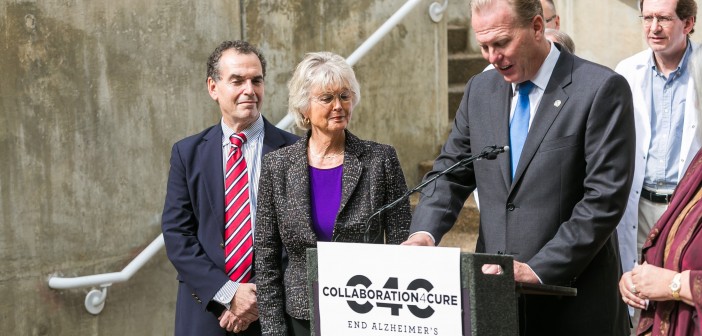
On October 28, Mayor Kevin Faulconer, County Supervisor Diane Jacob, San Diego philanthropist Darlene Shiley, and Mary Ball, president and CEO of the Alzheimer’s Association San Diego, came to SBP to announce the recipients of research awards from San Diego’s Dementia Drug Discovery Collaborative Program, “Collaboration 4 Cure (C4C).” The awards are part of an innovative program to harvest the best research ideas toward effective treatment of Alzheimer’s disease.

Eight world-class researchers were selected by C4C to pursue promising drug discovery projects. They will be given state-of-the-art equipment, resources and expertise at SBP’s Conrad Prebys Center for Chemical Genomics (Prebys Center) and The Scripps Research Institute to search for “small molecule” chemicals that can alter changes in the brain observed in Alzheimer’s disease, potentially restoring brain health to patients.

The research award recipients and their projects include:

  • Huaxi Hu, PhD, (SBP), will search for chemicals that can activate microglia cells, which protect neurons from inflammation and remove damaged cells.
  • Elena Pasquale, PhD, (SBP), funded to search for molecules that that prevent protein aggregation that form amyloid beta plaques.
  • Lutz Tautz, PhD, (SBP), will screen for molecules that reduce levels of an enzyme thought to inhibit memory formation in Alzheimer’s patients.
  • Yunwu Zhang, PhD, (SBP), will search for compounds that target apotosin, a protein thought to damage neurons.
  • Albert La Spada, MD, PhD (UCSD), will screen for molecules that increase the activity of lysosomes, packets of enzymes with protein-clearing powers.
  • Mathew Pearn, MD, (UCSD), funded to examine protein-bearing cellular structures called endosomes from growing too large and killing neurons.
  • Subhojit Roy, PhD, (UCSD), will seek ways to separate precursor proteins from the enzymes that turn them into amyloid beta.
  • Steve L. Wagner, PhD, (UCSD), will search for a way to mute the side effects of gamma secretase inhibitors, which can disrupt the amyloid formation process.

“SBP is proud to be part of C4C. San Diego is home to some of the best neuroscientists in the world, and with our advanced screening and drug discovery capabilities at the Prebys Center, we hope to quickly advance research to prevent, treat, and even cure this terrible disease,” said Michael Jackson, PhD, senior vice president of Drug Discovery and Development at SBP.

Initial funds for the launch of C4C, totaling nearly $500,000, were obtained through the generosity of Darlene Shiley and others involved with the initiative. With a five-year funding goal of $7 million, all funds will be raised through local philanthropy, and restricted to projects from researchers at San Diego-based institutions.

Alzheimer’s disease is the third-leading cause of death in the San Diego region.

To view the KUSI newscast of the event, click here

Institute News

The science behind the Pedal the Cause cancer research awards

Authorsgammon
Date

March 26, 2015

Pedal the Cause, the nonprofit organization dedicated to raising funds for cancer research, recently announced the funding awards for collaborative translational research projects for scientists at Sanford-Burnham, UC San Diego (Moores Cancer Center), and the Salk Institute. This means that scientists from these organizations will join together and embark on projects centered on what occurs “from bench to bedside” in the development of new drug treatment options for patients. Continue reading “The science behind the Pedal the Cause cancer research awards”

Institute News

Pedal the Cause announces new grants to advance cancer research

Authorrbruni
Date

March 13, 2015

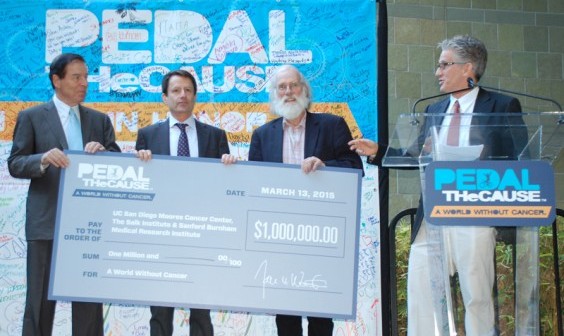
Pedal the Cause San Diego announced four new research projects to be funded from the proceeds of the second annual event at a press conference held at UC San Diego Moores Cancer Center on Friday, March 13. The check presentation, made by Pedal the Cause President and CEO Jim Woodman, drew an excited crowd of former riders, volunteers, sponsors, and cancer advocates eager to find out how their support for this year’s ride will lead to new high-risk, high-reward cancer research. Continue reading “Pedal the Cause announces new grants to advance cancer research”