insulin Archives - Sanford Burnham Prebys
Institute News

Scientists and podcasters

AuthorGreg Calhoun
Date

May 27, 2025

Sanford Burnham Prebys scientists bring dramatic stories of scientific achievement to life

In March 2025, Sanford Burnham Prebys scientists Ani Deshpande, PhD, and Pamela Itkin-Ansari, PhD, launched a new podcast exploring groundbreaking discoveries in science and medicine. The initial episodes have garnered rave reviews, including being hailed as “masterpieces” by upcoming podcast guest Adam Heller, PhD, the scientist and inventor who revolutionized blood sugar testing and laid the groundwork for modern continuous glucose monitoring systems.

On the first episode of The Discovery Dialogues Podcast, the hosts examined early descriptions of diabetes across ancient civilizations. Deshpande and Itkin-Ansari traced the research that led to the discovery of insulin and to life-saving treatment for diabetes.

Following its discovery as a treatment for diabetes, insulin had to be purified from millions of animal carcasses. In the follow-up episode, the podcasters discussed the race to make human insulin using genetic engineering, including interviews with Keiichi Itakura, PhD, a key member of the historic team that created the first synthetic gene to make human insulin, and Herb Boyer, PhD, the scientist who founded the first biotech company called Genentech and brought insulin to millions of patients.

Ani Deshpande, PhD, profile photo - image credit: Sanford Burnham Prebys

Ani Deshpande, PhD, is an associate professor in the Cancer Genome and Epigenetics Program at Sanford Burnham Prebys.

Pamela Itkin-Ansari, PhD, profile photo - image credit: Sanford Burnham Prebys

Pamela Itkin-Ansari, PhD, is an adjunct professor in the Center for Cardiovascular and Muscular Diseases at Sanford Burnham Prebys.

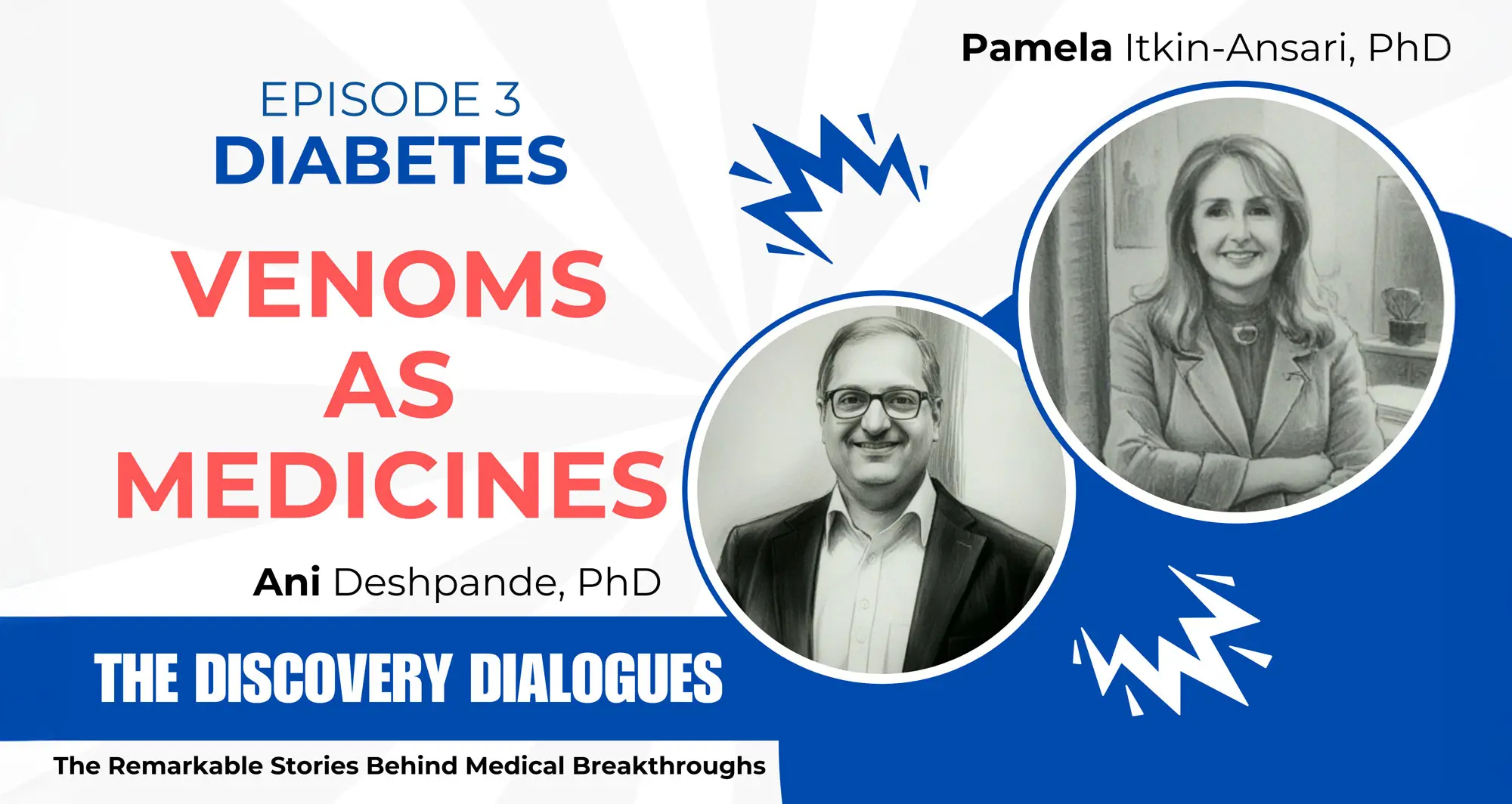
Last week, Deshpande and Itkin-Ansari released their third episode detailing animals that use insulin as venom and highlighting an animal that can sense low blood sugar faster than a machine.

We recently sat down with them to learn more about their motivations and creative process.

What is your origin story as scientists turned podcasters?

DESHPANDE: I have been very interested in communicating science for quite some time. And I think it is important for more scientists to speak in a way that all people can understand, and to embrace new ways of communicating.

I got especially excited to talk about the incredible potential of GLP-1 drugs such as Ozempic and Wegovy, but I don’t think you can properly understand them without a grasp of diabetes. I decided to tackle diabetes as the podcast’s first topic, and I reached out to Pam as a partner with complementary expertise.

ITKIN-ANSARI: I have done a lot of scientific outreach in the past as a diabetes scientist, including with the La Jolla Playhouse and Fleet Science Center, so I jumped at the opportunity. As it turns out, Ani and I are kindred spirits in terms of our desire to help people understand how biomedical research has changed the world.

What is your process for developing each episode?

DESHPANDE: We have a very elaborate process for deciding on each episode’s topic. outlining the chapters or segments and then passing drafts back and forth until we’ve refined them into a version that is both accurate and entertaining.

ITKIN-ANSARI: Getting that balance right is so important. I’m a Radiolab junkie. I have to hear every episode. The reason I keep coming back is because I get to learn something new and have a ton of fun along the way.

DESHPANDE: It is important to us that we’re not just telling stories people already know, so we take our time to find fascinating stories about the science and the personalities behind the discoveries.

How much research goes into making the podcast?

DESHPANDE: We just read and read and read and read. Then, we bounce ideas off each other to see what makes it into an episode.

ITKIN-ANSARI: The other thing is fact-checking. We feel it our job as card-carrying scientists to be as thorough as we can be to get the facts right.

While writing for the first three episodes, what information or stories surprised you?

ITKIN-ANSARI: For me, I was amazed by the venoms of the cone snail that have already led to an FDA-approved drug for severe pain and may also revolutionize diabetes treatment.

DESHPANDE: I think it’s surprising that diabetes had been described in detail more than three millennia ago. Many of our audience members told us they were surprised by that fact as well.

What teasers can you share about future episodes?

ITKIN-ANSARI: For an upcoming episode, a legendary scientist who changed diabetes care forever after surviving the Holocaust and making his way to the U.S.

DESHPANDE: One of the most fascinating things we will cover in our future episodes and that will surprise most people is that many of the most influential drugs in the history of medicine have come from plant poisons and animal venoms. It blows my mind, and I hope our listeners will also find it to be amazing.

Listeners can find The Discovery Dialogues Podcast on Spotify, Apple Podcasts and Amazon Music. The YouTube version includes on-camera interviews and additional illustrations.

Institute News

Scientists find molecular switch to regenerate insulin-producing cells

AuthorJessica Moore
Date

November 3, 2016

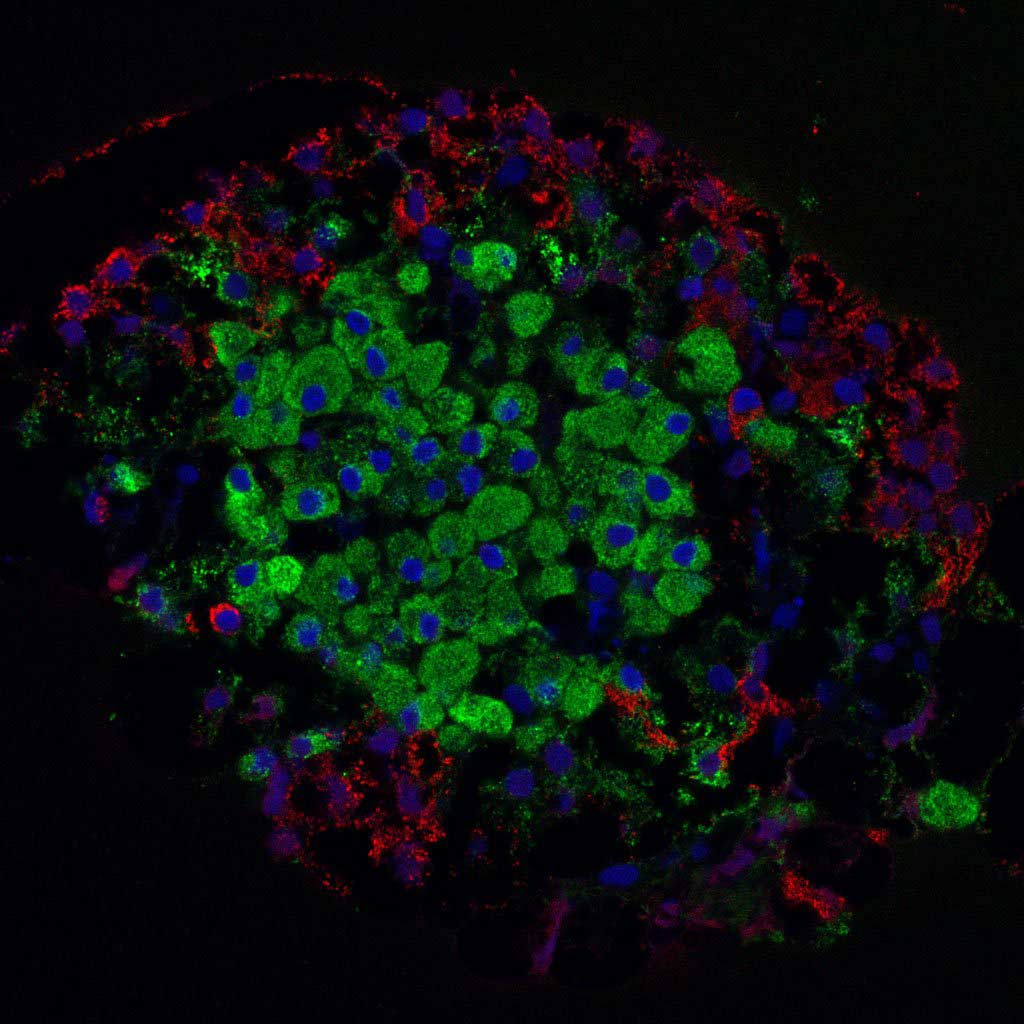
There may be a type 1 diabetes treatment one day that doesn’t involve injections, or a bulky external device, or even a transplant. Fred Levine, MD, PhD, professor and director of the Sanford Children’s Health Research Center, and his lab have discovered how the body regenerates beta cells, the cells that produce insulin. Future drugs acting by the same mechanism could eliminate—or greatly reduce—patients’ need for additional therapies to regulate their blood sugar.

Publishing in Cell Death and Disease, the team shows that using a drug to switch on a specific receptor causes certain cells in the pancreas to transform into the type that secretes insulin.

“The receptor we identified, protease-activated receptor 2 (PAR2), is a very promising drug target,” said Levine. “Although this study was done in mice, we found evidence for the same phenomenon in humans. Thus, we think drugs that activate PAR2 would free diabetic patients of their reliance on insulin for as long as those beta cells survive.”

In type 1 diabetes, beta cells are destroyed by the immune system. Without insulin, the rest of the body’s cells don’t take up glucose after a meal, so glucose levels in the bloodstream can become extremely high. If it’s not treated, that excess blood sugar can cause life-threatening dehydration and coma. Even when diabetes is managed, repeated episodes of high blood sugar cause long-term organ damage. For example, diabetes is the leading cause of kidney failure.

“For type 1 diabetics, keeping their blood sugar in a healthy range takes a lot of vigilance, and can be pretty restricting,” explained Levine. “Plus, even the most careful planning and prompt insulin injections can’t regulate blood sugar as well as beta cells can. Our goal is to regenerate those cells.”

Scientists have been looking for ways to replace beta cells for decades. Whereas many others are working towards stem cell-based therapies, Levine’s group has instead focused on how the pancreas itself might make up for the lost cells. This began with an observation that injuring the pancreas of diabetic mice causes their alpha cells—which produce another blood sugar-regulating hormone called glucagon—to convert into beta cells. This so-called ‘transdifferentiation’ happens only if the insulin-making cells are absent, as they are in type 1 diabetes.

Levine and his research unit hypothesized that something released from the damaged pancreas tissue triggered the cell type switch—likely a digestive enzyme. The best candidate for how the enzyme ‘talks to’ alpha cells was via the signaling receptor PAR2, which can be activated by trypsin, a digestive enzyme. Indeed, the new study’s battery of experiments revealed that activating PAR2 spurs alpha cells to morph into beta cells.

PAR2 activators such as 2fLI, the one used by the Levine group, are already under investigation by the pharmaceutical industry to treat pain and inflammation, which could speed the application of the scientists’ new findings.

“We are hopeful that PAR2 activators such as 2fLI will  be developed as a drug,” Levine commented. “It will take some effort, though, to find a way to get enough of it into the pancreas to induce replacement of a large number of beta cells. Current activators are eliminated from the circulation very rapidly, so we will likely need compounds with better pharmacokinetics.” 

Because PAR2 is found in many other tissues, the investigators examined its role in other types of tissue repair. They found that the receptor is also crucial for replacing damaged tissue in the liver and regenerating the tips of fingers and toes. 

“This discovery opens up a whole new area for us,” said Levine. “PAR2 appears to be a general regulator of regeneration. We plan to examine its role in a number of other tissues, and to explore the signaling that happens within the cell after it’s activated. That could lead to new drug targets not just for diabetes, but possibly other conditions as well.” 
Institute News

Protecting pancreatic cells from stress could hold promise for treating diabetes

Authorsgammon
Date

April 21, 2015

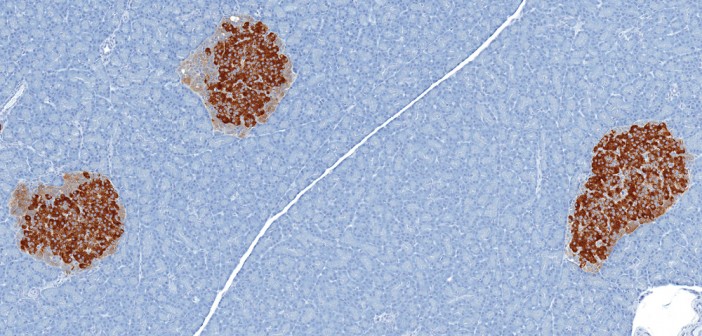
Type 2 diabetes is a chronic disease that affects about eight percent of adults worldwide, significantly increasing the risk of heart disease and stroke. This disease interferes with the body’s ability to make or use a hormone called insulin, which is produced by beta cells in the pancreas. These cells eventually fail in many patients with type 2 diabetes, making insulin replacement therapy a necessity for survival. However, this treatment is imprecise, onerous and often promotes weight gain, highlighting the strong need for better treatment options. Continue reading “Protecting pancreatic cells from stress could hold promise for treating diabetes”