Laszlo Nagy Archives - Sanford Burnham Prebys
Institute News

Study reveals how immune cells manage cholesterol levels

AuthorLindsay Ward-Kavanagh
Date

March 12, 2018

Atherosclerosis, the buildup of plaques inside arteries, is a key step in the development of cardiovascular disease, the leading cause of death in the United States. Elevated cholesterol levels are a risk factor for atherosclerosis, as the molecule is one of the building blocks of these plaques. However, since cholesterol is also essential in healthy cells, scientists are researching how cholesterol biology is controlled to better understand the changes that lead to disease.

Laszlo Nagy, MD, PhD, professor and director of the Genomic Control of Metabolism Program, recently collaborated with Peter Tontonoz, MD, PhD, professor, the leading senior scientist of the study and Francis and Albert Piansky Endowed Chair in Pathology and Laboratory Medicine at the UCLA David Geffen School of Medicine, to assess a network of molecules that control cholesterol transport out of macrophages, immune cells normally associated with inflammation.

“Although macrophages are usually thought of as the white blood cells that ingest invading bacteria and cleaning up cell debris after injury or infection, they can also enter a ‘alternatively activated’ state to help tissue repair and remodeling,” Nagy says. “In blood vessels, these repair state macrophages protect the body by removing cholesterol from the bloodstream. However, the accumulation of excess cholesterol in macrophages is a key event in the development of atherosclerosis. How macrophages control cholesterol transport is not well understood, but needs to be explored to better understand atherosclerosis.”

“We were interested in how macrophages are able to switch on the gene Abca1, the gene that encodes the protein that pumps cholesterol out of these cells,” Nagy explained. “We used our expertise in epigenomics to define regions of the genome that controlled the amount of Abca1 RNA produced.”

By examining long non-coding RNA strands that regulate gene expression, the study identified an RNA called MeXis that increases the expression of Abca1. Although MeXis cannot start transcription of Abca1 by itself, it does impact the ability of other proteins to transcribe the gene.

“Using our molecular tools, we were able to show that MeXis recruited another protein that helps to start transcription to Abca1, says Nagy. “Without MeXis, this protein did not interact with Abca1 and transcription was dramatically reduced, even when the cells received signals to start the process of ridding themselves of cholesterol.

“The more we understand about the biological processes that control cholesterol metabolism the better informed we are to develop strategies to prevent and treat atherosclerosis, says Nagy.  “This study reveals key insights on the regulation of Abca1, which could ultimately lead to new therapeutic approaches.”

The study was published in Nature Medicine.

Institute News

Exciting diabetes and obesity research highlights from Medical City

AuthorDeborah Robison
Date

May 22, 2017

Center for Metabolic Origins of Disease

With more than one-third of adults in the U.S. considered obese, scientists are searching for new ways to treat obesity and associated health problems such as type 2 diabetes. Four researchers from Sanford Burnham Prebys Medical Discovery Institute (SBP) at Lake Nona have been invited to present new perspectives and insights at the American Diabetes Association’s 77th Scientific Sessions, to be held June 9-13, 2017, in San Diego. The conference is the world’s largest gathering of research experts and clinicians focused on diabetes research, prevention and care. The presentations will inform new treatment strategies for the nearly 30 million people diagnosed with diabetes.

Potential early therapeutic target for diabetes prevention
Obesity often leads to accumulation of fat in muscle and faulty machinery involved in taking up glucose from a meal to use it for energy, leading to type 2 diabetes. A recent advance from the laboratory of Daniel P. Kelly, MD, scientific director of SBP at Lake Nona, may lead to a way to stop this pre-diabetic state from advancing. Dr. Kelly will present findings on a recently discovered cellular glucose sensor in muscle that serves as a key connection between insulin resistance and accumulation of fat in muscle, which occurs in obesity-related diabetes. When the protein is inhibited in skeletal muscle cells, regulatory genes that influence glucose uptake and insulin signaling are enhanced. The team is now validating the pathway as a therapeutic target to prevent type 2 diabetes.

Fatty liver and type 2 diabetes
Peter Crawford, MD, PhD, director of SBP’s Cardiovascular Metabolism Program, is studying the root causes of nonalcoholic fatty liver disease (NAFLD), a condition that affects nearly 80 percent of people with type 2 diabetes. About 5 percent of NAFLD cases advance to liver cirrhosis – a disease characterized by scarring and fibrosis that could require liver transplant. Dr. Crawford is an expert on how the liver processes energy derived from food. At the ADA meeting, he will discuss how the interruption of normal fat metabolism can lead to enhanced scarring. Through ongoing research, he hopes to be able to specifically identify which diabetes patients are at risk of developing advanced liver disease and to develop therapies that protect against disease progression.

Brain nutrient sensors help maintain energy balance
Diabetes researcher Julio Ayala, PhD wants to understand how specialized regions in the brain control food intake, energy expenditure and body weight. His ADA presentation will focus on how nutrient-sensors that control the balance between energy-consuming and energy-producing processes in almost every cell in our bodies also play a very specific role in the brain. His research shows that hormones, such as glucagon-like peptide-1 (GLP-1) regulate the activities of these brain nutrient sensors to influence hunger, satiety and ultimately body weight. Defective sensors are implicated in obesity and could be a target for new therapeutic treatments.

Glucose Sensor in Macrophages
Insulin resistance is a key feature of type 2 diabetes. When present, the impairment prevents insulin from getting glucose into muscle where it’s used for energy, and instead causes blood sugars to become elevated. The events that drive the development and progression of insulin resistance are not known. Laszlo Nagy, MD, PhD, director of SBP’s Genomic Control of Metabolism Program, will present new research that suggests that the inflammatory process—and specifically a type of white blood cells called macrophages—are involved. He will present a novel hypothesis on the role of macrophages, defined in Greek as “big eaters”, and identify molecules involved in muscle growth and glucose metabolism. His research aims to reveal cellular interactions that could become new therapeutic targets to treat type 2 diabetes.

Institute News

Breakthrough in understanding how stem cells become specialized

AuthorJessica Moore
Date

August 4, 2016

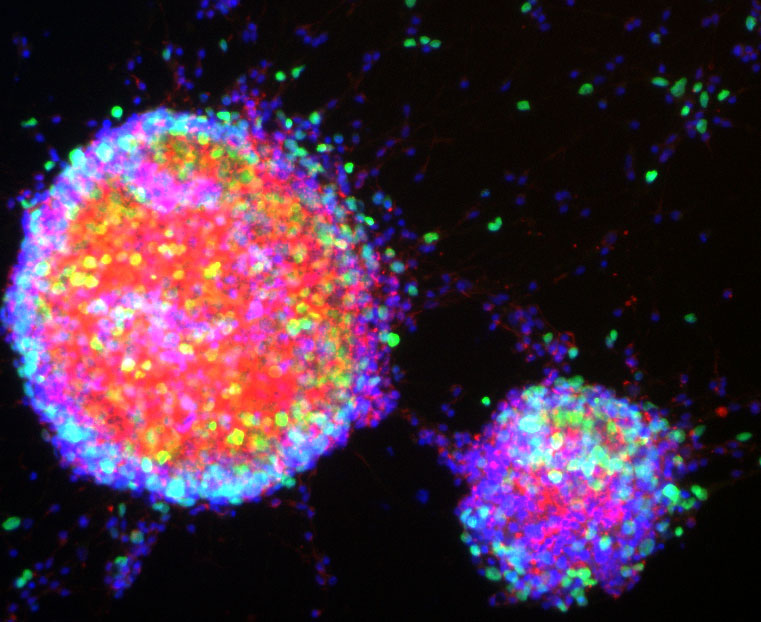
Scientists at Sanford Burnham Prebys Medical Discovery Institute (SBP) have made a major advance in understanding how the cells of an organism, which all contain the same genetic information, come to be so diverse. A new study published in Molecular Cell shows that a protein called OCT4 narrows down the range of cell types that stem cells can become. The findings could impact efforts to produce specific types of cells for future therapies to treat a broad range of diseases, as well as aid the understanding of which cells are affected by drugs that influence cell specialization.

“We found that the stem cell-specific protein OCT4 primes certain genes that, when activated, cause the cell to differentiate, or become more specialized,” said Laszlo Nagy, MD, PhD, professor and director of the Genomic Control of Metabolism Program at SBP’s Lake Nona campus and senior author of the study. “This priming customizes stem cells’ responses to signals that induce differentiation and makes the underlying genetic process more efficient.”

Differentiation matters

As an organism—such as a human—develops from its simplest, earliest form into maturity, its cells transition from a highly flexible state—stem cells—to more specialized types that make up its tissues. Many labs are trying to recapitulate this process to generate specific types of cells that could be transplanted into patients to treat disease. For example, pancreatic beta cells could treat diabetes, and neurons that produce dopamine could treat Parkinson’s.

What OCT4 does

OCT4 is a transcription factor—a protein that regulates gene activity—that maintains stem cells’ ability to give rise to any tissue in the body. OCT4 works by sitting on DNA and recruiting factors that either help initiate or repress the reading of specific genes.

The new study shows that, at certain genes, OCT4 also collaborates with transcription factors that are activated by external signals, such as the retinoic acid (vitamin A) receptor (RAR) and beta-catenin, to turn on their respective genes. Vitamin A converts stem cells to neuronal precursors, and activation of beta-catenin by Wnt can either support pluripotency or promote non-neural differentiation, depending on what other signals are present. Recruitment of these factors ‘primes’ a subset of the genes that the signal-responsive factors can activate.

The big picture

“Our findings suggest a general principle for how the same differentiation signal induces distinct transitions in various types of cells,” added Nagy. “Whereas in stem cells, OCT4 recruits the RAR to neuronal genes, in bone marrow cells, another transcription factor would recruit RAR to genes for the granulocyte program. Which factors determine the effects of differentiation signals in bone marrow cells—and other cell types—remains to be determined.”

Next steps

“In a sense, we’ve found the code for stem cells that links the input—signals like vitamin A and Wnt—to the output—cell type,” said Nagy. “Now we plan to explore whether other transcription factors behave similarly to OCT4—that is, to find the code in more mature cell types.

“If other factors also have this dual function—both maintaining the current state and priming certain genes to respond to external signals—that would answer a key question in developmental biology and advance the field of stem cell research.”

The paper is available online here.

Institute News

Enzymes could be key for brain cancer and Alzheimer’s disease

AuthorGuest Blogger
Date

December 9, 2014

This post was written by Janelle Weaver, PhD, a freelance writer.

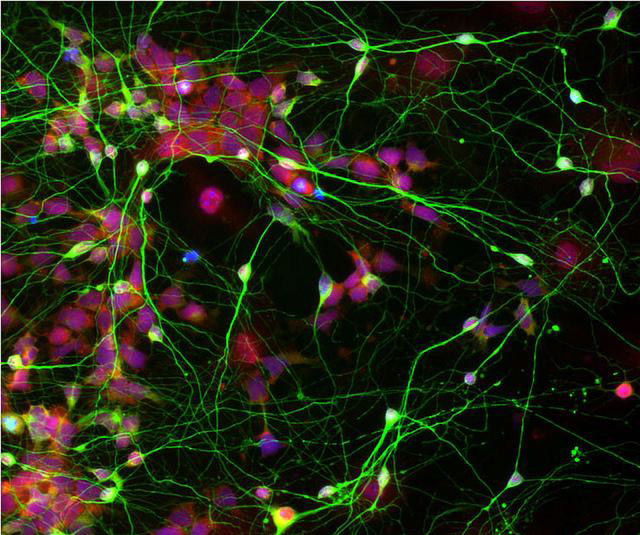
Animals ranging from fish to humans produce a vitamin-A metabolite called retinoic acid, which plays an important role in growth and embryonic development and protects against diseases such as cancer. By regulating the activity of key genes, retinoic acid causes immature cells called embryonic stem cells to turn into mature, specialized cells such as neurons. “Neurons—the building blocks of the nervous system—are particularly important cell types in therapy, due to the fact that they normally don’t reproduce or replace themselves after they become damaged,” said Laszlo Nagy, MD, PhD, director of the Genomic Control of Metabolism Program and professor in the Diabetes and Obesity Research Center at Sanford-Burnham’s Lake Nona campus. “Despite their crucial role, we still have a limited understanding regarding the molecular programs that coordinate their functionality.” Continue reading “Enzymes could be key for brain cancer and Alzheimer’s disease”

Institute News

A nuclear receptor that binds more than 5,000 sites in the genome—and promotes angiogenesis.

Authorsgammon
Date

July 17, 2014

The retinoid X receptor (RXR) is a nuclear hormone receptor—meaning that it sits on various parts of the genome—and turns genes “on” and “off.” RXR is known to play an important role in many fundamental biological processes such as reproduction, cellular differentiation, bone development, and hematopoiesis. Continue reading “A nuclear receptor that binds more than 5,000 sites in the genome—and promotes angiogenesis.”