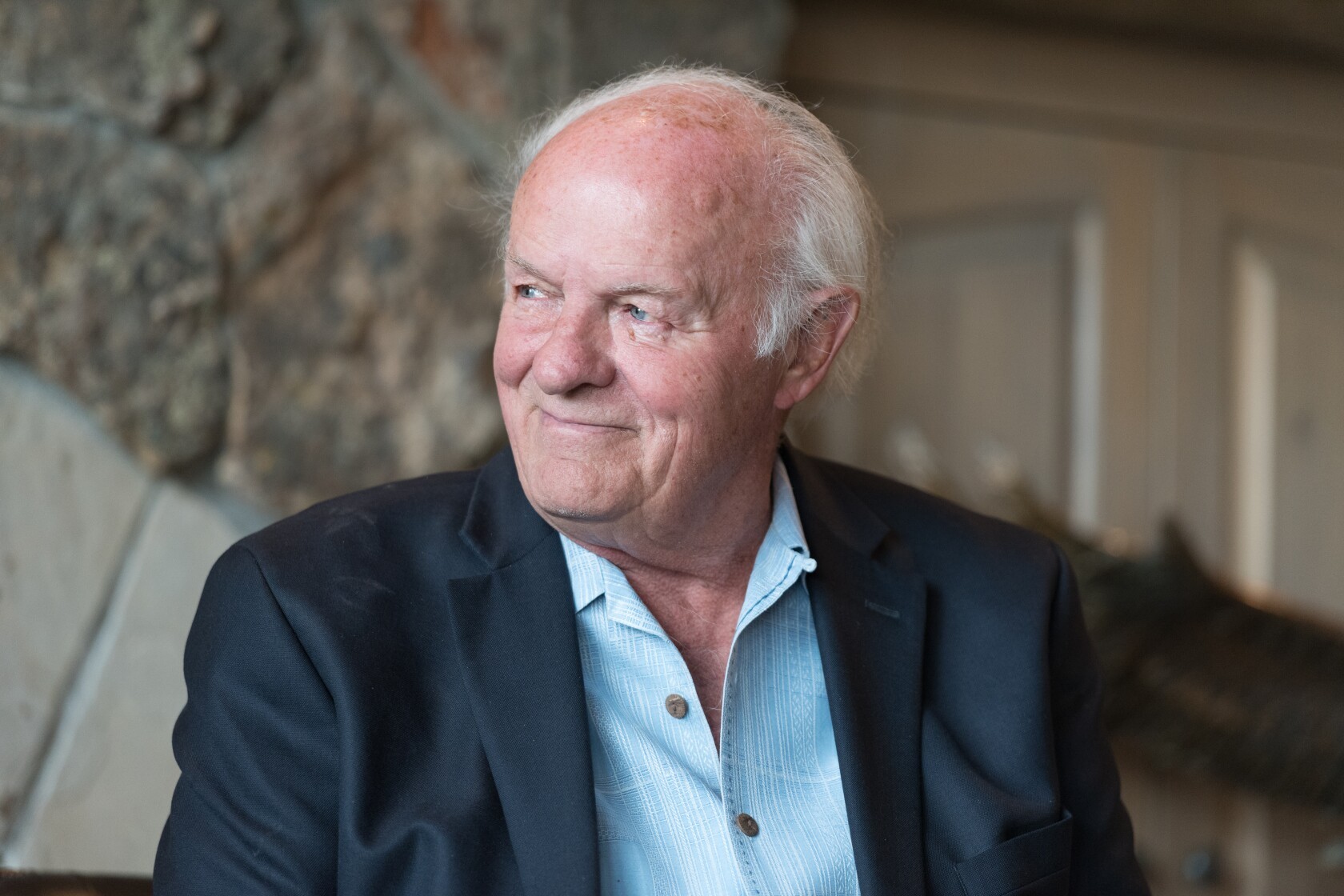
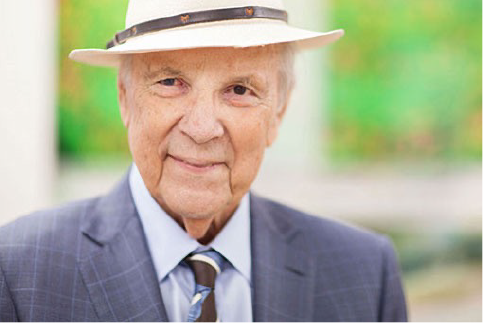
Renowned philanthropist and businessman T. Denny Sanford passed away July 18, 2026 in his hometown of Sioux Falls, South Dakota. He was 90 years old.
Renowned philanthropist and businessman T. Denny Sanford passed away July 18, 2026 in his hometown of Sioux Falls, South Dakota. He was 90 years old.
A self-made billionaire, Sanford had spent recent decades diligently spreading that wealth through philanthropy, primarily focusing on education, health services and biomedical research. His motto: “Aspire to inspire before you expire.”
“Denny was larger than life. He loved people, philanthropy, business and golf. He was my supporter and advisor, but more importantly, my confidant and friend. Denny was fascinated by science and education, especially in advancing ideas and efforts that would make lives better, both in terms of health and in well-being,” said David Brenner, CEO and president of Sanford Burnham Prebys Medical Discovery Institute.
“His generosity was manifest, from supporting research and treatment of rare children’s diseases to stem cells to recruiting new generations of bright, young scientists to carry on the work. He loved to hear about how his philanthropic investments have benefited young people.”
Sanford Burnham Prebys was a frequent beneficiary. In 2007, for example, Sanford gave the institute $20 million through Sanford Health, the largest rural health system in the U.S. and a longtime beneficiary of Sanford. The gift helped the then-called Burnham Institute to create the Sanford Children’s Health Research Center. A year later, Sanford donated $30 million to create the Sanford Consortium for Regenerative Medicine, with the Institute as a founding member.
Two years later, Sanford donated $50 million and The Burnham Institute became the Sanford-Burnham Medical Research Institute. In 2023, he gave $70 million to Sanford Burnham Prebys to launch an ambitious plan to recruit up to 20 new scientists.
Sanford has been an honorary trustee at Sanford Burnham Prebys since 2009.
“Long before Denny’s and my names became inextricably linked through the Sanford Burnham Prebys Medical Discovery Institute, we shared a common goal to make an impact in our communities and to serve others,” said Malin Burnham, who has served on its board of directors since 1982. “Denny embodied that purpose throughout his life, generously investing himself and his resources to benefit others, often with truly transformational results.”
“Denny’s commitment to health and medicine was extraordinarily broad and deep,” noted Donald Kearns, MD, chair of the Board of Directors at Sanford Burnham Prebys and president emeritus of Rady Children’s Hospital-San Diego. Indeed he partnered with and supported specialized pediatric care for local families through the hospital, Sanford Children’s Clinic in Oceanside and the Children’s Primary Care Medical Group.
Sanford fundamentally believed that basic research and the benefits derived were driven and sustained by the people who do it. That was most evident in his philanthropy supporting education and in supporting new generations of scientists, said Brenner.
“Denny was a visionary committed to making a better world. His $70 million gift to recruit new faculty—the young investigators who will be future leaders—was a transformational investment in the continued strength of biomedical research at Sanford Burnham Prebys and across the Torrey Pines Mesa.,” said Brenner.
Sanford was born in Saint Paul, Minn. in 1935 during the Great Depression. His mother died of breast cancer when he was four years old. “She had been in the hospital for about a year before she died, so I have no memory of her at all,” Sanford recalled, but her death would inspire significant, subsequent support of cancer research by her son.
His father passed when he was 20.
“We have a lot of heart disease in my family,” he told the Horatio Alger Association, which honored him in 2016. “My father had several heart attacks throughout my childhood. My older brother had a fatal heart attack at the age of 40. I also had a heart attack at the age of 44, but I have had good health since then. But the loss of my father when I was still so young was a major blow to me.
“He was the most caring person I ever met. He never graduated high school because he had to help support his family. He was very giving, and I think my ideas about philanthropy, which is such an important part of my life today, came from him.”
Sanford did graduate from high school—and the University of Minnesota in 1959. In the following years, Sanford would be a sales representative for industrial cork and building materials. He started a distribution company that he transformed into a manufacturing and research firm.
In 1986, he purchased a small bank in Sioux Falls, South Dakota with $80 million in assets, then created a credit card business: United National Corp., with its two subsidiaries, First Premier Bank and Premier Bankcard, soon had a $1 billion portfolio of credit card loans.
The scope of Sanford’s philanthropy is staggering.
He has donated more than $1 billion to Sanford Health, a system of 48 medical centers, 211 clinics and 160 senior living centers in the upper Midwest, California and Florida, including funding to establish the Edith Sanford Breast Center in honor of his mother.
In addition, Sanford has made multi-million dollar gifts to the Sanford Underground Research Facility, the Sioux Falls Development Foundation, the Sioux Falls Zoo and Aquarium and the Children’s Home Society of South Dakota.
A part-time resident of San Diego, Sanford has made similar and substantial gifts to a host of local institutions: UC San Diego, National University, the Salk Institute, San Diego Public Library and the Zoological Society of San Diego.
To date, it’s estimated Sanford’s total philanthropy is approximately $2 billion.
“We are on earth to provide for other people, not just ourselves and our families,” Sanford said before his induction into South Dakota’s Hall of Fame in 2007. “We all have the opportunity to work a little bit harder and help someone else, not just ourselves.”
Remembrances
“One of the greatest gifts of my 20-plus-year friendship with Denny was learning how deeply he cared about helping others. Whether we were talking about life, philanthropy or our Institute, he always brought the conversation back to making a difference. He believed that a truly meaningful life is measured by the impact you have on people’s lives. That philosophy has stayed with me ever since and continues to guide the mission and purpose of our biomedical research.”
Kristiina Vuori, MD, PhD
Professor
Cancer Genome and Epigenetics Program
Pauline and Stanley Foster Distinguished Chair
“I’ve always felt Denny was the older, wiser brother I never had. First time I saw his smile and those blue eyes with shirt to match, I knew I was in friendly territory. But friendly was quite an understatement. Right from the beginning, he wanted to know what we at the institute and me personally could do for kids. He was all about kids, especially those who didn’t get all the normal genes like the rest of us. Those blue eyes were quick to glow when meeting some of the kids we’ve worked with, and especially those few we’ve ‘saved.’ Those eyes teared up easily when he met the kids that neither of us could help. But their smiles would coax out a broad grin on that man’s kind and generous face.
“Whenever we had a big meeting inviting families, scientists and physicians, Denny was right there to welcome everyone and let them know how important they were to him. He showed it all the time. The kids and families wrote him thank you notes and, years later, he’d ask me about some of them.
“They asked about him too. Last year I went to a meeting in Sioux Falls and Denny said, ‘Let’s get together.’ I thought he meant a friendly drink. Not Denny. He’s the surprise man, asking me, “What do you need, pal?” I was caught totally off guard, speechless. He quickly added, ‘Not for you, for the kids.’
“He was generous, but you had to pull your own weight. We mostly got there. Just like 20 years before, being around my ‘big brother’ was all I needed. Of course, seeing that blue-eyed smile always charmed me. In May, he came to my birthday party, maybe he knew it would be our last time. I’ll miss those eyes, that man and his advice.”
Hudson Freeze, PhD
Director, Sanford Children’s Research Center
Professor
William W. Ruch Distinguished Endowed Chair
“Denny Sanford’s passing marks the loss of a truly extraordinary philanthropist whose vision, generosity and unwavering belief in the power of people to make a difference will be felt for generations.
“His support was instrumental in bringing Dr. David Brenner to Sanford Burnham Prebys, setting in motion the recruitment of world-class scientists whose discoveries continue to advance human health.
“Beyond our institute, Denny’s commitment to improving lives touched countless organizations and communities through his remarkable philanthropy. His legacy lives on not only in the buildings that bear his name, but in the scientific breakthroughs, healthier lives and brighter futures made possible by his generosity. As we honor his memory, we do so with deep gratitude and a renewed commitment to carry forward the vision he so passionately believed in.”
Lori Moore
Vice Chair, Sanford Burnham Prebys Board of Directors
“Over the fifteen years I have directed the Prebys Center for Chemical Genomics and the Center for Therapeutics Discovery, I have seen what it means for an institution to be shaped by Denny Sanford’s vision.
“Denny did not merely support biomedical research in the abstract: He embraced, and then championed, the harder and less certain part of our mission — the part that moves beyond understanding the molecular basis of disease into discovering first-in-class drugs for the diseases that have proven so stubbornly difficult to treat.
“That expansion of ambition was not the safe path. It was the visionary one, and it took someone who grasped the big picture: that transformational advances in healthcare for all begin with someone willing to fund the decades-long, uncertain crossing from biology to medicine.
“The pipeline of emerging therapeutics we are advancing today — for pain, for addiction, for cancer, for neurodegeneration — exists in large measure because Denny believed that ‘curing incurable diseases’ was a worthy investment, not a naive one. The tribute he would value most is not words, but the work itself — bringing these drugs to the patients who need them. That is the promise his generosity made possible, and the one we strive to keep.”
Michael Jackson, PhD
Senior Vice President, Drug Discovery and Development
Conrad Prebys Center for Chemical Genomics
Director, Center for Therapeutics Discovery
Associate Director, Translational Initiatives
“As a board member of Sanford Burnham Prebys, what I admired most about Denny was that his generosity didn’t just fund buildings or research. It gave big ideas the chance to become breakthroughs and helped transform our institute into a place capable of changing the future.
“As a San Diegan, I believe our fair city is healthier, stronger and more hopeful because he chose to invest here. His vision lives on in the discoveries we make, the patients we help and the lives we improve.
“As a person, Denny made me think bigger about what philanthropy can accomplish, and to believe that each of us can be a part of something greater than ourselves. His legacy will continue to inspire me—and many others—to do the very best we can, just as he did.”
Katherine Chapin
Sanford Burnham Prebys Board of Directors
“Like so many in our Sanford Burnham Prebys family, I am deeply saddened by the passing of Denny Sanford, who was a remarkable philanthropist, visionary and long-time friend. Denny’s unwavering belief in the power of scientific discovery shaped our institute and empowered our scientists to pursue breakthroughs that will bring hope to patients and families for generations to come.
“His legacy extends far beyond his extraordinary philanthropy. He inspired all of us to think bigger, dream bolder and recognize the power of philanthropy to accelerate medical discovery. As we mourn his passing, we also celebrate a life devoted to improving the human condition and making a lasting impact. There is no greater tribute we can offer than to carry his vision forward by cultivating a community of philanthropists who share his passion for discovery and are committed to ensuring that Sanford Burnham Prebys remains a place where bold science continues to change lives.”
Sandy Liarakos
Vice President, Philanthropy
Institute News
LEAP scholars share scientific and professional development achievements
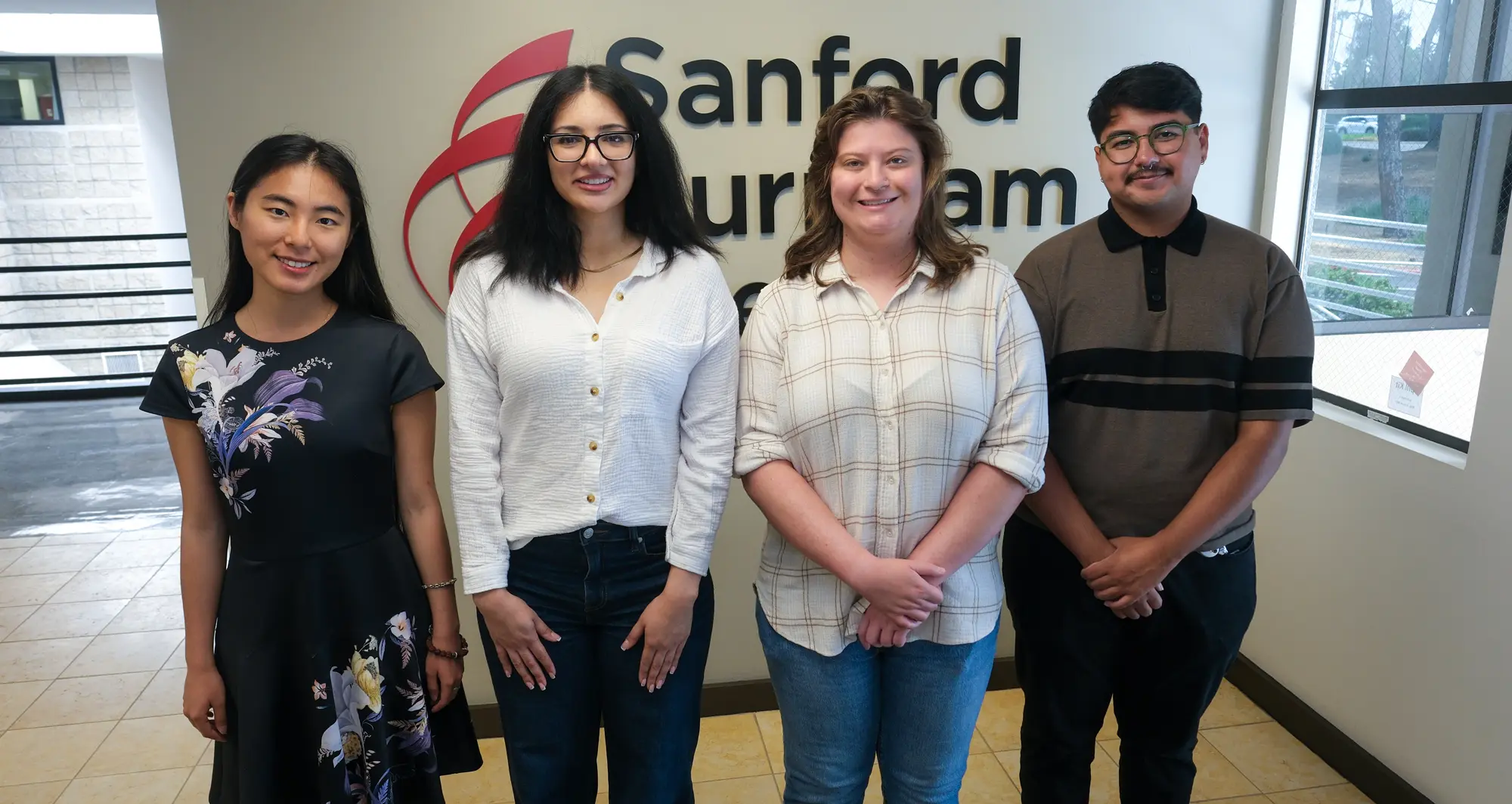
LEAP program participants recently shared their research at a capstone presentation event. From left to right: Yun Ma, Sarina Safavi, Isabel Sakowicz and Josue Navarrete. Not pictured: Mahek Shah. Image credit: Sanford Burnham Prebys.
Postbaccalaureate training program participants deliver capstone presentations, thank mentors and colleagues
In late June 2026, trainees in the LEAP (Laboratory Experience As Pathway to Graduate School) program at Sanford Burnham Prebys Medical Discovery Institute participated in a capstone presentation event. The scholars shared their research findings following a year of work and mentorship in labs throughout the Institute.
The LEAP program was designed to bridge the gap between college graduation and graduate school. It provides recent graduates with hands-on biomedical research experience, career development opportunities and mentorship to enhance their applications for—and ability to succeed in—highly competitive biomedical PhD programs.
With generous support from the Prebys Foundation, the LEAP program is offered through a collaborative partnership between the Sanford Burnham Prebys NCI-designated Cancer Center and Office of Learning and Development.
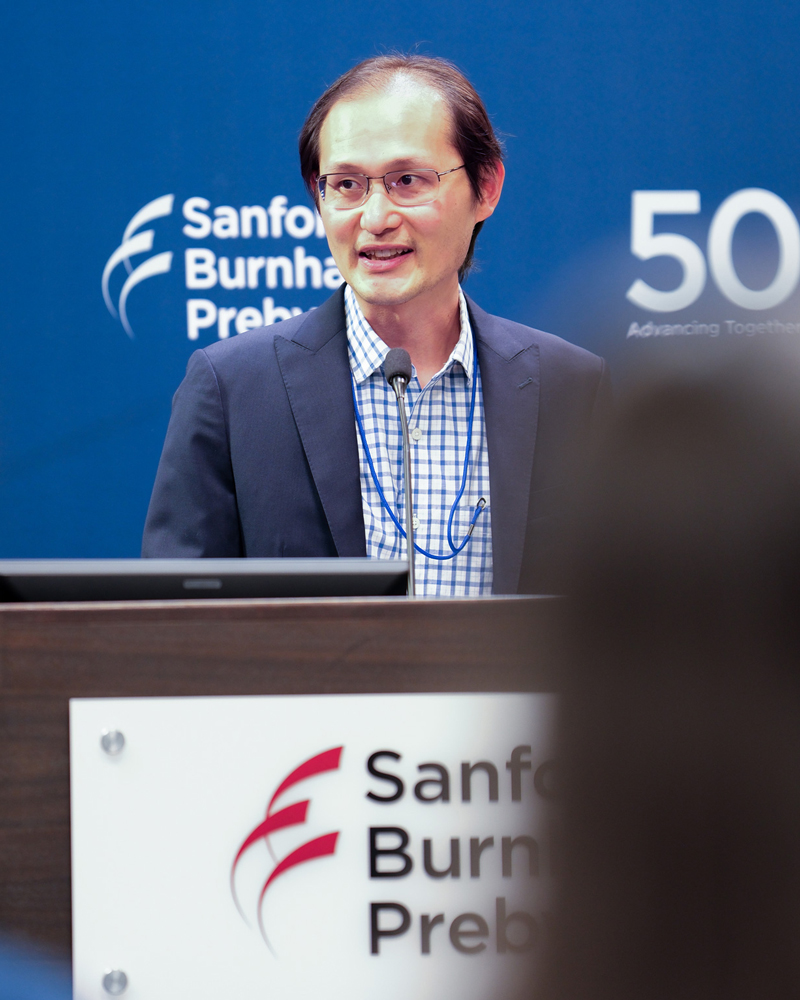
“Today we celebrate five of our LEAP program participants who have gained new skills, demonstrated research successes and grown as scientists throughout their journeys here,” said Kevin Yip, PhD, during his introductory remarks.
Following Yip’s welcoming address, the LEAP program mentors introduced the participants and invited them forward for their capstone presentations.
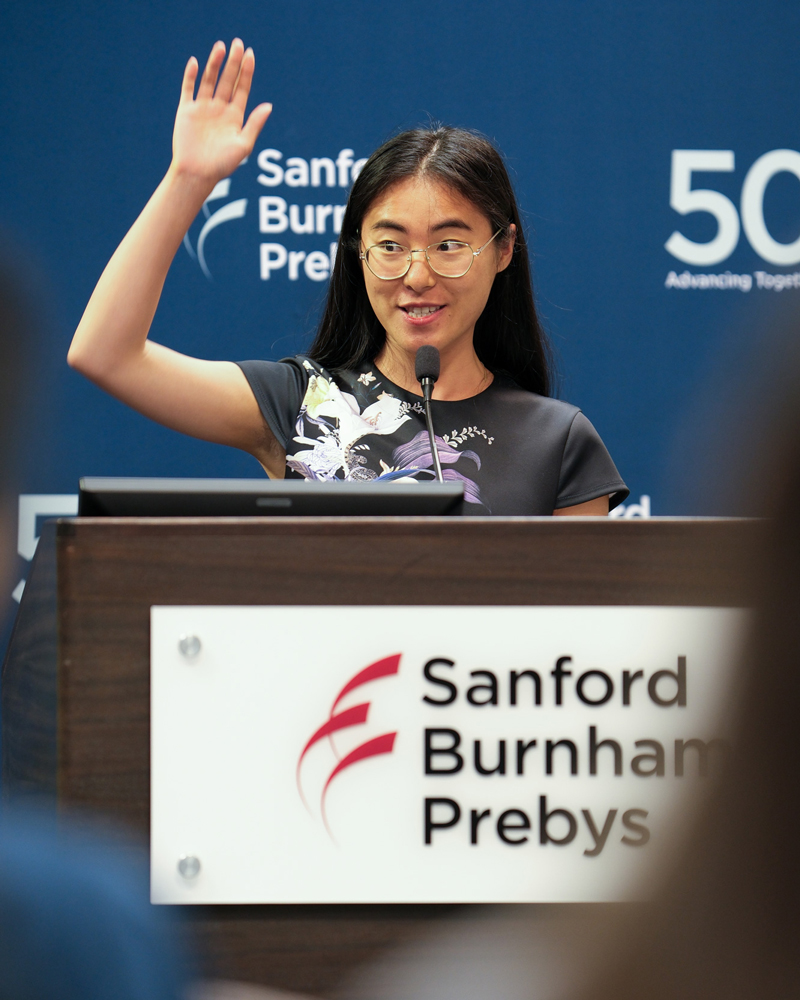
Yun Ma, a trainee in the Feng and Yip labs, discussed her study of proteins that group together in what are called protein complexes to carry out biological functions.
Ma developed a method for comparing data on RNA and proteins to identify priority genes affecting how protein complexes form. These priority genes may help shed new light on how diseases progress and may inform efforts to design new medications.
Her presentation was titled, “Inferring disease-associated changes in protein complex assembly from multimodal data.”
Kevin Yip, PhD, the Andrew and Erna Viterbi Distinguished Chair and director of the Center for Data Science and Artificial Intelligence, provided opening remarks at the event.
Sarina Safavi, a trainee in the Dhar lab, described her work to understand why cardiovascular disease—especially heart failure with preserved ejection fraction—is the leading cause of death among liver disease patients. Safavi developed tools needed to make new liver disease research models to study how the disease affects the heart.
The continuation of this research may lead to the discovery of new drug targets and methods for identifying liver disease patients at greater risk of heart failure to enable earlier treatments.
Her talk was titled, “Mechanistic understanding of MASLD-associated cardiac dysfunction and its reversibility.”
Josue Navarrete, a trainee in the Deshpande and Yip labs, detailed his project focused on small proteins from areas beyond the protein-coding genes that get the most scientific attention. Increasing amounts of evidence supports these microproteins’ biological importance, including in cancer.
Navarette optimized a computational technique for discovering microproteins which enables large-scale studies of thousands of genes. He tested the approach and found microproteins involved in stem cells becoming blood cells and other cells. Studying these microproteins may lead to new diagnostic techniques and potential treatments for blood cancers.
His lecture was titled, “Optimized pipeline enables genome-wide discovery of candidate microproteins in hematopoiesis.” Navarette will be joining the Institute as a doctoral student this fall.
Mahek Shah, a trainee in the Spruck lab, shared her study of a cancer treatment strategy that compels tumor cells to act as if they are infected by a virus. Known as viral mimicry, this therapeutic approach triggers the innate immune system to respond against cancer cells. Shah described drug screening experiments that identified promising novel candidate compounds.
In further tests, these compounds were found to activate viral mimicry, cause an immune response and to be toxic to cancer cells. Continued research may lead to new treatments that can boost the effectiveness of chemotherapy, radiation therapy and targeted therapies.
Her presentation was titled, “Novel compounds targeting histone modifying enzymes induce viral mimicry in breast cancer.”
Isabel Sakowicz, a trainee in the Tharp lab, discussed her research regarding the most common and difficult-to-treat form of ovarian cancer. These tumors can wall themselves off from the immune system with structural collagen proteins that resemble scar tissue.
Yun Ma, a trainee in the Feng and Yip labs, discussed her study of proteins that group together in what are called protein complexes to carry out biological functions.
Sakowicz explored how a potential treatment strategy might reduce levels of a form of collagen known to promote ovarian cancer invasiveness and metastasis. Lowering collagen VI levels may break down the barrier around ovarian cancer cells to make other treatments more effective, including immunotherapies.
Her presentation was titled, “FAK protein loss rewires amino acid metabolism in high-grade serous ovarian cancer.” Sakowicz will be joining the Institute as a doctoral student this fall.
In addition to discussing their respective projects, the trainees credited their mentors, fellow lab members and access to avenues for training and advancing as professionals.
“Beyond my scientific achievements, I have enjoyed many career development opportunities, including attending and presenting at workshops, seminars and conferences,” said Ma.
“Everyone in the lab has contributed to a truly supportive and cooperative environment,” said Safavi. “I would also like to thank the LEAP program coordinators for their efforts and making sure we were set up for success.”
Institute News
LEAP scholars share research and celebrate a year of growth
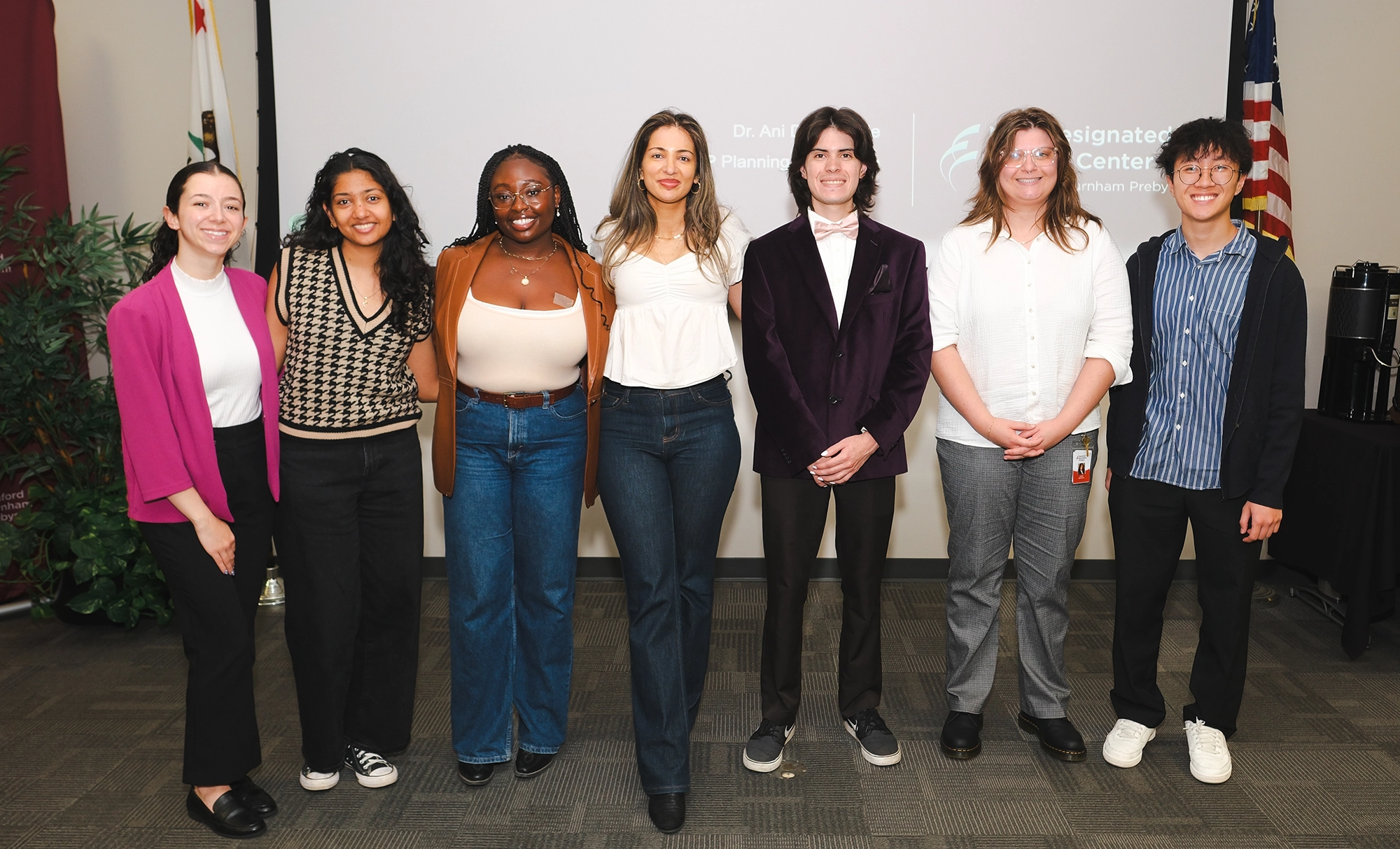
From left: Rachel Khoury, Makeh Shah, Emerald Adeyan, Sarina Safavi, Kai Rauda, Isabel Sakowicz, Kyle Alvarez. Not pictured: Monica Jensen. Image credit: Sanford Burnham Prebys.
Last week, scholars in the LEAP (Lab Experience As Pathway) program shared their research at a capstone presentation event, marking the culmination of a year-long journey in the lab. Designed to bridge the gap between college graduation and graduate school, the LEAP program provides recent grads with hands-on research experience, professional development, and mentorship to prepare them for advanced studies in STEM.
The program was first launched by Dr. Ani Deshpande and has since been championed by Dr. Kevin Yip, who continues to lead and shape its success. With generous support from the Prebys Foundation, the LEAP program is led by the Sanford Burnham Prebys NCI-designated Cancer Center, with significant contributions from the Office of Education, Training and International Services (OETIS), Workforce Engagement and Belonging (WEB), a dedicated team of mentors, and many other Sanford Burnham Prebys colleagues.
In his closing remarks, Dr. Deshpande reflected on the purpose and promise of the program. “This is about you,” he told the scholars. “Your energy, your growth, your potential. I’ve been so impressed by your scientific curiosity and your confidence.”
Dr. Yip added, “It’s been a privilege to work with such a talented and motivated group. Watching them grow as scientists and individuals over the past year has been truly inspiring.”
As the event wrapped up, students headed to a poster session and photo session with plenty to celebrate: a year of lab experience, new skills, and a clearer path to graduate school and beyond.
The LEAP program students include: Emerald Adeyan (Chavez and Heynen-Genel Labs) Developing an Innovative Assay for High-Throughput Detection of ecDNA in MYC-Amplified Medulloblastoma Kyle Alvarez (Jackson and Sinha Labs) Tissue Morphology Predicts Telomere Shortening in Human Tissues Monica Jensen (Huang Lab) Development and Validation of TREM2 Overexpression Lines in H9 Embryonic Stem Cells Rachel Khoury (Wang Lab) Motor Neuron Rewiring in Aging & Cachectic Muscle Wasting Conditions Kai Rauda (Osterman Lab) Skin-Deep Discovery: A Novel Vitamin C Metabolic Pathway in Cutibacterium acnes Sarina Safavi (Yip Lab) Exploring Differential Expression in Alzheimer’s Disease Resilience Isabel Sakowicz (Kumsta and Tharp Labs) Glucose-Driven Fibrotic Pathways: Connecting Metabolic Stress to Ovarian Fibrosis Mahek Shah (Spruck Lab) Validating F5446 as an Inducer of Viral Mimicry in Human Breast Cancer Cells
Conrad Prebys passed away on July 24, 2016 at the age of 82 after a protracted battle with cancer.
He was prominent real estate developer who began his portfolio in the 1960s with just $500. In time, he would become even more widely renowned as a philanthropist with many causes and interests. Most notably, in 2008 he donated $10 million to establish the Prebys Center for Chemical Genomics at then-Burnham Institute for Medical Research.
Five years after T. Denny Sanford donated $50 million in 2010 to the Institute (with the name changed to Sanford-Burnham Medical Research Institute), Prebys gave $100 million and the name was changed to Sanford Burham Prebys Medical Discovery Institute.
Both Sanford and Prebys became honorary directors in 2009. Like Sanford, Prebys was a strong advocate for biomedical science and translating the discoveries of basic research into new treatments, drugs and cures.
At the renaming of the Institute, Prebys said, “I’ve been involved with the excellent researchers at the Institute for many, many years. They’re the best there is, and that excites me. If, through my support, I can shorten people’s suffering, or extend their quality of life, that would give me unlimited pleasure and joy.”
Over the years, Prebys would make additional regular gifts to the Institute to support research.
His interests and philanthropic support were expansive. He made significant gifts to UC San Diego, San Diego State University, the San Diego Zoo, Scripps Mercy Hospital, the Boys and Girls Clubs, the Old Globe Theatre, the La Jolla Music Society, the Salk Institute and the San Diego Museum of Art. Many buildings, research centers and scholarships in the region bear his name.
He also donated $20 million to his alma mater—the Indiana University Kelley School of Business—to fund construction of a new campus amphitheater and the Kelley School of Business Conrad Prebys Career Services Center in 2015.
In 2012, he was named one of the 25 most generous people in the United States by Business Insider.
Born in South Bend, Indiana, Prebys was raised in a blue collar, ethnic, working class neighborhood where the mindset was to complete high school and then work in the local factories of Studebaker or Bendix. When he was eight years old, he developed a heart condition which doctors said would force him to lead a sedentary life and leave him unable to do manual labor. His parents decided that he should learn to play the piano as a way to make a living as an adult.
The turning point in his life was meeting an inspirational high school drama teacher who exposed him to culture and the arts. The teacher was also influential in encouraging Prebys to further his education. He was the first of five brothers to attend and graduate from Indiana University. He was also the first in his neighborhood to go beyond high school.
Prebys moved to San Diego in 1965 and founded Progress Construction Company to build homes, eventually diversifying to build, own or rent thousands of apartment units. Ultimately, these resources were transferred to his estate’s charitable organization, the Conrad Prebys Foundation, which sold the real estate portfolio to The Blackstone Group for more than $1 billion in 2021. The Prebys Foundation is now among the largest and most active charitable organizations in the San Diego region, with interests in health care, medical research, visual and performing arts, higher education and youth development.