nutrition Archives - Sanford Burnham Prebys
Institute News

Women in Science Lecture series showcases public health and nutrition policy leader

AuthorGreg Calhoun
Date

February 23, 2026

The series highlights the groundbreaking work and unique perspectives of women leaders in the biomedical sciences

On February 11, 2026, Sanford Burnham Prebys Medical Discovery Institute hosted the second event in the Women in Science Lecture Series. The occasion opened with a presentation by Cheryl A.M. Anderson, PhD, MPH, MS, professor and dean of the Herbert Wertheim School of Public Health and Human Longevity Science at the University of California San Diego and director of the UCSD Center of Excellence in Health Promotion and Equity.

Anderson introduced attendees to some of the pivotal findings of her mentors studying the effects of nutrition on public health, including the landmark dietary approaches to stop hypertension (DASH) clinical trial. Because of the challenges in achieving significant heart disease prevention benefits outside of the controlled environments used in studies such as the DASH trial, Anderson was determined to explore other approaches.

“I put together this concept that instead of asking the individual to figure it all out from our dietary recommendations, maybe we could figure out how to have a healthy, sustainable food system,” said Anderson.

“I see a sustainable food system as one that maintains our ability to get lots and lots of nutrition and where you meet the current population’s needs without compromising what future generations might also need.”

In addition to discussing her scientific journey, Anderson provided insight into her experience serving with other experts to provide input into two different iterations of the federal government’s Dietary Guidelines for Americans. These guidelines from the Department of Health and Human Services and Department of Agriculture set the standards for food in federally funded programs such as public school and day care lunches as well as the Women, Infants and Children (WIC) special supplemental nutrition program. Anderson shared her experience working collaboratively to provide science-based counsel in an ecosystem that also contains political considerations such as the interests of industries involved in agriculture and food production.

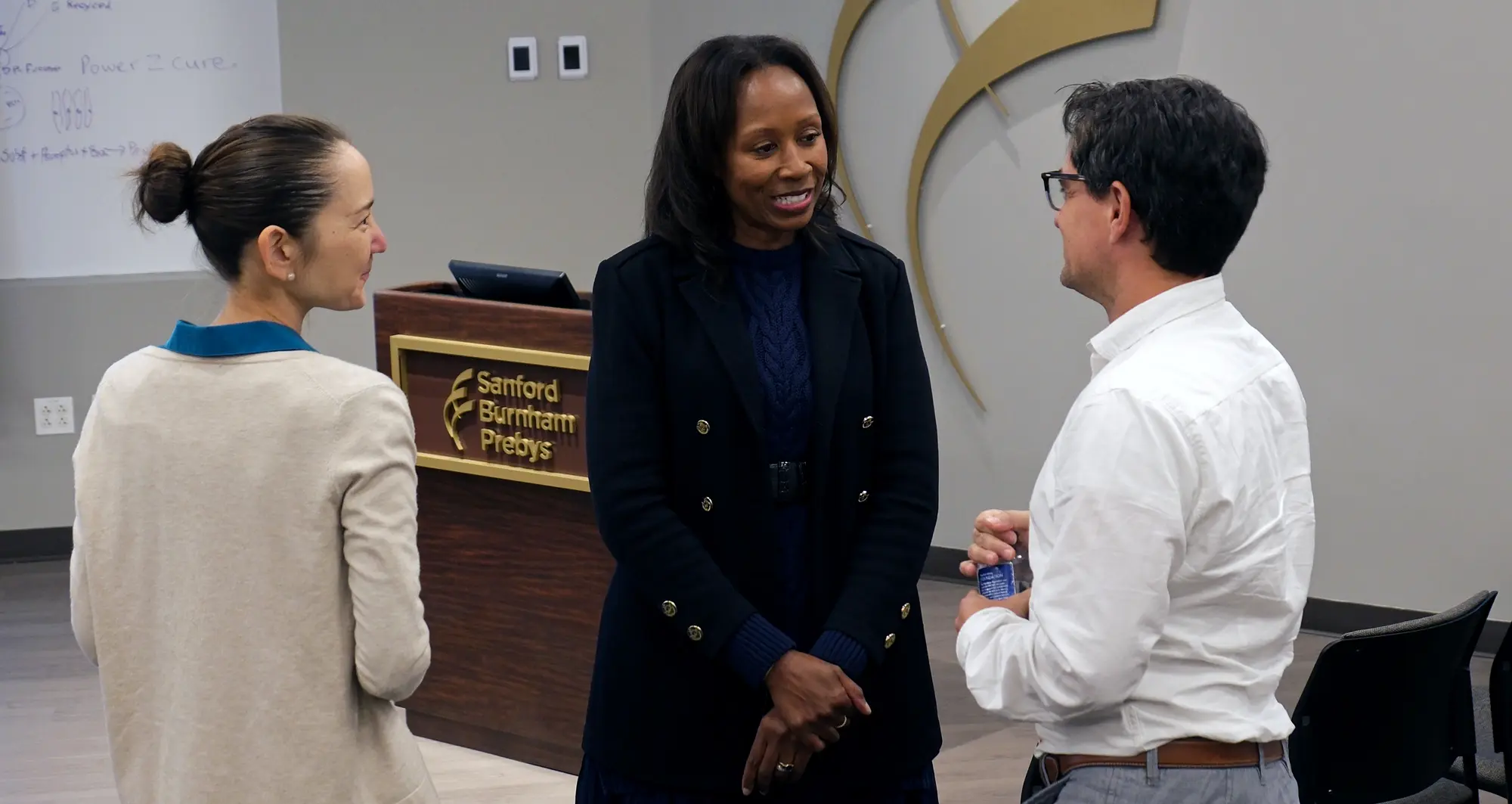
Angela Liou, MD seated left and Cheryl A.M. Anderson, PhD, MPH, MS right

Anderson (at right) opened the event discussing her career journey focused on how to develop a healthy, sustainable food system. The event also featured a fireside chat and audience question-and-answer session with Anderson and Liou.

Lukas Chavez, PhD, MS, associate professor in the Cancer Genome and Epigenetics Program at Sanford Burnham Prebys and scientific director of the Pediatric Neuro-Oncology Molecular Tumor Board at Rady Children’s Institute for Genomic Medicine, then moderated a fireside chat and audience question-and-answer session with Anderson and Angela Liou, MD, physician-scientist and pediatric oncologist with a dual appointment at Rady Children’s Health and the Cancer Genome and Epigenetics Program at Sanford Burnham Prebys. Topics included: how new scientific insights are translated to reduce population-level health risks or guide care for children facing serious illnesses; how new technologies change the way you conduct research and deliver patient care; what can be done to ensure that scientific discoveries can be equitably accessed and lead to better outcomes for all; and what do future clinicians and scientists need in terms of skills, mindset and institutional support to succeed as public health researchers and physician-scientists.

The Women in Science Lecture Series, featuring quarterly events that are free and open to the public, is part of broader efforts at Sanford Burnham Prebys to foster an environment that nurtures the success of individuals from all backgrounds. The series is hosted by the Office of Workforce Engagement & Belonging and highlights the groundbreaking work and unique perspectives of women leaders in the biomedical sciences, while fostering mentorship and collaboration across the Torrey Pines Mesa.

Registration is open for the next event in the series on May 13, 2026.

Institute News

Are artificial sweeteners bad for your health?

AuthorJessica Moore
Date

October 25, 2016

These days, we’re fighting a war on sugar, and it might seem like we’re winning. Low-calorie, artificial sweeteners are added to 15% of the volume of foods and beverages purchased in the United States.1 And they’re in all sorts of products labeled “light” or “no added sugar,” from soda to yogurt to protein bars. By replacing sugar, they’re meant to help consumers take in fewer calories. But epidemiological data suggest they may do the opposite, elevating the risk of health problems like type 2 diabetes and cardiovascular disease. 

“Artificial sweeteners were approved for consumption by the U.S. Food and Drug Administration because they’re non-toxic and don’t cause cancer at the recommended daily intake,” said George Kyriazis, PhD, assistant professor in the Integrative Metabolism Program, who recently presented evidence of their possible health risks during a public lecture at the University of Central Florida. “But we’re only now figuring out whether and how they may affect metabolism.”

The potential impact of artificial sweeteners, including sucralose, aspartame, saccharin and acesulfame potassium, on American health could be huge. In large studies following the same group of people over 10-20 years, those who drank at least one artificially sweetened beverage every day were 40% to 60% more likely to develop type 2 diabetes or suffer a heart attack or stroke as those who didn’t.2 The jump in relative risk is roughly the same as that with one or more regular sugary sodas.

Why is consumption of low-calorie sweeteners associated with all these problems if they’re not metabolized by our cells? Kyriazis thinks a potential mechanism lies in their ability to activate sweet taste receptors, the focus of his research. Sweet taste receptors, despite their name, are actually found in many organs, including the intestine and pancreas, where they regulate sugar uptake and secretion of sugar-regulating hormones, respectively.

Kyriazis has shown that sweet taste receptors are essential for artificial sweeteners to wreak havoc on metabolism. For example, adding saccharin to the water of normal mice for a few months causes them to become pre-diabetic, but mice lacking sweet taste receptors are protected from this condition. Whether this is also true in humans is unknown, but Kyriazis is leading a proof-of-concept clinical study at the Translational Research Institute for Metabolism and Diabetes at Florida Hospital that will begin recruiting soon.

“We will give healthy participants an FDA-approved food additive that inhibits sweet taste receptors and see if it can prevent any of the anticipated negative metabolic effects of saccharin consumption,” Kyriazis explained. “These studies could further our understanding of the role of sweet taste receptors in metabolic disease, which will help determine their validity as a target for future drug development.”


References:

  1. Ng SW, Slining MM, Popkin BM. Use of caloric and noncaloric sweeteners in US consumer packaged foods, 2005–2009. J Acad Nutr Diet 2012.
  2. Swithers SE. Artificial sweeteners produce the counterintuitive effect of inducing metabolic derangements. Trends Endocrinol Metab 2013. Table 1, refs 25, 26, 30.
Institute News

Targeting gut microbes may help malnourished children grow

Authorjmoore
Date

March 7, 2016

Malnutrition in infants and young children can have major life-long impacts—deficiencies in important nutrients stunt growth and impair development. Although aid organizations have developed fortified meals to make up for these deficiencies, they don’t completely compensate for the lack of nutrition. Now scientists know why malnourished children might not benefit as much as they should from added nutrients in their diet. Continue reading “Targeting gut microbes may help malnourished children grow”