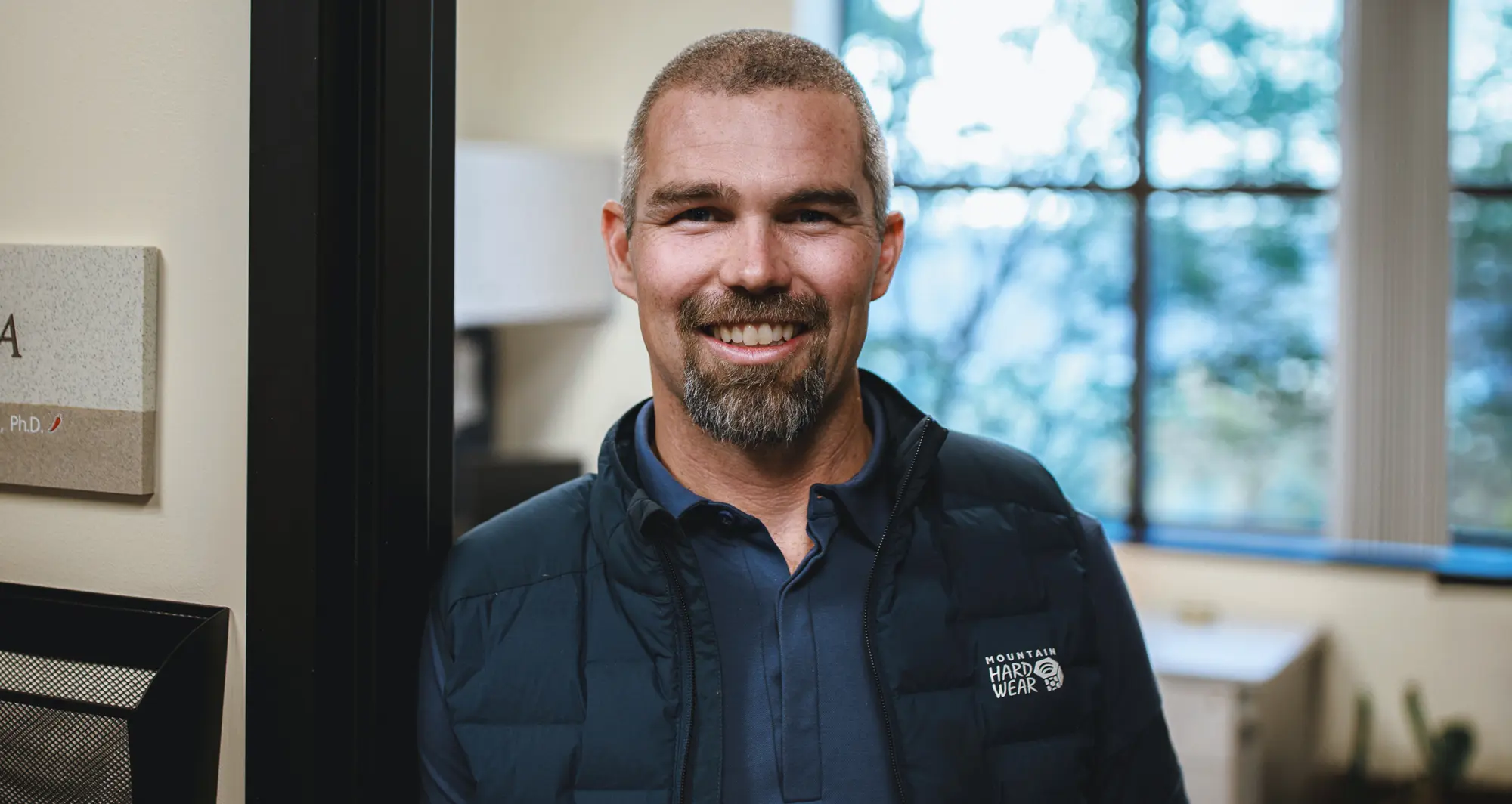
The new award will fund research regarding how to bust through the barrier between tumors and immune cells
Kevin Tharp, PhD, was awarded a three-year, $450,000 Ovarian Cancer Research Alliance grant to study high grade serous ovarian cancer, the most common and deadly form of the disease.
In collaboration with researchers at the University of California San Diego, Tharp recently published findings in Cell Reports demonstrating a treatment approach in mice that allowed more tumor-fighting immune cells to approach tumors, shifted the behavior of other immune cells to work against tumors, and made immunotherapy more effective.
Tharp will use the new funding to follow up on these findings regarding how high grade serous ovarian cancer circumvents the immune system’s anti-tumor defenses. His team will focus on the physical barrier that tumors build to keep immune cells at bay.
“We know that tumors can wall themselves off with structural collagen proteins that resemble scar tissue, and that the presence of this obstacle determines the effectiveness of anti-cancer immunotherapies,” said Tharp.
“We want to know how and why tumors create this obstruction and understanding this will help us find ways to break through these defenses to make immunotherapies more effective.”
Tharp will conduct this research under the mentorship of Cosimo Commisso, PhD, the deputy director of the NCI-Designated Cancer Center at Sanford Burnham Prebys and a professor in the Cancer Metabolism and Microenvironment Program, and David Schlaepfer, PhD, a professor in the department of OBGYN and Reproductive Sciences at the University of California San Diego Moores Cancer Center.
“Too many ovarian cancer patients progress and do not respond to the standard of care, so finding new treatments is an extreme clinical need,” said Tharp.
“There is potential for immunotherapies to treat recurrent and metastatic cancer if we can bridge the divide between tumors and immune cells.”
The Ovarian Cancer Research Alliance is the oldest and largest ovarian and gynecologic cancer charity in the world. Since its founding in 1994, the alliance has grown into the leading non-government funder of ovarian and related gynecologic cancer research by investing more than $140 million in grants to scientists.