community Archives - Page 9 of 10 - Sanford Burnham Prebys
Institute News

Highlights from the 2018 Faculty Retreat

AuthorSusan Gammon
Date

June 4, 2018

SBP’s annual Faculty Retreat was held May 30–31 in beautiful Carlsbad, California.

This year’s theme was “Fundamental Cellular Processes in Health and Disease,” and featured 20 speakers from SBP areas of expertise:

·         Development and Aging — Malene Hansen, PhD, Lorenzo Puri, MD, PhD, Karen Ocorr, PhD, Alexey Terskikh, PhD, and Rolf Bodmer, PhD

·         Immunity and Inflammation — Rob Weschler-Reya, PhD, Linda Bradley, PhD, Scott Peterson, PhD, and Jeff Smith, PhD

·         Technology Platforms — Dorit Hanein, PhD, Sumit Chanda, PhD, and Niels Volkmann, PhD

·         Drug and Disease Targets — Michael Jackson, PhD, Garth Powis, PhD, Wanda Reynolds, PhD, Elena Pasquale, PhD, and Matt Peroski, PhD

·         Share Resources Update — Craig Hauser, PhD

Special congratulations to Duc Dong, PhD, and Crystal Zhao, PhD, both of whom were officially promoted to associate professors.

Faculty promotion​
Pictured (left to right): Duc Dong, PhD, Elena Pasquale, PhD and Crystal Zhao PhD

Dong, in the Human Genetics Program, is advancing research in cell/organ replacement therapy that may ultimately benefit patients with diabetes and Alagille syndrome—a genetic disorder that can affect the liver, heart and other parts of the body.

Zhao, in the Tumor Initiation and Maintenance Program, is studying the regulation of neural stem cells—research that may lead to therapies for neurological diseases, including Alzheimer’s disease, Parkinson’s disease, and mental health disorders that affect cognitive abilities.

A highlight of the annual retreat is the presentation of the “WOW” award, which stands for Wonderful Original Work. This year, the WOW was given to Robert Wechsler-Reya, PhD, who won for his presentation titled “Overcoming Immune Evasion in Pediatric Brain Tumors.”

Wechsler-Reya’s research goal is to advance immunotherapy for medulloblastoma tumors—the most common malignant brain tumor in children. By increasing certain cell surface molecules called MHC on these cancer cells, he believes he can improve the ability of T cells to recognize the tumors and kill them.

Wechsler-Reya is a professor in the Tumor Initiation and Maintenance Program at SBP and is also the program director for the Joseph Clayes III Research Center for Neuro-Oncology and Genomics at Rady Children’s Institute for Genomic Medicine.

Cosimo Commisso, PhD, and Crystal Zhao, PhD, served as faculty organizers.

And many thanks to Wendy Lyon and Nelson, the research administrative specialists who organized the event.

Institute News

SBP brings science to San Diego community at STEM

AuthorSusan Gammon
Date

March 8, 2018

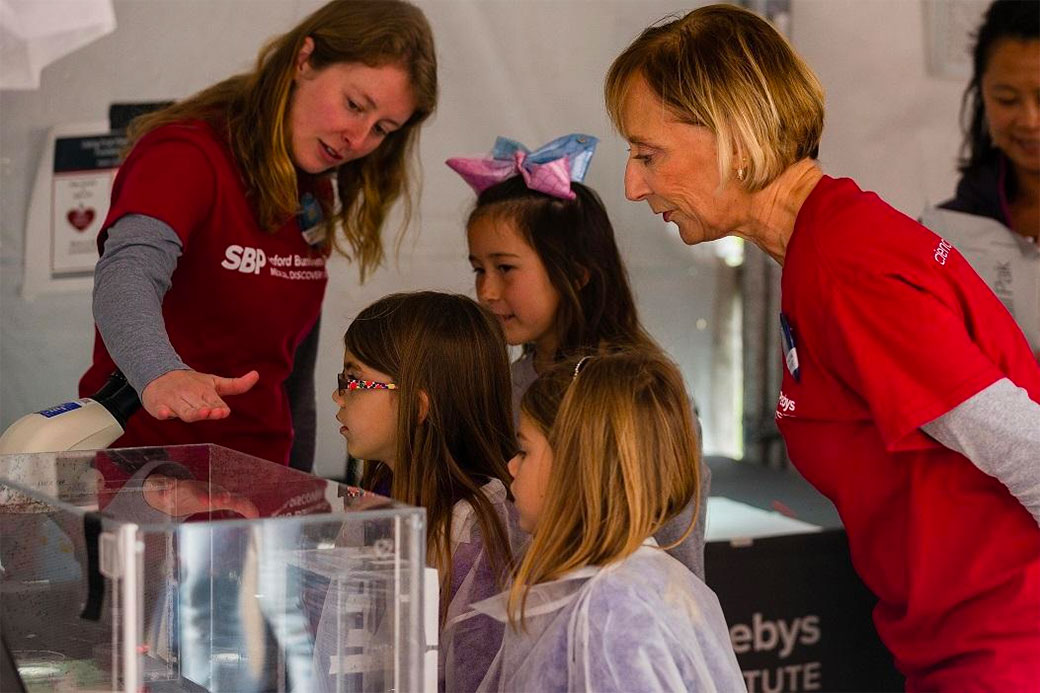
STEM Expo Day kicked off a week-long festival on Saturday, March 3, 2018 at Petco Park. The event marked the 10th annual San Diego Festival of Science and Engineering Expo Day—one of the largest STEM (Science, Technology, Engineering and Math) festivals in the U.S. The community outreach event provided learning and hands-on activities for students in grades kindergarten through 12th grade, as well as adults and families to ignite their passion for STEM education.

“STEM Expo is a great way to get our future researchers excited about science, and I believe that’s why SBP’s involvement continues to expand,” said Karen Ocorr, PhD, an SBP faculty member who organized a research demonstration for the exhibit booth.

About 40 SBP volunteers, including faculty, postdocs, staff and graduate students, worked in three shifts throughout the day to talk with visitors and guide them through two sets of interactive programs.

Ocorr set up a station where children received paper lab coats with personalized name tags to explore the food preferences of fruit flies and how it affects their heart health. Visitors used microscopes and high-powered LED magnifying glasses to look at fly abdomens to see if they had eaten sugar (dyed red) or fat (dyed blue). Not surprisingly, the fruit flies prefer a high sugar diet. Ocorr shared videos of beating fly hearts showing that both high sugar and high fat are bad for heart function.

The second station gave visitors an opportunity to interact with models of drugs and human proteins made by a 3D printer, courtesy of Adam Godzik, PhD, director of the Bioinformatics and Structural Biology Program at SBB. Godzik’s lab also brought glasses for viewing a virtual reality program showing how protein folding configurations are used to design drugs.

The event, which was free and open to the public, had more than 130 interactive exhibits with hands-on learning activities.

In spite of rain an estimated 25,000 people participated in EXPO Day at Petco Park.

Institute News

Remembering Dongxian Zhang

AuthorKristen Cusato
Date

March 31, 2017

Dongxian Zhang, PhD, our valued colleague, collaborator, mentor and friend, recently passed away after a long illness.

Dongxian had been with SBP since the fall of 1999. He came to us from Harvard Medical School. “He was a valued associate professor in our Degenerative Diseases Program and served as an adjunct assistant professor in the Department of Molecular Pathology at UC San Diego since 2004,” says Kristiina Vuori, MD, PhD, president of SBP. “His positive and helpful personality will be missed and always remembered.”

“He told me he was surprised that he had been accepted to college, but that acceptance motivated him to go on to make major contributions to his chosen field of study,” says Randal Kaufman PhD, director of the Degenerative Diseases Program.

“When Dongxian shared the news about his diagnosis, he was incredibly brave and at peace with his life,” says Kaufman. “I will truly miss my friend. I will also miss the times we played golf. We enjoyed the camaraderie, which I will never forget.”

Dongxian made key advances in the study of motor neuron degeneration, including the discovery of novel neuroprotective factors and biomarkers of early events in disease pathology. Recent findings in collaboration with Huaxi Xu, PhD, professor at SBP, should be published soon and may lead to new diagnoses and treatments for motor neuron diseases.

Xu says he will remember his friend for his gentle demeanor and extreme dedication to his trainees. “Dongxian would never hesitate to jump into the lab to finish an experiment, calibrate instruments or perform molecular biology to help out members of his lab, as well as our lab,” Xu says. “His illness came as a surprise to everyone. He faced his sickness with great integrity and humor.”

“To me, he was more than a mentor for my work but also to my life,” says Lu-Lin Jiang, PhD, who worked in Dongxian’s lab. “He gave us much freedom to explore the beauty of the science. He took care of us like he took care of his own kids. When he was recovering from his first brain surgery, he told us he was not afraid of death, but he was worried about us. Later, he tried to help us to find new positions. Dongxian was the most positive person I have ever met.”

Dongxian leaves behind his wife Dong-Er Zhang and two sons, David and Phillip. We offer our sincere condolences to his family.


More about Dongxian Zhang

In 1969, during the Culture Revolution in China, Dongxian, like many students in big cities, was sent from Shanghai to a rural village to be “re-educated” by farmers. He was only 16 years old and had completed less than one year of middle school. When the Revolution ended in 1977, the Chinese government reopened enrollment for college entrance and Dongxian took the national college entrance exam. Using textbooks he borrowed from the headquarters of a local railroad, he taught himself enough middle and high school subjects to receive one of the top 10 exam scores in Yunnan province in 1978. He went on to study at Peking University, one of the most prestigious in China.

Dongxian was hoping to write a novel based on his life experience, but sadly this never happened.

Institute News

Showing kids why mutants matter at the STEM Expo

AuthorJessica Moore
Date

March 7, 2017

Want to see some mutant worms? If you do, you’re like the hundreds—or possibly thousands—of children and their parents who visited the Sanford Burnham Prebys Medical Discovery Institute (SBP) booth at the STEM Expo, held Saturday, March 4 to kick off the San Diego Festival of Science and Engineering.

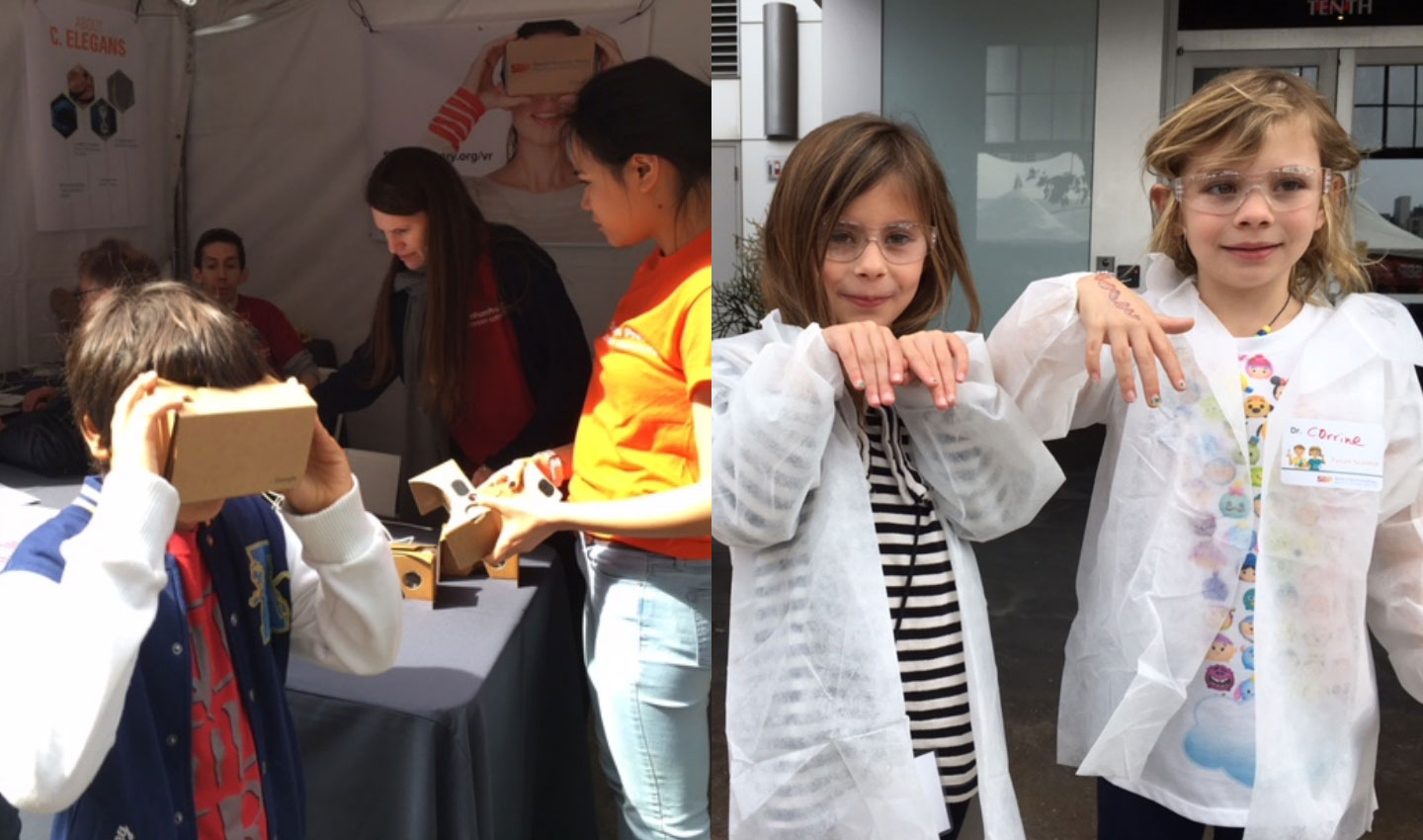
Those families got to watch live C. elegans—tiny worms used at SBP to study the biology of aging—move under a magnifying glass. By comparing normal worms to mutants that don’t move as well, they learned about how a single change to DNA can have a huge impact on how a whole body works. Scientists from the lab of Malene Hansen, PhD, associate professor at SBP, who provided the worms, explained how mutations in the same gene also cause human diseases like Ehlers-Danlos syndrome, which involves hyperflexible joints and skin.

They also had the chance to use virtual reality headsets to look at the shapes of proteins—the machines that make things happen inside cells—and how they can change as a result of a mutation. The 3D visualization tool was created by the lab of Adam Godzik, PhD, professor and director of the Bioinformatics and Structural Biology Program at SBP. Researchers from Godzik’s group told visitors about how they use similar computer modeling to find new mutations that could be important in cancer.

Kids left the SBP booth with temporary DNA tattoos on their hands (or sometimes their faces), mini lab coats personalized on the spot so they could pretend to be scientists at home and, maybe, a newfound interest in biology, thanks to the enthusiasm of the Institute’s many volunteers.

Institute News

SBP friend and supporter Gary K. Herberger has passed away

AuthorHelen I. Hwang
Date

March 6, 2017

With great sadness, Sanford Burnham Prebys Medical Discovery Institute (SBP) announces the passing of Gary K. Herberger, one of our most cherished friends and supporters, who died on February 28 after battling a long illness.

“With Gary’s passing, the SBP community has lost a treasured friend, and biomedical research has lost a staunch advocate. I was personally honored to be the inaugural holder of our endowed Jeanne and Gary Herberger Leadership Chair in Cancer Research. Gary’s legacy continues to live on as Garth Powis, D.Phil., director of the National Cancer Institute-designated Cancer Center, now holds the Jeanne and Gary Herberger Leadership Chair in Cancer Research. In addition, Huaxi Xu, PhD, director of the Neuroscience Initiative, was recently named as the Jeanne and Gary Leadership Chair in Neuroscience,” said Kristiina Vuori, MD, PhD, president of Sanford Burnham Prebys Medical Discovery Institute (SBP).

“Gary’s extraordinary achievements were rooted in his gentle soul and generous spirit,” said Jeanne Herberger, PhD, his wife of 50 years and his life partner in business and philanthropy. “He believed that his purpose in life was to serve humankind, so he always focused on the needs of others.”

T. Denny Sanford, SBP boardmember, said, “I will always cherish the wonderful memories of my friendship with Gary. His record of accomplishment as a distinguished architect and a benefactor to many institutions is unsurpassed. I will miss Gary, and I know the world will miss him.”

“Gary was a true legend in the real estate world because he had a rare combination of immense architectural design talent and outstanding development skill and expertise. The range of his projects was truly remarkable, but they all had one thing in common: You could see, at a glance, their uniqueness and their sheer quality. I feel so fortunate to have known him,” added SBP boardmember Malin Burnham.   

As president of Herberger Enterprises, Inc., Herberger propelled Arizona’s modern growth through his innovative real estate development and vigorous philanthropic leadership.

He got his start in architectural design as a young apprentice to Frank Lloyd Wright. Under Wright’s tutelage, he worked on the Guggenheim Museum in New York City and Grady Gammage Auditorium in Tempe, Arizona. After the eminent architect’s death in 1959, Herberger completed Wright’s project at Wichita State University in Kansas.

The Herbergers married in Minneapolis, Minnesota in 1967. Over the last few decades, the couple split their time between homes in Rancho Santa Fe, California and Paradise Valley, Arizona.
 

Institute News

Reena Horowitz honored at Sanford Burnham Prebys Medical Discovery Institute

AuthorHelen I. Hwang
Date

December 13, 2016

During a special end-of-the-year gathering, Reena Horowitz was honored for her hard work and dedication to Sanford Burnham Prebys Medical Discovery Institute (SBP). Held in the Fishman Auditorium at SBP, friends and staff thanked Horowitz with a bouquet of flowers, applause and a speech from Kristiina Vuori, PhD, president of SBP. Vuori thanked Horowitz for being a “leading ambassador for the Institute.”

In Vuori’s speech, she explained how Horowitz became involved with the Institute through her friendship with her neighbor Lillian Fishman. Dr. William T. Fishman and his wife, Lillian Fishman, founded SBP forty years ago. “Reena’s friendship with Lillian provided the Institute with a champion in the community, as well as the development of two of SBP’s institutional programs, the Fishman Fund Awards and the Group of 12 & Friends. Reena co-founded and has managed both of these extraordinary programs for over a decade,” said Vuori.

To nurture the careers of future scientific trailblazers at SBP, the Fishman Fund was established by SBP supporters Mary Bradley and Reena Horowitz to honor the founders of the Institute, Dr. William and Lillian Fishman. Over 55 postdoctoral students have been supported by the Fishman Fund, which awards postdoctoral fellowships and career development grants.

Horowitz co-founded G12 & Friends, a lecture and get-together with friends hosted monthly at SBP. What started out as Horowitz, Lillian Fishman and a few friends has ballooned into a group that usually draws over 100 guests, curious about a wide range of topics from science, medicine and the arts.

The celebration was an occasion to thank Horowitz for being a passionate supporter of SBP’s scientific programs within the community.

To find out more about the Fishman Fund and how to support it, click here.

Institute News

SBP supporters Dr. Tom and Cindy Goodman host SBP’s postdocs for the holidays

AuthorHelen I. Hwang
Date

December 9, 2016

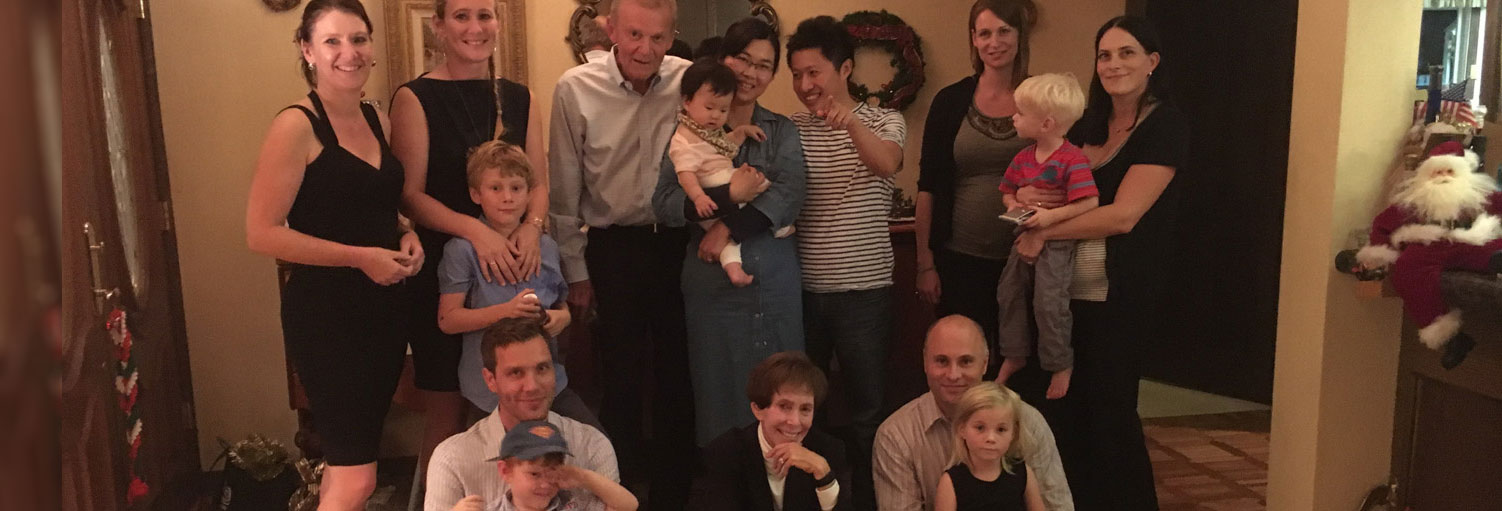
For the last ten years, Cindy and Dr. Tom Goodman have a tradition of inviting Fishman Fund winners, past and present, for a holiday celebration. “It’s a delight to see everyone in a social setting – listening, learning and sharing.” Conversations range from the latest and greatest on melanoma research to cultural discussions about what Thanksgiving is about.

The Goodmans have been supporters of Sanford Burnham Prebys Medical Discovery Institute (SBP) and the Fishman Fund for the last decade or so. Every year, they’ve invited the winners of the Fishman Fund to their own home to share a holiday dinner. Cindy Goodman’s family always had a tradition of having students over for big meals when she was growing up in Ohio. She wanted to continue the tradition here with SBP’s community.

The Fishman Fund provides funding for exceptional postdoctoral researchers with a Fishman Fund Fellowship and Fishman Fund Career Development Awards. Founded in 2001, the Fishman Fund was established by SBP supporters Mary Bradley and Reena Horowitz, to honor the Fishmans. In 2010, Jeanne Jones became the co-founder designee. SBP introduced the Fishman Fund Awards in honor of the Institute’s founders, Dr. William and Lillian Fishman. So far, the Fishman Fund has funded over 55 postdoctoral researchers.

Recently, the families of four Fishman Fund recipients went to the Goodmans’ home to share Thanksgiving dinner. Fishman Fund awardees Stefan Grotegut, Melanie Hoefer, Petrus de Jong, Bernhard Lechtenberg and Jia (Zack) Shen all enjoyed a holiday celebration with the Goodmans. Former Fishman Fund winner Karthik Bodhinathan also called from the Boston area, where he now works for a pharmaceutical company, after spending six holidays with the Goodmans.  In fact, they’ve grown so close that they met Bodhinathan’s sister on a trip to Singapore.

The appreciation we feel “magnifies in unexpected ways,” says Cindy. This year, there were 16 people in their home, including children, ranging from age 1 to 8 years old. The Goodmans made turkey, potatoes and cranberry sauce for some guests who’ve never enjoyed such a feast before.

For Shen and his family, it was their first American Thanksgiving and he wasn’t quite sure what to expect. “We really enjoyed the fantastic Thanksgiving dinner at Cindy and Tom’s home. The house was so cozy. Cindy and Tom just treated us like family members. During the dinner, we talked about life in San Diego, my plans for the near future and the funny things about my baby Olivia. Also, we had nice conversations with the other winners’ families. And all of us gave our thanks to Goodman family. It was a wonderful evening!”

“I would be delighted if others opened their houses and hearts to one student or family,” says Cindy Goodman. Their experiences have been so delightful that she hopes someone else will also gain from the gift of sharing as the Goodmans have benefitted for the last decade.

For more information about the Fishman Fund, click here.

Institute News

At Pedal the Cause, Team SBP rode 787 miles for cancer research in San Diego

AuthorJessica Moore
Date

November 16, 2016

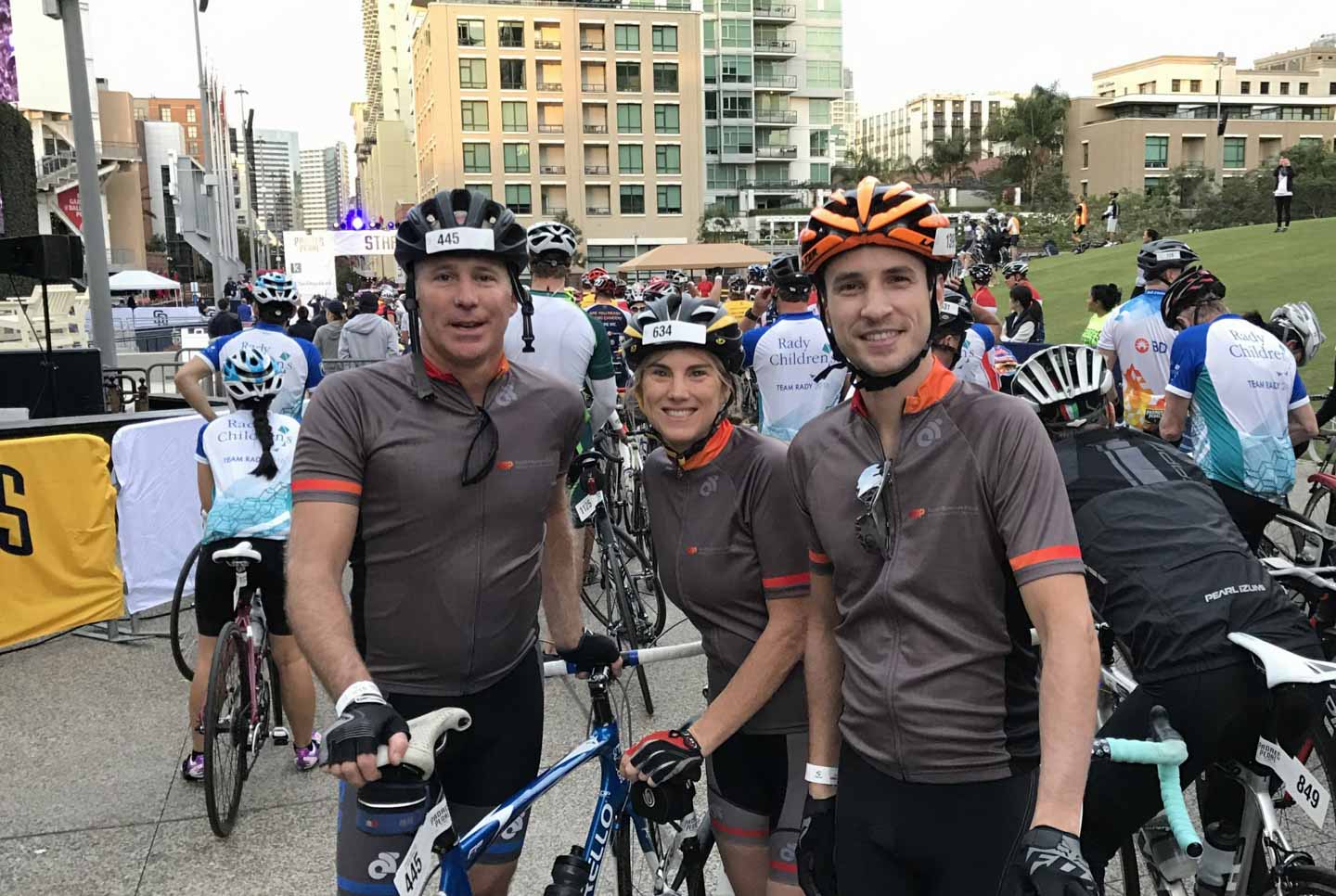
Over a blisteringly hot November weekend, scientists, staff, and supporters of Sanford Burnham Prebys Medical Discovery Institute came together to support the fight against cancer. They participated in the fourth annual Pedal the Cause bike ride and fundraising event that raised over $1.6 million. The money will be used to fund joint collaborative cancer research projects among scientists from SBP, the Salk, Rady Children’s Hospital and Moores Cancer Center at UC San Diego.

Our team’s nine riders biked a collective 787 miles over hilly terrain, raising almost $17,000. Some, like graduate student Marisa Sanchez, were inspired to ride by their personal experience with cancer. “I ride to honor my sister, Alessandra, who we lost to cancer four years ago,” said Sanchez in a video interview. “Research is crucial to advance cancer care—the treatments that are being developed now might have saved her life.”

Team SBP also ran a refueling station, where our volunteers helped the event’s 1,500 riders take a much needed break Sunday morning. In addition to water, snacks, and shade, the SBP station provided a fun disco-themed photo booth, complete with 70s-era tunes, in honor of the Institute’s 40th anniversary.

Local news station CW6 was on site to interview riders and scientists, including SBP’s Cosimo Commisso, PhD, assistant professor in the NCI-designated Cancer Center, who emphasized the importance of adequate funding to accelerate progress towards cures.

Commisso was part of a team that was awarded a grant from Pedal the Cause in 2014. That collaboration with Geoffrey Wahl, PhD, at the Salk and Andrew Lowy, MD, at Moores Cancer Center focused on pancreatic cancer, the most deadly common cancer in the U.S., and yielded breakthrough findings that could lead to a new treatment approach. The money raised this year will support similarly innovative, high-impact research that can be rapidly translated into new hope for cancer patients.

Institute News

“No surrender” to CDG

AuthorHelen I. Hwang
Date

September 9, 2016

From a farmhouse in rural Iowa, Crystal Vittetoe is fighting for her two babies afflicted with congenital disorders of glycosylation, known as CDG. She and her family have raised over $37,000 from a single fundraiser, and the donations keep coming in. “If we don’t fight for research, we are surrendering to CDG,” says Vittetoe.

“What Crystal has done for our research at the Institute is incredible. She’s raised enough money to pay for half a postdoc’s salary to do research for one year, and now we need to find the other half,” says Hudson Freeze, PhD, director of the Human Genetics Program at Sanford Burnham Prebys Medical Discovery Institute (SBP). “We have so many projects we start and want to complete. We need more hands on the projects. And if a family needs help, we don’t turn anybody away,” he says.

CDG is a collection of genetic diseases that causes mental and physical developmental issues, which leads to severe damage to multiple organs like the liver, heart and intestines.

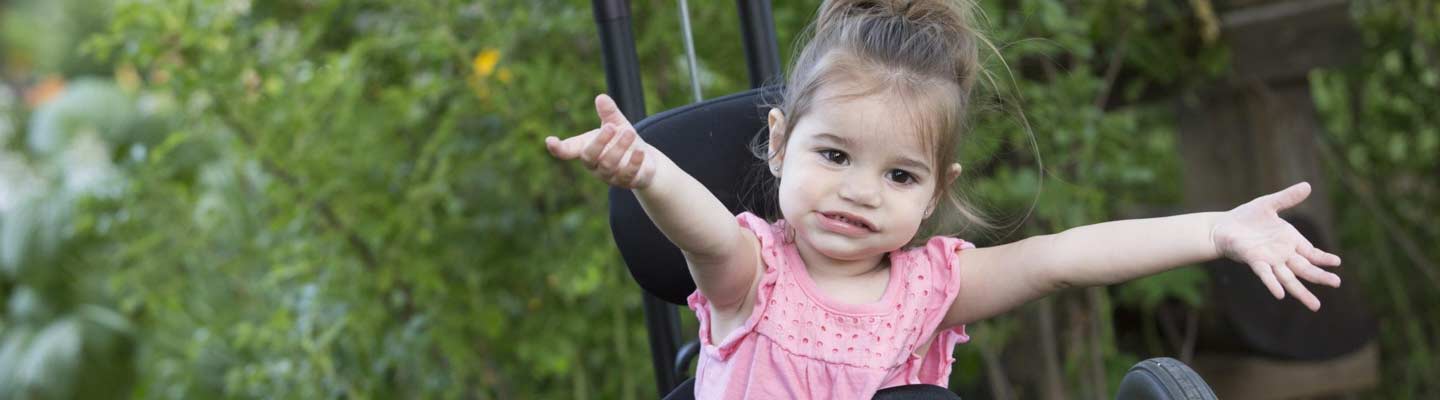
The Vittetoes have two young children with CDG—two-year-old daughter Everlee (in the photo above) and one-year-old son Breckyn. Vittetoe drove from Iowa to SBP in La Jolla, Calif., for the annual Rare Disease Day Symposium at SBP. There, she met other families, scientists, doctors as well as Freeze to learn about the latest research and treatments that can help their kids cope with her illness. Worldwide, there are less than 1,500 known cases of CDG where children are born with the genetic disorders.

Vittetoe realized from the family’s visit to SBP that much more research was needed to figure out why CDG happens and how to lessen the her children’s suffering. She was inspired to raise money for the Rocket Fund, in honor of John Taylor (Rocket) Williams IV who would’ve turned 10 years old this year. Sadly, he passed away at the age of two.

In the past year, Everlee has been hospitalized six times. During one episode, she was having an hourly seizure for 24 hours with the last one enduring for 3.5 hours. “It’s so stressful, no matter if she’s having a stroke-like episode or just needs fluids,” says Vittetoe.

With the help of family and friends, Vittetoe held a dinner and silent auction at Lebowski’s Rock ‘N Bowl in her hometown of Washington, Iowa with a population of just over 7,000. The three-hour inaugural event raised a phenomenal amount of money that even surprised Vittetoe. “We were blown away,” she said.

The bar donated 15% of the tab and a friend, who’s also a singer, volunteered the entertainment. Over 300 people contributed to a free-will dinner donation for delicious pork loin from the family’s hog farm and scrumptious sides whipped up by the children’s grandmother.

Substantial seed donations, along with gifts from local businesses, raised an enormous amount of funds at the silent auction. The Vittetoes have been farming in Iowa for generations, and Crystal’s husband Jonathan approached the local seed dealers who all said “yes” to helping out the kids. And of course, neighborhood farmers came to support the Vittetoes who always need seed for their crops.

People contributed checks from $10 to $5,000, and every dollar counted. Other families with CDG children drove over six hours from as far away as Minnesota and Illinois to show their support.

The giving doesn’t just stop with the fundraiser hosted by the Vittetoe family. Recently Crystal’s grandfather passed away in Colorado and the family asked for memorial donations to the Rocket Fund.

Vittetoe says, “It’s your babies and if you don’t do something, you’re just waving the white flag. We’re not waving the white flag. We just want to do something for them.”

Note:

The next SBP Rare Disease Day Symposium will be held on February 24, 2017. The day-long event will focus on Alagille syndrome, a genetic disorder that causes liver damage due to abnormalities in the bile ducts, which carry waste from the liver to the gallbladder and small intestine. For more information, click here.

Photo credit: Drish Photography.

Institute News

Conrad Prebys (1933-2016)

AuthorCommunications
Date

July 29, 2016

Conrad Prebys passed away on July 24, 2016 at the age of 82 after a protracted battle with cancer.

He was prominent real estate developer who began his portfolio in the 1960s with just $500. In time, he would become even more widely renowned as a philanthropist with many causes and interests. Most notably, in 2008 he donated $10 million to establish the Prebys Center for Chemical Genomics at then-Burnham Institute for Medical Research.

Five years after T. Denny Sanford donated $50 million in 2010 to the Institute (with the name changed to Sanford-Burnham Medical Research Institute), Prebys gave $100 million and the name was changed to Sanford Burham Prebys Medical Discovery Institute.

Both Sanford and Prebys became honorary directors in 2009. Like Sanford, Prebys was a strong advocate for biomedical science and translating the discoveries of basic research into new treatments, drugs and cures. 

At the renaming of the Institute, Prebys said, “I’ve been involved with the excellent researchers at the Institute for many, many years. They’re the best there is, and that excites me. If, through my support, I can shorten people’s suffering, or extend their quality of life, that would give me unlimited pleasure and joy.”

Over the years, Prebys would make additional regular gifts to the Institute to support research.

His interests and philanthropic support were expansive. He made significant gifts to UC San Diego, San Diego State University, the San Diego Zoo, Scripps Mercy Hospital, the Boys and Girls Clubs, the Old Globe Theatre, the La Jolla Music Society, the Salk Institute and the San Diego Museum of Art. Many buildings, research centers and scholarships in the region bear his name.

He also donated $20 million to his alma mater—the Indiana University Kelley School of Business—to fund construction of a new campus amphitheater and the Kelley School of Business Conrad Prebys Career Services Center in 2015.

In 2012, he was named one of the 25 most generous people in the United States by Business Insider.

Born in South Bend, Indiana, Prebys was raised in a blue collar, ethnic, working class neighborhood where the mindset was to complete high school and then work in the local factories of Studebaker or Bendix. When he was eight years old, he developed a heart condition which doctors said would force him to lead a sedentary life and leave him unable to do manual labor. His parents decided that he should learn to play the piano as a way to make a living as an adult.

The turning point in his life was meeting an inspirational high school drama teacher who exposed him to culture and the arts. The teacher was also influential in encouraging Prebys to further his education. He was the first of five brothers to attend and graduate from Indiana University. He was also the first in his neighborhood to go beyond high school.

Prebys moved to San Diego in 1965 and founded Progress Construction Company to build homes, eventually diversifying to build, own or rent thousands of apartment units. Ultimately, these resources were transferred to his estate’s charitable organization, the Conrad Prebys Foundation, which sold the real estate portfolio to The Blackstone Group for more than $1 billion in 2021. The Prebys Foundation is now among the largest and most active charitable organizations in the San Diego region, with interests in health care, medical research, visual and performing arts, higher education and youth development.