drug development Archives - Page 2 of 3 - Sanford Burnham Prebys
Institute News

Drug screen conducted at Sanford Burnham Prebys identifies new therapeutic avenues for Alzheimer’s disease

AuthorMonica May
Date

February 7, 2019

A screen of more than 1,600 Food and Drug Administration (FDA)–approved drugs performed at SBP’s Conrad Prebys Center for Chemical Genomics (Prebys Center) has revealed new therapeutic avenues that could lead to an Alzheimer’s disease treatment. 

The findings come from a collaboration between SBP scientists and researchers at the University of California San Diego School of Medicine, Leiden University Medical Center and Utrecht University in the Netherlands and were published in Cell Stem Cell

The hunt is on for an effective treatment for Alzheimer’s, a memory-robbing disease that is nearing epidemic proportions as the world’s population ages. Nearly six million people in the U.S. are living with Alzheimer’s disease. This number is projected to rise to 14 million by 2060, according to the Centers for Disease Control and Prevention (CDC). 

Scientists have known for many years that a protein called tau accumulates and creates tangles in the brain during Alzheimer’s disease. Additional research is revealing that altered cholesterol metabolism in the brain is associated with Alzheimer’s. But the relationship between these two clues is unknown. 

By testing a library of FDA-approved drugs against induced pluripotent stem cells (iPSC) neurons created from people with Alzheimer’s disease, the scientists were able to identify 42 compounds that reduced the level of phosphorylated tau, a form of tau that contributes to tangle formation. The researchers further refined this group to only include cholesterol-targeting compounds. 

A detailed study of these drugs showed that their effect on tau was mediated by their ability to lower cholesteryl esters, a storage product of excess cholesterol. These results led them to an enzyme called CYP46A1, which normally reduces cholesterol. Activation of this enzyme by the drug efavirenz (brand names Sustiva® and Stocrin®) reduced cholesterol esters and phosphorylated tau in these neurons, making it a promising therapeutic target for Alzheimer’s disease. Further mapping of the enzyme’s action(s) within a cell could reveal even more therapeutic targets. 

“Our Prebys Center is designed to be a comprehensive resource that allows basic research—whether conducted at SBP, academic and nonprofit research institutions or industry—to be translated into medicines for diseases that urgently need better treatments,” says study author Anne Bang, PhD, director of Cell Biology at the Conrad Prebys Center for Chemical Genomics at SBP. “We are proud that the Prebys Centers’ drug discovery technologies helped reveal new paths that could lead to a potential treatment for Alzheimer’s, one of the most devastating diseases of our time.”


The senior author of the study is Lawrence S. B. Goldstein, PhD, distinguished professor at the University of California San Diego (UC San Diego) and scientific director of the Sanford Consortium for Regenerative Medicine. The co-first authors are Vanessa Langness, a PhD graduate student in Goldstein’s lab, and Rik van der Kant, PhD, a senior scientist at Vrije University in Amsterdam and former postdoctoral fellow in Goldstein’s lab. 

Additional study authors include Cheryl M. Herrera, Daniel Williams, Lauren K. Fong and Kevin D. Rynearson, UC San Diego; Yves Leestemaker, Huib Ovaa, Evelyne Steenvoorden and Martin Giera of Leiden University Medical Center; Jos F. Brouwers and J. Bernd Helms; Utrecht University; Steven L. Wagner, UC San Diego and Veterans Affairs San Diego Healthcare System.

Funding for this research came, in part, from the Alzheimer Netherlands Fellowship, ERC Marie Curie International Outgoing Fellowship, the National Institutes of Health (NIH) (5T32AG000216-24, IRF1AG048083-01) and the California Institute for Regenerative Medicine (RB5-07011).

Read more in UC San Diego’s press release. 

Institute News

Off-the-shelf drugs could help manage Zika

AuthorSusan Gammon
Date

February 2, 2018

The Zika virus has been relatively quiet lately, but that doesn’t mean the danger is over. Zika can come roaring back at any time, generating severe birth defects and other health issues.

That makes it a race against time. Can scientists and clinicians develop effective Zika therapies before the virus rebounds? The normal drug discovery process takes 10 to 20 years, and we clearly don’t have that much time. But there’s another option: Retasking drugs that have already been approved for other conditions could dramatically shorten the approval process.

“It’s important to find drugs that are immediately available that you can put in the pipeline to treat Zika,” says Alexey Terskikh, PhD, associate professor at SBP.

A recent paper from Terskikh and UC San Diego’s Alysson Muotri, PhD, highlighted this possible solution. Published in Nature Scientific Reports, the study showed sofosbuvir (Sovaldi), a drug made by Gilead to treat hepatitis C, could also be effective against Zika.

Sovaldi neutralizes an RNA polymerase – an enzyme that transcribes RNA from DNA. By disrupting this pathway, Sovaldi prevents hepatitis C from replicating. Because Zika has a similar RNA polymerase, a number of labs have been looking at Sovaldi’s possible impact on the virus. The collaborative work conducted by the Terskikh and Muotri labs showed the drug decreased viral levels, reduced neural cell death and limited the amount of virus transmitted to babies.

This work reinforces a previous study, published in Nature Scientific Reports last November, that shows the anti-malaria drug chloroquine reduces Zika transmission between mothers and babies in a mouse model.

Chloroquine offers a number of advantages. It’s inexpensive, generally available in the countries most affected by Zika and poses no risk to pregnancy.

“Chloroquine has been tested in pregnant women for the past 50 years in high doses and has been found safe,” says Terskikh.

The researchers believe a drug cocktail, including Sovaldi, chloroquine and perhaps other drugs, could be effective against Zika.

“It’s possible we could use both drugs,” says Terskikh. “We are working on a grant proposal to test different combinations. Most antiviral therapies rely on a cocktail—for example many HIV treatments are a mix of three or four drugs.”

But most importantly for Zika, these drugs are already being made in significant quantities and, should another epidemic arise, could potentially help stem the outbreak and protect vulnerable people.

Institute News

Nanowire arrays allow electrical recording of neuronal networks

AuthorJessica Moore
Date

April 12, 2017

To examine a neuron’s health, activity and response to drugs, scientists record its electrical activity. Current methods of recording are destructive, so they can only be used to study a neuron for a brief period, and can only measure the activity of one cell at a time. But neurons don’t function individually—they act in networks, and commonly used systems for detecting the electrical activity of complex groups of neurons aren’t as sensitive as they could be.

A new technology developed through a collaboration between Anne Bang, PhD, director of Cell Biology in the Conrad Prebys Center for Chemical Genomics at the Sanford Burnham Medical Research Institute, and Shadi Dayeh, PhD, associate professor at UC San Diego, makes high-sensitivity recording possible in neuronal networks. Publishing in Nano Letters, the team describes nanowire arrays that could accelerate drug development for neurological and neuropsychiatric diseases.

“We envision that this nanowire technology could be used on stem-cell-derived brain models to identify the most effective drugs for disorders like bipolar disorder and Alzheimer’s,” says Bang.

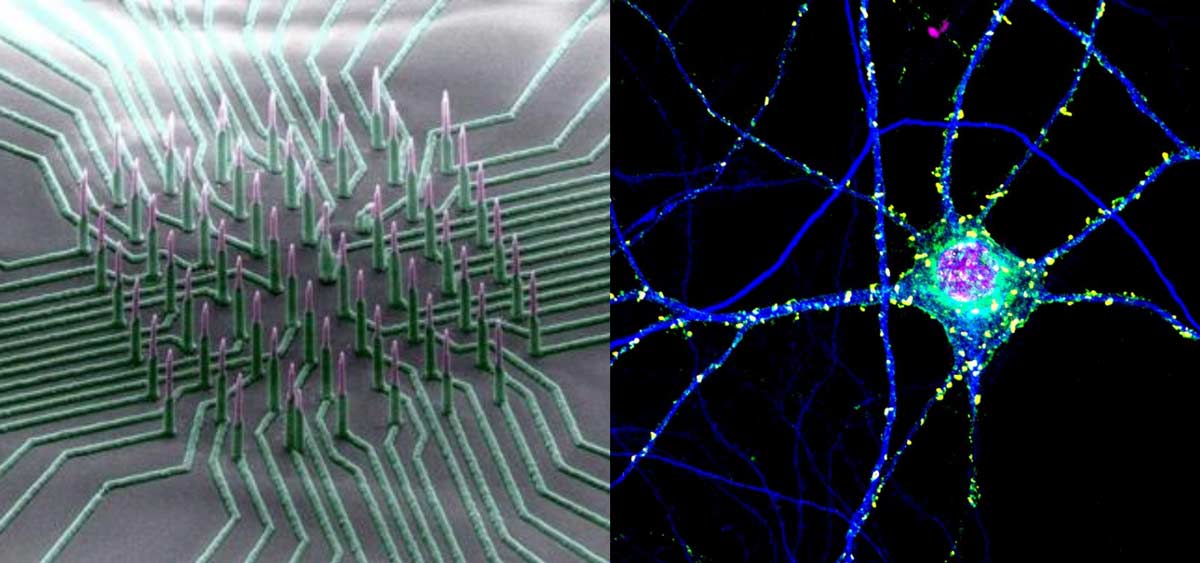
The nanowire technology developed in Dayeh’s laboratory is nondestructive and can simultaneously measure potential changes in multiple neurons — with the high sensitivity and resolution achieved by the current state of the art.

The device consists of an array of silicon nanowires densely packed on a small chip patterned with nickel electrode leads that are coated with silica. The nanowires poke inside cells without damaging them and are sensitive enough to measure small potential changes that are a fraction of or a few millivolts in magnitude. Neurons interfaced with the nanowire array survived and continued functioning for at least six weeks.

Another innovative feature of this technology is it can isolate the electrical signal measured by each individual nanowire. “This is different from existing nanowire technologies, where several wires are electrically shorted together and you cannot differentiate the signal from every single wire,” Dayeh says.

Dayeh noted that the technology needs further optimization for brain-on-chip drug screening. His team is working to adapt the arrays for heart-on-chip drug screening for cardiac diseases and in vivo brain mapping, which is still several years away. “Our ultimate goal is to translate this technology to a device that can be implanted in the brain.”

This story is based on a press release from UC San Diego.

Institute News

Drug reverses type 2 diabetes in mice

AuthorJessica Moore
Date

March 30, 2017

Type 2 diabetes is a massive public health challenge. About eight percent of the world’s adult population has it, and the complications are serious—increased risk of heart attack and stroke, kidney problems, hearing and vision loss and painful nerve damage. Managing blood sugar with diet, routine monitoring and insulin helps prevent these issues, but that takes more time and effort than many patients have.

A new experimental drug developed with the help of scientists at Sanford Burnham Prebys Medical Discovery Institute (SBP) may spell the end of insulin reliance. A study published in Nature Chemical Biology shows that the compound, which can be given as a pill, restores blood sugar control in a mouse model of diet-induced diabetes.

“By targeting an enzyme that controls insulin receptor signaling, we found a way to recover cells’ ability to respond to insulin,” says Anthony Pinkerton, PhD, director of medicinal chemistry at SBP’s Conrad Prebys Center for Chemical Genomics and a contributor to the research. “This could lead to a new treatment approach for type 2 diabetes.”

The candidate drug blocks an enzyme called low molecular weight protein tyrosine phosphatase (LMPTP), which regulates the insulin receptor. Human genetic studies suggested that individuals with lower LMPTP activity were protected from type 2 diabetes, but the mechanism of protection remained unclear.

The new investigation, led by Nunzio Bottini, MD, PhD, professor at UC San Diego, found that LMPTP has direct actions on the insulin receptor that reduce its signaling activity, making cells less sensitive to insulin. Turning off the LMPTP gene prevented mice from becoming diabetic when they were fed a high-fat diet, so the research team screened compounds to identify LMPTP inhibitors. Chemical improvements to the best compound gave a potent, orally available drug that improved glucose control in mice with type 2 diabetes.

“This is still a few steps away from clinical trials,” says Robert Liddington, PhD, professor at SBP who also collaborated on the study. “No adverse events were noted in mice who received the drug for a month, and the compound is highly selective for LMPTP, but considerably more optimization and testing has to be done to show that it’s safe when taken long-term and is likely to work in humans.”

Institute News

Measuring heart toxicity of cancer drugs in a dish

AuthorJessica Moore
Date

February 22, 2017

A class of cancer drugs known as tyrosine kinase inhibitors (TKIs) are often damaging to the heart, sometimes to the degree that they can’t be used in patients. These toxic effects are not always predictable using current preclinical methods, so they may not be discovered until they make it to clinical trials.

New research could make it possible to tell which TKIs cause heart toxicity without putting any humans at risk. The collaborative study, involving Wesley McKeithan, a PhD student in the Sanford Burnham Prebys Medical Discovery Institute (SBP) graduate program and Mark Mercola, PhD, adjunct professor at SBP and a professor at Stanford University, used lab-grown heart muscle cells to assess the drugs’ potential to cause damaging effects.

“This new method of screening for cardiotoxicity should help pharma companies focus their efforts on TKIs that will be safe,” says Mercola, who collaborated with Joseph Wu, MD, PhD, also a professor at Stanford, on the study published in Science Translational Medicine. “That could mean better new TKIs will make it to the market, since we will be able to predict whether or not they cause heart problems early in the development process.”

TKIs with tolerable cardiac side effects, which include imatinib (Gleevec) and erlotinib (Tarceva), are widely used to treat multiple types of cancer. Because tumors often become resistant to these drugs, new compounds in this class continue to be developed to provide replacement treatments. Other TKIs can harm the heart in a variety of ways, from altering electrical patterns to causing arrhythmias, reducing pumping capacity, or even increasing risk of heart attacks.

Mercola and Wu’s team used heart muscle cells derived from induced pluripotent stem cells (iPSCs), which can be generated from adult skin or blood cells. After treating heart muscle cells with one of 21 TKIs, they assessed their survival, electrical activity, contractions (beating) and communication with adjacent cells. They used a new method for measuring heart cell contraction developed by the lab of Juan Carlos del Álamo, Ph.D., at UC San Diego to create a ‘cardiac safety index’, which correlates in vitro assay results with the drugs’ serum concentrations in humans. Importantly, the safety index values matched nicely with clinical reports on the cardiotoxicity of currently used TKIs.

The study also identified a possible way to protect heart muscle cells from impairment caused by TKIs—treating them with insulin or insulin-like growth factor. Although more research is needed, the findings suggest that it may be possible to alleviate some of the heart damage in patients receiving these chemotherapies.

Mercola adds, “By using cells derived from a broader group of individuals, this screening strategy could easily be adopted by the pharma industry to predict cardiotoxicity.”

This story is based in part on a press release from Stanford University School of Medicine.

Institute News

V Foundation grant to Ani Deshpande, PhD, supports pioneering research toward better leukemia treatments

AuthorJessica Moore
Date

December 2, 2016

Patients with a rare type of leukemia called acute promyelocytic leukemia (APL) have better outcomes than most leukemias because they can be treated with a very effective drug that converts their cancer cells back to normal. This success has convinced many cancer researchers that there’s a way to do the same for other leukemias. And with his recently awarded funding from the V Foundation, Ani Deshpande, PhD, assistant professor at Sanford Burnham Prebys Medical Discovery Institute, can now find targets for future drugs to do just that.

“We’re aiming to rehabilitate the cancer cells, in a sense, instead of destroying them,” said Deshpande. “The advantage to this approach is that, unlike conventional chemotherapy, it doesn’t harm normal cells, so it should have far fewer toxic side effects.”

Deshpande aims to make a big impact with this work—he’s first focusing on a group of acute myeloid leukemia (AML) with very poor survival outcomes. Worse, these leukemias, characterized by fusions of chromosome 11 with another partner chromosome, are especially common among children and infants.

This subgroup of AML is trickier than APL, where the product of the gene created by the chromosomal rearrangement directly blocks the cancer cells from becoming their normal type. In contrast, in the leukemias that Deshpande’s lab studies, the change in the cells’ programming is more complex. The mutation they carry alters the regulation of other genes, but which of these prevent AML cells from becoming normal blood-forming cells is largely unknown.

Fortunately, Deshpande is an expert in studying leukemic gene regulation. His lab specializes in epigenetics—analyzing the chemical tags on genes that influence their activity. The V Foundation funds will allow Deshpande’s team to apply an advanced sequencing-based approach to identify and validate potential targets for drugs that restore cancer cells’ epigenome to normal.

“This grant not only lets me expand my lab by hiring a new postdoc, but it also means I can take risks that wouldn’t be possible if I were proposing research to the NIH,” commented Deshpande. “I’m confident that we’ll get exciting results. The tools we’re using have gotten exponentially better over the last few decades, so we’re poised for a breakthrough.”

About the V Foundation

The V Foundation for Cancer Research was founded by ESPN and legendary basketball coach Jim Valvano with one goal in mind: to achieve victory over cancer. Since its start in 1993, the V Foundation has awarded over $170 million in cancer research grants nationwide.

Watch Dr. Deshpande talk about why foundation funding is important:

Institute News

Beating prostate cancer

Authorjmoore
Date

November 7, 2016

About one in seven men will be diagnosed with prostate cancer during his lifetime. Though it has one of the highest survival rates of any type of cancer—95% make it through the first ten years—diagnosis and treatment could still be improved. Since November is Prostate Cancer Awareness Month, we’re highlighting the work our scientists are doing to address key challenges and unresolved questions in prostate cancer.

Early, accurate detection—The current method of screening for prostate cancer is a blood test for prostate specific antigen, or PSA, which detects cancer early, but isn’t very specific—only one in four men with high PSA levels actually has cancer. In general, high levels of PSA mean the next step is a biopsy. A more specific test would avoid unnecessary biopsies, which are invasive and stressful for patients.

Ranjan Perera, PhD, associate professor in the Integrative Metabolism Program, is looking for biomarkers that would enable just such a test. His lab is making progress—they identified five long noncoding RNAs (RNAs that, instead of carrying genetic information to be translated, regulate the translation of other RNAs) found at higher-than-normal levels in the urine of prostate cancer patients. An RNA-based test is on the market, but could be improved—measuring multiple markers would be more sensitive and specific.

Better therapies—For advanced cases, current treatments are either insufficient or overly toxic. Prostate cancer is usually first treated with drugs that block the actions of androgens, the hormones that drive its growth. If the tumor recurs later, as happens for cancers that are already at a late stage before treatment, it forms from cells that are resistant to those drugs. Then, the only option is chemotherapy or radiation.

Towards therapies that cause less collateral damage, Nicholas Cosford, PhD, associate director of Translational Research in the NCI-designated Cancer Center, is designing new drugs against targets found to be important in prostate cancer. These drugs are intended to block two strategies by which cancer cells survive—avoiding cell death, and generating extra energy by recycling the cell’s own parts.

Understanding why obesity correlates with aggressiveness—Obese men are no more likely than others to get prostate cancer, but if they do, it’s more likely to become advanced quickly. To figure out why this happens, Jorge Moscat, PhD, director, and Maria Diaz-Meco, PhD, professor in the Cancer Metabolism and Signaling Networks Program, are looking at how fat adjacent to the prostate interacts with tumor cells. A detailed picture of how fat cells and tumor cells interact could reveal new ways to treat prostate cancer in overweight men.

Institute News

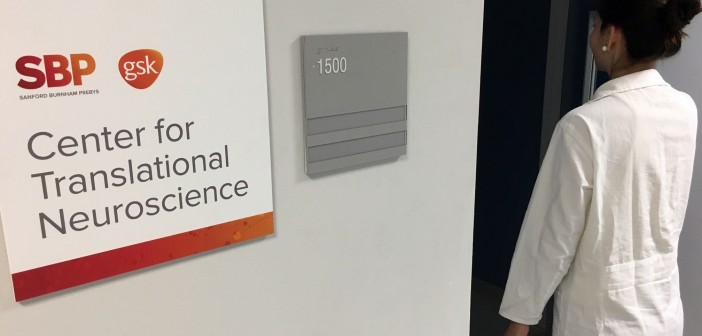
SBP and GSK create new Center for Translational Neuroscience

Authorkcusato
Date

April 20, 2016

SBP and GlaxoSmithKline (GSK), a global pharmaceutical company, have announced the creation of the SBP-GSK Center for Translational Neuroscience. The new Center, located on the SBP campus in La Jolla, will bring together experts from SBP and GSK to investigate factors that influence brain function and potentially reverse or slow down neurodegeneration, with the aim of identifying and validating new therapeutic targets. Under the three year agreement, GSK will provide funding to create and support a research laboratory. Staffed by SBP scientists, postdoctoral candidates and technicians working alongside neuroscientists from GSK, the Center will be designed to bolster research dedicated to translational neuroscience. Continue reading “SBP and GSK create new Center for Translational Neuroscience”

Institute News

Existing compound holds promise for reducing Huntington’s disease progression

Authorsgammon
Date

December 7, 2015

Currently, there is no treatment to halt the progression of Huntington’s disease (HD), a fatal genetic disorder that slowly robs sufferers of their physical and mental abilities. In a new collaboration between SBP’s Conrad Prebys Center for Chemical Genomics (Prebys Center) and the University of California, San Diego School of Medicine, researchers have discovered that an existing compound, previously tested in humans for diabetes, offers hope for slowing HD and its symptoms. Continue reading “Existing compound holds promise for reducing Huntington’s disease progression”

Institute News

Scientists identify promising new melanoma drug

Authorsgammon
Date

November 25, 2015

A new drug discovered by scientists at Sanford Burnham Prebys Medical Discovery Institute (SBP) may show promise for treating skin cancers that are resistant or unresponsive to today’s leading therapies.

In the United States, 5 million people are treated annually for skin cancer, and 9,000 people die from the deadliest form—melanoma—according to the US Department of Health and Human Services.

The new compound, named SBI-756, targets a specific molecular machine known as the translation initiation complex. These structures are in every cell and play the critical role of translating mRNA into proteins. In cancer cells the complex is impaired, producing extra protein and providing a growth advantage to tumors. SBI-756 causes the translation complex to dissociate, and was shown to inhibit melanoma cell growth in the study, published today in Cancer Research.

“The unique target of SBI-756 makes it especially promising for use in combination therapy,” said Ze’ev Ronai, senior author and scientific director of SBP’s La Jolla campus. “A major issue limiting the effectiveness of current melanoma therapies is that tumors become resistant to treatment. Combining drugs that come at a melanoma from different angles may help overcome the problem of drug resistance.”

About 50% of melanomas are caused by mutations in a specific gene called BRAF. Patients with these tumors are commonly prescribed vemurafenib, a BRAF inhibitor that shrinks tumors. However, many patients experience a relapse within weeks, months, or even years because tumors evolve and become resistant to the drug. A similar phenomenon is seen in mice, where treatment of BRAF melanomas results in an initial response, but 3-4 weeks later the tumors return.

The team found that if SBI-756 is co-administered with vemurafenib, the tumors disappeared and most importantly, they did not reoccur. Even in mice with advanced/late stage BRAF driven cancer, the reappearance of . These data suggests that SBI-756 provides a significant advantage in overcoming tumor resistance.

“The ability of this compound to delay or eliminate the formation of resistant melanomas is very exciting,” said Ronai.

In other forms of melanoma, caused by mutations in the genes NRAS and NF1—which are known as unresponsive to BRAF drugs—administering SBI-756 alone significantly the scientists found. The team is now testing whether combining SBI-756 with existing drugs used for treating these types of melanomas can make the tumors disappear.

Drugs that target the translation initiation complex have been intensely pursued in the past few years, not just for melanoma, but for a wide array of cancers. SBI-756 is considered a first-in-class drug because it is the first successful attempt to target a specific part of the complex called eIF4G1.

In fact, SBI-756 is the culmination of seven years of work in Ronai’s group—testing and tweaking the drug’s features to help it bind to the target more readily and to make it easier to formulate. The resulting compound is a significant improvement over the initial version.

“It appears that the dose we need to administer is very low. Even in the experiments where the drug was administered to mice with tumors over a significant period of time, we have not found any toxicity,” Ronai said.

“The finding of SBI-756 is also exciting for the possible treatment of diseases other than cancer, such as neurodegenerative diseases, where the activity of the translation initiation complex is reported to be higher,” said professor Nahum Sonenberg of McGill University, a world renowned leader in the field of protein translation.

“We hope that we’re going to come up with the next generation of the compound that can go into clinical trials—first in melanoma but likely in other tumors,” Ronai said.

The study was performed in collaboration with the Conrad Prebys Center for Chemical Genomics at SBP, Lady Davis Institute for Medical Research, Sir Mortimer B. Davis-Jewish General Hospital, McGill University (Canada), the National Cancer Institute, MD Anderson Cancer Center, and Yale University.