education Archives - Page 9 of 10 - Sanford Burnham Prebys
Institute News

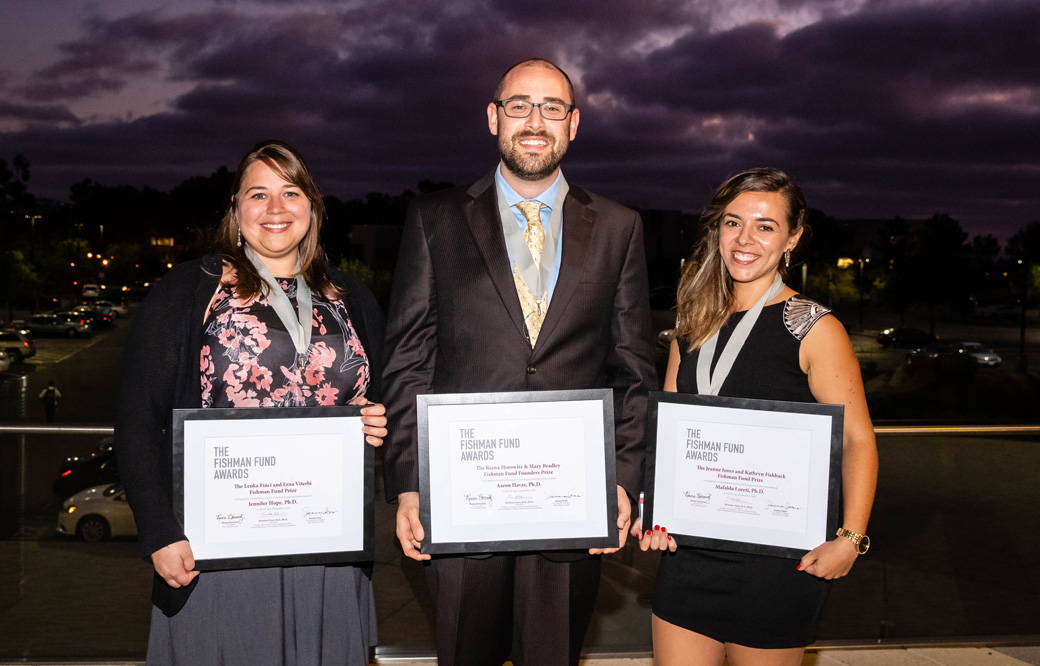
2017 Fishman Fund Award Ceremony celebrates postdoctoral scholars

AuthorHelen I. Hwang
Date

September 20, 2017

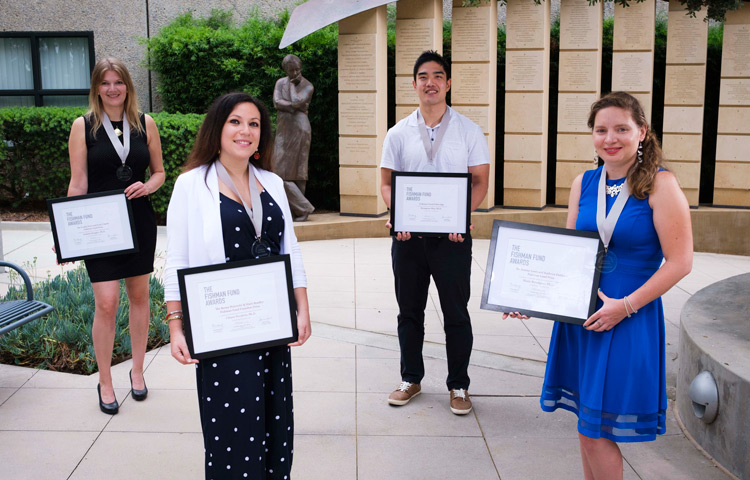
More than 100 supporters of Sanford Burnham Prebys (SBP) Fishman Fund Awards came out to honor this year’s Fishman Fund Award recipients: David Sala Cano, PhD, Michael J. Stec, PhD, and Jose Luis Nieto Torres, PhD, at the Sanford Consortium on Tuesday evening.

Malin Burnham, SBP’s Honorary Board Trustee, spoke about SBP exemplifying collaboration as part of its DNA. He also said that of all the organizations he works with, he gets the most satisfaction from being involved with SBP. Dr. Torres received the award and Fishman Fund medallion from Burnham, while Torres’ parents watched on with pride. They flew in from Spain, visiting the United States for the first time.

Fishman Fund co-founders and SBP supporters Reena Horowitz and Jeanne Jones led the ceremonies as they spoke about the founding of the Fishman Fund Award in 2001. The Fishman Fund Career Development Awards have grown from a $1,500 allowance to $10,000 stipends for each recipient so they can attend workshops, network and travel to national and international scientific conferences to learn about the latest developments in their research fields. The generosity of Fishman Fund donors enables such important career advancement opportunities for future scientific leaders.

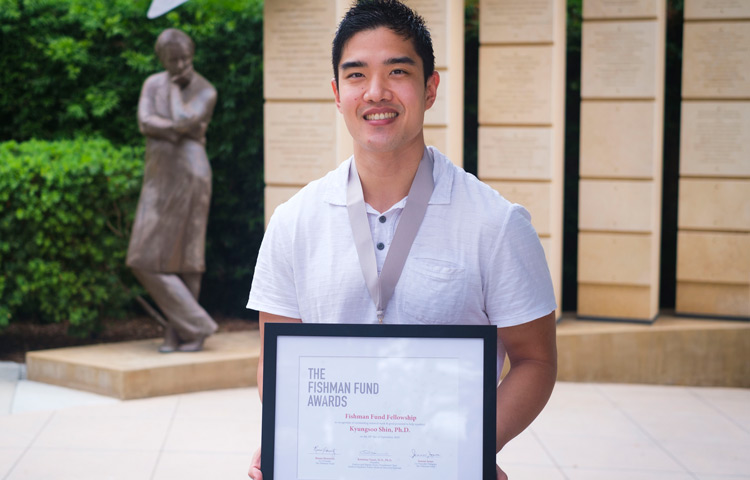
Greg Lucier, former SBP board member and CEO of NuVasive, Inc., also spoke on the topic of “we versus me,” emphasizing the importance of teamwork. SBP supporters Dr. Andrew Viterbi, co-founder of Qualcomm, and Armi Williams, Fishman Fund Advisory Board member and former SBP trustee, presented Fishman Fund awards and medallions to Drs. Stec and Cano, respectively.

This year’s recipients gave short presentations on their work, each of which dealt with aging, including muscle stem cells, muscle regeneration and autophagy (body’s ability to eliminate waste and recycle). Read more about their work below.

Your contributions provide vital support for the Fishman Fund. Please donate now.

2017 Fishman Fund Awardees:

David Sala Cano, PhD, a postdoctoral scholar in the laboratory of Alessandra Sacco, PhD, is working on muscle stem cells. He focuses on muscle wasting, a major health problem that leads to poor quality to life, and is associated diseases such as diabetes, chronic kidney disease, cancer and aging. He is working on identifying new targets for drugs that may prevent skeletal muscle degeneration.

Dr. Cano comes to La Jolla from a small town of Abrúcies, Spain. He holds degrees from the University of Barcelona, including a BS degree in biochemistry, a MS degree in physiology and a PhD in biomedicine. His goal is to become a principal investigator in an academic setting, combining his passion for research and teaching.

Michael J. Stec, PhD, focuses on understanding the mechanisms regulating stem cell function and skeletal muscle regeneration; he is also in the laboratory of Alessandra Sacco, Ph.D. He aims to develop novel therapies for improving muscle function in aged and diseased individuals.

Dr. Stec hails from Whippany, New Jersey. He holds a BS degree in health and exercise science from the College of New Jersey, a MS degree in exercise science from Bloomsburg University of Pennsylvania and a PhD in pathobiology and molecular medicine from the University of Alabama in Birmingham. Ultimately, his career goal is to obtain a position in the biotech industry.

Jose Luis Nieto Torres, PhD, is a postdoctoral scholar in the laboratory of Malene Hansen, PhD He conducts research on autophagy—a process our bodies use to eliminate cell waste by recycling debris into usable sources of energy. Our bodies need to be able to eliminate debris that accumulates over time and make new components for proper functioning. Autophagy declines with aging, and is associated with many age-related diseases.

Dr. Torres joined SBP from Palencia, Spain. He obtained his BS degree in biochemistry and biology from the University of Salamanca and MS and PhD degrees in molecular biology from the Universidad Autonoma de Madrid. In the future, Dr. Torres aims to become a principal investigator of his own lab in an academic setting.


Institute News

Inspiring the next generation of researchers and physicians

AuthorDeborah Robison
Date

May 24, 2017

Summer scholars investigate future careers in science and medicine. 

Nearly 28 percent of high school freshmen declare interest in a STEM-related field. That’s roughly one million students each year. But unfortunately, of these students, 57 percent will lose interest by the time they graduate from high school.

Summer internships are often sought for the boost they give to a resume but they also provide valuable direction for students unsure of how to chart a course toward a scientific career.

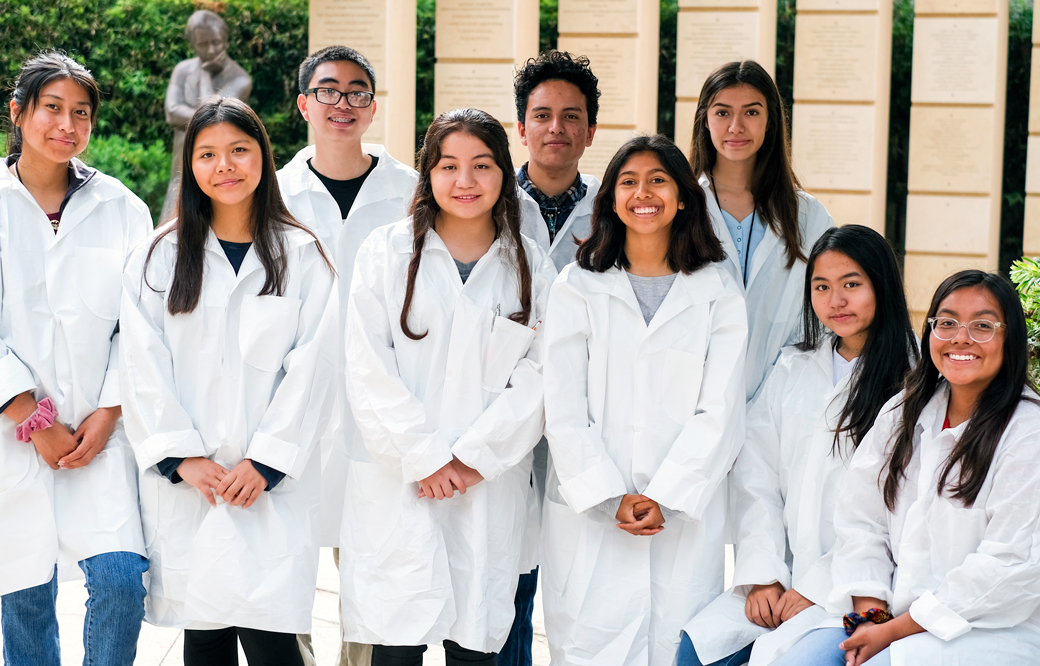
As Central Florida’s high school graduates prepare to head off to college, there is a small group who may have a leg up on their peers. Students who donned lab coats last summer at SBP Lake Nona, took part in an immersive lab experience to try their hands full-time at what could be a future career in a STEM-related field. Already academic stars, the practical experience fueled their passion for research and medicine.

“I learned a great deal about bench research techniques which I believe helped me stand out to admissions officers,” said Andrew Tiu, a Bishop Moore High School graduate who is headed to Georgetown University in the fall. “My internship also helped me learn about the mentality and motivation behind scientific research. It truly gave me a taste of the work I hope to take up in the future.”

Andrew Tiu

Then there’s Kathleen Garvey from Trinity Preparatory School who plans to pursue a special focus in research at Johns Hopkins; she acknowledges her lab mentor Peter Crawford, PhD, for helping ignite that passion. “My internship made me certain about wanting to study the life sciences and actively pursue more research opportunities.”

Kathleen Garvey

Other interns were similarly motivated. Veronica Eslava (University) and Saumya Kapoor (Cypress Creek) will attend University of Florida; Prianca Nagda and Rakhi Patel (Trinity Prep) are destined for Georgetown and University of Miami; and Steven Jones (East River) will attend University of Central Florida.

Is a career in science for you? What students should know.

We asked our faculty, “What advice would you give to high school and college students who are interested in research as a career?” Here are their top ten tips:

1. Develop a solid science foundation during high school—no need to focus on highly specialized courses but build a base of math, chemistry, physics and biology.

2. Take elective courses that offer a lab experience. It can be anything that allows you to set up small experiments or to be involved in a science project.

3. Join extracurricular groups that have an interest in science.

4. Volunteer for a few weeks or a summer at a “real” research place, such as a laboratory at a university or college.

5. Read general science articles written for non-specialists such as Scientific American. See what area triggers your interest.

6. The earlier you get your hands wet in the lab, the better. Start generating data and publishing papers ASAP. In this field you will be judged by the quantity and quality of your publications.

7. Besides lots of biology and chemistry, biomedical research can also involve plenty of physics, math, and computer science—stay open to linking various disciplines.

8. Education is expensive and life science careers may need additional studies after obtaining a bachelor’s degree.

9. Talk to a lot of people that have pursued a science career.

10. Enroll in your dream subject but look for cross-training opportunities.

Institute News

Meet the 2016 Fishman Fund awardees

AuthorHelen I. Hwang
Date

September 16, 2016

When Joana Borlido, PhD, got the call that she won the inaugural Fishman Fund Fellowship late on a Friday afternoon, she called her parents, who had been waiting up past midnight in her native Portugal to find out if she had won the prestigious two-year postdoctoral fellowship along with a $5,000 career-development cash grant.

After all, her mother, a science teacher, had inspired Borlido to go into science by bringing home props of human body parts and subscribing to an immunology comic series. Yes, those biology cartoons do exist.

On September 15, the Fishman Fund ceremony honored Borlido and Fishman Fund Career Development recipients Bernhard Lechtenberg, PhD, and Jia (Zack) Shen, PhD

In celebration of SBP’s 40th anniversary, the significance of the Fishman Fund has been elevated with the addition of a two-year postdoctoral award called the Fishman Fund Fellowship. The Fishman Fund Fellowship is an incredible award that not only compensates exceptional postdocs at a higher income level than a typical fellowship, but also comes with a one-time $5,000 flexible career-development award, which they can use to further their professional endeavors. The established Fishman Fund Career Development awards of $10,000 will continue to be awarded as well.

Since the Fishman Fund’s inception in 2001, the Fishman Fund has grown from $1,500 cash awards. It was first established by Horowitz and Mary Bradley in honor of founders Dr. William and Lillian Fishman. In 2010, Jeanne Jones became the co-founder designee.

During the ceremony, Fishman Fund co-founder Reena Horowitz discussed the importance of supporting “the next generation of biomedical trailblazers.” She also said that the “Fishmans believed passionately in cultivating early-stage scientific talent. They knew that young investigators must focus intently on honing research skills and gaining professional experience.” Horowitz also took a moment to honor friends and supporters who have passed: Mary Bradley, Erna Viterbi, Pauline Foster, and Conrad Prebys.

Nina Fishman, daughter of SBP founders Dr. William and Lillian Fishman, read from a speech her father gave at the Institute. He said, “Each is encouraged to develop original ideas, which can be tested experimentally and subsequently qualify for grant support. Together we have the ‘critical mass’ of intellectuals and skills to accelerate progress in sciences.” She added that the Institute has demonstrated that a “relatively small but highly focused group can provide a nucleus where the whole is greater than the sum of its parts.”

Past winner Petrus de Jong, MD, PhD, shared how the Fishman Fund has boosted his career. With the grant, de Jong attended a drug delivery systems symposium with biotech entrepreneurs, participated in a research symposium in pancreatic cancer and received tailored career advice from senior scientists. “These events have been crucial for my personal career development, which would not have been possible without the Fishman Fund Award,” he said.

Fishman Fund Fellowship Awardee:

Joana Borlido, PhD, explores the mechanisms through which the channels that connect the cell nucleus (where the genome is stored) affect the immune system. She works in the laboratory of Maximiliano D’Angelo, PhDHer work will help elucidate the molecular basis for the onset and development of leukemia.

She completed her PhD in Oncology at the University of Cambridge in the U.K. and her BS in Biology at the University of Porto in Portugal.

If Borlido is not in the lab, she can usually be found playing foosball, which she admits she would play during all her free time if she could.

Fishman Fund Career Development Recipients:

Bernhard Lechtenberg, PhD, studies cellular signaling networks in normal human physiology and diseases in the laboratory of Stefan Riedl, PhDLechtenberg uses protein X-ray crystallography to study diseases such as cancer and ALS (Lou Gehrig’s disease). He received his BS and MS from the University of Luebeck in Germany and his PhD from the University of Cambridge in the U.K.

In his spare time, he and his wife Anne Hempel, also a SBP postdoc, participate in Ragnar Relay races, in which a team runs nonstop day and night to complete a course of almost 200 miles.

Jia (Zack) Shen, PhD, develops functional screens of for drugs that inhibit ubiquitin ligases (enzymes that tag proteins with a small protein called ubiquitin). Such drugs, alone and in combination with current chemotherapies, are considered important advances in the therapy of breast cancer patients. Shen works in the laboratory of Charles Spruck, PhD, and received his BS from Zhejiang Sci-Tech University and his PhD from the Chinese Academy of Sciences.

He and his wife love taking their 6-month-old daughter Olivia for walks in San Diego. Shen also plays soccer twice a week with a team at the Salk Institute.

With the generous support of the Fishman Fund, this stellar group of postdocs will benefit tremendously from well-earned rewards for their hard work and vision for “Science Benefiting Patients.”

Institute News

Aspiring scientists tackle big data at Sanford Burnham Prebys Medical Discovery Institute

AuthorGuest Blogger
Date

June 24, 2016

Growing up, Courtney Astore was inquisitive about science and technology. So when she had the opportunity to participate in middle school science fairs, she jumped at the chance. In high school, Astore’s research in behavioral and social science, medicine and elaborate statistical algorithms led to her being a finalist at the Intel International Science and Engineering Fair three times.

Today, as an incoming sophomore at the University of Central Florida (UCF), Astore is majoring in Biotechnology with a focus on Bioinformatics. Together, with her lifelong friend Rebecca Elsishans at the University of Florida, she plans to launch a start-up company called Enasci-x that will use genetic analysis to aid in vaccine development.

Executives at UCF’s business incubator contacted Leslie Molony, PhD, senior director of Business Development for Sanford Burnham Prebys Medical Discovery Institute’s (SBP)  Lake Nona campus to inquire about providing  training to aspiring scientists enrolled in the National Science Foundation- iCorps™ funded  LaunchPad program.

The LaunchPad program fosters entrepreneurial research designed to help the commercialization of technology. Molony guided Astore and Elsishans in the biological science and business aspects of forming a start-up for their first product-in-development called Genes4Vaccines.

Her students received guidance on a top-level list of ‘how-to’s’

  • how to understand protein structures
  • how to generate data that can lead to new drug discovery
  • how to define new products and commercialize them
  • how to develop business plans and ‘pitching’ strategies

“Courtney and Rebecca are phenomenal young women who are very eager to understand how the medical research process—vaccine discovery–can lead to commercial products,” said Molony.  “They have great potential to become software service providers, or to use their talents to discover new vaccine targets that may lead to partnerships with pharmaceutical companies.”

“In terms of where we are today and how we’ve been able to map out what we need to do, we couldn’t have done any of this without Dr. Molony,” said Astore. “Her drug discovery background and business development expertise have opened our eyes to the potential of what we can accomplish, and what we need to do to get there. We know our next big steps are to finalize our minimum value product, get data validation in the lab and then attract investors.”

Big data for medical research, adds Molony, is a growing niche in the field of infectious disease where vaccine and therapy needs arise quickly and unexpectedly.

To augment her student’s training, she connected Astore with Fraydoon Rastinejad, PhD, professor in SBP’s Center for Metabolic Origins of Disease at Lake Nona who offered her a summer internship where she’ll be collecting data and analyzing human disease databases.

“Dr. Rastinejad is one of the most renowned researchers in the field, and I’m honored to have the opportunity to work with him.  My internship will give me a deeper base of scientific knowledge to advance my research,” said Astore. “To work hands-on in his lab, analyzing data that recognizes patterns and clues to disease development is a dream come true.”

This post was written by Jackie Kelvington

Related:
Genes4Vaccines – UCF I-Corps

Institute News

Monika Schneider, former SBP postdoc, now a health policy analyst in DC

Authorjmoore
Date

April 26, 2016

This is part of a series on what past SBP postdocs are doing now.

Monika Schneider, PhD, was a postdoctoral researcher in the laboratory of Sumit Chanda, PhD, professor and director of the Immunity and Pathogenesis Program, from 2012-2014, where she studied how the immune system recognizes and clears HIV. After serving as a science policy advocate at the American Association of Immunologists, she recently took a position with the Duke-Margolis Center for Health Policy.

What’s your job like— what do you do every day?

In my current position, I develop policy solutions to issues that affect drug development and health care. My duties include research to identify the main players, current policy, and gaps in knowledge or process; convening meetings with relevant stakeholders; and writing up reports on recommended policies and pathways for implementation.

What do you enjoy most about it and why?

I really enjoy learning new things, and here I get to learn about what has to happen after discovery of a drug at a research institution before it can be marketed. I also get to make an impact on how drug development is prioritized and paid for.

What do you hope to accomplish in your career?

It’s the same as what initially drew me to science in general and immunology in particular: helping to reduce the suffering caused by disease. I hope to develop policies that will result in smarter, faster, and less costly drug development.

What did you gain from your postdoc experience at SBP? 

I really appreciated the translational aspect of much of the research at SBP. I also feel that during my time as a postdoc, I learned how to do team science. Having multiple projects, and collaborators that were on the other side of the country, really strengthened my organizational and project management skills. 

How did you find your first job after your postdoc? Was it challenging?

I found my first job through a job posting site. It was not challenging for me mostly due to good timing and fit—the organization’s leadership knew my references. However, I believe that my involvement in student government and the SBP Science Network (SBP-SN) gave me a leg up.

Were you looking specifically for jobs in science policy?

No, I was also considering scientific program management and medical writing. I really enjoy discussing science (I always liked lab meetings) and technical writing, so I was looking for positions where I could serve as a liaison between scientists and government, business interests, or the public.

What do you miss most and least about San Diego?

I miss the plethora of breweries, Mexican food, and, of course, the friends I made while living there. I do not miss sitting in traffic to get to work (I take the metro now) or the lack of leafy trees and grass.

Institute News

Gearing up for summer internships

Authorjmoore
Date

April 13, 2016

Scientific staff at SBP’s Lake Nona campus are excited to welcome this year’s crop of high school interns in June. The highly competitive program—one of very few in Florida to offer such extensive hands-on research—received 48 applications from students for seven coveted slots. The majority of the academically talented, highly motivated students have taken advanced science coursework at area schools including Edgewater, Winter Park, Jones, East River, Trinity Prep, Timber Creek, Dr. Philips, Boone, Seminole and many others.

“We hope to provide transformative experiences—to immerse students in real, modern research using sophisticated techniques,” said Peter Crawford, MD, PhD, associate professor and director of the Cardiovascular Metabolism Program, who will oversee the internship program this year.

The interns will be involved in cutting-edge projects such as:

  • Analyzing levels of thousands of types of fat molecules to identify possible biomarkers of early Alzheimer’s disease
  • Using chemical profiling and mouse models to understand the metabolic origins of diabetes and heart disease
  • Large-scale production of recombinant proteins using bioreactor systems

In their two to four weeks at SBP, trainees will work one-on-one with staff scientists and postdocs. In addition to lab training, they’ll be exposed to research from across the Institute through weekly seminars and discuss their work in lab meetings.


This involvement in the scientific community helps summer interns gain a lot more than knowledge of how to do experiments. Past intern Christina Lee, now a sophomore at UCLA preparing for medical school, reflected that she acquired “an invaluable perspective on how quickly the scientific community is moving forward.”

“What surprised me most in the lab,” said intern Mitchell Thomas, “is the unwavering motivation researchers have. Though some procedures are very time consuming and may not work the first time, they continue on.”

Appreciating the pace of scientific progress and the rigors of laboratory research will be a great benefit for these students, who plan to pursue life science careers. The 50 SBP Lake Nona internship alumni are now pursuing higher education at such prestigious universities as Duke, Stanford, the University of Florida, and the University of Pennsylvania.

Institute News

Mirco Guigli graduates SBP’s PhD program, will continue project at Vala Sciences

Authorjmoore
Date

March 18, 2016

Mirco Guigli, who defended his PhD thesis on February 25, represents another success for SBP’s graduate program. He not only developed a prototype microscope that has generated commercial interest, but has a clear plan for his future—he will join Vala Sciences to continue this work.

Guigli knew before coming to SBP that he intended to work in industry, which made him a good fit for the laboratory of Jeffrey Price, MD, PhD, an associate professor here and president and CEO of Vala. Price’s lab develops high-performance imaging technologies to support drug screening.

When asked how he decided on SBP for his graduate training, Guigli explained, “Jeff contacted me and suggested I come back to his lab to do a PhD—I had done an internship with him in 2009 as part of my masters program. I was actually pretty happy where I was, working as an electrical engineer designing a dialysis machine for a company in Italy, but I was 25 and had nothing to lose.”

His background in engineering was helpful for Guigli’s project, in which he designed, built, and adapted software for a microscope that offers a promising alternative to confocal microscopy. This system offers similar resolution to confocal, but takes up much less space and uses less intense illumination, allowing imaging of biological processes in real time.

This high resolution is possible because the microscope employs structured illumination, in which portions of the specimen are illuminated in sequential complementary grid patterns. While this approach has already been employed in commercially available microscopes, the key to this new system is the use of a digital micromirror (also used in IMAX projection) to control which parts of the specimen are illuminated. Because digital micromirrors are not microscopic, they’re easier to synchronize with image collection, which could make this microscope faster than what’s currently available.

While this project, focusing on technology rather than biology, is unusual for SBP, Guigli greatly values the knowledge he gained. “I was basically learning what a protein was at age 27. My fellow students, who mostly had experience in biological research, were really helpful. As we were discussing our projects over beers, they really wanted to help me understand their work. From those discussions, I also got a feel for biology as a whole, since they’re working on everything from HIV to muscle regeneration to Alzheimer’s.”

Institute News

2014 Fishman Fund Awards announced

Authorrbruni
Date

October 6, 2014

Three gifted and promising young postdoctoral researchers were presented the prestigious Fishman Fund Award at the annual ceremony on October 2. More than 50 generous benefactors and past award winners joined the celebration to congratulate the young scientists and encourage them to continue their research careers. Continue reading “2014 Fishman Fund Awards announced”

Institute News

Internship program participant aims high

Authoradmin
Date

August 14, 2014

Xavier University of Louisiana student Kirk McCall might seem like your average college student: energetic, full of potential, and harboring big dreams for the future. But Kirk is also working on sophisticated one-of-a-kind science experiments during his four-summer internship program at Sanford-Burnham and has accumulated lab experience years ahead of most of his peers.

Continue reading “Internship program participant aims high”