targeted therapy Archives - Sanford Burnham Prebys
Institute News

PERCEPTION proves a predictable NCI milestone

AuthorScott LaFee
Date

May 9, 2025

PERCEPTION is the acronym for PERsonalized Single-Cell Expression-Based Planning for Treatments In Oncology, an artificial intelligence-based tool that, in findings first reported last year, was able to predict tumor response to targeted therapy using single-cell datasets.

The work, published in Nature Cancer, is the result of first study author Sanju Sinha, PhD, assistant professor in the Cancer Metabolism and Microenvironment Program at Sanford Burnham Prebys, with senior authors Eytan Ruppin, MD, PhD, and Alejandro Schaffer, PhD, at the National Cancer Institute (NCI), part of the National Institutes of Health, and colleagues.

Recently, the NCI’s Center for Cancer Research highlighted PERCEPTION in its 2024-2025 annual Milestones report.

The researchers said PERCEPTION not only helped predict which anti-cancer drugs are most effective for individual patients, but also tracked the evolution of drug resistance over the course of the disease and treatment — something never before achieved.

“A tumor is a complex and evolving beast. Using single-cell resolution can allow us to tackle both of these challenges, Sinha said when their findings were published. “PERCEPTION allows for the use of rich information within single-cell omics to understand the clonal architecture of the tumor and monitor the emergence of resistance.” (In biology, omics refers to the sum of constituents within a cell.)

“The ability to monitor the emergence of resistance is the most exciting part for me. It has the potential to allow us to adapt to the evolution of cancer cells and even modify our treatment strategy.”

PERCEPTION was previously named among the National Institutes of Health director’s highlights for 2024.

Institute News

The “Eph” system may pave the way for novel cancer therapies

AuthorSusan Gammon
Date

November 27, 2023

Over the past three decades, researchers have been investigating an important cell communication system called the “Eph system,” and the evidence implicating the system in cancer is staggering.

The Eph system is comprised of multiple Eph receptors and their ligands—ephrins—and are involved in contact-dependent communication between cells. They play essential roles in regulating various cellular processes.

Modern studies have shed light on the Eph system’s role in tumor expansion, invasiveness, metastasis, cancer stem cell maintenance and therapy resistance.

This month, Elena Pasquale, PhD, published a review in Nature Reviews Cancer that summarizes the current state of research on the Eph system and its links to cancer progression and drug resistance.

“The Eph system has many critical functions during the development of tissues and organs, but it also has the capacity to either promote or suppress cancer progression and malignancy” says Pasquale. “In cancer, the activities of the Eph system can differ depending on the circumstances—for example, which Eph receptors and ligands are present in a tumor cell, the types of tumor cells in which they function, and the characteristics of these cells.”

“It’s this remarkable versatility that makes the Eph system a compelling but also challenging target for potential therapies,” says Pasquale.

“The aims of this review were to comprehensively survey the large body of data regarding various aspects related to Eph signaling in tumors and to highlight potential strategies for therapeutic targeting,” says Pasquale. “Overall, while significant progress has been made in deciphering the Eph system in cancer, there is much more to learn.

“Gaining a deeper understanding of how the Eph system functions in cancer is challenging but will be essential for the development of targeted therapies and personalized treatment approaches for patients.”

Institute News

Cancer’s final frontier: the tumor microenvironment

AuthorMonica May
Date

September 3, 2019

Cancer researchers are setting their sights on a new kind of cancer treatment that targets the tumor’s surrounding environment, called the tumor microenvironment, in contrast to targeting the tumor directly. 

To learn more about this approach, we spoke with cancer experts Jorge Moscat, PhD, director and professor in the Cancer Metabolism and Signaling Networks Program at Sanford Burnham Prebys; and Maria Diaz-Meco, PhD, professor in the Cancer Metabolism and Signaling Networks Program at Sanford Burnham Prebys. Both scientists recently authored a review article centered on a family of cancer-linked proteins that regulate the tumor’s microenvironment. The paper was published in Cancer Cell

What is the tumor microenvironment exactly? 
Moscat: Just like every person is surrounded by a supportive community—their friends, family or teachers—every tumor is surrounded by a microenvironment. This ecosystem includes blood vessels that supply the tumor with nutrients; immune cells that the tumor has inactivated to evade detection; and stroma, glue-like connective tissue that holds the cells together and provides the tumor with nutrients.

Diaz-Meco: These elements are similar to the three legs of a stool. If we remove all three legs, we can deliver a deadly blow to the tumor. FDA-approved drugs exist that target blood vessel growth and reactivate the immune system to destroy the tumor. The final frontier is targeting the stroma.

When did scientists realize it’s important to focus on the tumor’s surroundings—not the tumor itself? 
Diaz-Meco: Scientists have known for more than a century that the tumor’s surroundings are different from normal cells. The tissue surrounding a tumor is inflamed—tumors are often called “wounds that never heal”—and their metabolism is radically different from healthy cells. 

Moscat: The discovery of oncogenes—genes that can lead to cancer—in the 1970s shifted the field’s focus to treatments that target the tumor directly. These targeted treatments work incredibly well, but only for a short time. Cancer researchers are realizing that tumors quickly adapt to this roadblock and become treatment resistant. In addition, many oncogenes are difficult to target, earning the title “undruggable.” As a result, cancer researchers are returning their focus to the tumor microenvironment—especially the stroma. Only a handful of stroma-targeting drugs are in development. None are FDA approved.

Which cancers could benefit most from a stroma-targeting drug? 
Moscat: Pancreatic, colorectal and liver cancers stand to benefit most from a stroma-targeting drug. For example, 90% of a pancreatic tumor consists of stroma—not cancer cells. Combined, these cancers are responsible for more than 20% of all cancer deaths in the U.S. each year. 

What is the focus of your lab’s research? 
Diaz-Meco: Our lab studies the cross talk between tumors and their environment. This conversation is very complex. In addition to “talking” with the tumor, the stroma also “speaks” with the immune system. We are working to map these interactions so we can create drugs that silence this conversation—or change it. For example, we recently showed—in a mouse model that faithfully recapitulates the most aggressive form of human colorectal cancer—that by altering the stroma’s interactions with the immune system, we might make tumors vulnerable to immunotherapy. 

What do new insights into the tumor microenvironment mean for cancer drug development? 
Moscat: It’s likely that the ultimate cancer “cure” won’t be just one drug that kills the tumor cells, but a combination of therapies. I expect this will be a three-part combination treatment that stops blood vessel growth, activates the immune system to attack the tumor and targets the stroma. 

Additionally, this research shows that experimental models of cancer drug development need to take the tumor microenvironment into account. Many current models use mice that lack an immune system—in order to get the tumor to grow—or focus on the tumor in isolation. Based on our knowledge of the tumor microenvironment, this isn’t an accurate representation of human disease. 

Diaz-Meco: In our lab, we have created several animal models of cancers that preserve the immune system and mirror tumor progression. In addition to better modeling human disease, this also allows us to study cancer from its earliest beginnings. This work could lead to early interventions—before the cancer has become large and hard to treat.

Anything else you’d like to add? 
Moscat: We are truly in the golden age of cancer biology. We understand more than we ever have before. New technologies are allowing us to obtain an unprecedented amount of information—we can even map every gene that is “turned on” in a single cancer cell. I am incredibly hopeful for the future. 

Learn more about the future of cancer treatment by attending our next “Conquering Cancer” event at the Fleet Science Center. Details

Institute News

Making ERK work as a therapeutic target for colorectal cancer

AuthorJessica Moore
Date

June 3, 2016

Colorectal cancer is the third most common cancer in the US, affecting 1.2 million people. Despite extensive research, the five-year survival rate remains below 15%, underscoring the need for new treatments.

One-third of colorectal cancers are driven by over-activation of extracellular signal-regulated kinases 1 and 2 (ERK1/2), which regulates proliferation, metabolism, and cell movement. However, drugs targeting the ERK1/2 pathway are not widely used to treat colorectal cancer because they don’t appreciably slow cancer growth. New research co-led by Petrus de Jong, MD, PhD, postdoctoral associate at SBP, points to a possible reason for this lack of effect, as well as a solution.

“We genetically deleted the ERK1/2 pathway in the lining of the mouse intestine, and we expected to see less cell proliferation,” said de Jong, a co-first author on the paper. “Instead, the opposite occurred. There was more cell growth and the cells were less organized.” de Jong works in the laboratory of Garth Powis, D.Phil., professor and director of SBP’s NCI-Designated Cancer Center, who also contributed to the investigation.

The new study, published in Nature Communications, shows that the increased cell growth caused by disabling ERK1/2 results from increased activity of a related kinase, ERK5. The team went on to show that inhibiting both pathways suppresses proliferation of human colorectal cancer cell lines and slows growth of tumor-like structures in vitro.

“Therapies aimed at targeting ERK1/2 likely fail because ERK5 compensates,” said Eyal Raz, MD, senior author and professor at the UC San Diego School of Medicine. “Previously, ERK5 didn’t seem important in colorectal cancer. This is an underappreciated escape pathway for tumor cells. Hence, the combination of ERK1/2 and ERK5 inhibitors may lead to more effective treatments for colorectal cancer patients.”

“If you block one pathway, cancer cells usually mutate and find another pathway that ultimately allows for a recurrence of cancer growth,” said Koji Taniguchi, MD, PhD, assistant project scientist at UC San Diego and the other co-first author. “Usually, mutations occur over weeks or months. But other times, as in this case, the tumor does not need to develop mutations to find an escape route from targeted therapy. When you find the compensatory pathway and block both, there is no more escape.”

The scientists suggested that other inhibitors of the ERK1/2 pathway should be tested with ERK5 inhibitors in both human colorectal cancer cells and mouse models to identify the most effective combination that could advance to clinical trials.

This post is a modified version of the press release from UC San Diego. Photo from Ed Uthman via Flickr.

The paper is available online here.

Institute News

Why new therapies are failing some kids with brain cancer

Authorjmoore
Date

February 1, 2016

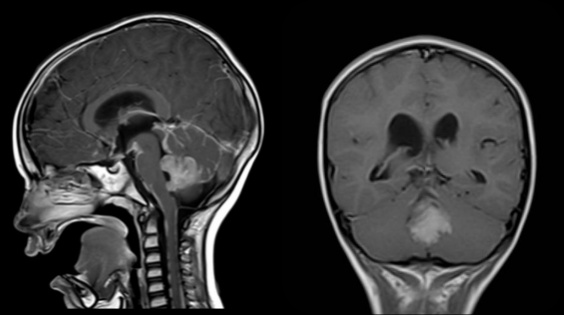
The most common type of malignant brain cancer in children is medulloblastoma, a fast growing tumor located in the cerebellum—the lower, rear portion of the brain. Although the standard treatment, an aggressive combination of surgery, radiation, and high-dose chemotherapy, cures more than 70 percent of patients, many survivors are left with profound long-term side effects, including cognitive deficits and increased incidence of other cancers. Continue reading “Why new therapies are failing some kids with brain cancer”

Institute News

Newly identified cause of motor neuron disease paves way for better treatments

Authorsgammon
Date

July 8, 2015

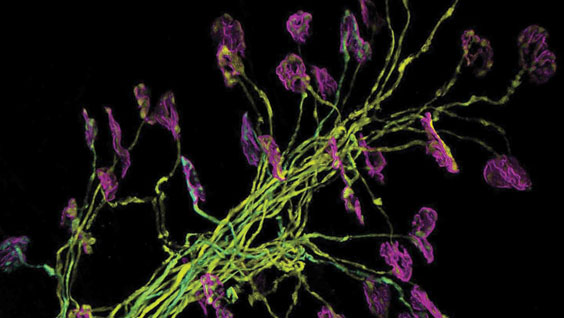
The discovery that a protein called membralin promotes the survival of motor neurons could potentially lead to novel therapies for severe, early-onset motor neuron disease, according to a recent study by SBP investigators. As reported recently in eLife, the researchers developed a novel mouse model for identifying therapeutic targets for a class of motor neuron disorders called distal hereditary motor neuropathies. Continue reading “Newly identified cause of motor neuron disease paves way for better treatments”

Institute News

Cancer metabolism 101

Authorsgammon
Date

April 21, 2015

“Feed me!” Cancer is caused by the uncontrolled proliferation of cells. Their rapid growth comes with a voracious appetite to support their nutritional demands. To satisfy these demands, cancer cells rewire their metabolism. Increasingly, scientists are looking to exploit the metabolic differences between normal and cancer cells for the development of new anti-cancer therapies. Continue reading “Cancer metabolism 101”

Institute News

Expanding the options to treat melanoma

Authorsgammon
Date

March 16, 2015

Melanoma is the most deadly form of skin cancer with approximately 10,000 deaths per year in the U.S. and more than 65,000 worldwide. Although there are more and better treatment options available today than in previous years, there is still an urgent need to develop drugs that target the numerous pathways melanoma cells use to multiply, spread, and kill. Continue reading “Expanding the options to treat melanoma”