philanthropy Archives - Page 2 of 4 - Sanford Burnham Prebys
Institute News

2022 Fishman Fund Awards honor postdoctoral researchers

AuthorMiles Martin
Date

October 17, 2022

Since 2001, the awards have paid tribute to our Institute’s heritage and supported the trailblazers of tomorrow

Last week, the Fishman Fund Awards were presented at the Sanford Consortium, marking the first in-person awards presentation for the scholarships since 2019. The Fishman Fund honors the legacy of the Institute’s founders, Dr. William and Mrs. Lillian Fishman, and its purpose is to support the next generation of scientific leaders.

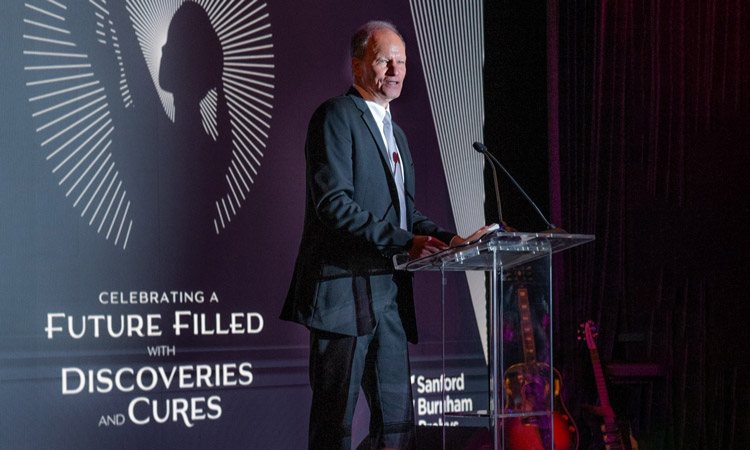
“The Fishman Fund Awards are important to our community and to the future of science,” said President and CEO David Brenner, M.D., during his comments at the ceremony. “The Fishmans understood that supporting our young scientists is a critical investment in the future of research, and that postdocs are the lifeblood of a scientific enterprise and crucial to the process of discovery.”

Professor Hudson Freeze, PhD, the first Fishman Fund awardee, recalled how the award was given to faculty the first year, but after that became an award exclusively for postdoctoral researchers. “Those are the people who do the work, and without them, there is no Institute,” said Freeze.

Assistant Professor Caroline Kumsta, PhD, who was a Fishman Fund awardee in 2011, also spoke. “The Fishman Fund has shaped many aspects of my life, and I am honored to be one of the recipients,” she said.

The evening was emceed by Reena Horowitz, who established the Fishman Fund with the late Mary Bradley in 2001. Since then, 74 awards have been conferred. This year, three $10,000 awards were given to postdocs to support their career development. An additional fellowship that provides salary and benefits was also awarded.

“These awards are important because they provide the vital funds to young career scientists for professional development and collaborative opportunities,” Horowitz said. “It is these up-and-coming biomedical researchers who will make the medical discoveries of tomorrow, shape the future of healthcare and literally save lives.”

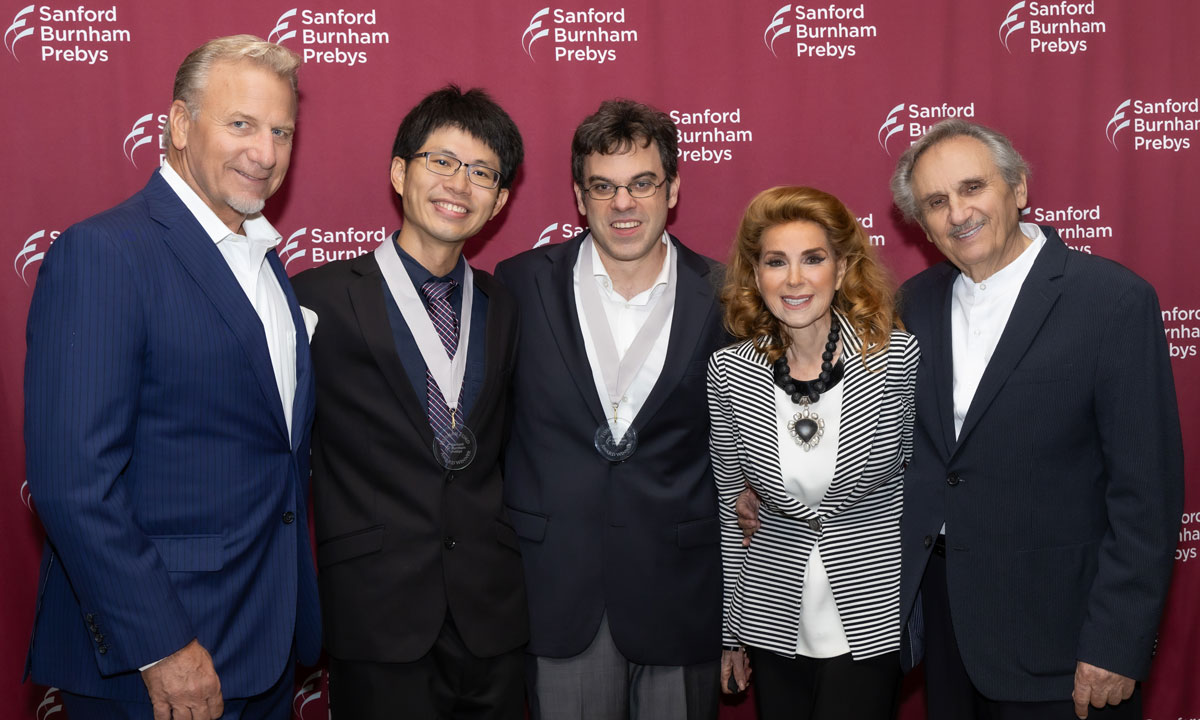
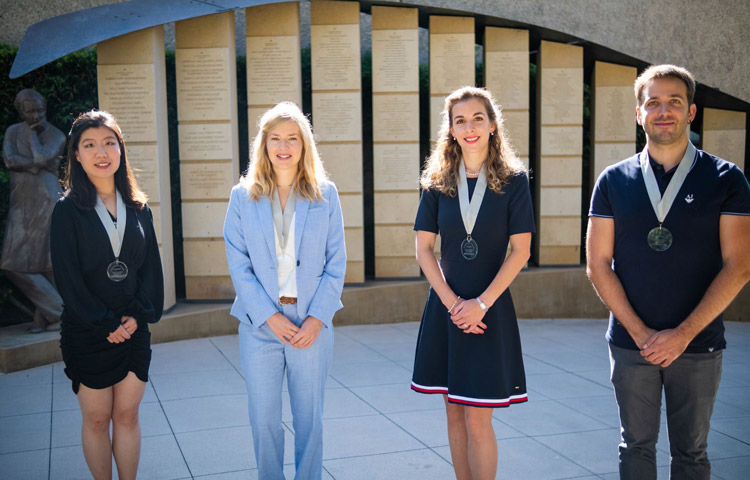
This year’s awards were presented to:

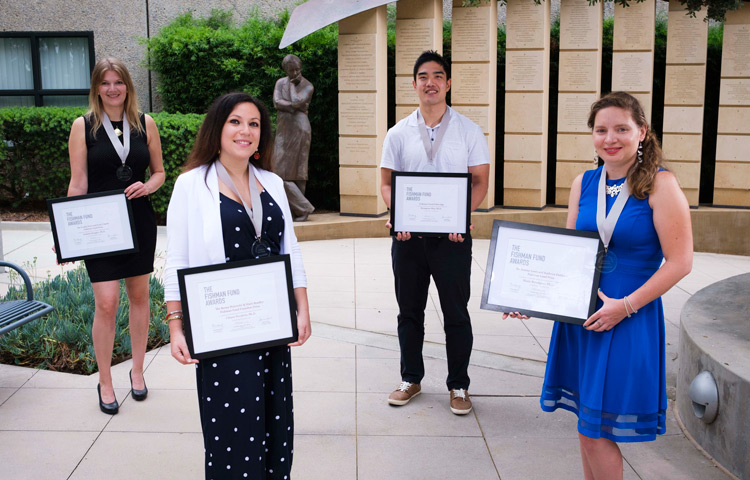
Guillem Lambies Barjau, PhD
Jeanne Jones and Kathryn Fishback Fishman Fund Award

“I am honored to be here today. Thank you to Sanford Burnham Prebys and the Fishman Fund for giving me this opportunity.”

Lambies Barjau hopes to improve the outcome of patients with pancreatic cancer. In the lab of Cosimo Commisso, PhD, Lambies Barjau studies how pancreatic cancer cells gather nutrients from their environment to survive and grow. Pancreatic tumors exist in a harsh, nutrient-poor environment, but they can activate a process called macropinocytosis to scavenge molecules as an alternative source of energy. By deciphering this process, Lambies Barjau’s research may reveal novel approaches to slow the growth of these often-deadly tumors.

Shanshan Yin, PhD
Lenka Finci and Erna Viterbi Fishman Fund Award

“I am grateful that you are our scientists’ strongest supporters. Together, we’ll do great science.”

Yin is studying the links between aging and breast cancer. About one in eight women will get breast cancer during her life, and the risk increases with age. In the lab of Peter Adams, PhD, Yin uses cutting-edge technology to quantify the activation of specific genes during aging. Identifying these genes may help explain why breast cancer occurs more frequently in older women, and could also lead to preventive treatments to spare the millions affected by the disease.

Tanja Eisemann, PhD
Reena Horowitz and Mary Bradley Fishman Fund Award

“I can’t tell you how honored I am to receive a 2022 Fishman Fund Award. I would like to express my deepest gratitude to the Fishman Fund donors for their generosity.”

Eisemann is exploring approaches to leverage the immune system against medulloblastoma, one of the most aggressive childhood brain cancers. Although rare, there are still about 500 children in the U.S. diagnosed each year with this dangerous cancer. In the lab of Robert Wechsler-Reya, PhD, Eisemann studies the interactions between T cells and medulloblastoma tumor cells, opening new research avenues to discover therapies that can enhance a patient’s own immune system to slow—or even eliminate—this dangerous brain cancer.

Cynthia Lebeaupin, PhD
Fishman Fund Fellowship

“The Fishman Fund Fellowship and the resources at Sanford Burnham Prebys will ensure I canperform science of excellent quality and make a lasting impact. Thank you for your support.”

Lebeaupin works in the laboratory of Randal J. Kaufman, PhD, where she studies how fatty liver disease leads to liver cancer. Fatty liver disease, which affects more than 25% of the U.S. population, develops when the body creates too much fat or can’t metabolize fat efficiently enough. There are no treatments or cures for this chronic liver condition and no methods of early detection. Lebeaupin’s research aims to address this unmet medical need by uncovering the biological pathways that lead to liver cancer and translating these findings into effective therapies.

Institute News

2021 Fishman Fund Award ceremony celebrates postdoctoral scholars

AuthorSusan Gammon
Date

September 28, 2021

The Fishman Fund Awards were presented on September 23, 2021, in a virtual ceremony that honored the enduring legacy of our Institute’s founders, Dr. William and Lillian Fishman.

The three exceptional winners were welcomed by Fishman Fund co-founder Reena Horowitz; co-founder designee Jeanne Jones; and 2018 award recipient Laura Martin-Sancho, who commented, “A Fishman Fund Award is more than the money—it means that someone believes in you and believes in your goals.”

Longtime supporter, Institute trustee and namesake Malin Burnham reflected on his first meeting with the Fishmans more than 40 years ago when they were setting the stage for Sanford Burnham Prebys. “The Fishmans were creating a collaborative, inspirational atmosphere for postdocs—the lifeblood of scientific enterprise. This award pays tribute to their vision that young, talented scientists hold the key to curing disease.”

Sanford Burnham Prebys CEO Randy C. Mills thanked our supporters and shared, “Fishman Fund Award winners are on a journey not only to make their mark through scientific discovery, but also to define themselves as scientific leaders. I’m excited to see the vision of better science that they will translate into reality for the benefit of patients in need.”

Reena Horowitz and the late Mary Bradley established the Fishman Fund Awards in 2001 to honor the Fishmans and advance the careers of promising young scientists. Ever since the fund was launched 20 years ago, more than 70 awards have been conferred—now worth $10,000—to support career-development activities. 

This year’s awards were presented to:

Cynthia Lebeaupin, PhD
The Lenka Finca and Erna Viterbi Fishman Fund Prize

“I’m especially grateful to be affiliated with a community that supports its postdoctoral researchers, helping us transition into the great leaders of tomorrow.”

Dr. Lebeaupin is studying how fatty liver disease progresses to liver cancer. Fatty liver disease is rapidly increasing in the U.S. and around the world—and there is no cure. Studying how cells respond to stress conditions may open new avenues to target those responses and prevent cancer. Dr. Lebeaupin, a postdoctoral associate in the lab of Randal J. Kaufman, PhD, aims to become a professor of biology in academia.

Valeria Guglielmi, PhD 
The Reena Horowitz and Mary Bradley Fishman Fund Founders Award

“Now more than ever, we need people like you who trust scientists and believe science can really make a difference in our lives.”

Dr. Guglielmi is researching nuclear pore complexes and their role in the development and activity of immune cells. This research may lead to novel treatments for health conditions caused by dysregulated immune-cell production and function. Guglielmi is a postdoctoral associate in the lab of Maximiliano D’Angelo, PhD, and her goal is to become an independent investigator to further research on the immune system.

Paulina Sosicka, PhD 
The Jeanne Jones and Kathryn Fishback Fishman Fund Prize 

“I’m very grateful and honored to receive this Fishman Fund Career Development Award. Thank you to the founders and donors who made this possible.” 

Dr. Sosicka is investigating the application of dietary supplementation to treat debilitating genetic conditions called CDGs, which are rare diseases—mainly affecting children—caused by defects in the human enzymes and proteins responsible for adding sugar molecules onto proteins and lipids. The research may also provide insights into new approaches to treat obesity and cancer. A postdoctoral associate in the lab of Hudson Freeze, PhD, Dr. Sosicka aspires to become a professor in academia in the field of glycobiology.


Event recording


Institute News

Celebrating the next generation of biomedical trailblazers at the 19th annual Fishman Fund Awards

AuthorMonica May
Date

September 22, 2020

Four talented early-career researchers were awarded prestigious Fishman Fund Awards.

When Dr. William and Lillian Fishman founded our Institute in 1976, they knew that nurturing the next generation of scientists was just as important as advancing cutting-edge research. Today, their values live on in the form of the Fishman Fund Awards, which help exceptional postdoctoral researchers develop into scientific leaders.

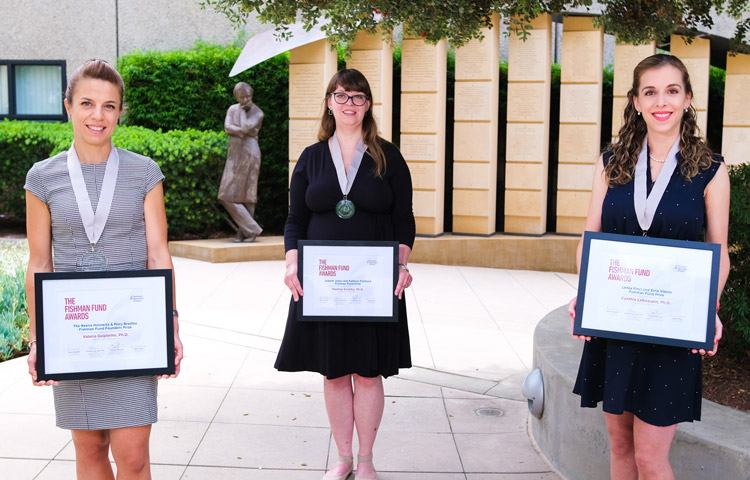
On September 24, four talented early-career researchers received the prestigious award during an inspiring virtual ceremony. Generous benefactors, past award winners, and family and friends tuned into the event, which featured remarks from Institute president Kristiina Vuori, MD, PhD; professor and Fishman Fund Award recipient José Luis Millán, PhD; Fishman Fund co-founder Reena Horowitz and co-founder designee Jeanne Jones.

“The Fishmans firmly believed in helping brilliant early-career postdoctoral scientists become great principal investigators,” says Ms. Horowitz, who established the Fishman Fund Awards in 2001 with her late friend Mary Bradley. “Our goal with these awards is to encourage and support these researchers in their quest for the next great medical breakthroughs, which might one day be able to save the lives of our family members, friends and neighbors.”

Fishman Fund winners undergo a rigorous selection process that includes a personal interview and a presentation to the selection committee. All winners receive a $10,000 career development award that can be used to attend workshops, network and travel to national and international conferences to learn about the latest developments in their research fields. The winner of the Fishman Fund Fellowship receives a two-year salary stipend in addition to the professional development funding.

Meet this year’s Fishman Fund Award winners

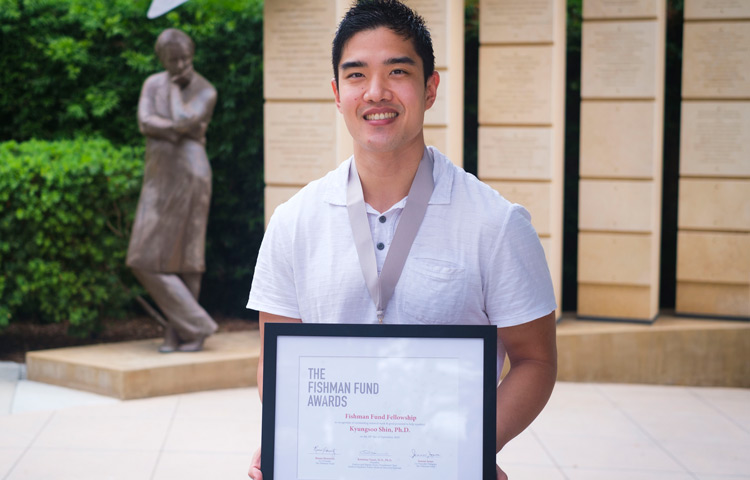
Fishman Fund Fellowship Award

Kyungsoo Shin, PhD, grew up in Halifax, Nova Scotia, in Canada, where he also attended Dalhousie University for his undergraduate and graduate studies. Dr. Shin works in the laboratory of Dr. Francesca Marassi, where he is advancing a potential treatment for age-related macular degeneration, a leading cause of vision loss in people over the age of 60. Dr. Shin recently showed that a protein called vitronectin is the likely cause of the pebble-like deposits in the back of the eye that underlie the disease. With this information, scientists can now work toward a treatment to prevent vision loss.

Dr. Shin’s career goal is to become an independent researcher focused on understanding how cellular membranes—gatekeepers that regulate what enters or exits a cell—are involved in disease. He hopes to mentor and inspire the next generation of scientists to advance our understanding of human biology.
 

Fishman Fund Career Development Awards

Marie Berenguer, PhD, grew up near Paris and went to school in Bordeaux. She is currently studying in the laboratory of Dr. Gregg Duester and focuses on how a compound called retinoic acid affects the way embryos are formed. Her work may open new avenues to prevent and treat birth defects.

Dr. Berenguer’s career goal is to become a principal investigator and lecturer in genetics and developmental biology. By leading her own research team, she hopes to improve our understanding of genetic diseases and lay the foundation for future therapies.

Daniela Dengler, PhD, is from Germany, where she studied pharmacy and worked in a pharmacy for a year before she decided to pursue her PhD at the Friedrich-Alexander University in Erlangen-Nuremberg, Germany. Dr. Dengler works in the Conrad Prebys Center for Chemical Genomics with Dr. Eduard Sergienko. She is searching for new drugs that bind to proteins called G-protein coupled receptors (GPCRs), which mediate many physiological processes in the body. More than 30% of all FDA-approved drugs act on GPCRs.

Dr. Dengler’s career goal is to become a project leader in biotech, where she wants to combine her background in chemistry with her knowledge in assay development and high-throughput screening to find drugs for unmet medical needs.

Chiara Nicoletti, PhD, grew up in Gela, in Sicily, and received her PhD at the University of Padua in northern Italy. Dr. Nicletti is in Dr. Pier Lorenzo Puri’s lab and is studying the links between genetic sequences and risk of disease. Her research will open new avenues to help clinicians practice personalized medicine—including predicting who is likely to get a disease, how to prevent it, how to treat it and perhaps even cure the condition.

Dr. Nicoletti’s career goal is to become a principal investigator, leading her own research team that focuses on integrating foundational research with everyday medical practice to improve human health.

Watch the Fishman Fund Awards ceremony, which featured remarks from Institute president Kristiina Vuori, MD, PhD; professor and Fishman Fund Award recipient José Luis Millán, PhD; Fishman Fund co-founder Reena Horowitz and co-founder designee Jeanne Jones.

Learn more about the Fishman Fund, or, donate now, to support future scientific leaders.

Institute News

Meet molecular biologist Kyungsoo Shin

AuthorMonica May
Date

September 22, 2020

Kyungsoo Shin is the winner of this year’s prestigious Fishman Fund Fellowship Award, which helps talented early-career researchers become scientific leaders

While growing up, Kyungsoo Shin always found himself drawn to science. Learning how the body works was endlessly fascinating to him. But it wasn’t until he was in the middle of his PhD that he became officially hooked on research.

“I was doing a long 16-hour experiment, and around 9 or 10 p.m. I started getting really positive results. I was so excited that I called my supervisors at the time,” recalls Shin. “Even though it was so late, they were just as happy as I was! That was my first introduction to how intoxicating research can be, and the power of a supportive community.”

Today, as a postdoctoral researcher at Sanford Burnham Prebys, Shin is applying his passion for discovery to an area of great need: finding a treatment for dry age-related macular degeneration (AMD). No treatments currently exist for the common condition, which is the main cause of vision loss for people over the age of 60. As a new father, this research became especially meaningful to Shin.

“My son is 3 months old, and just started to smile and laugh,” says Shin. “I couldn’t imagine one day not being able to see him, or my grandchildren. If I had dry AMD, I probably wouldn’t be able to even drive to go see him. I don’t want to imagine that sort of life for anyone.”

Working with a world-renowned scientist

Shin has found a wise mentor in Professor Francesca Marassi, PhD, one of the world’s leading experts on nuclear magnetic resonance (NMR) spectroscopy. This technology allows scientists to see the shape of a protein, which enables rational drug design. When the job posting first appeared, Shin was writing his PhD thesis—but his supervisor told him to stop writing and apply to the position immediately. The opportunity to work with Marassi was too important.

“Learning from her has fundamentally changed who I am as a scientist,” says Shin. “Before I used to think in terms of completing projects. Now I ‘follow the science,’ which means let the data lead me to my next step.”

This approach has proved successful: Marassi and Shin recently uncovered a new drug target for dry AMD. Using NMR and other cutting-edge technologies located at the Institute, they deciphered the shape of a protein called vitronectin. Then they showed that the sticky, propeller-shaped protein likely “seeds” the formation of pebble-like structures in the back of the eye that cause vision loss.

Fishman Fund Award advances key research

Now, with the support of the Fishman Fund Fellowship Award—which provides a salary stipend and $10,000 for career development—Shin can attend scientific conferences that will help him think outside of the box and grow as a scientist. Receiving an award in honor of the Fishmans—who started the Institute after reaching mandatory retirement age—is special to Shin.

“The Fishmans were so devoted to pushing our understanding of human health that they continued their research even when they didn’t have to,” says Shin. “To receive a fellowship that is named after such inspirational and honorable people is truly an honor. I have a great sense of responsibility to advance research that will have a positive impact on humanity, and could one day benefit my son or his children.”

Sanford Burnham Prebys is grateful to the generous Fishman Fund donors who make the career development awards possible. Learn more about the Fishman Fund, or donate now, to support future scientific leaders.

Institute News

Dinah Conyers Ruch: The power of investing in human health

AuthorDinah Conyers Ruch
Date

June 24, 2020

Long-time supporter Dinah Conyers Ruch discusses the impact of giving to biomedical research—especially COVID-19 efforts—and the importance of investing in human health. 

How were you introduced to Sanford Burnham Prebys?  
My grandson John, whom we called “Rocket,” was born with a rare disease known as CDG, or Congenital Disorders of Glycosylation. Our doctors were able to quickly diagnose this disease thanks to CDG expert Hudson Freeze at Sanford Burnham Prebys Medical Discovery Institute. Dr. Freeze works closely with the families of children impacted by rare diseases like CDG and has now become a lifelong friend. Though we weren’t able to save Rocket, we have kept his legacy alive by supporting Dr. Freeze through a fund that continues to study this disease and fight for a cure. 

What about the Institute’s mission compels you to keep giving? 
Over ten years ago, our family’s experience with Rocket showed us the promise and power of science to understand and improve human health. Today, we continue to be inspired by the dedication and passion of the scientists who devote their careers to often neglected diseases like CDG, which impacts thousands of children worldwide. When I started to hear about COVID-19 earlier this year, another intractable disease, I initially felt powerless. Then I started to receive emails from the Institute about the efforts underway to study the virus, and I knew I wanted to do something immediately. Private philanthropy can be a powerful catalyst for change and progress especially when you have trusted partners like the scientists at Sanford Burnham Prebys.  

What inspired you to give to Dr. Sumit Chanda’s research? 
Dr. Chanda’s efforts to understand and find treatments for COVID-19 are essential not just in the short-term but also well into the future. When I learned about the drug repositioning strategy, which involved screening more than 12,000 approved drugs, I understood that this research could save time, money and, most important of all, lives. Dr. Chanda shared his larger vision too, which includes expanded research capacity, multiple scientific leaders, and strategic partners from across the globe. This excited me. This is a vision that is responsive and forward-looking and it confirmed my interest in boosting the efforts through philanthropy. 

Why should someone else give back to pandemic research? 
Put simply, the need couldn’t be greater. The pandemic has changed American life so quickly. The devastating effects of COVID-19 go beyond our health and include rampant unemployment, economic uncertainty and broken social safety nets. Investing in therapies now can improve not just our human health but also our societal outlook. Scientists at the Institute have long led the path from research to power a cure. I have seen it firsthand. And I am more confident than ever that the COVID-19 research today will lead to greater health tomorrow. I hope others will join me in supporting this important work. 

Join Dinah

Join Dinah in supporting COVID-19 research at Sanford Burnham Prebys through our first-of-its-kind matching gift opportunity—which doubles all donations dollar-for-dollar up to $500,000. For more information contact Rachael McCabe at rmccabe@sbpdiscovery.org or make a gift online

Double your gift today

Institute News

Malin Burnham: Community before self during the COVID-19 crisis

AuthorMalin Burnham
Date

May 21, 2020

Our namesake shares why supporting biomedical research is more important than ever before. 

How are you and your family doing in this COVID-19 crisis? How has it affected your life? 
We are lucky in that all of my family members and friends are in good health. When you see the situation in other parts of the country and the world, however, you can tell that this virus has a devastating impact on the communities where it hit hardest. Given that I have not been affected directly, I don’t want to complain, but I have to admit that cabin fever has become a real challenge. I hope that we will find ways to manage the outbreak quickly, so we can all go back to our normal lives soon. I am thrilled about the exciting and promising COVID-19 research that has been taking place at Sanford Burnham Prebys over the past weeks. 
  
Is there anything that you’ve learned in this crisis that surprised you? 
There have been many things that have surprised me since the outbreak began earlier this year. On the one hand, I have been impressed by how quickly some communities have prepared and responded to the pandemic. I have been even more impressed by the compassion and work ethic of our healthcare workers. This crisis shows us again, how much we need them and what important roles they play in our society. A major surprise to me has been the virality of this virus and how fast the pandemic has affected the entire world. Nobody lives in a bubble anymore. Healthcare crises like this one can quickly spread across the globe. 
  
How do you think the San Diego community has responded to the crisis? 
I’m most pleased to see that San Diego County immediately started following almost all of the steps proposed on a State and Federal level to keep our population safe and implemented plans to help affected businesses. Even though we can’t tell yet what the long-term effects will be, we should be proud of that as a community. I am also excited to be part of a community that has been on the frontlines of the fight against the novel coronavirus. Our residents abided by the rules, our hospitals were well prepared and managed the influx of COVID-19 patients well, we’re testing more and more people for the virus, and we have the talent and infrastructure on the Torrey Pines Mesa and beyond to find an effective treatment for COVID-19 quickly. Sanford Burnham Prebys is playing an important role in that effort. “Community before Self” has been my motto for a while now and I can really see that happening in our community right now. 
  
What do you think we, as a community, should take away from this crisis? What have we learned? 
The community spirit to fight COVID-19 that we have seen over the past few weeks has been truly energizing. It shows what we can achieve as a community when we all work together toward a common goal. This shouldn’t stop once we find a vaccine or cure for COVID-19, instead we should expand this cooperative spirit to other community needs of which there are plenty in San Diego and our region. 
  
Why is support for organizations like Sanford Burnham Prebys particularly important at this time? 
As you know, I have been a supporter of the Institute for a very long time and the COVID-19 crisis shows us again how important the work of institutes like Sanford Burnham Prebys is. If fundamental and translational medical research is not done, there will not be any new treatments or cures. The work Dr. Sumit Chanda, for example, has done, in such a short time, is incredible. Screening a library of 12,000 compounds that are known to be safe in humans in just a few weeks, that’s quite a task and shows how nimble the Institute is. Philanthropic support right now, to fight the pandemic, is more important than ever because getting federal grants takes a very long time and is a cumbersome process. We don’t have the time for that. We need a vaccine or effective treatment quickly, not in a few years from now. Philanthropy can fill that gap and help society at large in a very profound way. 

Institute News

Advancing life-changing science at Sanford Burnham Prebys’ 2019 gala

AuthorMonica May
Date

November 13, 2019

On November 2, 2019, more than 170 supporters of Sanford Burnham Prebys stepped into a winter wonderland at our Institute’s “Nordic Nights”-themed gala.

As attendees enjoyed the festivities—including an ethereal violinist on stilts and dancing ballerinas—the evening’s goal was never far from everyone’s mind: advancing biomedical research that will transform the future of human health. Thanks to guests’ generous donations our scientists can accelerate their efforts to understand and treat serious diseases such as Alzheimer’s, heart disease, cancer and more.

Watch Helen share her breast cancer story
(video shown at the gala)

Institute News

18th Annual Fishman Fund Award ceremony celebrates the next generation of biomedical trailblazers

AuthorSusan Gammon
Date

September 23, 2019

Three talented early-career researchers were presented with a prestigious Fishman Fund Award at the annual ceremony on September 19. More than 100 generous benefactors, past award winners and family and friends joined the celebration held at the Sanford Consortium. The awards honor the Institute’s founders, Dr. William and Lillian Fishman.

Reena Horowitz, who along with her close friend Mary Bradley established the Fishman Fund Awards, welcomed the audience and shared how the Fishmans truly believed that young researchers need a boost from time to time—and that these awards do exactly that. Recipients who are selected from a pool of Sanford Burnham Prebys postdocs use the $10,000 stipend to attend workshops, network and travel to national and international conferences to learn about the latest developments in their research fields. 

“The young researchers at Sanford Burnham Prebys make discoveries that have an impact in San Diego as well as helping advance science and health around the world,” said Horowitz. “The Institute motto could not ring truer: From Research the Power to Cure.”

Professor Hudson Freeze—one of the very first Fishman Fund Award winners and now director of the Institute’s Human Genetics Program—shared how his nearly 40 years of research has established him as a magnet for a global community of families seeking treatments for rare childhood diseases. He encouraged this year’s winners to take advantage of working in a world-class research center and to pursue meaningful research that will open new avenues to improve human health.

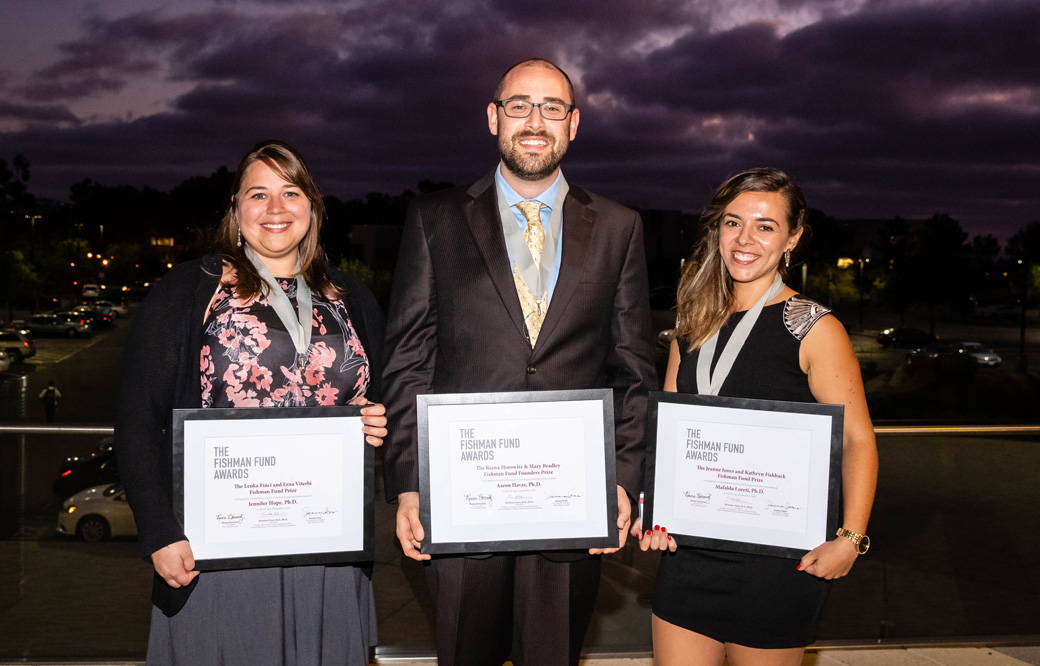
Jennifer Hope, PhD, was presented with the Lenka Finci and Erna Viterbi Fund Prize by Horowitz and Institute supporter Judy White. Dr. Hope works in the laboratory of Professor Linda Bradley, where she is studying cellular and molecular mechanisms that drive the development of T cells that attack cancer. Jennifer’s career goal is to become an independent investigator focused on research to promote patient responsiveness to cancer therapies.

Mafalda Loreti, PhD, was presented with the Jeanne Jones and Kathryn Fishback Fund Prize by Fishman Fund co-founder designee Jeanne Jones and longtime Institute supporter Sam Horowitz. Dr. Loreti is studying the mechanisms that promote muscle growth and repair in the laboratory of Associate Professor Alessandra Sacco. Her career goal is to become an independent researcher in an academic setting, where she will explore the biology of muscle pathologies and approaches to improve muscle health.

Aaron Havas, PhD, received the Reena Horowitz and Mary Bradley Fishman Fund Prize from Horowitz and Institute supporter Doreen Schonbrun. Dr. Havas works in the lab of Professor Peter Adams, where he studies how aging affects gene regulation. His career goal is to work in the biotech industry exploring drugs that target the process to promote healthy aging.

Since the fund’s inception in 2001, 64 prizes have been awarded. Every other year, a 24-month fellowship that provides salary support is given to a deserving postdoc. The fellowship was awarded in 2018, so it will be given again at next year’s ceremony.

The generosity of our Fishman Fund donors enables the tradition of providing career advancement opportunities. On behalf of all of us at Sanford Burnham Prebys, we thank you for your support.

Institute News

An evening with autoimmune disorder experts

AuthorMonica May
Date

June 26, 2019

On June 20, 2019, nearly 100 community members, including many people living with autoimmune disorders and their loved ones, joined us at our latest SBP Insights event. The discussion featured unique perspective from three experts—a scientist, a doctor and a patient—on a single topic: autoimmune disorders. 

More than 50 million Americans have an autoimmune disorder, such as Crohn’s disease, psoriasis or rheumatoid arthritis. These conditions are often painful, chronic and debilitating. For unknown reasons, more than 80 percent of these patients are women. 

Scientists know these disorders occur when the immune system mistakenly attacks healthy tissue. But researchers still don’t understand why immunosuppressive treatments don’t work for everyone or know the initial trigger that causes the immune system to misfire. Answers to these fundamental questions could unlock insights that lead to new, effective medicines. 

“Before I was diagnosed, I thought doctors had it all sorted out. Now I know there is so much they don’t know,” says 17-year-old Madison Koslowski, who was diagnosed last year with juvenile idiopathic arthritis. She uses a wheelchair and cane for mobility while she works with her doctor to find a treatment that relieves her intense joint pain. “Right now, my friends are planning their future and figuring out where they will go to college. But for me, there are so many unknowns. I don’t know if I’m going to respond to the next medicine we try or if I will be really sick. I feel like my life is on pause. I have no idea when it will start again.”

Madison traveled from Los Angeles with her mother and a friend to hear race-car driver Angela Durazo speak about her journey with rheumatoid arthritis and learn what’s on the horizon for autoimmune treatments (read Angela’s story).

Following Angela’s presentation, Carl Ware, PhD, professor and director of the Infectious and Inflammatory Diseases Center at Sanford Burnham Prebys, took the stage and provided an overview of the science behind autoimmune disease. Ware also described his ongoing research collaboration with Eli Lilly, which recently led to a new Phase 1 clinical trial for autoimmune disorders. 

Hal Hoffman, MD, chief, division of allergy, immunology and rheumatology at UCSD and Rady Children’s Hospital, wrapped up the discussion with an overview of how he and his team are turning to rare immune disorders to understand the conditions as a whole. A Q&A followed the brief presentations. 

17-year-old Madison Koslowski (right), who was diagnosed last year with juvenile idiopathic arthritis, poses with race-car driver Angela.

17-year-old Madison Koslowski (right), who was diagnosed last year with juvenile idiopathic arthritis, poses with race-car driver Angela.

The discussion was moderated by Zaher Nahle, PhD, CEO of the Arthritis National Research Foundation.

Join us at our next SBP Insights discussion, which focuses on pancreatic cancer and takes place on November 21, 2019. Event details.

Institute News

Getting groovy for a good cause at Bring It!

AuthorMonica May
Date

May 9, 2019

From the moment guests stepped into the disco-lit room, it was clear Bring It! was not your typical fundraiser. 

Donned in bell bottoms, sequined bodysuits and platformed heels, this year’s guests sampled hors d’oeuvre’s supplied by roller-blading servers and grooved to classics such as “Stayin’ Alive” and “Dancing Queen.” 

The 70’s-themed event, held on May 2, 2019, at the Del Mar Fairgrounds, drew a crowd of more than 400 attendees—the largest yet—a testament to the hard work and dedication of co-chairs Juli Oh and Matt Browne, and Sarah and David Szekeres. John Weisbarth, host of Tiny House Nation and San Diego native, emceed the event for the third year in a row.

While fun was had by all, the night’s mission was never far from anyone’s mind: fundraising for our Institute’s work to find cures for diseases such as Alzheimer’s, cancer, heart disease, diabetes and more. 

Co-chair Sarah Szekeres shared her personal story about why research is important to her: “Learning I have the BRCA2 gene mutation, which puts me at a greater risk of breast and ovarian cancer, has been an overwhelming and frightening experience for me and my family. It’s through basic research that we will develop effective medicines or tests that prevent, diagnose or treat disease—and create a future where my daughter, and her children and grandchildren, aren’t afraid of cancer or Alzheimer’s or the many serious diseases our society faces today.”

Guests vied for an opportunity to participate in onstage competitions—a spot so coveted it was raffled to the highest bidder. Top-scoring teams partook in absurdly hilarious games, such as “Hungry Hungry Human,” where guests attempted to collect plastic balls from an inflated pool while wheeled on a dolly; and “Rocky,” where participants furiously boxed and ran in place to reach the most steps on a pedometer. Despite wearing wigs and hats, contestants even braved a bobbing-for-apples style competition involving candy encased in a Jello Mold.

Altogether, Bring It! certainly puts the “fun” in “fundraising needs.” We hope to see you next year—stay tuned for more details about the date and theme of the event.  

We are extremely grateful to the event’s generous sponsors, including Alexandria Realty, Heron Therapeutics, Marleigh and Alan Gleicher, Cooley, Marilena and Greg Lucier, Retrophin, Domain Associates, Robin and Hank Nordhoff, Jeanne Herberger, PhD, Moon Valley Nurseries, Bank of America Merrill Lynch, Luke and Elizabeth Bonacci, Sarah and David Szekeres, Jonell and Gregory Tibbitts, Court and Julie Turner, Dulcy and Mason Matthies, Josie and Jim Myers, Marie Simmons, Arena Pharmaceuticals, BDO, CBRE, Creative Fusion, Cushman & Wakefield, IDT, Deloittte & Touche, Farrell Family Foundation, iProtean, KPMG, Johnson & Johnson, Marsh & McLennan Agency, Neurocrine Biosciences, Oxford Finance, Pegasus Building Services, UnionBank, Cabrillo Advisors, Square1bank and USI Insurance Services. 

Watch a fun-filled KUSI segment about the event. 

Head to our Facebook page to view event photos; search #BringIt19 to find more content. 

Interested in keeping up with our latest discoveries, upcoming events and more? Subscribe to our monthly newsletter, Discoveries.