awards Archives - Page 4 of 5 - Sanford Burnham Prebys
Institute News

American Heart Association awards postdoctoral fellowship to SBP scientist

AuthorMonica May
Date

January 23, 2019

It’s no surprise that muscles are important to our metabolism: it’s why building muscle at the gym can accelerate weight loss. 

Scientists are particularly interested in how muscle metabolism affects the heart, arguably the most important muscle in the body. With heart disease remaining the number-one killer of men and women in the U.S., the hunt is on to better understand the molecular mechanisms of the heart so we can develop better treatments. (Learn more about heart disease at our upcoming SBP Insights event.) 

Research is revealing that altered communications between skeletal and heart muscle increases the risk of heart disease. But the molecular mechanisms behind this link are currently unknown. 

Now, the American Heart Association has awarded a two-year postdoctoral fellowship to SBP’s Chiara Nicoletti, PhD, to study the genetic basis of metabolic changes in skeletal muscle that ultimately lead to heart disease. Nicoletti works in the lab of Pier Lorenzo Puri, MD, professor in the Development, Aging and Regeneration Program at SBP. 

Findings from Nicoletti’s work could uncover therapeutic targets for heart disease and/or lead to a prognostic tool that could predict heart disease risk. Both developments would be much-needed advances in the battle against heart disease. 

Interested in keeping up with SBP’s latest discoveries, upcoming events and more? Subscribe to our monthly newsletter, Discoveries.

Institute News

2018 Fishman Award Ceremony honors postdoctoral scholars

AuthorSusan Gammon
Date

September 26, 2018

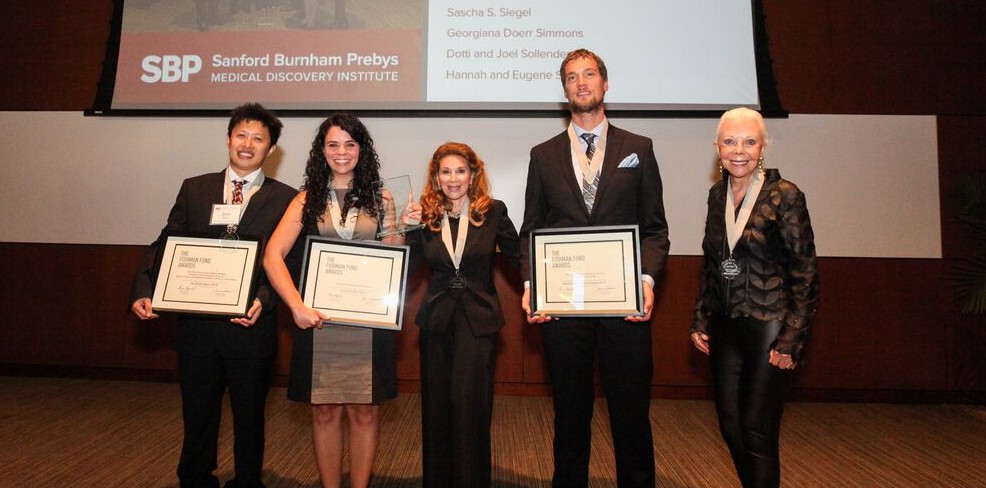
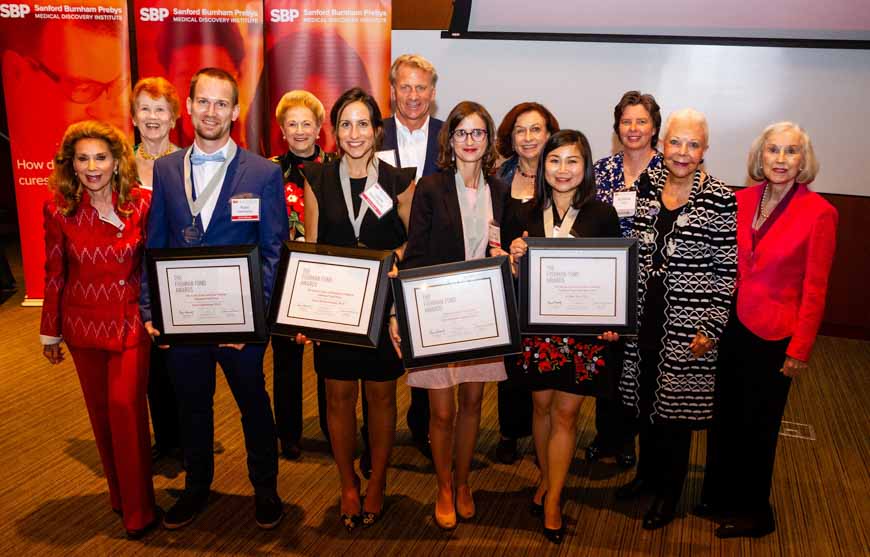
More than 100 supporters of SBP came out to celebrate this year’s Fishman Award recipients: Usue Etxaniz Irigoien, PhD, Koen Galenkamp, PhD, Laura Martin-Sancho, PhD, and Ee Phie Tan, PhD The annual awards ceremony, held September 20 at the Sanford Consortium, recognizes postdocs who have made extraordinary efforts and encourages their passion for careers in science.

The evening began with a warm welcome from founder Reena Horowitz, who described how she began the Fishman Fund with the late Mary Bradley (her dear friend) to honor Dr. William and Lillian Fishman. The Fishmans were the founders of SBP and firmly believed in helping young postdoctoral scientists become great principal investigators—and these awards help boost young researchers to meaningful careers in science.

Jeanne Jones, the Fishman Fund’s co-founder designee, shared that since the fund’s inception, 64 recipients have been awarded. The career development awards—bestowed annually to three postdocs—provide a generous $10,000 stipend to allow them to attend workshops and travel to national and international conferences to learn the latest developments in their research fields. Additionally, a Fishman Fund Fellowship Award, which provides salary support for two years in addition to benefits and a career-development stipend, was awarded this year for the second time in SBP history.

The keynote speaker was Aman Mann, PhD, who won the Fishman Award in 2011. Today, Mann is a research assistant professor at SBP and an entrepreneur and founder of AivoCode, a neuroscience company that licenses technology originally developed at SBP. Mann reflected on how the award gave him added confidence and resources to pursue his career goals—and he encouraged this year’s recipients to similarly follow their dreams.

If you are interested in donating to the Fishman Fund, click here.

The 2018 Fishman Fund Fellowship winner, Usue Etxaniz Irigoien, PhD, was presented with her award by Reena Horowitz. Irigoien, originally from the Basque region of Spain, is the first in her family to pursue a graduate degree in science. She is currently a postdoctoral researcher in the laboratory of Lorenzo Puri, PhD, and is studying the communication between nerves and muscles. Irigoien’s research is providing insights that may lead to improved therapies for neuromuscular diseases such as ALS. In the future, she hopes to become a principal investigator of her own lab.

The Fishman Fund Awardees:

Koen Galenkamp, PhD, was presented with his award by Andrew Viterbi, a distinguished scientist and former SBP trustee. Galenkamp works in the laboratory of Cosimo Commisso, PhD, and specializes in seeking ways to starve pancreatic tumors of the food they need to survive and grow. Originally from Amsterdam, Galenkamp thanked his colleagues and wife—who is also a postdoc in San Diego—and shared his plans to use the funds to attend a comprehensive pancreatic cancer conference at Cold Spring Harbor Laboratories.

Laura Martin-Sancho, PhD, a postdoc in the lab of Sumit Chanda, PhD, received her Fishman Fund Award from Armi Williams, a Fishman Fund Board member and longtime SBP supporter. Martin-Sancho is working to develop antiviral medicines that will combat infectious diseases such as influenza, dengue, and West Nile and Zika viruses. Martin-Sancho’s career goal is to be an independent investigator in an academic organization. She will use her stipend to attend a Keystone RNA virus conference in Dublin, Ireland.

Ee Phie Tan, PhD, originally from Malaysia, joined SBP in 2016 to work in the lab of Malene Hansen, PhD Tan is studying autophagy—a cell process that tidies up cell debris and recycles parts to maintain health. Defects in autophagy are linked to many aging-related diseases such as Alzheimer’s and Parkinson’s disease, and even cancer. Tan received her award from Reena Horowitz and will use the funds to attend a Gordon Research Conference in Texas and a Keystone Symposium in Santa Fe, New Mexico. 
 

Institute News

SBP scientist recognized by Biocom for contributions to San Diego life science industry

AuthorMonica May
Date

September 25, 2018

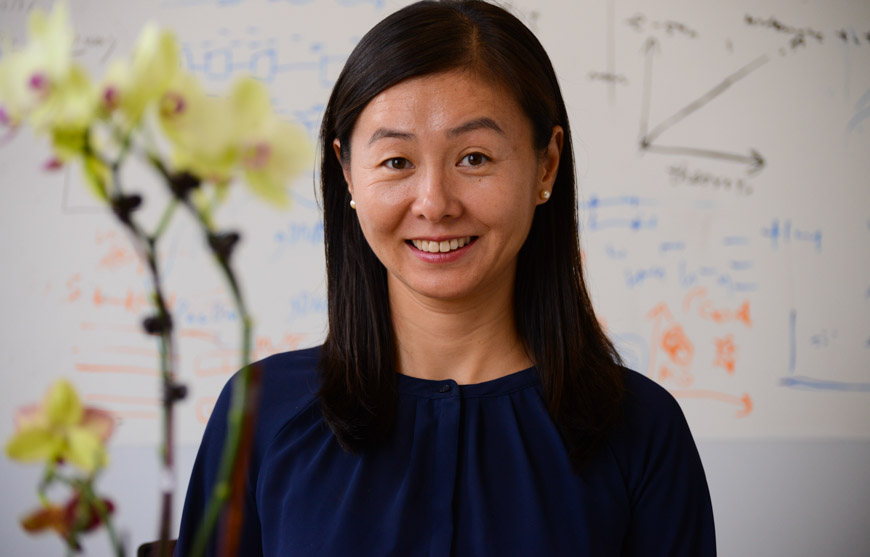
Tao Long, PhD, assistant professor in the Bioinformatics and Structural Biology Program at Sanford Burnham Prebys Medical Discovery Institute (SBP), has been named a 2018 Life Science Catalyst by Biocom, the association representing the California life science industry.

This annual award celebrates up-and-coming individuals in the life science industry—including scientists, entrepreneurs, investors, corporate leaders and business advisers—who are making a lasting and positive mark on Southern California’s life science industry prior to their 40th birthdays. Read the full list of winners.

Scientists know that individuals’ genetic makeups and gut microbiomes play important roles in human health. But sorting through genomic and clinical data is technologically complex. Long and her team are developing bioinformatics and machine-learning algorithms to help uncover links between our genes as well as the genes of the trillions of microbes that live in our gut and disease. This work could help us learn more about health conditions ranging from cancer to Alzheimer’s disease.

“Marked by their contributions to research, discovery and entrepreneurship in San Diego and Los Angeles, this year’s Life Science Catalyst Award recipients showcase the up-and-coming leaders who are transforming the life science industry,” says Joe Panetta, president and CEO of Biocom. “Biocom is honored to recognize these people who are utilizing their skill sets to positively impact human health across the globe.”

The 17 award winners will be featured in the fall edition of Biocom’s LifeLines magazine and honored during the December Biocom Board of Directors meeting.

Interested in keeping up with SBP’s latest discoveries, upcoming events and more? Subscribe to our monthly newsletter, Discoveries.

Institute News

SBP women awarded American Heart Association Fellowships

AuthorSusan Gammon
Date

June 15, 2018

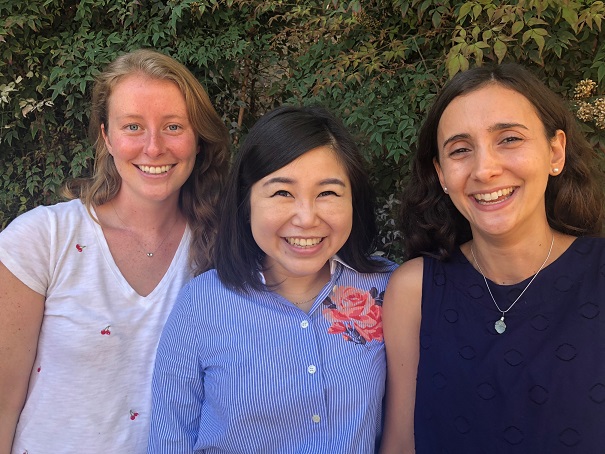
There has never been a more exciting time to embark on a career in biomedical research. Fortunately, the American Heart Association (AHA) is supporting early-career scientists with passion, commitment and focus by providing fellowships that fund their pursuit of cardiovascular research. Recently, three SBP scientists were awarded AHA grants to finance projects that align with the AHA mission of building healthier lives, free of cardiovascular disease and stroke.

Katja Birker (left)
Birker, a graduate student in the lab of Rolf Bodmer, PhD, will be studying genes that could possibly contribute to hypoplastic left heart syndrome (HLHS)—a condition that affects roughly 2–4 out of every 10,000 babies. Today, the cure for HLHS is a three-step invasive surgery that begins two weeks after the baby is born.

Birker will be collaborating with the Mayo Clinic to identify and test whether candidate HLHS genes found in patients have similar consequences in the hearts of fruit flies, which are an established model organism for cardiovascular research. She will use the flies to work toward her goal of validating novel genes that could be used in the future for diagnostic and therapeutic purposes related to cardiovascular diseases.

EePhie Tan, PhD (middle)
Tan’s research is taking a deeper dive into previous research showing that the cell recycling process called autophagy provides health benefits—including life extension—in response to reduced food intake. This project will examine the cell networks that govern autophagy, and a specialized form of autophagy called lipophagy (fat recycling). Lipophagy is a relatively new field of biomedical research, but scientists have already learned that malfunctions in lipophagy can lead to the accumulation of toxic fat deposits and contribute to heart disease.

Tan, a postdoc in the lab of Malene Hansen, PhD, will use a small worm called C. elegans as a model system to study proteins involved in the lipophagy process. Since the core machinery of lipophagy is conserved in all organisms (from humans to C. elegans), Tan’s findings may be used to find future treatments that target toxic fat deposits in heart disease.

Clara Guida, PhD (right)
Guida will study why children from obese parents have an increased risk of developing cardiovascular disease. The research may lead to the development of biomarkers that can predict heart conditions caused by parents that eat a high-fat diet (HFD), and may lead to new drugs that can prevent the negative effects of a parental HFD on the heart function of offspring.

Guida, a postdoc in Bodmer’s lab, will study the inheritance of DNA modifications called “epigenetic marks” in fruit flies fed a HFD. These epigenetic marks are thought to cause heart problems in the next generation. She will be testing potential drugs to see if they can erase the inherited abnormal gene changes and prevent the negative effects of a parental HFD. The research is especially relevant to lipotoxic cardiomyopathy—a condition associated with fat accumulation in the heart.

Institute News

2017 Fishman Fund Award Ceremony celebrates postdoctoral scholars

AuthorHelen I. Hwang
Date

September 20, 2017

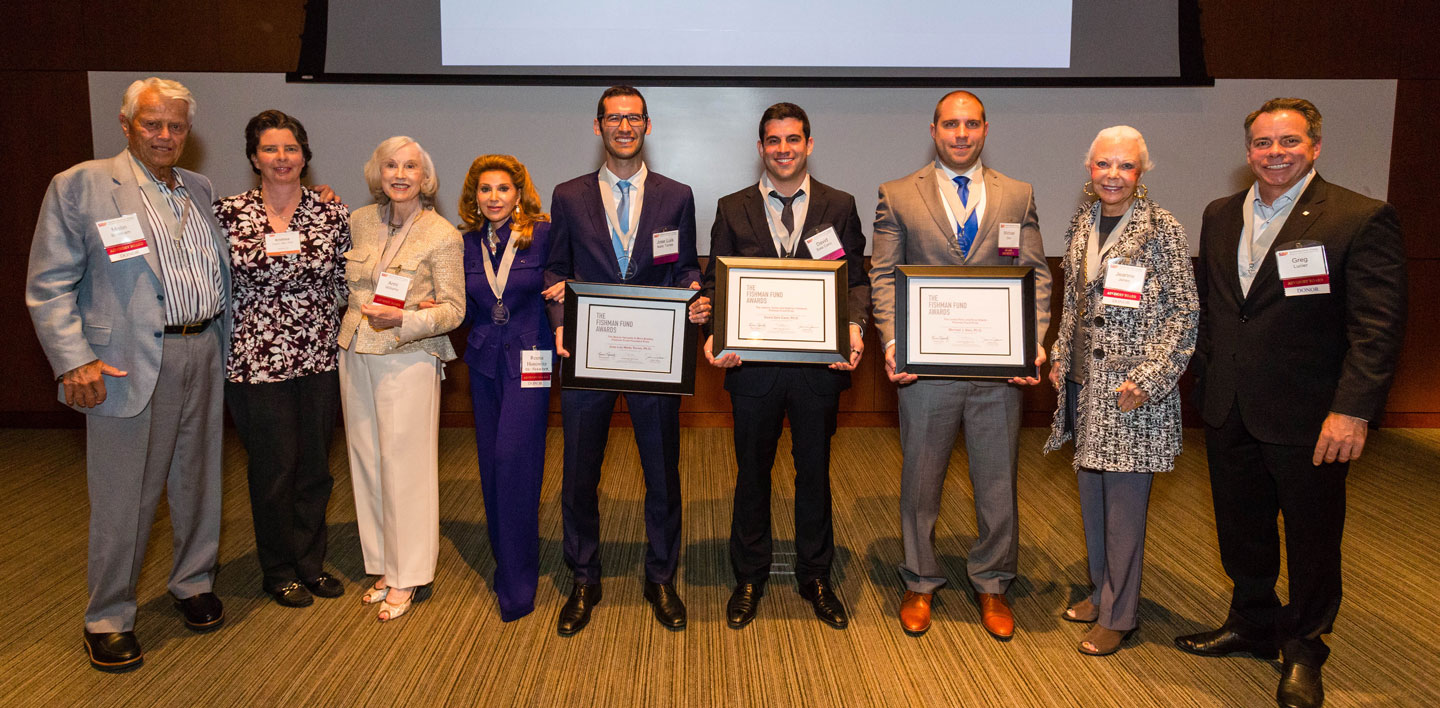
More than 100 supporters of Sanford Burnham Prebys (SBP) Fishman Fund Awards came out to honor this year’s Fishman Fund Award recipients: David Sala Cano, PhD, Michael J. Stec, PhD, and Jose Luis Nieto Torres, PhD, at the Sanford Consortium on Tuesday evening.

Malin Burnham, SBP’s Honorary Board Trustee, spoke about SBP exemplifying collaboration as part of its DNA. He also said that of all the organizations he works with, he gets the most satisfaction from being involved with SBP. Dr. Torres received the award and Fishman Fund medallion from Burnham, while Torres’ parents watched on with pride. They flew in from Spain, visiting the United States for the first time.

Fishman Fund co-founders and SBP supporters Reena Horowitz and Jeanne Jones led the ceremonies as they spoke about the founding of the Fishman Fund Award in 2001. The Fishman Fund Career Development Awards have grown from a $1,500 allowance to $10,000 stipends for each recipient so they can attend workshops, network and travel to national and international scientific conferences to learn about the latest developments in their research fields. The generosity of Fishman Fund donors enables such important career advancement opportunities for future scientific leaders.

Greg Lucier, former SBP board member and CEO of NuVasive, Inc., also spoke on the topic of “we versus me,” emphasizing the importance of teamwork. SBP supporters Dr. Andrew Viterbi, co-founder of Qualcomm, and Armi Williams, Fishman Fund Advisory Board member and former SBP trustee, presented Fishman Fund awards and medallions to Drs. Stec and Cano, respectively.

This year’s recipients gave short presentations on their work, each of which dealt with aging, including muscle stem cells, muscle regeneration and autophagy (body’s ability to eliminate waste and recycle). Read more about their work below.

Your contributions provide vital support for the Fishman Fund. Please donate now.

2017 Fishman Fund Awardees:

David Sala Cano, PhD, a postdoctoral scholar in the laboratory of Alessandra Sacco, PhD, is working on muscle stem cells. He focuses on muscle wasting, a major health problem that leads to poor quality to life, and is associated diseases such as diabetes, chronic kidney disease, cancer and aging. He is working on identifying new targets for drugs that may prevent skeletal muscle degeneration.

Dr. Cano comes to La Jolla from a small town of Abrúcies, Spain. He holds degrees from the University of Barcelona, including a BS degree in biochemistry, a MS degree in physiology and a PhD in biomedicine. His goal is to become a principal investigator in an academic setting, combining his passion for research and teaching.

Michael J. Stec, PhD, focuses on understanding the mechanisms regulating stem cell function and skeletal muscle regeneration; he is also in the laboratory of Alessandra Sacco, Ph.D. He aims to develop novel therapies for improving muscle function in aged and diseased individuals.

Dr. Stec hails from Whippany, New Jersey. He holds a BS degree in health and exercise science from the College of New Jersey, a MS degree in exercise science from Bloomsburg University of Pennsylvania and a PhD in pathobiology and molecular medicine from the University of Alabama in Birmingham. Ultimately, his career goal is to obtain a position in the biotech industry.

Jose Luis Nieto Torres, PhD, is a postdoctoral scholar in the laboratory of Malene Hansen, PhD He conducts research on autophagy—a process our bodies use to eliminate cell waste by recycling debris into usable sources of energy. Our bodies need to be able to eliminate debris that accumulates over time and make new components for proper functioning. Autophagy declines with aging, and is associated with many age-related diseases.

Dr. Torres joined SBP from Palencia, Spain. He obtained his BS degree in biochemistry and biology from the University of Salamanca and MS and PhD degrees in molecular biology from the Universidad Autonoma de Madrid. In the future, Dr. Torres aims to become a principal investigator of his own lab in an academic setting.


Institute News

Ze’ev Ronai wins Lifetime Achievement Award from the Society for Melanoma Research

AuthorJessica Moore
Date

November 10, 2016

Ze’ev Ronai, PhD, chief scientific advisor at Sanford Burnham Prebys Medical Research Institute (SBP) and professor in its NCI-designated Cancer Center, is the 2016 recipient of the Society for Melanoma Research’s Lifetime Achievement Award. The award honors “an individual who has made major and impactful contributions to melanoma research throughout their career.”

Ronai is being recognized for his significant contributions to melanoma research that are advancing understanding of this deadly form of skin cancer and could lead to new treatments. His studies on ultraviolet (UV) irradiation-induced changes that promote melanoma showed how they rewire signaling networks. A major discovery from those inquiries was that one player in that rewiring, a protein called ATF2, can switch from its usual tumor-preventive function to become a tumor promoter. Work by the Ronai lab also mapped how ATF2 contributes to melanoma development, and identified specific factors involved in melanoma response to therapy and metastatic potential.

In mapping the landscape of melanoma signaling, Ronai’s lab also uncovered the important role the enzyme PDK1 plays in melanoma development and metastasis. More recently, Ronai’s studies identified a mechanism underlying resistance of melanoma to BRAF inhibitor therapy, paving the road for a new clinical trial. Integral to Ronai’s research are translational initiatives, including the development of SBI-756, a small molecule that disrupts the complex that initiates protein synthesis and prevents melanoma resistance when combined with BRAF inhibition.

Ronai and his team also study how cancer cells thrive under harsh conditions, such as lack of oxygen or nutrients. That line of research has produced important insights into cancer heterogeneity and its capacity to drive the survival of the select few cancer cells that are resistant to therapy and able to metastasize. Ronai’s studies of proteins that control stress responses, such as Siah and RNF5, have furthered understanding of these processes and identified new targets for future therapies.

Ronai’s record of scientific accomplishments was recognized by the National Cancer Institute with an Outstanding Investigator Award, a seven-year grant that allows recipients to pursue projects of unusual potential. Ronai’s unique focus on how gene activity changes in cancer promises to continue establishing new paradigms for how cancers develop and respond to therapy.

About the Society for Melanoma Research

The Society for Melanoma Research (SMR) is an all-volunteer group of scientists dedicated to finding the mechanisms responsible for melanoma and, consequently, new therapies for this cancer. SMR contributes to advances in melanoma research by catalyzing collaborations among basic, translational, and clinical researchers, carrying new technology-based discoveries from bench to bedside and back.

About melanoma

The incidence of melanoma, the most lethal form of skin cancer, is rising at one of the fastest rates of all cancers in the U.S. Melanoma can strike people of all ages and is the most common form of cancer among young adults ages 25 to 29.

Institute News

Meet the 2016 Fishman Fund awardees

AuthorHelen I. Hwang
Date

September 16, 2016

When Joana Borlido, PhD, got the call that she won the inaugural Fishman Fund Fellowship late on a Friday afternoon, she called her parents, who had been waiting up past midnight in her native Portugal to find out if she had won the prestigious two-year postdoctoral fellowship along with a $5,000 career-development cash grant.

After all, her mother, a science teacher, had inspired Borlido to go into science by bringing home props of human body parts and subscribing to an immunology comic series. Yes, those biology cartoons do exist.

On September 15, the Fishman Fund ceremony honored Borlido and Fishman Fund Career Development recipients Bernhard Lechtenberg, PhD, and Jia (Zack) Shen, PhD

In celebration of SBP’s 40th anniversary, the significance of the Fishman Fund has been elevated with the addition of a two-year postdoctoral award called the Fishman Fund Fellowship. The Fishman Fund Fellowship is an incredible award that not only compensates exceptional postdocs at a higher income level than a typical fellowship, but also comes with a one-time $5,000 flexible career-development award, which they can use to further their professional endeavors. The established Fishman Fund Career Development awards of $10,000 will continue to be awarded as well.

Since the Fishman Fund’s inception in 2001, the Fishman Fund has grown from $1,500 cash awards. It was first established by Horowitz and Mary Bradley in honor of founders Dr. William and Lillian Fishman. In 2010, Jeanne Jones became the co-founder designee.

During the ceremony, Fishman Fund co-founder Reena Horowitz discussed the importance of supporting “the next generation of biomedical trailblazers.” She also said that the “Fishmans believed passionately in cultivating early-stage scientific talent. They knew that young investigators must focus intently on honing research skills and gaining professional experience.” Horowitz also took a moment to honor friends and supporters who have passed: Mary Bradley, Erna Viterbi, Pauline Foster, and Conrad Prebys.

Nina Fishman, daughter of SBP founders Dr. William and Lillian Fishman, read from a speech her father gave at the Institute. He said, “Each is encouraged to develop original ideas, which can be tested experimentally and subsequently qualify for grant support. Together we have the ‘critical mass’ of intellectuals and skills to accelerate progress in sciences.” She added that the Institute has demonstrated that a “relatively small but highly focused group can provide a nucleus where the whole is greater than the sum of its parts.”

Past winner Petrus de Jong, MD, PhD, shared how the Fishman Fund has boosted his career. With the grant, de Jong attended a drug delivery systems symposium with biotech entrepreneurs, participated in a research symposium in pancreatic cancer and received tailored career advice from senior scientists. “These events have been crucial for my personal career development, which would not have been possible without the Fishman Fund Award,” he said.

Fishman Fund Fellowship Awardee:

Joana Borlido, PhD, explores the mechanisms through which the channels that connect the cell nucleus (where the genome is stored) affect the immune system. She works in the laboratory of Maximiliano D’Angelo, PhDHer work will help elucidate the molecular basis for the onset and development of leukemia.

She completed her PhD in Oncology at the University of Cambridge in the U.K. and her BS in Biology at the University of Porto in Portugal.

If Borlido is not in the lab, she can usually be found playing foosball, which she admits she would play during all her free time if she could.

Fishman Fund Career Development Recipients:

Bernhard Lechtenberg, PhD, studies cellular signaling networks in normal human physiology and diseases in the laboratory of Stefan Riedl, PhDLechtenberg uses protein X-ray crystallography to study diseases such as cancer and ALS (Lou Gehrig’s disease). He received his BS and MS from the University of Luebeck in Germany and his PhD from the University of Cambridge in the U.K.

In his spare time, he and his wife Anne Hempel, also a SBP postdoc, participate in Ragnar Relay races, in which a team runs nonstop day and night to complete a course of almost 200 miles.

Jia (Zack) Shen, PhD, develops functional screens of for drugs that inhibit ubiquitin ligases (enzymes that tag proteins with a small protein called ubiquitin). Such drugs, alone and in combination with current chemotherapies, are considered important advances in the therapy of breast cancer patients. Shen works in the laboratory of Charles Spruck, PhD, and received his BS from Zhejiang Sci-Tech University and his PhD from the Chinese Academy of Sciences.

He and his wife love taking their 6-month-old daughter Olivia for walks in San Diego. Shen also plays soccer twice a week with a team at the Salk Institute.

With the generous support of the Fishman Fund, this stellar group of postdocs will benefit tremendously from well-earned rewards for their hard work and vision for “Science Benefiting Patients.”
Institute News

SBP researcher receives NIH Outstanding Investigator Award to study deadly pathogens

AuthorSusan Gammon
Date

June 7, 2016

Francesca Marassi, PhD, professor in SBP’s NCI-designated Cancer Center, has been awarded an Outstanding Investigator Award from the National Institute of General Medical Sciences (NIGMS). The $4 million grant is to study how proteins on the surface of pathogens promote virulence by mediating the first-line interactions with human host cells. The project has important implications for biology and medicine.

“Our initial focus is on a protein called Ail (attachment invasion locus) that is expressed on the outer membrane of Yersinia pestis, the causative agent of plague,” said Marassi. “The Y. pestis bacterium is highly pathogenic, spreads rapidly and causes an extremely high rate of mortality. Ail is critical for suppressing the human immune defenses and for promoting bacterial invasion”

Although it is sensitive to some antibiotics, the potential use of Y. pestis as a biological weapon has led to its classification as a Tier 1 Biothreat Agent – a designation used by the U.S. Department of Health and Human Services to identify pathogens and toxins that can be misused to threaten public health or national security.

“The emerging threat of bacterial drug resistance makes our work particularly important,” added Marassi. “We will be using a technology called NMR (nuclear magnetic resonance) to determine the three-dimensional structure of Ail and examine how it associates with its human protein partners. Visualizing these biomolecular complexes helps us understand how pathogens engage their human host, and advances our ability to design effective drugs and vaccines for bacteria and viruses,” added Marassi.

Institute News

Doug Lewandowski, PhD, elected as a Fellow of the American Association for the Advancement of Science

AuthorJessica Moore
Date

April 28, 2016

The director of Translational Cardiovascular Research at SBP’s Lake Nona campus was recently named a Fellow of the American Association for the Advancement of Science (AAAS). E. Douglas Lewandowski, PhD, was one of 33 scientists selected to become a AAAS fellow in the Section on Medical Sciences, recognizing his “distinguished contributions to fundamental aspects of cardiac metabolism and their implications for heart disease.” Continue reading “Doug Lewandowski, PhD, elected as a Fellow of the American Association for the Advancement of Science”

Institute News

Peter Crawford, MD, PhD, elected to the American Society for Clinical Investigation

Authorjmoore
Date

April 19, 2016

The director of SBP’s Cardiovascular Metabolism Program was recently elected into a pre-eminent honor society for physician-scientists. Peter Crawford, MD, PhD, was one of 74 medical researchers whose nominations to the American Society for Clinical Investigation (ASCI) were accepted in 2016. This distinction is conferred only on investigators who have made significant scientific advances prior to the age of 50. Continue reading “Peter Crawford, MD, PhD, elected to the American Society for Clinical Investigation”