awards Archives - Page 3 of 5 - Sanford Burnham Prebys
Institute News

2023 Fishman Fund Award ceremony celebrates postdoctoral scholars

AuthorSusan Gammon
Date

September 15, 2023

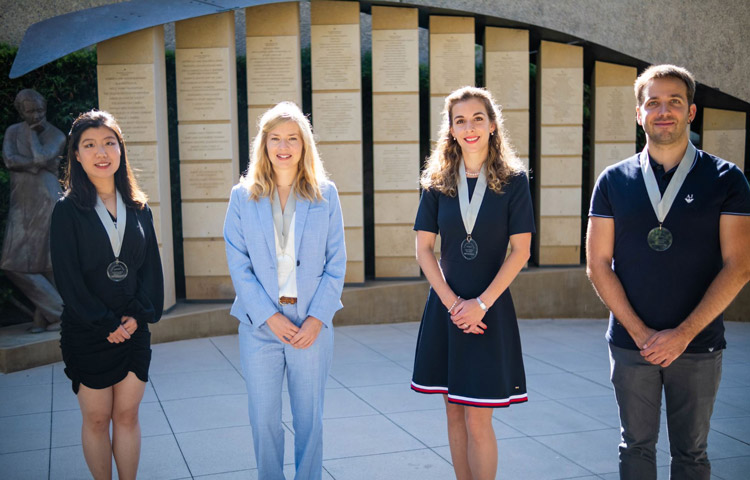
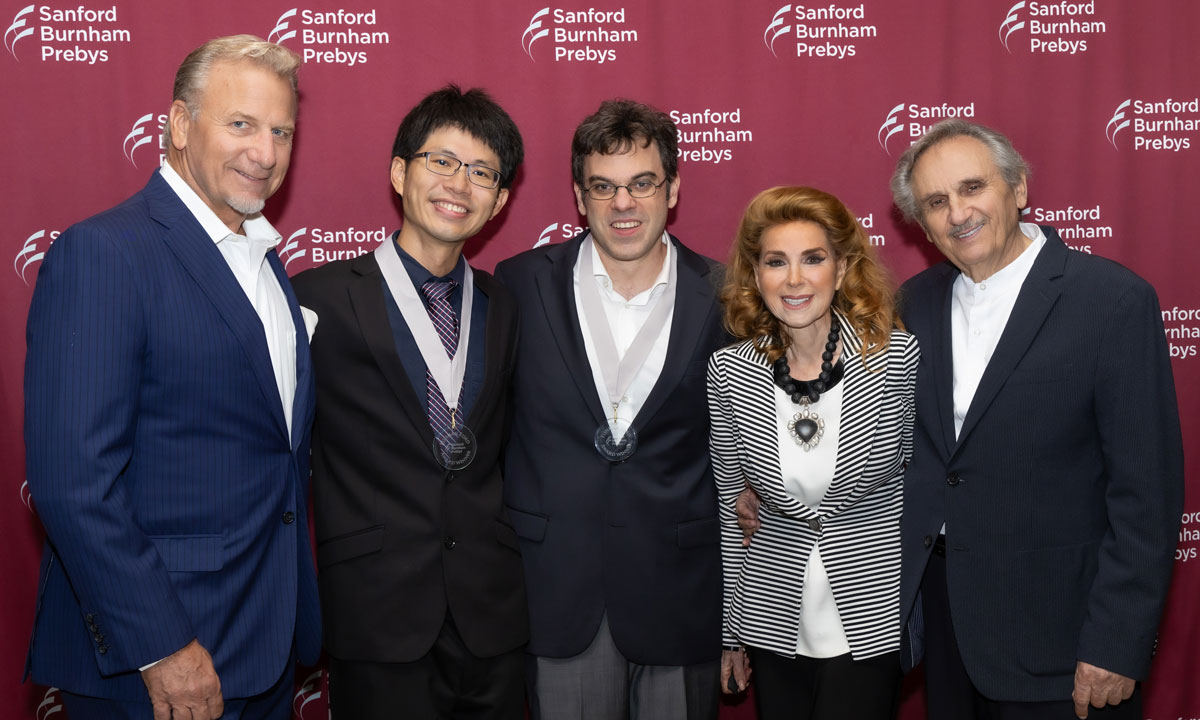
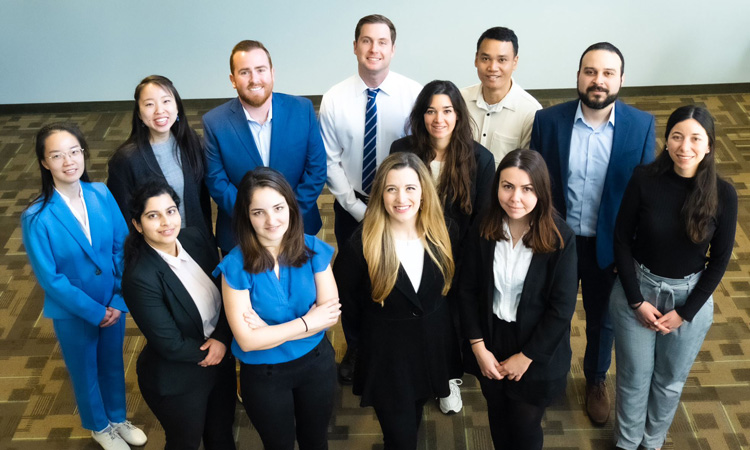
Three talented early-career researchers were presented with prestigious Fishman Fund Awards at the 22nd annual ceremony on September 20.

More than 100 generous benefactors, past award winners, and family and friends joined the celebration held at the Sanford Consortium.

Fishman Fund co-founder Reena Horowitz greeted the audience and shared how she, along with Mary Bradley, established the Fishman Fund Awards in 2001 to honor Dr. William and Lillian Fishman, founders of Sanford Burnham Prebys.

The Fishmans were committed to fostering the careers of young scientists. The award ceremony honors our founders’ dedication to furthering the careers of promising scientists by gathering each autumn to celebrate exceptional postdocs.

Before the awards were presented to the winners, David Brenner, MD, CEO of Sanford Burnham Prebys, described how important postdocs are to scientific discovery and why investing in their careers is a vital step toward improving human health.

“The postdoc experience is important, as it provides more training, experience and skills, before entering a more permanent science career,” said Brenner. “Postdocs represent the next generation of imagination and innovation, which much be recognized, encouraged and emboldened.”

Meet this year’s Fishman Fund Award winners

The Reena Horowitz & Mary Bradley Fishman Fund Founders Prize
Cheng-Ju Kuo, PhD, a postdoctoral researcher in the lab of Dr. Caroline Kumsta, is studying the biology of aging. Dr. Kuo is unraveling the molecular mechanisms linked to a cellular recycling process that declines with age. His findings could open up new possibilities to treat age-released diseases. Dr. Kuo’s goal is to establish his own laboratory where he will study aging and train the next generation of scientists.

Jeanne Jones and Kathryn Fishback Fishman Fund Prize
Alicia Llorente, PhD, a postdoctoral associate in the lab of Dr. Brooke Emerling, is investigating how breast cancer cells become resistant to therapy. Dr. Llorente combines her expertise in lipid kinases with cancer biology to open possibilities for novel therapeutics for therapy-resistant breast cancer. Her career goal is to combine research with teaching by obtaining a faculty position at a university.

Lenka Finci and Erna Viterbi Fishman Fund Prize
Theo Tzaridis, MD, is a postdoctoral associate in the lab of Dr. Peter Adams, where he focuses on aggressive brain tumors. His research led to the identification of a key checkpoint molecule widely expressed in brain tumors, which is a significant step toward improving immunotherapy as a treatment for brain tumors. Dr. Tzaridis plans to become a leader in translating research findings into clinical trials.

Fishman Fund winners undergo a rigorous selection process that includes a personal interview and a presentation to the selection committee. All winners receive a $10,000 career development award that can be used to attend workshops, network and travel to national and international conferences to learn about the latest developments in their research fields.

A special thank-you to the Fishman Fund donors who make these awards possible.
Institute News

Presenting The Conrad Prebys Foundation fellows

AuthorMiles Martin
Date

May 15, 2023

Thanks to a generous grant from The Conrad Prebys Foundation, a diverse group of early-career researchers will gain hands-on experience in drug discovery and translational medicine.

A new educational program at Sanford Burnham Prebys has welcomed a diverse group of early-career scientists to learn how to transform research discoveries into treatments for human diseases. The program was made possible by a generous grant from The Conrad Prebys Foundation as part of its mission to increase the diversity of San Diego’s biomedical workforce.

“Our mission at The Conrad Prebys Foundation is to create an inclusive, equitable and dynamic future for all San Diegans,” says Grant Oliphant, CEO at The Conrad Prebys Foundation. “San Diego is one of the top areas in the country for biomedical research, and we’re pleased to partner with Sanford Burnham Prebys to help strengthen the pipeline of diverse talent in life sciences research.”

Graduate students and postdoctoral fellows selected for the program will complete projects at the Institute’s Conrad Prebys Center for Chemical Genomics (Prebys Center), the nation’s leading nonprofit drug discovery center. The Prebys Center specializes in finding new medicines for diseases with a substantial unmet medical need in order to develop better therapies. 

“Thank you to The Conrad Prebys Foundation. I am beyond grateful for their support,” says predoctoral Prebys fellow Michael Alcaraz, who will complete his project on the links between aging and brain disease with Professor Peter D. Adams, PhD, and Steven Olson, PhD, executive director of Medicinal Chemistry at the Prebys Center. 

To help fulfill the Foundation’s mission, Sanford Burnham Prebys students and postdocs from historically underrepresented groups were encouraged to apply for the new program.

“Promoting diversity in the biomedical workforce is a founding principle of our educational program,” says Alessandra Sacco, PhD, vice dean and associate dean of Student Affairs in the Graduate School of Biomedical Sciences at Sanford Burnham Prebys. Sacco will oversee the new program alongside Dean Guy Salvesen, PhD, and Professor Michael Jackson, PhD

“Working actively to train people from all backgrounds gives opportunities to people who may not otherwise have had them—and it also improves the quality of the research itself,” she adds.

“Translational research is one of the biggest priorities in biomedicine right now because it’s how we turn discoveries into actual medicines,” says Sacco. “This program gives students and postdocs an opportunity to build the skills they need for translational research jobs in academia or industry.”

The fellowship will culminate in a final symposium next spring, where the fellows will present their research to their peers and to the wider community. 

“I’m looking forward to gaining more experience and making my contribution to the translational science at the Prebys Center,” says predoctoral Prebys fellow Merve Demir, who will complete a structural biochemistry project with Assistant Professor Jianhua Zhao, PhD, and Eduard Sergienko, PhD, director of Assay Development at the Prebys Center. 

The full list of fellows includes:
 

Postdoctoral Fellows

– Karina Barbosa Guerra [Deshpande Lab, Ed Sergienko co-mentor]
“SGF29 as a novel therapeutic target in AML”
 
– Merve Demir [Zhao Lab, Ed Sergienko co-mentor]
“Structural studies of MtCK and GCDH enzyme drug targets”
 
– Jerry Tyler DeWitt [Haricharan Lab, TC Chung co-mentor]
“Investigating the unique molecular landscape of ER+ breast cancer in black women” 
 
– Alicia Llorente Lope [Emerling Lab, Ian Pass co-mentor]
“Exploring PI5P4Kγ as a novel molecular vulnerability of therapy-resistant breast cancer” 
 
– Van Giau Vo [Huang Lab, TC Chung co-mentor]
“Identifying enhancers of SNX27 to promote neuroprotective pathways in Alzheimer’s disease and Down Syndrome”
 
– Xiuqing Wei [Puri Lab, Anne Bang co-mentor]
“Selective targeting of a pathogenetic IL6-STAT3 feedforward loop activated during denervation and cancer cachexia”


Predoctoral Fellows

– Michael Alexander Alcaraz [Adams Lab, Steven Olson co-mentor]
“Activating the NAMPT-NAD+ axis in senescence to target age-associated disease”
 
– Shea Grenier Davis [Commisso Lab, Steven Olson co-mentor]
“Examining PIKfyve as a potential therapeutic target in pancreatic cancer” 
 
– Patrick Hagan [Cosford Lab, Ian Pass co-mentor]
“Discovery and development of novel ATG13 degrading compounds that inhibit autophagy and treat non-small-cell lung cancer”
 
– Texia Loh [Wang Lab, Ed Sergienko co-mentor]
“Investigating the role of HELLS in mediating resistance to PARP Inhibition in small-cell lung cancer”
 
– Michaela Lynott [Colas Lab, TC Chung co-mentor]
“Identification of small molecules inhibiting ATF7IP-SETDB1 interacting complex to improve cardiac reprogramming efficiency”
 
– Tatiana Moreno [Kumsta Lab, Anne Bang co-mentor]
“Identifying TFEB/HLH-30 regulators to modulate autophagy in age-related diseases”
 
– Utkarsha Paithane [Bagchi Lab, TC Chung co-mentor]
“Identification of small-molecule enhancers of Honeybadger, a novel RAS/MAPK inhibitor” 
 

Institute News

Sanford Burnham Prebys celebrates one of its legends

AuthorMiles Martin
Date

March 8, 2023

In 2022, Distinguished Professor Emeritus Erkki Ruoslahti, MD, PhD, was awarded the Albert Lasker Basic Medical Research Award, the top American prize for biomedical research.

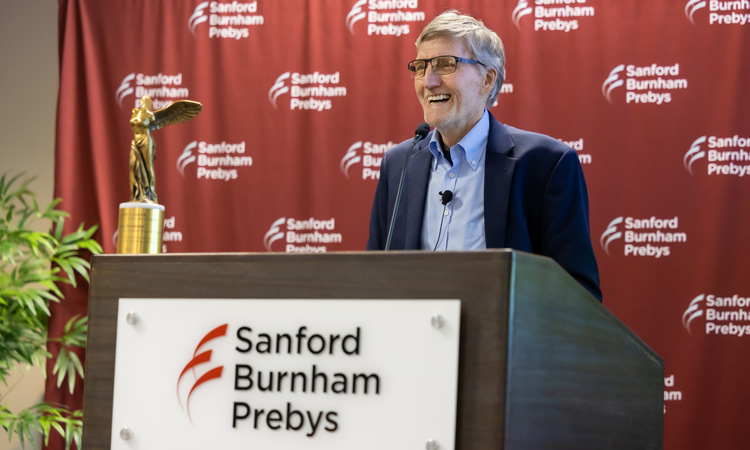
Ruoslahti was also among the first scientists to join the Institute in the late 1970s, where he completed this award-winning research. To celebrate Ruoslahti’s career and accomplishments, Sanford Burnham Prebys hosted a special lecture with the esteemed scientist as well as a celebratory reception afterward.

“Erkki’s illustrious career is one that keeps us all inspired—me, especially, as I follow in his footsteps in leading this Institute,” says David A. Brenner, MD, president and CEO of Sanford Burnham Prebys. “His Lasker Award win is so very much deserved. Not only does it recognize his outstanding influence in the field, but it also elevates the status of our Institute in the research community.”

Ruoslahti, who shares the award with Richard O. Hynes from the Massachusetts Institute of Technology, and Timothy A. Springer from Boston Children’s Hospital and Harvard Medical School, began his presentation with the research that led to his discovery of the integrins—proteins found on the surface of cells that helps them attach to, and communicate with, nearby cells and the extracellular matrix. 

Ruoslahti’s road to the discovery of integrins began at the University of Helsinki, where, along with his colleagues, he discovered fibronectin, a protein that helps surround, support and give structure to cells and tissues in the body. However, the biggest breakthroughs were yet to come.

Erkki Ruoslahti gives lecture to full a full auditorium

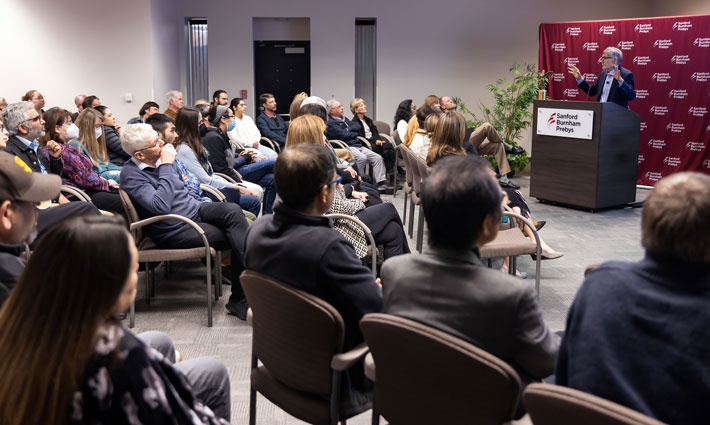
Ruoslahti gave his presentation to a packed house in Fishman Auditorium

“My research on fibronectin and the subsequent discovery of the integrins really got going in my first years at Sanford Burnham Prebys,” says Ruoslahti, who first joined the Institute in 1979, when it was known as the La Jolla Cancer Research Foundation.

The Ruoslahti research team discovered that a simple sequence of three amino acids, called RGD, within fibronectin, attaches directly to cells. They were then able to synthesize RGD and use it as a tool to discover the cell-surface receptors today known as the integrins. This seemingly small discovery created an entirely new subdiscipline of molecular biology.

“The Lasker Award is given for a fundamental discovery that opens up a new area of biomedical science. It is America’s top biomedical research award and is often referred to as ‘America’s Nobel,’” says Brenner. “This is a profound honor, one that is only given to those who have made the greatest impact in our field.”

In 1989, Ruoslahti became president and CEO of the Institute, a position he held until returning to full-time research in 2002. He became a Distinguished Professor Emeritus at Sanford Burnham Prebys in 2020. Ruoslahti has previously received the Japan Prize, the Gairdner Foundation International Award, the G.H.A. Clowes Memorial Award, and the Robert J. and Claire Pasarow Foundation Medical Research Award. He is also a Knight of the Order of the White Rose of Finland, a Commander of the Order of the Lion of Finland and is among the most cited scientists in the world.

Institute News

Yasuyuki Kihara wins a dream award

AuthorMiles Martin
Date

November 9, 2022

And he’s had his eye on it for more than a decade.

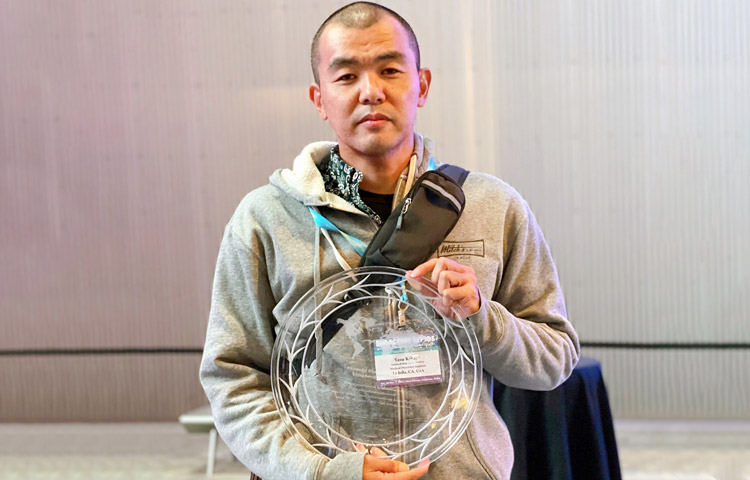
Research Assistant Professor Yasuyuki Kihara, PhD, has won an Eicosanoid Research Foundation (ERF) Young Investigator Award, which is presented every other year to three early-career faculty researchers who have made breakthroughs in the field of bioactive lipids.

The award may not come with a cash prize, but for Kihara, this prize is priceless. 

“The first time I applied for this award was around 2009, and I’ve applied several times since then,” he says. “This has been many years in the making, and I’m incredibly honored to receive this award.”

Kihara is the first Sanford Burnham Prebys scientist to win this award for research completed at the Institute. Assistant Professor Victoria Blaho, PhD, also received the award in 2007, before becoming a Sanford Burnham Prebys faculty member in 2019. 

Applying bioactive lipids to multiple sclerosis: Kihara’s prize-winning research

Kihara has devoted his scientific career of more than 20 years to studying bioactive lipids, a broad group of molecules that cells use to communicate and to control their activities. Some of the most well-known examples of bioactive lipids are the hormones testosterone and estrogen, but there are countless other examples in different parts of the body as well.

“Bioactive lipids are involved in signaling in every cell of every organism,” says Kihara. “Lipids are essential for life, and I’m not sure I could even imagine a biological process or a pathway that doesn’t involve a lipid at some step.”

Kihara’s work focuses on multiple sclerosis (MS), a potentially disabling disease of the brain and spinal cord that affects the brain’s ability to communicate with the rest of the body. MS occurs when protective structures in our neurons, called myelin sheaths, become damaged.

“Losing this myelin makes it much more difficult for the brain to send signals to other parts of the body,” says Kihara. “This causes a wide range of symptoms that can be debilitating for the people living with this disease.” 

In 2010, FDA-approved an oral drug for MS called fingolimod. Fingolimod has a chemical structure that resembles a bioactive lipid, and Kihara has teamed up with Professor Jerold Chun, MD, PhD, to study how this drug works at the molecular level to explore whether there may be other ways to leverage bioactive lipids against MS.

“We believe that cellular signaling pathways and the bioactive lipids that control them may have a more complicated role in MS than is currently understood,” says Kihara. “Studying these molecules at this fundamental level will help reveal new ways of treating the disease.”

Institute News

Brain cancer researcher Jia Zack Shen wins 2022 Eric Dudl scholarship

AuthorMiles Martin
Date

October 18, 2022

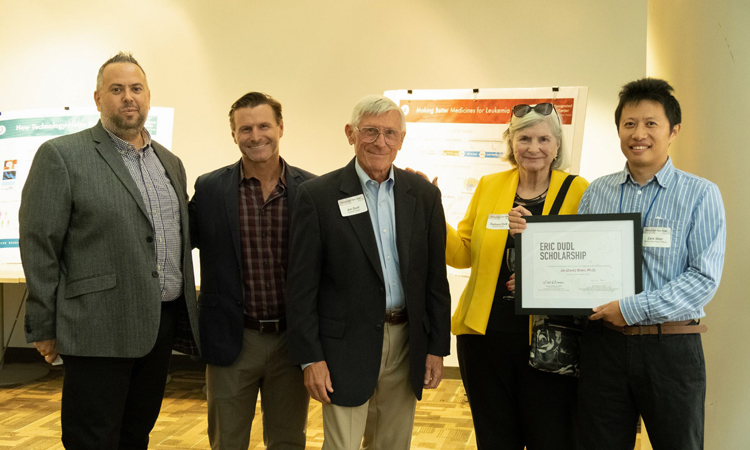
For the first time since the pandemic, Sanford Burnham Prebys presented the Eric Dudl Endowed Scholarship Award in person at last week’s Cancer Center Open House. This year’s recipient, selected by leaders at the Cancer Center, was Jia Zack Shen, PhD, a staff scientist in the lab of Charles Spruck, PhD The award pays tribute to Eric Dudl, a postdoctoral researcher who succumbed to cancer in 2006, when he was just 33.

“Eric was ill at such a young age, but he was also very lucky because he knew exactly what his dream job was and what his life meant,” says Shen. “Eric’s compassion and dedication to cancer research has been inspiring and encouraging for our postdocs here at Sanford Burnham Prebys. Thank you to the Dudl family for helping me continue my career here.”

Honoring Eric Dudl

In 2005, Eric Dudl had just begun his postdoctoral research in a cancer lab at Sanford Burnham Prebys, where he was known as kind, helpful and a fast learner. Then, at age 32, he was diagnosed with non-small cell lung cancer. This only fueled his fiery passion for cancer research.

“Even when he was very ill, Eric wanted to make a contribution in the time he had,” says Jim Dudl, MD, Eric’s father. “One day I looked at Eric and asked, ‘Why don’t you take some time off work? Get your energy back and go back in when you feel better?’ He looked up at me and said, ‘Why would I do that? This is the best job in the world!’”

Tragically, Eric Dudl would pass away in 2006, at age 33. The next year, his parents established the Eric Dudl Endowed Scholarship Fund to support young cancer researchers like their son.
“These talented scientists pick up where Eric had to leave off,” says Barbara Dudl, Eric’s mother.

Eric Dudl

Eric Dudl

“We are so grateful to the Institute for their compassion for Eric during his illness and helping us create this scholarship. The scientists who are now working on new discoveries might one day save the life of someone like Eric.”

The award presentation was emceed by Cosimo Commisso, PhD, and featured comments from Eric’s parents, as well as his brother, Bret.

“This scholarship fund is the best way we can honor Eric, because he was so passionate about education and supporting others,” says Bret. “The fact that he now helps other postdocs further their work to fight cancer is exactly what he would have wanted.”

Meet the recipient: Jia Zack Shen

Shen started at the Institute as a postdoctoral researcher in 2016, winning a Fishman Fund Award that year. He has since transitioned to a permanent role as a staff scientist, and the funding from this award will help continue to support his role.

“Sanford Burnham Prebys has a great, noncompetitive atmosphere, and the resources we have here are excellent,” says Shen. “Combining cancer research with the drug discovery capabilities we have at SBP is my dream.”

Shen’s research focuses on killing cancer stem cells by shutting off their ability to self-renew and by promoting a response from the immune system, delivering what Shen and his colleagues call a “one-two punch.” Shen has been working specifically on glioblastoma, one of the most aggressive brain cancers.

“Glioblastoma is one of the most devastating diseases, and there is a desperate need for better ways to treat it,” says Shen. “I am working hard to leverage the immune system to fight glioblastoma and save thousands of lives.”

Institute News

2022 Fishman Fund Awards honor postdoctoral researchers

AuthorMiles Martin
Date

October 17, 2022

Since 2001, the awards have paid tribute to our Institute’s heritage and supported the trailblazers of tomorrow

Last week, the Fishman Fund Awards were presented at the Sanford Consortium, marking the first in-person awards presentation for the scholarships since 2019. The Fishman Fund honors the legacy of the Institute’s founders, Dr. William and Mrs. Lillian Fishman, and its purpose is to support the next generation of scientific leaders.

“The Fishman Fund Awards are important to our community and to the future of science,” said President and CEO David Brenner, M.D., during his comments at the ceremony. “The Fishmans understood that supporting our young scientists is a critical investment in the future of research, and that postdocs are the lifeblood of a scientific enterprise and crucial to the process of discovery.”

Professor Hudson Freeze, PhD, the first Fishman Fund awardee, recalled how the award was given to faculty the first year, but after that became an award exclusively for postdoctoral researchers. “Those are the people who do the work, and without them, there is no Institute,” said Freeze.

Assistant Professor Caroline Kumsta, PhD, who was a Fishman Fund awardee in 2011, also spoke. “The Fishman Fund has shaped many aspects of my life, and I am honored to be one of the recipients,” she said.

The evening was emceed by Reena Horowitz, who established the Fishman Fund with the late Mary Bradley in 2001. Since then, 74 awards have been conferred. This year, three $10,000 awards were given to postdocs to support their career development. An additional fellowship that provides salary and benefits was also awarded.

“These awards are important because they provide the vital funds to young career scientists for professional development and collaborative opportunities,” Horowitz said. “It is these up-and-coming biomedical researchers who will make the medical discoveries of tomorrow, shape the future of healthcare and literally save lives.”

This year’s awards were presented to:

Guillem Lambies Barjau, PhD
Jeanne Jones and Kathryn Fishback Fishman Fund Award

“I am honored to be here today. Thank you to Sanford Burnham Prebys and the Fishman Fund for giving me this opportunity.”

Lambies Barjau hopes to improve the outcome of patients with pancreatic cancer. In the lab of Cosimo Commisso, PhD, Lambies Barjau studies how pancreatic cancer cells gather nutrients from their environment to survive and grow. Pancreatic tumors exist in a harsh, nutrient-poor environment, but they can activate a process called macropinocytosis to scavenge molecules as an alternative source of energy. By deciphering this process, Lambies Barjau’s research may reveal novel approaches to slow the growth of these often-deadly tumors.

Shanshan Yin, PhD
Lenka Finci and Erna Viterbi Fishman Fund Award

“I am grateful that you are our scientists’ strongest supporters. Together, we’ll do great science.”

Yin is studying the links between aging and breast cancer. About one in eight women will get breast cancer during her life, and the risk increases with age. In the lab of Peter Adams, PhD, Yin uses cutting-edge technology to quantify the activation of specific genes during aging. Identifying these genes may help explain why breast cancer occurs more frequently in older women, and could also lead to preventive treatments to spare the millions affected by the disease.

Tanja Eisemann, PhD
Reena Horowitz and Mary Bradley Fishman Fund Award

“I can’t tell you how honored I am to receive a 2022 Fishman Fund Award. I would like to express my deepest gratitude to the Fishman Fund donors for their generosity.”

Eisemann is exploring approaches to leverage the immune system against medulloblastoma, one of the most aggressive childhood brain cancers. Although rare, there are still about 500 children in the U.S. diagnosed each year with this dangerous cancer. In the lab of Robert Wechsler-Reya, PhD, Eisemann studies the interactions between T cells and medulloblastoma tumor cells, opening new research avenues to discover therapies that can enhance a patient’s own immune system to slow—or even eliminate—this dangerous brain cancer.

Cynthia Lebeaupin, PhD
Fishman Fund Fellowship

“The Fishman Fund Fellowship and the resources at Sanford Burnham Prebys will ensure I canperform science of excellent quality and make a lasting impact. Thank you for your support.”

Lebeaupin works in the laboratory of Randal J. Kaufman, PhD, where she studies how fatty liver disease leads to liver cancer. Fatty liver disease, which affects more than 25% of the U.S. population, develops when the body creates too much fat or can’t metabolize fat efficiently enough. There are no treatments or cures for this chronic liver condition and no methods of early detection. Lebeaupin’s research aims to address this unmet medical need by uncovering the biological pathways that lead to liver cancer and translating these findings into effective therapies.

Institute News

Fishman Fund Fellowship awarded to Cynthia Lebeaupin for liver cancer research

AuthorMiles Martin
Date

June 8, 2022

Cynthia Lebeaupin, PhD was recently awarded the 2022 Fishman Fund Fellowship, a postdoctoral award unique to Sanford Burnham Prebys.

The award provides a boosted stipend to exceptional postdocs from the Institute who have a demonstrated research track record and whose work shows significant potential for future breakthroughs.

“It’s an honor to have been selected for such a prestigious award from the Institute, says Lebeaupin, who works in the lab of Randal J. Kaufman, PhD “The resources and people at Sanford Burnham Prebys are incredible and I’m happy to be able to continue my research here.”

Sanford Burnham Prebys introduced the Fishman Fund Awards in 2001 to honor of the Institute’s founders, Dr. William and Lillian Fishman. The fund was established by Reena Horowitz and the late Mary Bradley, longtime supporters of the Institute.

“The Fishmans created an Institute that fosters a collaborative, inspirational atmosphere for postdoc students,” said Horowitz at the 2021 Fishman Fund Awards. “The Fishmans understood that support for new science is a brilliant research investment.”

Lebeaupin has been at the Institute since 2018, and this is not her first honor from the Fishman Fund. In 2021, she was awarded a Fishman Fund Career Development Award, a smaller prize offered to several postdocs each year. She also completed an internship at the Institute’s former Lake Nona campus in 2014.

“I’ve had an affinity for Sanford Burnham Prebys for a long time,” says Lebeaupin. “I knew once I met Dr. Kaufman and everybody on campus that this was the best place to complete my postdoc.”

Lebeaupin’s research focuses on a growing and pressing problem in medicine – liver cancer. One of the major risk factors for developing liver cancer is fat accumulation in the liver, known as fatty liver disease. Increases in obesity rates over the last several decades have led to a dramatic increase in fatty liver disease.

Fatty liver disease is increasing at an alarming rate, and unfortunately, it’s here to stay,” says Lebeaupin. “My research is figuring out how fatty liver disease progresses to liver cancer, so we can use this knowledge to help prevent it.” 

In particular, Lebeaupin is working on exploring how cells respond to fatty liver disease over time. She discovered that a molecule that helps liver cells protect themselves from short-term stress can promote cancer in the long-term. She has now moved into studying the system in human tissues.

“This research is exciting because we aim to translate our discoveries from the bench to the bedside,” says Lebeaupin. “What I hope to do in the future is use new technologies on liver samples from patients so we can identify what’s actually going on in liver diseases.”

Institute News

2021 Fishman Fund Award ceremony celebrates postdoctoral scholars

AuthorSusan Gammon
Date

September 28, 2021

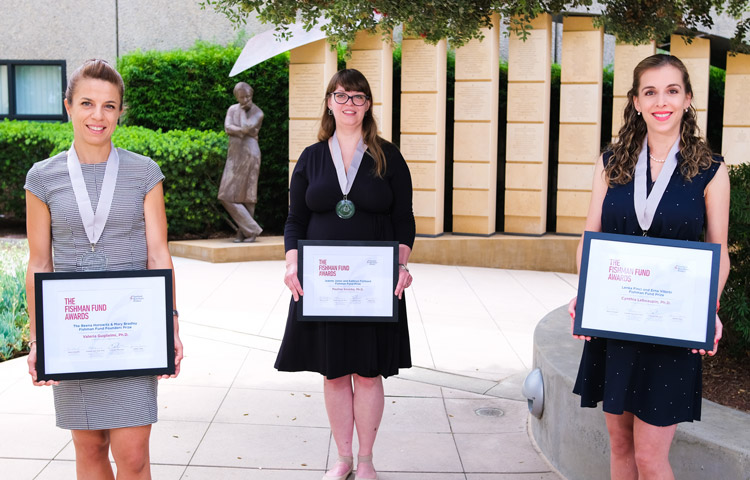
The Fishman Fund Awards were presented on September 23, 2021, in a virtual ceremony that honored the enduring legacy of our Institute’s founders, Dr. William and Lillian Fishman.

The three exceptional winners were welcomed by Fishman Fund co-founder Reena Horowitz; co-founder designee Jeanne Jones; and 2018 award recipient Laura Martin-Sancho, who commented, “A Fishman Fund Award is more than the money—it means that someone believes in you and believes in your goals.”

Longtime supporter, Institute trustee and namesake Malin Burnham reflected on his first meeting with the Fishmans more than 40 years ago when they were setting the stage for Sanford Burnham Prebys. “The Fishmans were creating a collaborative, inspirational atmosphere for postdocs—the lifeblood of scientific enterprise. This award pays tribute to their vision that young, talented scientists hold the key to curing disease.”

Sanford Burnham Prebys CEO Randy C. Mills thanked our supporters and shared, “Fishman Fund Award winners are on a journey not only to make their mark through scientific discovery, but also to define themselves as scientific leaders. I’m excited to see the vision of better science that they will translate into reality for the benefit of patients in need.”

Reena Horowitz and the late Mary Bradley established the Fishman Fund Awards in 2001 to honor the Fishmans and advance the careers of promising young scientists. Ever since the fund was launched 20 years ago, more than 70 awards have been conferred—now worth $10,000—to support career-development activities. 

This year’s awards were presented to:

Cynthia Lebeaupin, PhD
The Lenka Finca and Erna Viterbi Fishman Fund Prize

“I’m especially grateful to be affiliated with a community that supports its postdoctoral researchers, helping us transition into the great leaders of tomorrow.”

Dr. Lebeaupin is studying how fatty liver disease progresses to liver cancer. Fatty liver disease is rapidly increasing in the U.S. and around the world—and there is no cure. Studying how cells respond to stress conditions may open new avenues to target those responses and prevent cancer. Dr. Lebeaupin, a postdoctoral associate in the lab of Randal J. Kaufman, PhD, aims to become a professor of biology in academia.

Valeria Guglielmi, PhD 
The Reena Horowitz and Mary Bradley Fishman Fund Founders Award

“Now more than ever, we need people like you who trust scientists and believe science can really make a difference in our lives.”

Dr. Guglielmi is researching nuclear pore complexes and their role in the development and activity of immune cells. This research may lead to novel treatments for health conditions caused by dysregulated immune-cell production and function. Guglielmi is a postdoctoral associate in the lab of Maximiliano D’Angelo, PhD, and her goal is to become an independent investigator to further research on the immune system.

Paulina Sosicka, PhD 
The Jeanne Jones and Kathryn Fishback Fishman Fund Prize 

“I’m very grateful and honored to receive this Fishman Fund Career Development Award. Thank you to the founders and donors who made this possible.” 

Dr. Sosicka is investigating the application of dietary supplementation to treat debilitating genetic conditions called CDGs, which are rare diseases—mainly affecting children—caused by defects in the human enzymes and proteins responsible for adding sugar molecules onto proteins and lipids. The research may also provide insights into new approaches to treat obesity and cancer. A postdoctoral associate in the lab of Hudson Freeze, PhD, Dr. Sosicka aspires to become a professor in academia in the field of glycobiology.


Event recording


Institute News

Graduate student awarded American Heart Association Fellowship

AuthorSusan Gammon
Date

April 14, 2021

The heart is the core of life, and for PhD graduate student Katja Birker, it’s the foundation for the beginning of a career.

Birker recently received a prestigious predoctoral fellowship from the American Heart Association (AHA) to continue her research on hypoplastic left heart syndrome (HLHS), a congenital heart disease that affects between two and four of every 10,000 babies born. As of today, the only cure for HLHS is three open-heart surgeries that begin two weeks after birth.

“I’m very grateful to the AHA for supporting my research,” says Birker. “I’ve embarked on a career to study the genes that contribute to HLHS, and this award will help me continue my work that may eventually lead to targeted prevention of HLHS as well as other congenital heart diseases.”

Birker is collaborating with the Mayo Clinic to identify and test whether genes found in HLHS patients—or “candidate” genes—have similar consequences in the hearts of fruit flies—a model organism for cardiovascular research. The research aims to identify novel gene functions and pathways that are likely to contribute to HLHS.

“Many believe that HLHS is a genetic disease, but the genes that are involved are not well known,” says Birker. “The fruit fly is a very good genetic system to model disease because it has many similar genes to humans and a short life span. I’m able to film videos of fly hearts to understand the impact of the candidate genes on heart function.

“My goal is to find genes that can be used in the future for the diagnosis and treatment of HLHS in babies. The research approach could also be used to screen for genes that might be involved in many other types of heart disease,” adds Birker.

The AHA supports early-career scientists with passion, commitment and focus by providing fellowships that fund their pursuit of cardiovascular research. Birker, a graduate student in the lab of Rolf Bodmer, PhD, professor and director of the Development, Aging and Regeneration Program, received her first AHA fellowship in 2018.

Institute News

Meet the winners of the heartfelt Eric Dudl scholarship award

AuthorMonica May
Date

January 19, 2021

Award pays tribute to postdoctoral researcher who succumbed to cancer at age 33

Eric Dudl’s lifelong dream to be a scientist was just starting to come true. He’d begun his postdoctoral research in a cancer lab at Sanford Burnham Prebys, where he was known as kind, helpful and the “go-to guy” when an unfamiliar piece of machinery arrived.

Watch the virtual ceremony honoring the winners of the Dudl scholarship award, including remarks by Eric’s family, their faculty mentors and the interim head of our National Cancer Institute (NCI)-designated Cancer Center, Ze’ev Ronai.

Then, at age 32, he was diagnosed with cancer. The diagnosis only reaffirmed his passion for science, and he often returned to the lab after a long day of chemotherapy.

“One day when he was quite ill, I looked at Eric and said, ‘Why don’t you take some time off of work. Get your energy back and go back in when you feel better,’” says Jim Dudl, MD, Eric’s father, at the ceremony honoring this year’s scholarship recipients. “He immediately looked up at me and said, ‘Why would I do that? This is the best job in the world!’”

Eric underwent five rounds of chemotherapy, but the tumor was aggressive. Only nine months after the initial diagnosis, he succumbed to the cancer. He was 33.

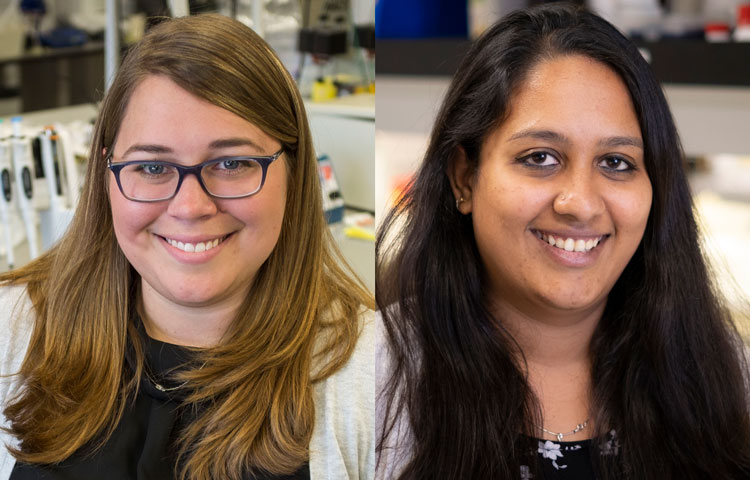
Today, Eric’s memory lives on in the form of the Eric Dudl Endowed Scholarship Award, created by Eric’s family in 2007 to support talented postdoctoral researchers working in the cancer field. This year’s virtual event celebrated the 2019 and 2020 scholarship winners: Jennifer Hope, PhD, a postdoctoral researcher in the Linda Bradley lab; and Archna Ravi, PhD, a postdoctoral researcher in the Brooke Emerling lab.

“This scholarship fund is truly the best way that we can honor Eric because he was so passionate about education and supporting others,” says Bret Dudl, Eric’s brother. “The fact that he now helps other postdocs further their work to fight cancer is exactly what he would have wanted.”

Eric Lau, Robert Tinoco, And Gaurav Pathria

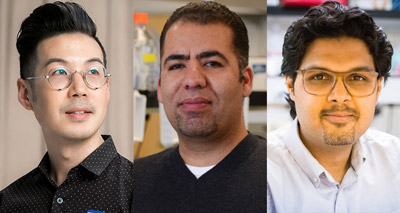
Where are they now? From left to right: Past Dudl Scholarship award winners include Eric Lau, now an assistant member at the Moffitt Cancer Center; Robert Tinoco, now an assistant professor at UC Irvine; and Gaurav Pathria, now a scientist at Genentech.

As in past years, each scientist was nominated by leaders at Sanford Burnham Prebys’ National Cancer Institute (NCI)-designated Cancer Center and then selected by Institute president and Pauline & Stanley Foster Presidential Chair Kristiina Vuori, MD, PhD

“These talented scientists truly pick up where Eric had to leave off,” says Barbara Dudl, Eric’s mother. “We are so grateful to the Institute for their compassion for Eric during his illness and as we worked to create this scholarship, and the scientists who are now working on discoveries that might one day save the life of someone like Eric.”
 

Jennifer Hope, PhD (Linda Bradley lab)

Tell us a little bit about your research. If all goes well, what do you hope to achieve?
I’m working to understand why the immune system, specifically T cells, seems to turn a “blind eye” to tumors—in contrast to other foreign invaders such as viruses.

Over the last few years, our studies have pinpointed one molecule that transforms T cells and can help slow, stop, and in some cases, even eliminate, tumors in mice.

My ultimate hope is that we use this information to create better cancer treatments, particularly for skin cancer (melanoma), which remains a deadly cancer. 

What does this award mean to you?
It is a great honor to have received this award, particularly because of the story behind it! We may all have different reasons for going into science and research, but one thing we all share is passion for our work. We also know how taxing cancer therapies can be on a patient’s mind, body and soul, so for Eric to have continued his work with such diligence while undergoing treatment is truly inspirational and speaks to his resilience and character.

How does this award advance your work?
With this award, I was able to travel to Pittsburgh, Pennsylvania, where I spent a week in the lab of a renowned T cell expert. There, I gained invaluable hands-on experience with assays that I could bring back to my lab here and have already implemented in our work. The timing of this award, which I received in 2019, was very lucky. I completed the weeklong residency in January of 2020 just before COVID-19 had taken off in the U.S.
 

Archna Ravi, PhD (Brooke Emerling lab)

Tell us a little bit about your research. If all goes well, what do you hope to achieve? 
Scientists know that rapidly growing cancer cells become desperate for nutrients and start to use alternative pathways to get “food.” It’s a bit like, “If you aren’t going to feed me, I’m going to feed myself.” I’m studying a family of proteins that controls two of these alternative pathways (autophagy and mitochondrial metabolism). If we can block two important ways a tumor “feeds” itself, we believe we can create a very effective drug that can starve a tumor.

I hope my work will ultimately lead to better cancer therapeutics, especially for triple-negative breast cancer and sarcomas. These are very difficult tumors to treat; and we need better, targeted therapies to help more people survive these cancers.

What does this award mean to you personally?
Anyone who has heard Eric’s story has been inspired by it. It’s the sort of dedication and perseverance that I hope to achieve in my career. In the face of the disease, Eric chose to continue working on something he truly enjoyed and believed in. It’s about doing what you’re passionate about no matter what hurdles are thrown your way. For my work to be recognized with this scholarship is a great honor.

How will this award advance your work? What will you be able to achieve now? 
As a postdoctoral researcher, I’m on the threshold of a new path in my career. I plan to use the funds to “attend” conferences where I can share my work and network with people all over the world. This award really supports my career goal of becoming an independent scientist.

Anything else you would like us to know? 
For me, cancer research is not just about doing good science. It’s about ensuring that no one has to fear losing loved ones to this disease. My mom was diagnosed with breast cancer a few years back. Thankfully, she’s doing well now after surgery and chemotherapy. But that experience, and the fear that we both felt, stays with me today.

Along these lines, many people aren’t aware that the research needed to create a new drug starts at nonprofit organizations such as Sanford Burnham Prebys. The hardest part—the actual science notwithstanding—is getting the funding to carry out such research. No contribution to science is too small! Every gift increases the chances that we can find new treatments.

Read more about the Eric Dudl Endowed Scholarship Fund, or support early-career researchers, by donating to the fund.