Cancer Center Archives - Page 9 of 11 - Sanford Burnham Prebys
Institute News

Stepping into a scientist’s shoes at the Cancer Center Open House

AuthorMonica May
Date

June 20, 2019

Cancer research has led to new insights and novel medicines that have transformed the lives of parents, grandparents and children around the world. Yet cancer remains the number-one cause of death in San Diego (nationally, it is the second-leading cause of death). The quest for new and better treatments—and a world free of the disease—remains urgent. 

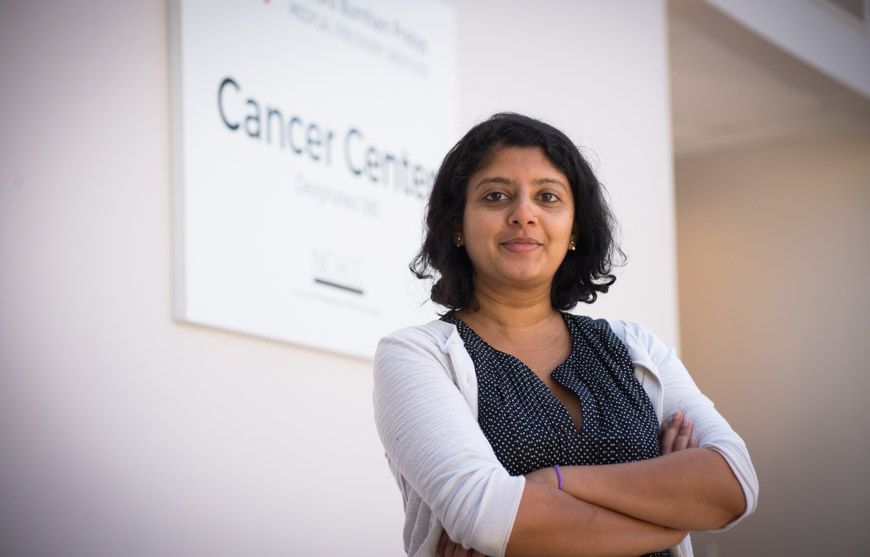
On June 13, 2019, the San Diego community—including many cancer survivors and their loved ones—had a unique opportunity to step into the shoes of a cancer researcher and see how cancer drugs are discovered at the open house of our NCI-designated Cancer Center. The facility is one of only seven National Cancer Institute (NCI)–designated basic research cancer centers in the nation. 

Following an introduction by Garth Powis, D. Phil., professor and director of the NCI-designated Cancer Center, guests embarked on guided lab tours. Attendees discovered how we’re working to find better ways to combat cancer, viewed highly specialized equipment—such as machines that model the low-oxygen environment surrounding a tumor—and donned lab coats to catch a glimpse of our ultra-high-throughput drug screening robot in action at our Prebys Center for Drug Discovery. The state-of-the-art technology at the Prebys Center can screen hundreds of thousands of potential drug candidates in one run, accelerating the time it takes to find new, promising compounds that may become tomorrow’s cancer treatments.

Guests also learned how San Diego, with a multitude of world-class research institutes, universities and biotech companies, is shaping the future of cancer diagnosis and treatment. And our Community Advisory Board, comprised of cancer research advocates and cancer survivors, were on hand to share the importance of factoring in patients’ perspectives as breakthrough science moves from “bed to bedside.”

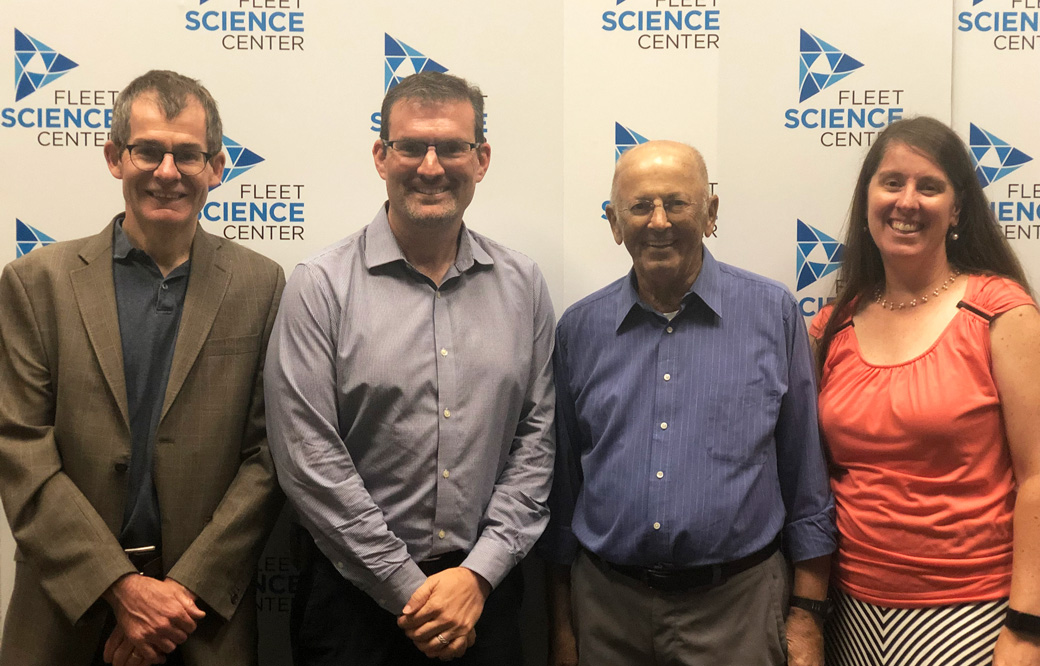
See the science in action in these event photos.

Missed the event? We hope you can join us at our next open house in November. The event is free and open to the public. Check for more details at sbpdiscovery.org/calendar.

Many thanks to our Community Advisory Board (CAB), the host of the open house. Comprised of nine cancer research advocates, including many cancer survivors, this committee strives to create a dialogue between our scientists and the community. We are grateful for CAB’s efforts surrounding the event, which included helping our scientists prepare lay-friendly presentations and posters that were critical to the event’s success.

Interested in keeping up with our latest discoveries, upcoming events and more? Subscribe to our monthly newsletter, Discoveries.

Institute News

AACR selects Sanford Burnham Prebys scientist as NextGen Star

AuthorMonica May
Date

April 4, 2019

The American Association for Cancer Research (AACR) has named Cosimo Commisso, PhD, assistant professor in Sanford Burnham Prebys’ NCI-designated Cancer Center, as a NextGen Star. 

The program strives to increase the visibility of early career scientists at the organization’s annual meeting—one of the year’s largest gatherings of cancer researchers—and to support their professional development and advancement. The 2019 AACR Annual Meeting was held from March 29 to April 3 in Atlanta and attracted more than  21,000 scientists and clinicians. 

As a NextGen star, Commisso was featured on AACR’s website and was invited to give a presentation during a special “NextGen Star” session. He also presented in a session titled, “Features and Functions of the Pancreatic Tumor Microenvironment.” Both talks were well attended.

Commisso’s presentations focused on pancreatic cancer, a deadly and difficult-to-detect tumor. Less than 10 percent of people who are diagnosed with pancreatic cancer are alive five years later. More than 56,000 Americans are expected to be diagnosed with pancreatic cancer in 2019 and its incidence is on the rise. Pancreatic cancer is on track to become the second leading cause of cancer-related death in the U.S. next year, according to the Pancreatic Cancer Action Network. New studies have linked military service to an increased risk of pancreatic cancer, perhaps due to exposure to herbicides such as Agent Orange.

Commisso is working to halt pancreatic cancer growth by studying the way cells internalize nutrients, called macropinocytosis. In this process, cells extend their membranes to capture nutrients in their surrounding environment—similar to how humans swallow a pill by encasing it in water. 

“We’ve discovered that pancreatic tumors that have a mutation in the RAS gene—which occurs in almost all cases—fuel their growth by kicking macropinocytosis into overdrive,” says Commisso. “By halting macropinocytosis, essentially cutting off the cancer cells’ fuel supply, we hope we can develop effective, much-needed treatments for pancreatic cancer.”

In his NextGen Star presentation, Commisso detailed how macropinocytosis is dialed up or down depending on nutrient availability. Studies performed by Szu-Wei Lee, PhD, a postdoctoral fellow in the Commisso laboratory, indicate that RAS-mutated pancreatic tumors use two forms of macropinocytosis—one that is “always on” (constitutive) and another that is nutrient dependent.

“Uncovering the molecular differences between these two pathways could yield personalized targets that selectively target pancreatic cancer cells,” says Commisso. “In addition to pancreatic tumors, new evidence shows that lung, prostate and bladder cancers highjack macropinocytosis to keep growing. This means our work in pancreatic cancer may also lead to new treatments for these other tumor types.”

Watch Dr. Commisso explain his lab’s focus

View the full list of the NextGen stars 

Interested in keeping up with SBP’s latest discoveries, upcoming events and more? Subscribe to our monthly newsletter, Discoveries below.

Institute News

Padres Pedal the Cause presents record-breaking check for nearly $3 million to fund local cancer research

AuthorMonica May
Date

January 29, 2019

Local cancer research just got a big boost. 

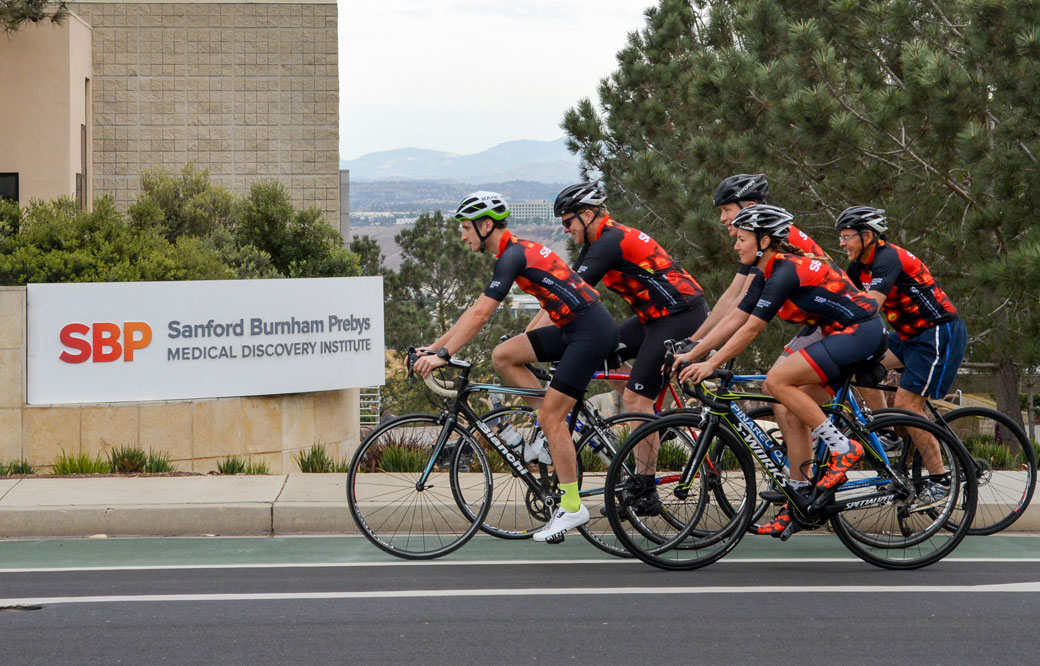
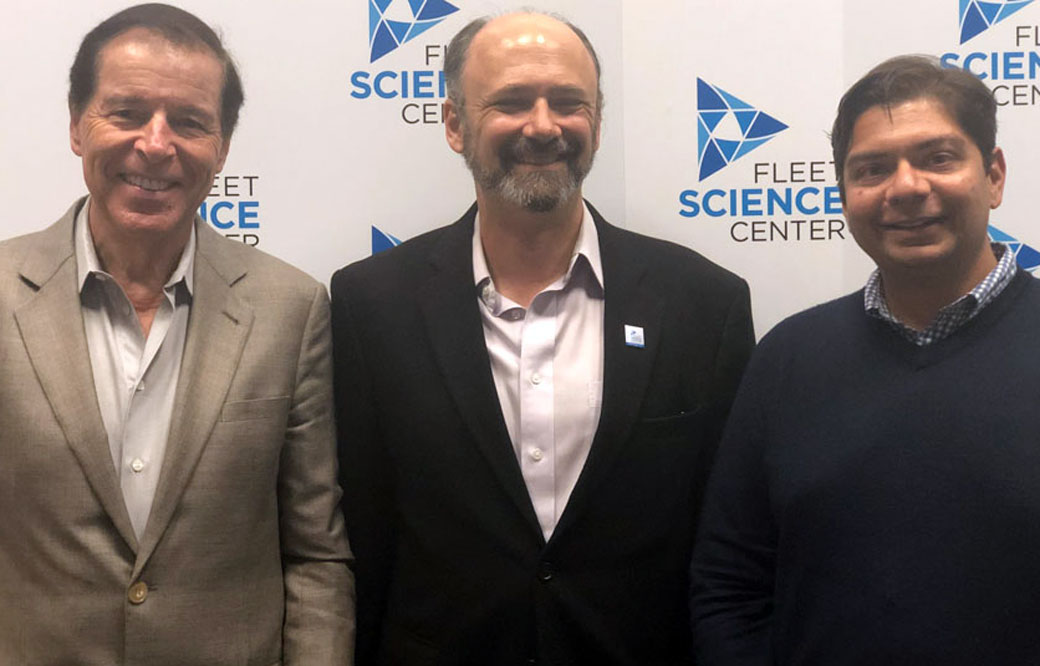
On Thursday, January 24, SBP president Kristiina Vuori, MD, PhD, joined leaders from Moores Cancer Center at UC San Diego Health, Salk Institute for Biological Studies and Rady Children’s Hospital–San Diego to help Padres Pedal the Cause (PPTC) reveal that this year’s event raised a record-breaking $2.9 million for local cancer research. The leaders joined executive director Anne Marbarger onstage to receive the official check. 

This year’s event—which invited participates to cycle, spin, run or walk—had more than 2,500 participants, an increase of 35 percent. Total fundraising grew by 22 percent. SBP has participated in the event since its inception; and this year our team of more than 60 scientists, staff and SBP supporters raised more than $30,000 for the cause. Since the inaugural ride six years ago, PPTC has raised more than $10 million.

Nearly 300 of the event’s participants, including Tony Gwynn Jr., Pedal founders Bill and Amy Koman, San Diego business leaders, and top donors and fundraisers, gathered at the Del Mar racetrack to witness the funding reveal and check presentation in person. 

Gwynn shared a moving story about his father’s battle with salivary cancer, a journey he still finds difficult to recount. “If he saw this progress, he would be smiling today,” he said. 

A full 100 percent of the proceeds fund collaborative research taking place at the four San Diego research institutes. Past PPTC grants have accelerated SBP’s research into cancers of the breast, skin, brain, colon, pancreas and more. This year’s grant announcement will be revealed in the spring. 

In the meantime, make sure to mark your calendars for the 2019 event, which will take place on Saturday, November 16. Registration will open in mid-April.

Interested in keeping up with SBP’s latest discoveries, upcoming events and more? Subscribe to our monthly newsletter, Discoveries. 

Institute News

SBP scientist awarded Susan G. Komen® and NIH grants to advance breast cancer research

AuthorMonica May
Date

October 25, 2018

Breast cancer remains the second most common cancer for American women. While treatment advances are being made, more research is needed. Current treatments don’t work for every woman.
 
Now, breast cancer researcher Svasti Haricharan, PhD, assistant professor at Sanford Burnham Prebys Medical Discovery Institute (SBP), has been awarded more than half a million dollars in combined grants from Susan G. Komen® and the National Institutes of Health (NIH). 

This funding will advance Haricharan’s breast cancer research—including developing a diagnostic test that could guide therapeutic options—and allow her to apply lessons from breast cancer to additional cancers. 

Susan G. Komen grant

The majority of women diagnosed with breast cancer have the estrogen-positive (ER-positive) form, meaning the tumor grows in response to estrogen. Hormone therapies (anti-estrogen drugs) that block estrogen—and thus stop the tumor from growing—are available. However, this treatment doesn’t work for 40 percent of women with ER-positive breast cancer. 

“Currently, doctors are unable to predict which ER-positive patients will respond to treatment—so an estrogen-blocking medicine is given, and a ‘wait and see’ approach is taken to see if the treatment will work,” says Haricharan. “However, if a woman doesn’t respond to treatment, during this time the tumor is instead still growing and may metastasize—when it becomes deadlier and even harder to treat. Knowing upfront if an individual will respond to treatment allows doctors to skip a treatment that won’t work and move immediately to prescribing a medicine that may be effective.” 

Haricharan’s previous work found that about one-third of women with ER-positive breast cancer who were treatment resistant had a mutation in DNA damage-repair genes—providing a potential biomarker that could predict who would respond to treatment. 

Luckily, an FDA-approved test that detects defects in DNA damage repair is currently available for colorectal cancer patients. The grant from Susan G. Komen enables Haricharan to evaluate whether this same test can be used to predict response to anti-estrogen drugs in ER-positive breast cancer patients. 

Additionally, research from Haricharan’s previous lab identified a medicine that is FDA approved for advanced or metastatic breast cancer patients and holds potential as a frontline breast cancer treatment (the first treatment prescribed by a doctor). The grant will allow her to bring these pieces of the puzzle together—developing a predictive test and evaluating a potential alternative treatment. 

“Because an FDA-approved test is already on the market, development of a breast cancer test to predict response to hormone therapy may be accelerated. I’d estimate my work could enable a commercially available test in less than five years—though of course a real-world assessment will be needed to obtain doctor and insurance-company approval,” says Haricharan. “Pairing a new test that can guide therapeutic options with a potential treatment would be an important advance for ER- positive breast cancer. I want to express my greatest thanks to Susan G. Komen for funding this important work.” 

NIH grant

Haricharan was also awarded a K22 grant from the NIH, which helps early-career scientists transition to independent research careers. This grant will allow her to apply insights from her breast cancer research to additional cancers. 

Studies have indicated there are links between the growth of colorectal and bladder tumors and estrogen response. While women are less frequently diagnosed with bladder cancer, they tend to have a greater risk of dying from the disease. In contrast, estrogen may have a protective effect on the development of colorectal cancers. 

The NIH grant will enable Haricharan to work to better understand the role DNA damage-repair mutations may play in response to standard-of-care treatment for ER-positive breast, colorectal and bladder cancers. Once this role has been established, the grant will help fund a search for effective targeted treatments.

“Both bladder and colorectal cancers are often caught at a late stage, when the cancer is harder to treat,” says Haricharan. “I hope that this research will ultimately yield tests that can predict response to treatment and guide treatment options for these deadly cancers.” 

Link to the NIH grant: A pan-cancer role for MUTL loss in inducing treatment resistance 

More information about the Susan G. Komen grant: Susan G. Komen Announces $26 Million Investment in New Research to Find Solutions for Aggressive and Metastatic Breast Cancers, and to Help Communities Most at Risk
 

Interested in keeping up with SBP’s latest discoveries, upcoming events and more? Subscribe to our monthly newsletter, Discoveries.

Institute News

5 things to know about acute myeloid leukemia (AML)

AuthorMonica May
Date

September 26, 2018

It’s no surprise that our blood is important. The cargo it transports—nutrients, infection-fighting cells, clotting factors, waste and more—keeps our body healthy and running smoothly. So when blood cells don’t form properly, serious cancers can occur. 

Scientists divide blood cancers into three broad categories—leukemia, lymphoma and myeloma—based on the cell type affected. Leukemias disrupt white blood cell production; lymphomas affect the lymphatic system, which removes extra fluid from the body; and myelomas affect plasma cells, which produce intruder-fighting antibodies. There are many subsets within each category.

In honor of Blood Cancer Awareness Month, we spoke with Sanford Burnham Prebys Medical Discovery Institute scientist Ani Deshpande, PhD, to learn more about the blood cancer he studies: acute myeloid leukemia (AML). Of the 60,000 American children and adults diagnosed with leukemias each year, nearly 30 percent will have AML. 

  • Most patients receive the same treatment used nearly five decades ago. Drug developers have created medicines for AML patients who have certain changes in their DNA, called mutations. But the majority of AML patients receive the treatments used in the ’70s: chemotherapy, radiation and possibly a bone marrow transplant. This isn’t last-decade science; it’s last-century science.
  • It’s deadly. The five-year survival rate for adults with AML—the number of people who are alive five years after diagnosis—is only 24 percent, according to the American Cancer Society. New medicines and treatment approaches are urgently needed. 
  • Sequencing is making strides. Now, scientists can sequence patients’ genomes to learn the underlying mutation driving their cancer. This technology has advanced our understanding to the point that about 60 to 70 percent of the time, their doctor knows the mutation involved. Our new problem is that we don’t have effective medicines that target most of these mutations. 
  • Speaking of sequencing. Because of DNA sequencing, we also know that a large fraction of the mutations in AML are epigenetic changes—alterations that affect which genes turn on but don’t change the DNA itself.

To better understand how epigenetic changes work, imagine a cookbook. If recipes are DNA,               then epigenetic changes are bookmarks. These bookmarks signal whether the recipe should be made or not, without altering the underlying text of the recipe.

Our laboratory is studying the epigenetic changes that drive AML. Our hope is that once we identify these changes, we can create drugs that restore the epigenome to its normal state. 

  • There is hope. After nearly 50 years of little progress, four new drugs have been approved for AML over the last 18 months. And there are currently more than 330 clinical trials enrolling patients in the U.S., so more treatments may soon follow. 

Resources:

Interested in keeping up with Sanford Burnham Prebys’ latest discoveries, upcoming events and more? Subscribe to our monthly newsletter, Discoveries.
 

Institute News

V Foundation grant to Ani Deshpande, PhD, supports pioneering research toward better leukemia treatments

AuthorJessica Moore
Date

December 2, 2016

Patients with a rare type of leukemia called acute promyelocytic leukemia (APL) have better outcomes than most leukemias because they can be treated with a very effective drug that converts their cancer cells back to normal. This success has convinced many cancer researchers that there’s a way to do the same for other leukemias. And with his recently awarded funding from the V Foundation, Ani Deshpande, PhD, assistant professor at Sanford Burnham Prebys Medical Discovery Institute, can now find targets for future drugs to do just that.

“We’re aiming to rehabilitate the cancer cells, in a sense, instead of destroying them,” said Deshpande. “The advantage to this approach is that, unlike conventional chemotherapy, it doesn’t harm normal cells, so it should have far fewer toxic side effects.”

Deshpande aims to make a big impact with this work—he’s first focusing on a group of acute myeloid leukemia (AML) with very poor survival outcomes. Worse, these leukemias, characterized by fusions of chromosome 11 with another partner chromosome, are especially common among children and infants.

This subgroup of AML is trickier than APL, where the product of the gene created by the chromosomal rearrangement directly blocks the cancer cells from becoming their normal type. In contrast, in the leukemias that Deshpande’s lab studies, the change in the cells’ programming is more complex. The mutation they carry alters the regulation of other genes, but which of these prevent AML cells from becoming normal blood-forming cells is largely unknown.

Fortunately, Deshpande is an expert in studying leukemic gene regulation. His lab specializes in epigenetics—analyzing the chemical tags on genes that influence their activity. The V Foundation funds will allow Deshpande’s team to apply an advanced sequencing-based approach to identify and validate potential targets for drugs that restore cancer cells’ epigenome to normal.

“This grant not only lets me expand my lab by hiring a new postdoc, but it also means I can take risks that wouldn’t be possible if I were proposing research to the NIH,” commented Deshpande. “I’m confident that we’ll get exciting results. The tools we’re using have gotten exponentially better over the last few decades, so we’re poised for a breakthrough.”

About the V Foundation

The V Foundation for Cancer Research was founded by ESPN and legendary basketball coach Jim Valvano with one goal in mind: to achieve victory over cancer. Since its start in 1993, the V Foundation has awarded over $170 million in cancer research grants nationwide.

Watch Dr. Deshpande talk about why foundation funding is important:

Institute News

Hearst Foundation’s new fellowship funds innovative research to fight breast cancer

AuthorJessica Moore
Date

October 20, 2016

Mark Goldberg, PhD, is working on a potential way to turn cancer stem cells into harmless cells. He and his advisor, Charles Spruck, PhD, assistant professor in the NCI-designated Cancer Center, are optimistic that they could turn this approach into new drugs that prevent breast cancer from returning.

Goldberg is supported by the first-ever research fellowship given by the David Whitmire Hearst Jr. Foundation. The funds were awarded specifically for this groundbreaking project.

“Breast cancer can spread to other organs very early, sometimes even before it’s detected,” said Spruck. “Those micrometastases—just one or a few cells—lie dormant for years, and are insensitive to anticancer drugs. Our goal is to switch those cells to a normal cell type that can’t generate a tumor.”

In as-yet unpublished research, Spruck’s lab recently discovered a protein that’s crucial for pre-cancerous cells to begin growing aggressively and out of control. Goldberg will use animal models of breast cancer to show that genetically inactivating this protein prevents secondary tumors from forming. The next step is to search for candidate drugs that inhibit the protein.

“If we find blockers of this protein that controls progression to malignancy, they could be given to breast cancer patients, after standard treatment has eradicated their primary tumor, to eliminate any remaining cancer stem cells,” added Spruck.

Goldberg’s background in bioengineering gives him a fresh perspective on cancer research. As a PhD student at Caltech, he designed implantable glucose and ion sensors using microfluidics and nanophotonics. That experience gives him a flexible, solutions-oriented approach to designing experiments.

“During Mark’s interview—the first time I met him—we came up with a really exciting way to apply what he was working on at Caltech to cancer research,” Spruck commented. “That kind of creative thinking and insight is invaluable—it’s why I hired him for this fellowship-supported spot.

“Because this research is so early-stage, it’s hard to get funded through traditional avenues. The Hearst Foundation fellowship allows us to get the evidence that this strategy works. That data will be key to getting the support we need for the drug discovery phase.” 

Institute News

To treat breast cancer, give it a lifeline

AuthorJessica Moore
Date

October 17, 2016

In honor of Breast Cancer Awareness Month, we’re highlighting the work our scientists are doing towards the next generation of breast cancer therapies.

Providing more oxygen to a tumor might seem like exactly the wrong way to treat cancer. But Masanobu Komatsu, PhD, associate professor in the Cardiovascular Metabolism Program and the NCI-designated Cancer Center, is trying to find treatments that do exactly that. Enhancing a tumor’s blood supply, which carries oxygen to cancer cells, actually lowers the chance that the cancer will spread.

“We’re aiming to minimize one of the most challenging and devastating aspects of breast cancer—metastasis,” said Komatsu. ”Mortality rates for metastatic breast cancers are still incredibly high. Of the patients with cancer that has spread and led to tumors in other organs, almost 80% will survive less than five years.”

Cancer cells become more likely to move into other tissues as they adapt to a low-oxygen environment due to the tumor’s defective vasculature. Because these blood vessels grow abnormally fast, they form improperly—oxygen and nutrients leak out before reaching the tumor’s interior. However, the cancer cells buried within continue to divide and mutate, so some can survive the lack of oxygen. The master switch that enables cancer cells to generate energy by alternate means also triggers changes that let them enter the circulation and find new homes.

Strengthening the blood supply could also help make the cancer more vulnerable to therapeutic attack, Komatsu added. “Improving the circulation inside a tumor would help anticancer drugs—and the body’s own T cells, which also help eliminate cancer—reach all the tumor cells, and increasing oxygen levels helps sensitize them to radiation and immunotherapy.”

Animal studies suggest that normalizing tumor blood vessels confers such benefits, but existing drugs known to stabilize the vasculature have shown limited benefit. Komatsu and his lab are looking for better therapies by screening microRNAs, small pieces of genetic material that regulate gene activity.

With funding from the Florida Breast Cancer Foundation, the scientific team is testing each of hundreds of microRNAs to look for those that affect signaling pathways controlling the stability of tumor blood vessels. The microRNAs that come up positive could either be developed as drugs (to be used in combination with other cancer-killing treatments), or studied further to find new drug targets.

“This strategy is relevant not only to breast cancer, but to any solid tumor,” commented Komatsu. “The therapies we hope to find could help a huge number of patients.”

Institute News

New technology could deliver drugs to brain injuries

AuthorJessica Moore
Date

June 28, 2016

A new study led by scientists at the Sanford Burnham Prebys Medical Discovery Institute (SBP) describes a technology that could lead to new therapeutics for traumatic brain injuries. The discovery, published in Nature Communications, provides a means of homing drugs or nanoparticles to injured areas of the brain.

“We have found a peptide sequence of four amino acids, cysteine, alanine, glutamine, and lysine (CAQK), that recognizes injured brain tissue,” said Erkki Ruoslahti, MD, PhD, distinguished professor in SBP’s NCI-Designated Cancer Center and senior author of the study. “This peptide could be used to deliver treatments that limit the extent of damage.”

About 2.5 million people in the US sustain traumatic brain injuries each year, usually resulting from car crashes, falls, and violence. While the initial injury cannot be repaired, the damaging effects of breaking open brain cells and blood vessels that ensue over the following hours and days can be minimized.

“Current interventions for acute brain injury are aimed at stabilizing the patient by reducing intracranial pressure and maintaining blood flow, but there are no approved drugs to stop the cascade of events that cause secondary injury,” said Aman Mann, PhD, postdoctoral researcher in Ruoslahti’s lab and co-first author of the study with Pablo Scodeller, PhD, another postdoc in the lab.

More than one hundred compounds are currently in preclinical tests to lessen brain damage following injury. These candidate drugs block the events that cause secondary damage, including inflammation, high levels of free radicals, over-excitation of neurons, and signaling that leads to cell death.

“Our goal was to find an alternative to directly injecting therapeutics into the brain, which is invasive and can add complications,” explained Ruoslahti. “Using this peptide to deliver drugs means they could be administered intravenously, but still reach the site of injury in sufficient quantities to have an effect.”

The CAQK peptide binds to components of the meshwork surrounding brain cells called chondroitin sulfate proteoglycans. Amounts of these large, sugar-decorated proteins increase following brain injury.

“Not only did we show that CAQK carries drug-sized molecules and nanoparticles to damaged areas in mouse models of acute brain injury, we also tested peptide binding to injured human brain samples and found the same selectivity,” added Mann.

“This peptide could also be used to create tools to identify brain injuries, particularly mild ones, by attaching the peptide to materials that can be detected by medical imaging devices,” Ruoslahti commented. “And, because the peptide can deliver nanoparticles that can be loaded with large molecules, it could enable enzyme or gene-silencing therapies.”

This platform technology has been licensed by a startup company, AivoCode, which was recently awarded a Small Business Innovation Research (SBIR) grant from the National Science Foundation for further development and commercialization.

Ruoslahti’s team and their collaborators are currently testing the applications of these findings using animal models of other central nervous system (CNS) injuries such as spinal cord injury and multiple sclerosis.

The paper is available online here.


Institute News

Unveiling a tumor survival strategy points to new drug target

AuthorJessica Moore
Date

June 20, 2016

One of the reasons tumors can grow out of control is that they survive harsh conditions that normal cells can’t. For example, many can thrive even when supplies of oxygen are low, which happens when tumor growth outpaces the formation of oxygen-supplying blood vessels. Garth Powis, D.Phil., professor and director of SBP’s NCI-designated Cancer Center, has been studying how tumors adapt to this condition, called hypoxia, in hopes of finding ways to block it, which would kill certain cancers.

Surviving hypoxia requires a protein called hypoxia inducible factor-1 (HIF-1), which controls genes involved in switching tumor metabolism to oxygen-independent pathways and promotes the growth of new blood vessels. Though blocking HIF-1 would kill hypoxic tumors, finding drugs that achieve this has so far proven difficult.

A new study from the Powis lab published in Cancer Research may have found another way to overcome cancers’ hypoxia resistance.

The research team found that eliminating or blocking an enzyme called aldolase A lowers activity of HIF-1 and inhibits growth of breast cancer tumors in mice. Aldolase A is responsible for one of the steps in glycolysis, a metabolic process crucial for tumor survival, as cancer cells use it to generate energy more than normal cells.

“Our findings suggest that HIF-1 and glycolysis are a self-perpetuating cycle,” commented Petrus R. de Jong, MD, PhD, postdoctoral associate in Powis’ lab and co-lead author of the study.

“Turning off aldolase A breaks the cycle, decreasing both glycolysis and HIF-1 activity,” Geoffrey Grandjean, PhD, co-first author, explained. “This treatment strategy is a double whammy— it keeps tumors from generating energy without oxygen and it keeps them from becoming better vascularized to get more oxygen.”

To show that aldolase A can be blocked by a drug, Powis teamed with medicinal chemists at the University of Texas at Austin led by Kevin Dalby, PhD, professor of chemical biology, to develop an inhibitor, which slowed proliferation in cultured cancer cells

“The inhibitor we used hasn’t been optimized for use as an anticancer drug,” de Jong said. “However, it could inform future drug design— aldolase A is a very promising target.”

The paper is available online here.