Immunity Inflammation and Microbiology Archives - Page 3 of 5 - Sanford Burnham Prebys
Institute News

What scientists are learning about COVID-19 and the brain

AuthorMonica May
Date

December 8, 2020

We caught up with cell biologist Anne Bang, who recently teamed up with her husband to study how SARS-CoV-2 affects the brain

Brain fog. Memory loss. Dizziness and confusion. Although COVID-19 is primarily thought of as a lung disease, survivors continue to report lingering and highly concerning neurological effects—severe enough to impact their ability to work and live normal lives. Doctors are also seeing a worrisome increase in strokes in younger patients, among other observations.

To learn what scientists know so far about COVID-19 and its effect on the brain, we caught up with Anne Bang, PhD, director of Cell Biology at Sanford Burnham Prebys’ Conrad Prebys Center for Chemical Genomics. Bang recently teamed up with scientists at Penn Medicine and a virologist at Scripps Research—who also happens to be her husband—to investigate whether SARS-CoV-2 infects brain cells. Their findings were published in Cell Stem Cell.

What do scientists know about the brain and COVID-19 so far?

Unfortunately, information is still very limited. There are reports of viral replication in the brain and spinal cord fluid of people with COVID-19 who have neurological symptoms. But as you can imagine, taking brain biopsies from someone who has COVID-19 is not realistic. So we really don’t know a lot yet. For this reason, scientists are turning to systems that can model the human brain, such as brain cells created from induced pluripotent stem cells (iPSCs) and brain organoids, to study SARS-CoV-2’s impact on the brain.

What did you find in your study?

We created several types of brain cells using iPSCs and brain organoids, which we then infected with SARS-CoV-2. We found that SARS-CoV-2 primarily infects a brain cell type called choroid plexus cells—largely bypassing neurons and astrocytes. The choroid plexus is a specialized part of the blood-brain barrier, which controls what can enter your brain and produces cerebral spinal fluid. More research emerges every day, but so far, the consensus in the field seems to align with our findings.
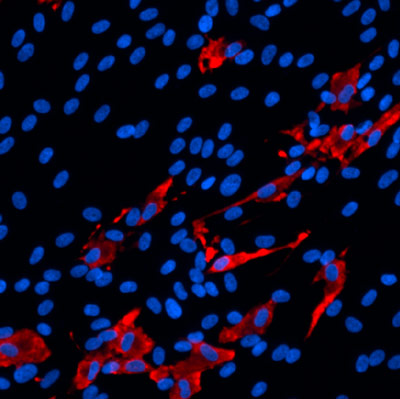
SARS_CoV2_ Infected human choroid plexus cells a type of brain cell

The scientists found that SARS-CoV-2 (red) primarily infects brain cells called choroid plexus cells (blue), which are part of the brain’s protective blood-brain barrier.

How might this finding translate to what we’re seeing in patients?

We know that choroid plexus cells produce high levels of ACE2, which is the receptor that SARS-CoV-2 uses to enter and infect cells. Because the choroid plexus is the “gatekeeper” to the brain, it’s possible that the virus enters the brain by infecting these cells. However, much more research is needed before we can give a definitive answer to this question.

We have more questions than answers right now about COVID-19. What is one question you wish we had the answer to?

How does the virus get from the nose and mouth and spread to other parts of the body? This is a big question for me and the scientific field. Once we know how the virus travels throughout the body, we can potentially stop its spread and control the dangerous symptoms.

What was it like working with your husband? Was this your first time working together?

It was really fun. I found out that he is great to work with. We’ve been together for 30 years, and incredibly, this was the first time we worked together.
Institute News

COVID-19 vaccines: Our experts weigh in on the historic news

AuthorMonica May
Date

November 13, 2020

There are now two experimental vaccines for COVID-19 that are more than 90% effective—a remarkable development that has made the world collectively exhale. We caught up with our leading COVID-19 researchers to get their take on the update—including whether we are “out of the woods” and where they were when they heard the news.

Sumit Chanda, PhD, virologist
I was at work, obsessively refreshing my browser to follow the election results when the first press release about the Pfizer vaccine popped up. When I heard 90% efficacy, I was super excited. I had sort of a sigh of relief. Then I read the fine print, and I started to have more guarded optimism. I’m not popping the champagne yet. But I’m putting it on ice.

The 90% measurement was taken starting only one week after the second booster shot. That’s not a lot of time, and with a pretty small number of people. What I am really looking for is how many people are protected two months and six months after the booster shot. That’s when I’m going to get really excited. We know that 90% is the ceiling, now we need to know where the floor is. Even if efficacy drops from 90 to 70%, that is still really great.

This is also why we will likely need multiple vaccines, and with different mechanisms of protection. This vaccine also has to be kept at -70 degrees Celsius, which presents a logistical challenge to say the least. Most doctor’s offices don’t have this type of specialized equipment, not to mention rural areas or less developed countries.

Today’s news that the Moderna vaccine is at least as effective as Pfizer’s is equally great news. However, we are still going to need antivirals. Between people who may not respond to these vaccines, can’t get the vaccines, or simply don’t want to take them, there is still going to be a lot of people who catch COVID-19. Luckily there are some antiviral options that are looking really good, including an antibody from Lilly that just got Emergency Use Authorization from the FDA.

With all this said, this is unequivocally good news. I am optimistic that we will have several vaccines that are usable in the next couple months. But for now, we need to mask up and keep social distancing.

Step inside Sumit Chanda’s lab where he and his colleagues are racing to find a potential treatment for COVID-19.

Carl Ware, PhD, immunologist and clinical trial participant

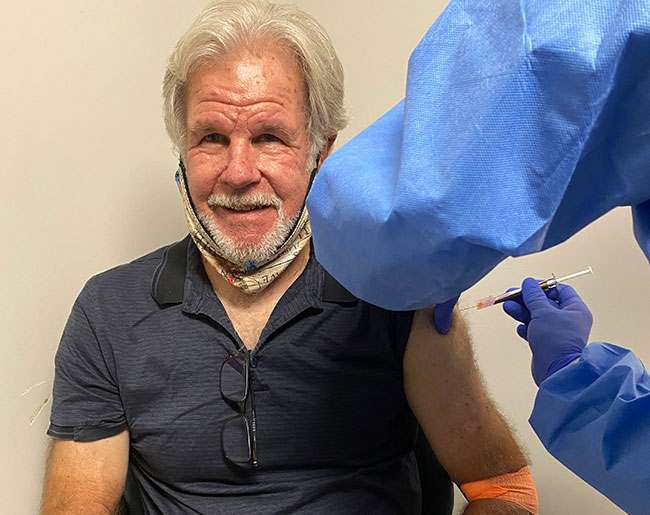
I first heard the news about the Pfizer vaccine on the radio when I was listening to KPBS’ surf report (Scott Bass is a poet). As an immunologist studying coronaviruses and a volunteer in the Moderna vaccine trial, I’m following all of the results closely. I immediately turned the volume up.

NBC San Diego spoke with Dr. Carl Ware about his experience participating in a clinical trial testing Moderna’s vaccine for COVID-19.

The news is very encouraging, and certainly shines a brighter light at the end of the proverbial tunnel. 90% effectiveness is very impressive. My excitement is mostly based upon earlier trial results showing that the vaccines are safe and effective in stimulating the immune system. However, those trials only involved several hundred people in comparison to the tens of thousands of volunteers in the latest results, so these developments are very encouraging. It gives us a much better understanding of how the vaccine may work in the general population. 

However, questions will need to be answered about the efficacy in people over the age of 65 and other susceptible populations, the longevity of immunity, and long-term safety. Fortunately, these results will be scrutinized by scientists that are the best in the world. I have full confidence in their analysis.  

The effort to make a vaccine so quickly is truly an outstanding accomplishment. It’s not a race to be first, but first to stop the virus. This war against an unseen enemy will require multiple strategies to truly end this pandemic. Right now I am keeping an eye out for data that shows the long-term protection of these vaccines, and looking forward to results from my colleague Sumit Chanda, who has been racing to find existing drugs that could treat people who do become sick with COVID-19.

Laura Martin-Sancho, PhD, virologist

I learned about the Pfizer-BioNTech vaccine news last Monday morning. I had just woken up and was enjoying a cup of coffee when I read the press release. Here, they reported the results to date of their vaccine clinical trial showing 90% protection from COVID-19 infection. I felt very happy and very hopeful. Being from Spain, one of the countries that has been most affected by COVID-19, and having all my family over there, I felt this was the news we all have been waiting for a long time.

While this 90% might not hold by the end of the trial as more cases are reported, it still brings a lot of hope. Especially since many vaccines currently under clinical trials, including Moderna’s, use a similar approach. So we have even more reasons to be optimistic.

Future challenges for these vaccines will be to determine if they can prevent transmission from asymptomatic people with COVID-19. As clinical trial participants were not tested for COVID-19 throughout the study, and only symptomatic cases were reported, the question remains as to whether vaccinated people can still transmit the disease.

We also still don’t know how long the protection elicited by the vaccine lasts, which will determine whether and how frequently we will need a vaccine boost. In addition, more data are needed to evaluate if these vaccines can protect against severe COVID-19 or whether different age groups or ethnicities are protected. Only time will tell.

Meet the scientists on the front lines with coronavirus, including Dr. Martin-Sancho.

Institute News

COVID-19: Renowned scientist enters clinical trial

AuthorSusan Gammon
Date

September 17, 2020

Meet Carl Ware, PhD, director of the Infectious and Inflammatory Disease Center at Sanford Burnham Prebys. After a career of studying how viruses wreak havoc on our health, he now becomes a “subject” in a COVID-19 clinical trial. 

What inspired you to enroll in a COVID-19 clinical trial?
I’m an immunologist working on coronaviruses. I understand the science of vaccines and the protection provided against infections. I also know how important clinical trials are to developing safe and effective vaccines. I trust the science, so I stepped up to volunteer for the vaccine trial. Who better than an immunologist to be part of this grand experiment? 

Are you nervous? 
Excited is more accurate.

Do you know which vaccine you’re getting?
Yes, the RNA-based vaccine by Moderna. It’s not a live virus! The vaccine uses a small part of the virus that allows the virus to attach to lung cells. To cause disease, a virus must replicate inside a cell. The infected cell dies, releasing large numbers of new viruses. The progeny virus infects more lung cells, producing more virus that reaches levels that are easily spread to other people. The vaccine stimulates the immune system to block the virus from entering and replicating in the lung cells, stopping the infection and spread to other persons.

How many people are in the trial?
About 30,000 people will participate. The volunteers are placed into two groups receiving either the vaccine or a placebo. The study is “blinded,” so I don’t know which group I’m in, but I’m hoping it’s not the placebo group. The preliminary tests of this new vaccine indicate it is safe and stimulates the immune system. However, proof of safety and effectiveness requires a large number of volunteers. More volunteers are needed to complete the goal of 30,000. 

How will you be evaluated during the trial? 
Following the first injection, I will report my symptoms every night for a week using a simple, very cool app on my cell phone. A month later, I will receive a booster and follow the same procedure with the phone app. I have two more visits to the site at six months and a year to determine if the vaccine stimulated long-lasting immunity.

How will it be determined if the vaccine works?
All sorts of tests will be used to measure the response of my immune system. No worries, volunteers in the trial will not be infected with the virus!

The trial is open to anyone who wants to participate, especially those persons most vulnerable, with serious diseases; front-line and essential workers; those over 65, Black and Latinx persons, and people with other health risks. There are several test centers around the San Diego area. More information on volunteering is at eStudySite.
 

Institute News

A scientist’s perspective on the coronavirus (COVID-19) pandemic

AuthorMonica May
Date

March 17, 2020

Infectious disease expert Sumit Chanda tells us how his team is combating the virus, and the advice he gives his loved ones.

Since the first case of coronavirus (COVID-19) was identified in December 2019, the respiratory virus has swept across the globe. Cases have been confirmed on every continent but Antarctica, prompting the World Health Organization to declare COVID-19 an official pandemic.

As the world grapples with the ongoing outbreak, we spoke with Sumit Chanda, PhD, an infectious disease expert and director of Sanford Burnham Prebys’ Immunity and Pathogenesis Program, to get his perspective on the pandemic and learn what Sanford Burnham Prebys scientists are doing to find effective treatments for COVID-19.

What is coronavirus?
Coronaviruses are a large family of viruses common in animals, but they can leap to humans, causing illnesses ranging from a common cold to severe respiratory diseases such as pneumonia, Middle East respiratory syndrome (MERS), and severe acute respiratory syndrome (SARS).

Were you surprised by the virus’s rapid spread? Why or why not? 
Once there was evidence of person-to-person transmission outside of China, the rapid global spread of the virus was not surprising. Since this is a new virus, there is no natural immunity in the human population to slow the spread of the pathogen. Furthermore, respiratory viruses are among the most easily spread microbes and thus considered to have high pandemic potential.

Is there a vaccine for COVID-19?
Since this is a new coronavirus, there is no vaccine—and developing one can take several years.

How are Sanford Burnham Prebys scientists working to combat COVID-19? 
As we speak, our scientists are looking to find known drugs that can inhibit the virus. Typically, it can take five to 10 years to bring a new drug to the market. However, the approach we are taking at Sanford Burnham Prebys, known as drug repositioning, can cut this development time dramatically. Since we are looking at FDA-approved drugs that are proven to be safe in humans, these medicines could rapidly get to people infected with the virus. If successful, drug repositioning will likely be the fastest path to find a therapeutic solution for the virus. 

Longer term, work has been ongoing to develop broad-spectrum antivirals. These medicines would work against many viruses, not just one. For example, if we had developed a broad-spectrum antiviral that works on MERS or SARS, it is likely it could be used for the current COVID-19 outbreak. Ideally, the therapy could be given prophylactically to block the rapid spread of the disease.

What are the benefits of drug repositioning? 
Drug repositioning is advantageous because FDA-approved drugs have already completed safety testing—meaning they have been used in people and are known to be safe. Safety testing can take years to complete. This means that if we do find a therapy that is effective against COVID-19, we can bring it to patients much faster than a novel treatment.

Any predictions for how far the virus will spread in the U.S.? 
We eagerly await large-scale testing for the virus so we can get a better understanding of how widespread it currently is in the U.S. It is difficult to predict a potential trajectory of viral spread in the U.S. until those numbers become available. 

But as of now, I have not seen any evidence of disease containment. It will be instructive to see how the situation plays out in other advanced democracies that are coping with a viral outbreak, including South Korea and Europe, to get a better idea of what might happen here.

Get an inside look at the race to find a treatment for COVID-19.

What advice are you giving your loved ones?
The advice I give my friends and family is to hope for the best, prepare for the worst. We are in uncharted waters.

Institute News

Should you be worried about the never-before-seen coronavirus outbreak?

AuthorSumit Chanda, PhD
Date

February 21, 2020

Here’s what Sumit Chanda, PhD, director of Sanford Burnham Prebys’ Immunity and Pathogenesis Program, has to say about the virus spreading fear around the world.

  1. What is coronavirus?
    Coronaviruses are a large family of viruses common in animals but can leap to humans, causing illnesses ranging from a common cold to severe respiratory diseases such as pneumonia, Middle East respiratory syndrome (MERS), and severe acute respiratory syndrome (SARS).
  2. What is the concern?
    Health experts are monitoring the outbreak first identified in Wuhan City (China), originating at a large seafood and animal market. It appears to be a new type of coronavirus that can be passed human-to-human, and it has caused more than 75,000 infections. New cases have been identified in 26 countries, including the United States. Thousands of people have died. 
  3. Isn’t there a vaccine for the virus?
    Since this is a new coronavirus, there is no vaccine—and developing one can take several years.
  4. Should the rest of the world be worried?
    Given the pace of global travel in today’s world, it’s a reality that the virus is only a plane ride away. International airports, including some in the U.S., are screening passengers from Wuhan City and other Asian cities where the virus has been detected. It’s important to note that SARS and MERS, also coronaviruses, kill up to 30% of the people infected, although it’s too early to know the lethality of the Wuhan coronavirus.

If you’ve traveled to the affected areas—or been in close contact with someone who has—and develop a fever accompanied by coughing, shortness of breath, and/or tightness of the chest, seek medical attention immediately, and do not travel into public spaces.

Institute News

5 things to know about immunotherapy and breast cancer

AuthorSusan Gammon
Date

September 30, 2019

If you follow news about medical breakthroughs, you have undoubtedly heard about immunotherapy to treat cancer.

This form of therapy is designed to prime the body’s own immune system to fight the disease head-on. For some cancers, such as melanoma and lung cancer, immunotherapy has helped patients who once had only a life expectancy of months now live for years. But does it work for other cancers?

We sat down with Svasti Haricharan, PhD, assistant professor at Sanford Burnham Prebys and recipient of a Susan G. Komen Career Catalyst Award to discuss where we are with immunotherapy and breast cancer. Here are five things she wants us to know.

  1. As scientists, our job is to understand the biology of why immunotherapy works for some cancers but not others. Our goal is to develop approaches to expand the benefits of immunotherapy to as many patients as possible. With breast cancer, we are still in the early days, but there has been some success. Earlier this year a type of immunotherapy called an “immune checkpoint inhibitor” was approved to treat certain types of metastatic breast cancer. But immunotherapy doesn’t work—yet—for all breast cancers.
  2. No two breast cancers are alike. Even though two women with breast cancer may have the same size tumor, the individual characteristics of the tumor—the receptors, the genetics, even the way the tumor cells gather fuel to grow, can differ. Just as importantly, the way each woman’s body reacts to the growing cancer is predicated by her immune history: her exposure to immunological challenges, the strength of the immune response her body is capable of mounting, and how long she can sustain an immune response. These factors strongly influence the likelihood that a patient will respond to a specific therapy. The more we drill down on breast tumors, and the tricks they use to evade the immune system, the closer we get to outsmarting them.
  3. Today, immunotherapy seems to work best for triple negative breast cancer. Triple negative means three types of receptors—estrogen receptor, progesterone receptor and HER2—are not expressed on the cancer cells. Cancers that express these receptors are easier to treat because these receptors can be targeted directly. We believe part of the reason why immunotherapy is effective for triple negative breast cancer is because these cells can grow rapidly and produce more neoantigens—altered tumor proteins that have not previously been recognized by the immune system. So, these tumors may already have immune cells infiltrating the tumor, and when unleashed via immunotherapy, they can readily attack the cancer. 
  4. Immunotherapy—at least the immune checkpoint agents that are used today—target a protein called PD-1 found on T cells, which are the immune cells that roam the body looking for disease. PD-L1 is another protein found on some normal and some cancer cells. When PD-1 attaches to PD-L1, T cells are queued to leave the cell alone and not attack it. We believe cancer cells use PD-L1 to protect themselves from the immune system, and that cancers with large amounts of PD-L1 are the most likely to respond to checkpoint inhibitors. It’s possible that testing breast tumors for PD-L1 levels will help identify more women likely to benefit from these drugs. 
  5. Collaboration is key. Although we like to think of scientists as having “Eureka” moments, the reality is that much of the progress we make is incremental. We painstakingly plan, control and execute experiments—gathering and analyzing data to open new avenues that can be tested in the clinic. Working alongside professionals who are responsible for patient outcomes is an important part of the research spectrum. Their input provides direction for our goal of achieving cures—and a means to evaluate if what started in the lab will work in the clinic. There are nearly 300 clinical trials currently ongoing that are testing immunotherapeutic approaches for breast cancer. The information we gather from these trials helps guide the future of what we do next in the laboratory. Advances will be made, and progress is on the horizon.
     
Institute News

5 lessons I’ve learned from rheumatoid arthritis and why I’m grateful to scientists who can change my world

AuthorMonica May
Date

June 26, 2019

Angela Durazo was a rising star triathlete—racking up age-group wins and corporate sponsorships. Then a diagnosis with rheumatoid arthritis, an autoimmune disorder caused by the immune system attacking healthy tissue, turned her life upside down. Here, she shares her story—including her new journey as a race car driver—and explains why research taking place at Institutes such as Sanford Burnham Prebys is critical to developing medicines that could help her and the 350 million people worldwide who live with the condition. 

I never thought of myself as an athlete. I was a cheerleader in high school and then participated in basketball for fun, but I wasn’t invested in the sports. Then some years and trials and tribulations later, seeking to find strength within myself, I accepted an invitation to cheer on a friend and I witnessed a triathlon. 

Instantly something spoke to me. The grit, determination, discipline. I was immediately enamored. I needed to do one, but I didn’t know if I could do it. All I knew was I had to try. And so I did. And it was in triathlon, where I truly found myself. Until a diagnosis rocked my world. 

Before I was diagnosed—a journey in itself—I’d never heard of rheumatoid arthritis (RA). No one in my family had it. No one in my life had it. However, I would soon come to find what living with this disease meant. I wouldn’t wish it on my worst enemy. 

First, I noticed stiffness in my hands when I woke up. I thought I might have slept on them wrong. But it kept happening night after night after night. Then it started affecting my workouts. During my runs, I started feeling like I had sandbags strapped around my legs. Unspeakable, unrelenting pain in my arm started. It felt—and still feels during a flare up—like someone is scraping my bone with a hot knife.  

Unable to keep up with training due to the pain and fatigue, I retired from triathlon after seven years. Little did I know the journey that would unfold next—taking me through dozens of doctors, two more career changes (I had a brief endeavor in acting in which I won a Best Actress Award for lead actress in an International feature film) and ultimately leading me to my life’s passion: race car driving. 

My experience continues to teach me so much. Now, nearly ten years after my diagnosis, I feel like I’ve finally crawled my way out of hell. To a healthy person, that may sound like an exaggeration. But to anyone who struggles with RA or any chronic diseases, they will know exactly what I mean.

Here are five lessons I have learned as a person reclaiming my life despite living with RA:

Trust yourself. I knew in my heart that something was deeply wrong. However, as a young, seemingly healthy athlete, doctors thought I was simply overtraining. One even floated the idea that I was a hypochondriac (I won’t repeat what I told that doctor.) Finally, after a year and a half of doctor visits, I stumbled across the term “rheumatoid arthritis” on the Internet. I convinced my doctor to test for RA and I finally had my answer. It couldn’t come soon enough: At this point my hands had begun to puff and distend (ulnar deviation). 

RA is a disability. When I started competing in paratriathlons, created for people with physical disability, some people questioned if I was really disabled. What these individuals didn’t understand is that—even though invisible from the outside—RA caused permanent damage to my mobility. In addition to the arthritis, it eroded my tendons and bursas (fluid-filled sacs that cushion the bone). Even when medicated, I couldn’t rely on my body. One day you can be fine and the next day you aren’t. One day I could run like a gazelle and the next day I feel like I have sandbags on my legs. My coach and those closest to me saw these effects firsthand. In fact, arthritis is a leading cause of work disability in the U.S., according to the Centers for Disease Control and Prevention (CDC).

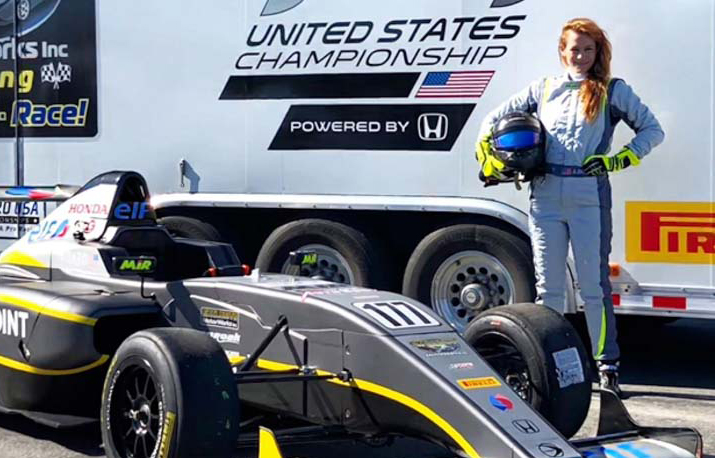
Your disease does not define you. I still get chills when I think about the moment that I sat in a Formula race car for the first time. This was eight years after my diagnosis. I felt like I had found my spirit that had been missing since my retirement from triathlon. Race car driving is tough on my hands—Formula cars do not have power steering, amplified by G-forces generated by driving more than 160 miles per hour. I have to work twice as hard to keep my strength up. But frankly, I would work three times as hard if needed. I am not letting RA prevent me from pursuing my passion. 

Develop healthy coping skills. Between doctors saying that you won’t walk again and often having to prove your illness, paying attention to mental health is incredibly important for people with RA or any chronic disease. I struggled deeply with depression—and at one point alcohol—and I know many others who also struggle with unhealthy coping mechanisms. Find your support group. Go to therapy. I went to intensive trauma therapy for well over a year to accept the loss of my old body and learn how to embrace this new body with RA. One piece of advice that my trauma specialist told me which transcends any health condition: “RA has already taken so much from you, do not let it take anymore. Turn your pain into power and fight.”

When medicines fail, research is hope. New drugs such as biologics are wonderful. I was incredibly hopeful when I first learned about them. But they only work for one-third of patients. For the other two-thirds of the RA population, we are left figuring it out on our own. And there is so much we don’t know—from what triggers the immune system’s attack to why certain people respond to treatments and others don’t. Get engaged in your research foundations. Attend events. Join Facebook groups. And don’t be afraid to ask questions. YOU are your biggest advocate.

I took this year off racing to heal my body with an experimental treatment, which is working. Now, I’m recalibrating and looking forward to next year’s adventure—IndyCar development—and taking some podiums! 

I believe whole heartedly that one-day we will have a cure for RA. Until then, I hope that others with RA know they aren’t alone, and that as long as autoimmune research advances at Institutes such as Sanford Burnham Prebys, we have hope for the future.

Read more about Angela Durazo at Today.com or watch her share her story.

Institute News

An evening with autoimmune disorder experts

AuthorMonica May
Date

June 26, 2019

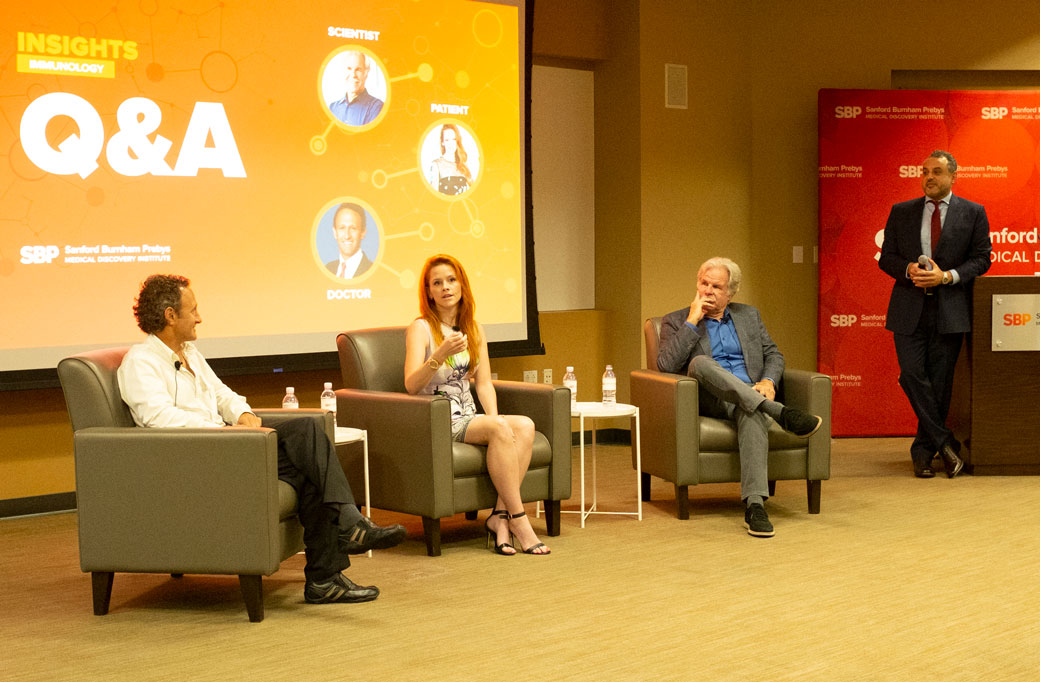
On June 20, 2019, nearly 100 community members, including many people living with autoimmune disorders and their loved ones, joined us at our latest SBP Insights event. The discussion featured unique perspective from three experts—a scientist, a doctor and a patient—on a single topic: autoimmune disorders. 

More than 50 million Americans have an autoimmune disorder, such as Crohn’s disease, psoriasis or rheumatoid arthritis. These conditions are often painful, chronic and debilitating. For unknown reasons, more than 80 percent of these patients are women. 

Scientists know these disorders occur when the immune system mistakenly attacks healthy tissue. But researchers still don’t understand why immunosuppressive treatments don’t work for everyone or know the initial trigger that causes the immune system to misfire. Answers to these fundamental questions could unlock insights that lead to new, effective medicines. 

“Before I was diagnosed, I thought doctors had it all sorted out. Now I know there is so much they don’t know,” says 17-year-old Madison Koslowski, who was diagnosed last year with juvenile idiopathic arthritis. She uses a wheelchair and cane for mobility while she works with her doctor to find a treatment that relieves her intense joint pain. “Right now, my friends are planning their future and figuring out where they will go to college. But for me, there are so many unknowns. I don’t know if I’m going to respond to the next medicine we try or if I will be really sick. I feel like my life is on pause. I have no idea when it will start again.”

Madison traveled from Los Angeles with her mother and a friend to hear race-car driver Angela Durazo speak about her journey with rheumatoid arthritis and learn what’s on the horizon for autoimmune treatments (read Angela’s story).

Following Angela’s presentation, Carl Ware, PhD, professor and director of the Infectious and Inflammatory Diseases Center at Sanford Burnham Prebys, took the stage and provided an overview of the science behind autoimmune disease. Ware also described his ongoing research collaboration with Eli Lilly, which recently led to a new Phase 1 clinical trial for autoimmune disorders. 

Hal Hoffman, MD, chief, division of allergy, immunology and rheumatology at UCSD and Rady Children’s Hospital, wrapped up the discussion with an overview of how he and his team are turning to rare immune disorders to understand the conditions as a whole. A Q&A followed the brief presentations. 

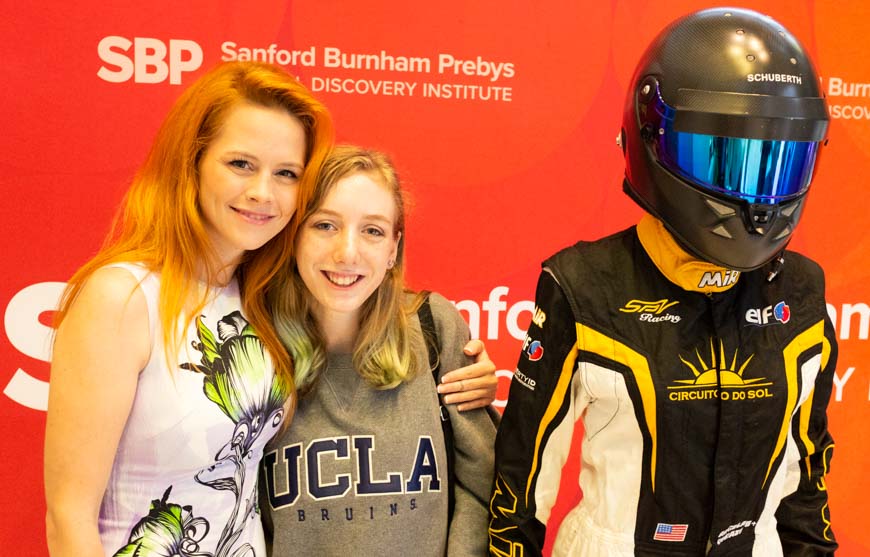
17-year-old Madison Koslowski (right), who was diagnosed last year with juvenile idiopathic arthritis, poses with race-car driver Angela.

17-year-old Madison Koslowski (right), who was diagnosed last year with juvenile idiopathic arthritis, poses with race-car driver Angela.

The discussion was moderated by Zaher Nahle, PhD, CEO of the Arthritis National Research Foundation.

Join us at our next SBP Insights discussion, which focuses on pancreatic cancer and takes place on November 21, 2019. Event details.

Institute News

Targeting long-sought EphA2 receptor becomes crystal clear

AuthorMonica May
Date

May 13, 2019

Scientists have long sought to target a cellular receptor called EphA2 because of its known role in many disorders, including cancer, inflammatory conditions, neurological disorders and infectious diseases. However, lack of information about the structure formed when EphA2 links to other molecules—ligands—has hindered drug development. 

Now, scientists at Sanford Burnham Prebys have crystallized EphA2 together with peptide ligands (short proteins) and used the structure to engineer more powerful compounds that activate or inactivate the receptor, paving the way for new therapies. The discovery was published in the Journal of Biological Chemistry.

“EphA2 plays a central role in a plethora of biological and disease processes,” says Elena Pasquale, PhD, professor in the Tumor Initiation and Maintenance Program at Sanford Burnham Prebys. “Our team’s identification of potent, highly selective peptides that regulate the receptor is a key step toward rational design of therapies for the numerous disorders that are driven by EphA2.” 

EphA2 is found in the cells that line the surfaces of our body, including our skin, blood vessels and other organs. The receptor is typically only present at high levels during disease states, making it a promising drug target. Activating the receptor could hinder tumor growth, while inhibiting it could reduce unwanted formation of blood vessels (angiogenesis), treat certain inflammation-driven disorders and block pathogens—such as malaria, chlamydia and the hepatitis C virus—from gaining entry into a cell through the receptor. Because EphA2 travels deep inside of the cell when activated, scientists could also harness it as a Trojan horse by attaching chemotherapies or imaging agents to the peptide ligands, which would subsequently be delivered to the desired cells. 

In the study, the scientists initially crystallized a weakly binding peptide in complex with EphA2, yielding a detailed picture of the binding features and providing clues to the receptor’s “sweet spot” or site of action. The researchers then used this information to repeat this process, engineering increasingly more powerful ligands. This work identified several peptides that strongly clasp the receptor and activate or inactivate it—which can be used to inform drug development.

Further quantitative Förster Resonance Energy Transfer (FRET) microscopy experiments, which measure receptor-receptor interactions, revealed that EphA2 receptors cluster together when activated by a peptide—an effect similar to that caused by its natural ligands—answering an unresolved question in the field. 

“In addition to helping guide therapeutic development paths, these peptides are also valuable research tools for scientists who are working to gain insights into this important receptor,” adds Pasquale. “Our hope is that with this new information, one day we can find targeted therapies to treat cancer, inflammatory disorders and infectious diseases that are regulated by EphA2.”


The co-first authors of the study are Maricel Gomez-Soler, PhD, and Marina Petersen Gehring, PhD, of Sanford Burnham Prebys; and Bernhard C. Lechtenberg, PhD, formerly of Sanford Burnham Prebys and currently of the Walter and Eliza Hall Institute of Medical Research. 

Additional authors include Elmer Zapata-Mercado and Kalina Hristova, PhD, of Johns Hopkins University. The study’s DOI is 10.1074/jbc.RA119.008213. 

This research was supported by the National Institutes of Health (NIH) (R01NS087070, R01GM131374 and P30CA030199). 

Institute News

Immune therapy enters Phase 1 clinical trial

AuthorMonica May
Date

November 15, 2018

Sanford Burnham Prebys Medical Discovery Institute (SBP) today announced that the first healthy subject has been dosed in a Phase 1 clinical trial evaluating LY3361237, a biologic that inhibits inflammation by activating an immune checkpoint receptor. LY3361237 arose from a research collaboration between Eli Lilly and Company (Lilly) and SBP formed in 2015 that seeks to discover and develop new immunological therapies. 

Diseases such as lupus, psoriasis and rheumatoid arthritis result from dysfunction of the immune system. Many of these conditions are characterized in part by immune checkpoint failure, resulting in the immune system attacking normal tissue. Previous studies have shown that activating checkpoint receptors can suppress inflammation and restore immune balance—indicating its therapeutic potential. More than 80 diseases are caused by the immune system attacking the body’s own organs, tissues and cells, according to the National Institutes of Health (NIH).  

“Today’s milestone is an important step forward for patients who suffer from autoimmune disease,” says Carl Ware, PhD, director of the Infectious and Inflammatory Diseases Center at SBP. “This advance also illustrates how the fundamental understanding of a biological process—in this case, the role of checkpoint receptors in immune function—can translate to the development of new medicines.”

“Immunological disorders—many of which disproportionately impact women—affect millions of people around the world and remain an area of great medical unmet need,” adds Ajay Nirula, MD, PhD, vice president of Immunology at Lilly. “Our collaboration with SBP is a powerful example of how uniting complementary areas of expertise—deep foundational scientific knowledge from SBP combined with expertise in protein engineering, immunobiology and clinical development from Lilly— can lead to a promising new candidate to treat autoimmune disorders.”

The study will evaluate the safety, tolerability and pharmacokinetics of LY3361237 in healthy subjects. Further information about the trial can be found on ClinicalTrials.gov using the Identifier NCT03695198.

Interested in keeping up with SBP’s latest discoveries, upcoming events and more? Subscribe to our monthly newsletter, Discoveries.