The Institute honored the holiday with a special event that connected participants with the tradition’s customs and cuisine.
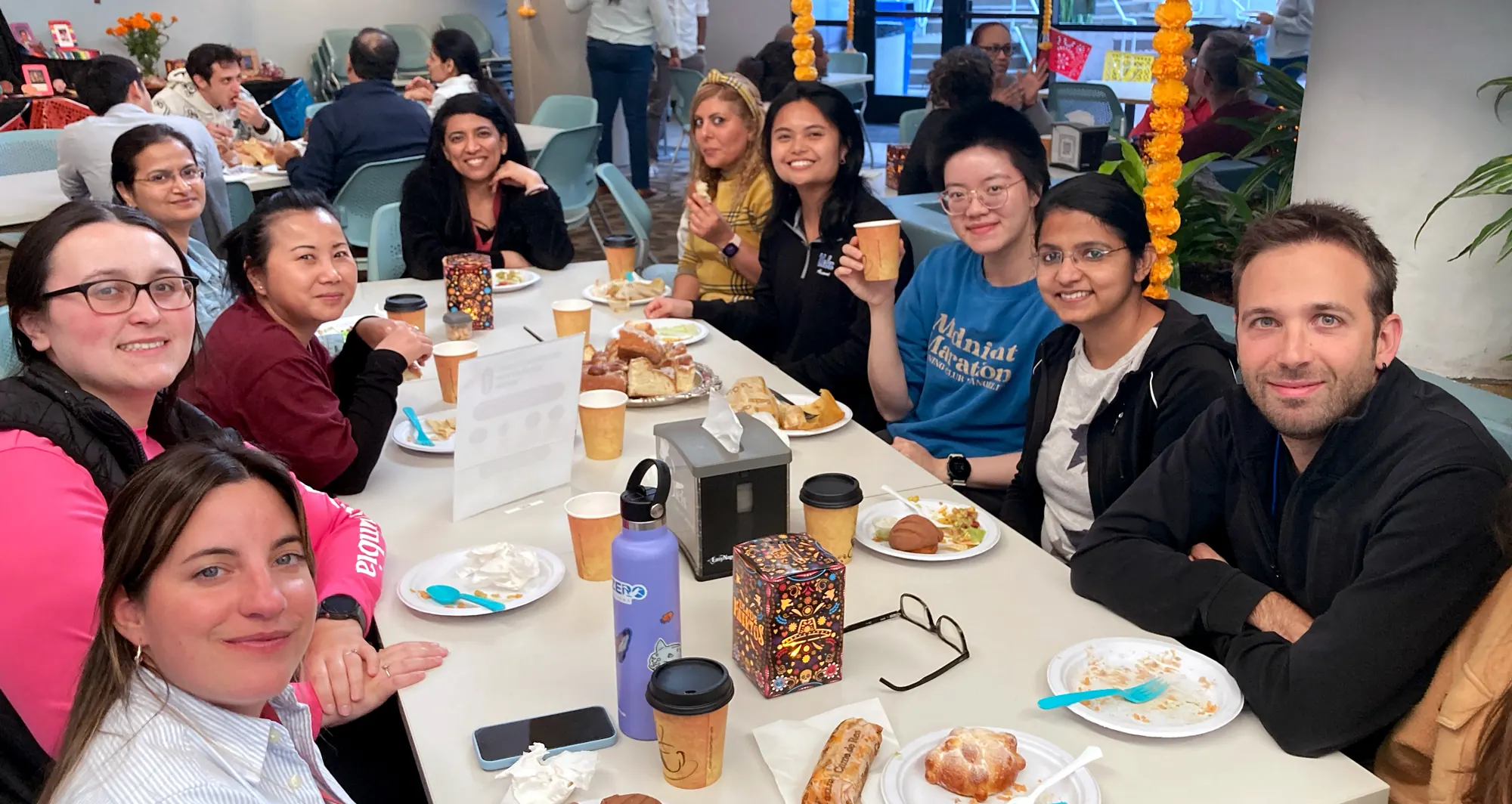
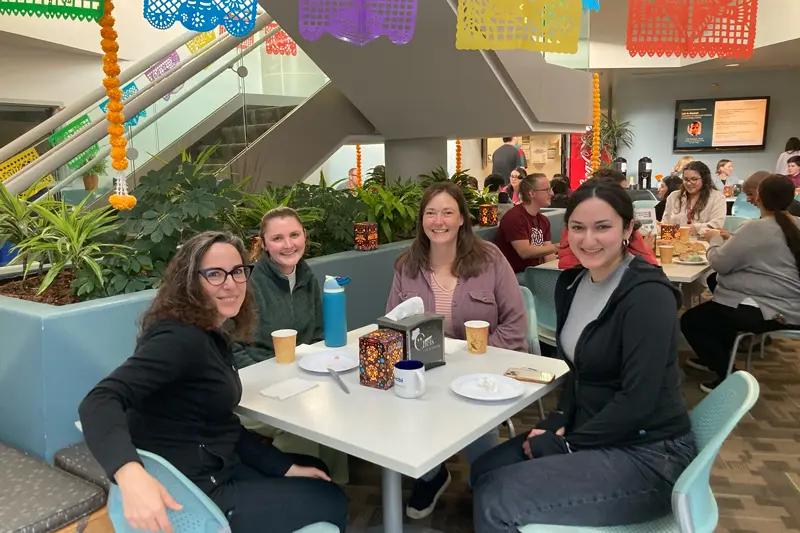
On Wednesday, November 6, 2024, Chairmen’s Hall on the Sanford Burnham Prebys campus was transformed by the sights, smells and sounds of Día de los Muertos.
As attendees snacked on sweet breads and sipped Mexican hot chocolate and spiced coffee, they were encouraged to learn more about the holiday through a gallery exhibit featuring posters discussing the tradition’s origin and symbolism.
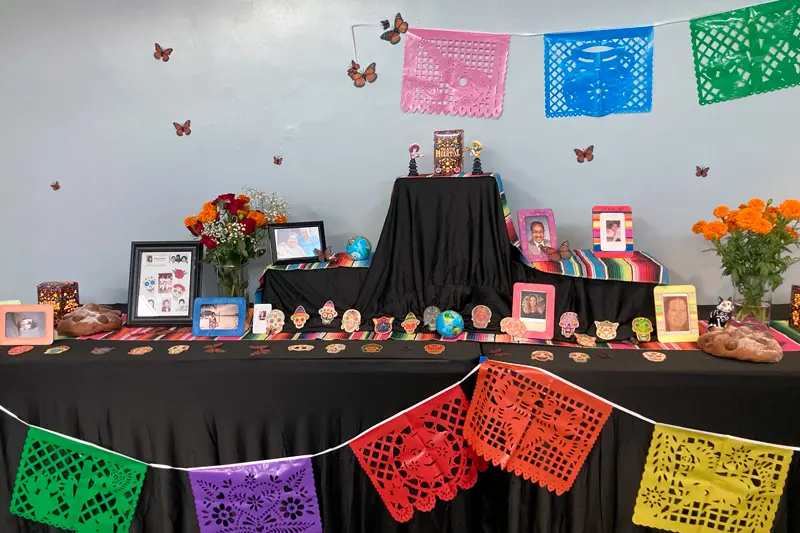
Día de los Muertos is held on November 1 and 2 each year. It provides an opportunity for families and communities to ceremonially welcome back the souls of deceased loved ones for a reunion. Central to the holiday are altars called ofrendas, or “offerings,” that include personal mementos and symbolic items meant to help guide back the souls of family members. Some symbols also highlight the celebration’s focus on enjoying the sweetness of life even while recognizing the inevitability of death.
The Día de los Muertos event at Sanford Burnham Prebys featured an ofrenda that was constructed through community participation. In the weeks prior, attendees were able to attend two arts and crafts sessions to make wooden sugar skulls and decorate picture frames for the ofrenda.
Images courtesy of Sara Sandoval
In addition to the gallery exhibit and ofrenda, the event included traditional decorations such as colorful papel picado, a traditional Mexican craft made from perforated tissue paper, which was hung like streamers, as well as monarch butterflies that migrate through Mexico during the holiday and represent the returning souls of ancestors. A playlist of traditional Mexican folk music accentuated the crafts and cuisine, which included family recipes shared in a potluck meal.
This event was a continuation of the Holidays Around the World series at Sanford Burnham Prebys. This series is planned by volunteers from labs and departments across campus, Workforce Engagement and Belonging (WEB) and WEB director, Lauren Mitchell, MS, to bring the Sanford Burnham Prebys community together to learn more about the many cultures represented within the institute’s faculty, staff and trainees.
A ribbon-cutting event on August 7 celebrated the philanthropic gift and state-of-the-art auditorium that will enable new community engagement events at the Institute.
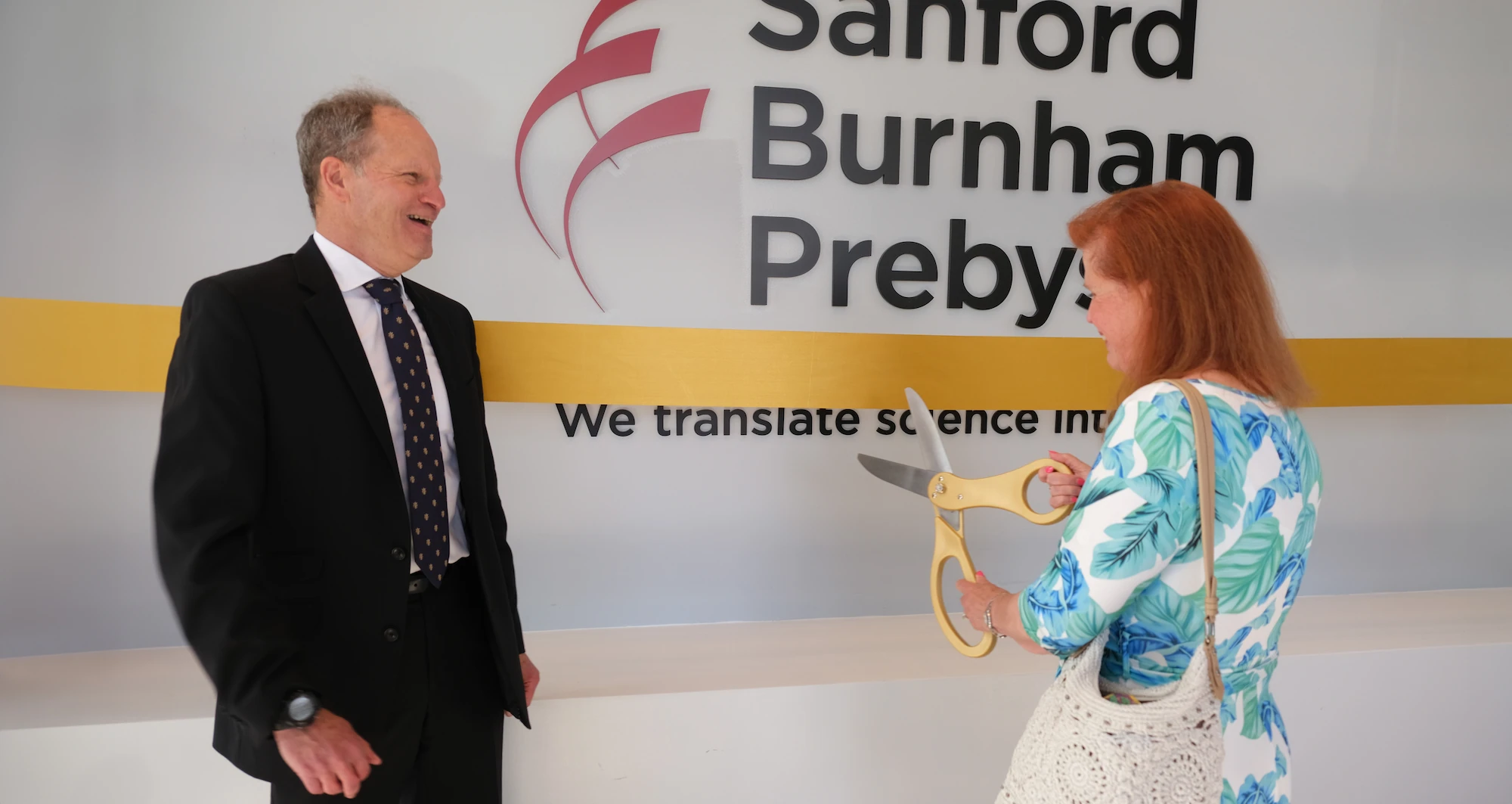
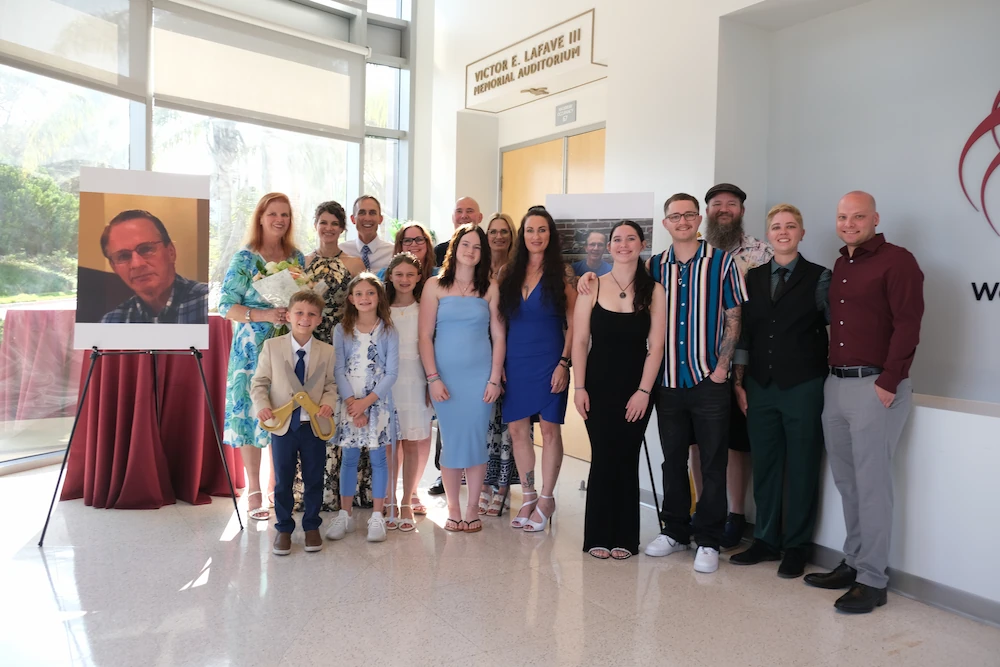
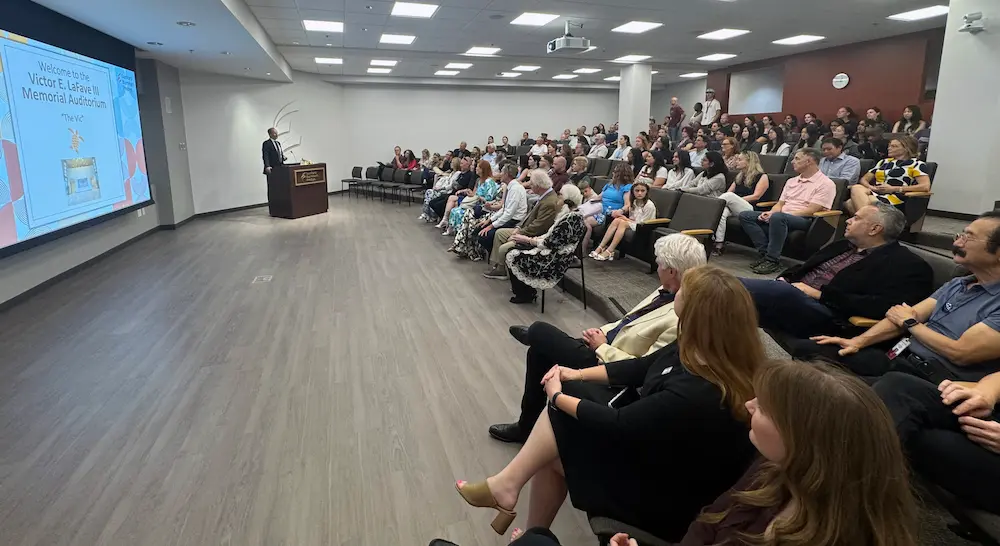
Sanford Burnham Prebys unveiled its newly renovated auditorium in Building 12 during a special Happy Town Hall and ribbon-cutting ceremony on Wednesday, August 7, 2024. The improved meeting space was renamed as the Victor E. LaFave III Memorial Auditorium, or “the Vic,” in recognition of the generous support of the LaFave family.
Racheal McCabe, senior director of Philanthropy at Sanford Burnham Prebys, opened the festivities by welcoming members of the LaFave family, board members, faculty, staff and friends of the Institute. She provided details about the auditorium’s namesake, including his service in the U.S. Air Force and appreciation of sports, traveling, music, photography and gardening.
“Most of all, Vic showed a deep love for his beloved wife, Sue, and his family and friends,” said McCabe. “We included a hidden, golden turtle above the auditorium’s entrance as a special tribute to Sue’s love for the animal, and we think Vic would be pleased by that.”
“The tortoise and the turtle are universally seen as symbols of wisdom and knowledge, so it is quite fitting for representing the scientific discovery, education and learning that will take place in the Victor E. LaFave III Memorial Auditorium.”
McCabe introduced David A. Brenner, MD, president and CEO of Sanford Burnham Prebys, who said, “Thank you on behalf of the entire institute. This is going to be a transformational gift for our community engagement strategies and a pivotal place for collaboration and exchanging ideas.”
Brenner and Sue LaFave ceremonially cut a ribbon to formally announce the grand opening of the Vic. Guests entered the new auditorium to learn about the renovations and other updates at the institute.
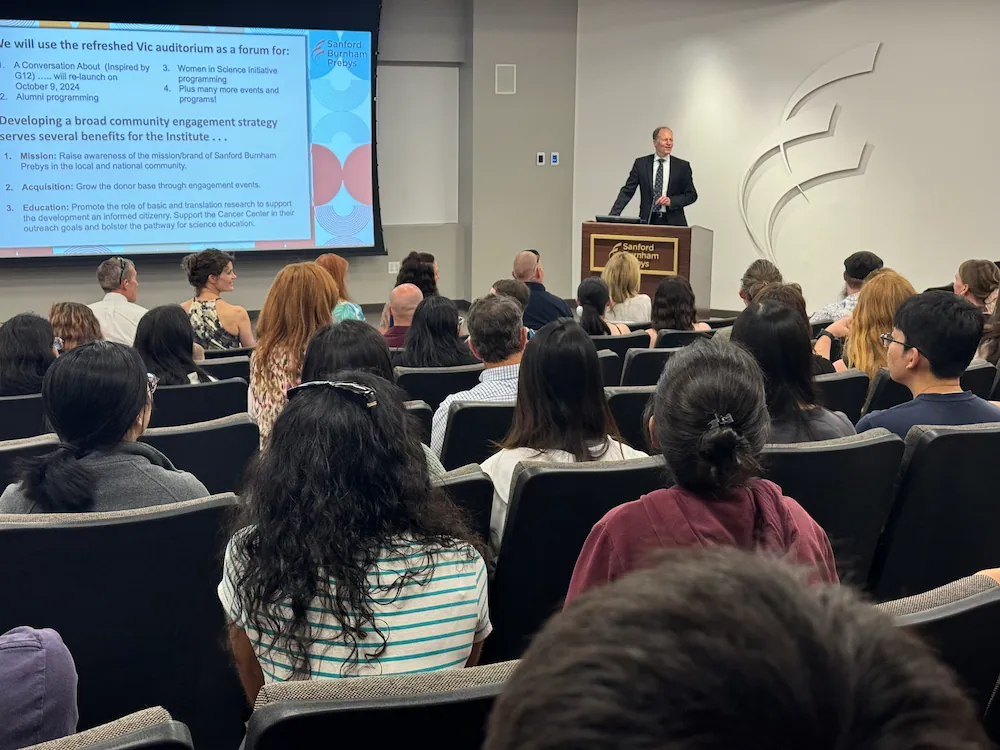
Brenner discussed plans for the enhanced auditorium to be a prominent space for community engagement through new and ongoing events. The meeting space will help the institute connect with community members, alumni and research collaborators throughout the region and state.
A new community engagement program called “A Conversation About” will launch in the Vic on October 9, 2024. Taking inspiration from the Group of 12 educational discussions and the Insights streaming program, A Conversation About will feature expert panelists from the scientific and medical communities in dynamic discussions about the future of research and health care.
The A Conversation About series will focus on the four disease-focused, broadly collaborative research centers at Sanford Burnham Prebys: Cancer, Neurodegeneration and Aging, Metabolic and Liver, and Cardiovascular and Muscular.
By bringing together community collaborators and clinicians with Sanford Burnham Prebys researchers, A Conversation About will offer a unique perspective on how clinical research and practice can be used to inform fundamental and translational science.
Institute News
Women in Science event at Sanford Burnham Prebys examines how female faculty members navigate research careers
The Women in Science event at Sanford Burnham Prebys on Monday, August 12, 2024, focused on how female faculty members at different career stages have navigated their professional journeys in academia and the life sciences.
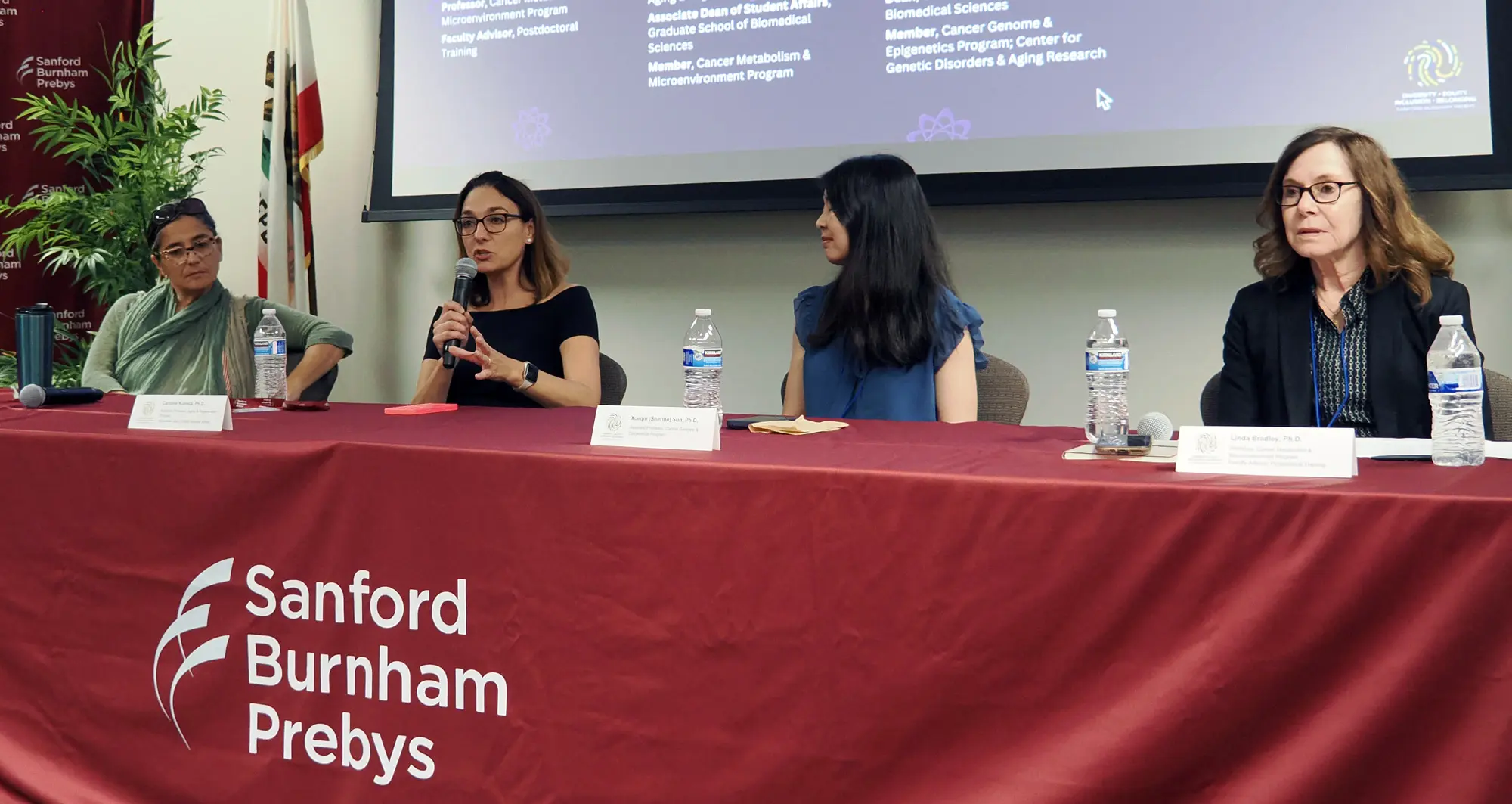
Four panelists at different career stages shared insights and answered audience questions
Sanford Burnham Prebys held a Women in Science event on Monday, August 12, 2024. The session was in Fishman Auditorium on the Institute’s campus and focused on how female faculty members at different career stages have navigated their professional journeys in academia and the life sciences.
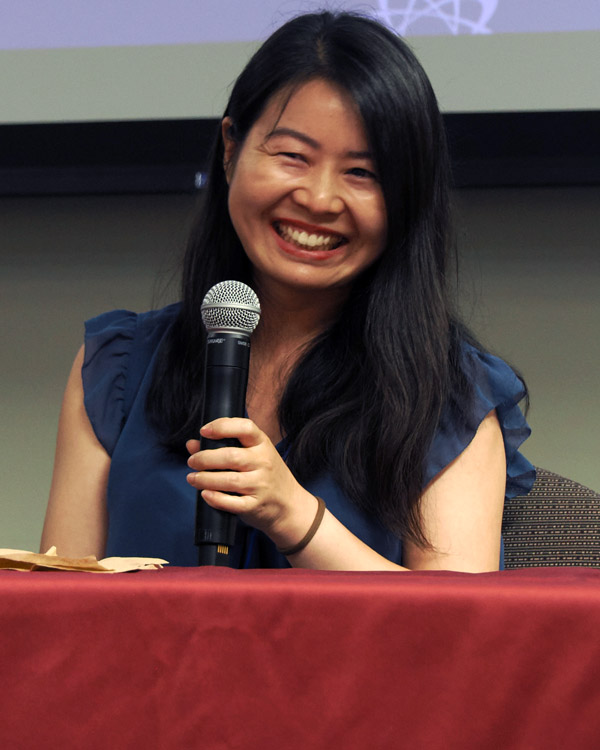
Eric Wang, PhD, an assistant professor in the Cancer Molecular Therapeutics Program at Sanford Burnham Prebys and co-chair of the Education and Training Diversity, Equity and Inclusion (DEI) Committee, opened the event and introduced the moderator, Shanshan Yin, PhD, a postdoctoral associate working in the lab of Peter D. Adams, PhD, and four panelists from Sanford Burnham Prebys:
Linda Bradley, PhD, a professor in the Cancer Metabolism and Microenvironment Program
Caroline Kumsta, PhD, an assistant professor in the Development, Aging and Regeneration Program and associate dean of Student Affairs of the Graduate School of Biomedical Sciences
Alessandra Sacco, PhD, the director of the Development, Aging and Regeneration Program and dean of the Graduate School of Biomedical Sciences
Shanshan Yin, PhD, is a postdoctoral associate working in the lab of Peter D. Adams, PhD. She was the panel discussion moderator.
Work and life balance
Yin asked the panelists to discuss how they balance their work and personal lives, and what strategies they use to restore their energy levels and maintain a positive mindset.
“I had to learn to manage my schedule, rather than letting it manage me,” said Kumsta. “I’ve gained a greater appreciation for stepping away from problems, and I often find that I come up with new solutions during or after hiking or working out, instead of by just working more and more.”
“Because I am setting up a new lab, it feels like I am working even more than I did as a postdoctoral fellow,” said Sun. “My persistence, curiosity and interest in the scientific process are the key drivers that are helping me as the lab gets up to speed.”
Caregiving
Yin followed this conversation by requesting that the panelists comment on the factors of childcare and family obligations throughout the careers of female faculty members.
“The childcare system for working parents in the U.S. leaves a lot of room for improvement,” said Bradley. “This has not improved through the course of my career, and it is something we think about a lot within the Postdoctoral Training Advisory Group as we discuss ways to improve the experience of postdoctoral fellows at the institute.”
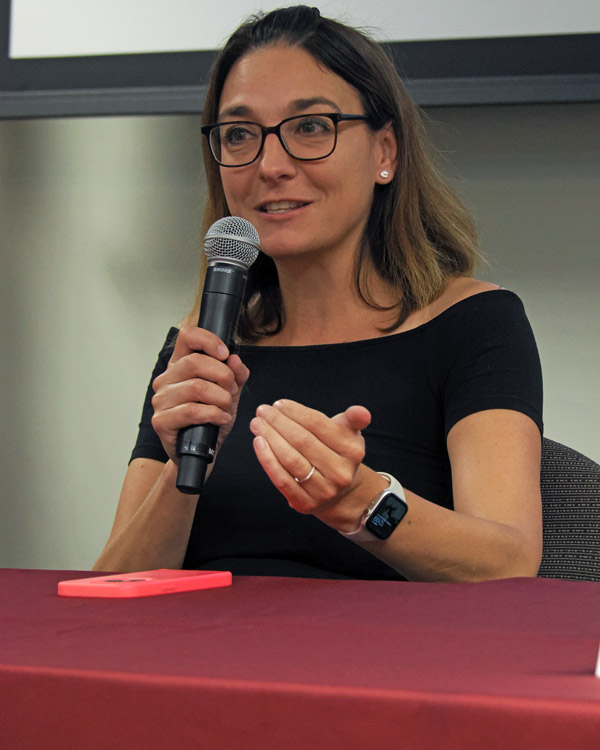
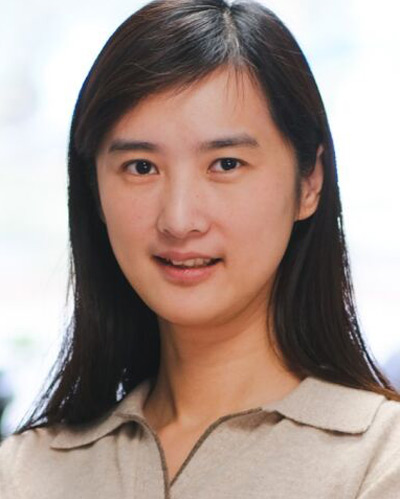
Panelist Xueqin (Sherine) Sun, PhD, is an assistant professor in the Cancer Genome and Epigenetics Program.
“It can be hard to feel less productive as a scientist after having kids,” said Sun. “This is something we each have to navigate and there are no easy answers.”
Audience questions
Yin welcomed audience members to ask the panelists additional questions.
Sacco fielded a question about the balancing act of working long hours for short-term gain versus the increased risk of burnout. She said, “For me, this has really happened in phases. Some parts of certain experiments or application cycles require extra effort, and you have to learn when you can pull back and have a more balanced schedule.”
Kumsta answered a question about unrealistic expectations for postdoctoral fellows. She said, “I encourage every postdoc and principal investigator to have open and honest conversations about expectations for working hours, vacation time and weekend emails, among other topics. That won’t fix everything, but it will prevent a lot of uncertainty and build a foundation for addressing issues.”
The panelists had noted the strong representation of male scientists and staff members in the audience. Sacco responded to a question about what male scientists could do better to improve the environment for women in the field. She said, “We should all recognize our own biases, minimize their impact when making decisions, and be good listeners to other scientists’ needs.”
Gender and academic rank
The event closed with a conversation about gender disparities in academic ranks at research and higher education institutions. The panelists focused on the attrition than can occur after the end of postdoctoral fellowships as a major challenge for retaining women in academic science.
Kumsta explored some potential solutions that funders and institutions could consider. She said, “An extra year of funding for early-career female scientists and an extra year on the tenure clock may help us retain women and support their promotion from junior faculty positions. We also need to find ways to reward the extra administrative service that many female faculty members are asked to give on faculty committees.”
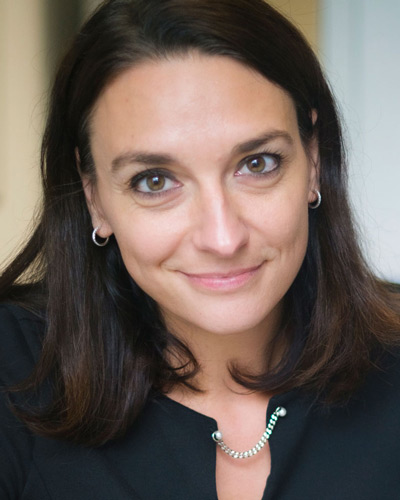
Panelist Caroline Kumsta, PhD, is an assistant professor in the Development, Aging and Regeneration Program and associate dean of Student Affairs of the Graduate School of Biomedical Sciences.
“I think certain things are getting better, but we need to do even more to retain women in the field,” said Sun. “The National Institutes of Health allowing time and budget for childcare costs in training grants was an important step.”
“Today’s event reminds us of the importance of speaking up,” said Sacco. “We can articulate and share our vision for a better tomorrow and work together to achieve it.”
The Women in Science event was hosted by the Education and Training DEI Committee at Sanford Burnham Prebys and supported by the Institute’s Diversity, Equity, Inclusion and Belonging (DEIB) Council and DEIB program manager, Lauren Mitchell.
Institute News
Sanford Burnham Prebys event explores the science behind addiction
Nicholas Cosford, PhD, co-director of the Cancer Molecular Therapeutics Program, presents an overview of the many links between addiction and cancer.
Scientists and clinicians from three local research institutions converged July 31 to discuss new ways to treat multiple addictions at Sanford Burnham Prebys open house
The NCI-designated Cancer Center at Sanford Burnham Prebys welcomed San Diego community members to the institute’s campus on July 31, 2024 for an open house focused on addiction research. The Cancer Center team developed the event in partnership with scientists from Scripps Research and the University of California San Diego School of Medicine.
Ze’ev Ronai, PhD, director of the Sanford Burnham Prebys Cancer Center, formally opened the event and welcomed attendees before introducing David A. Brenner, MD, president and CEO of Sanford Burnham Prebys.
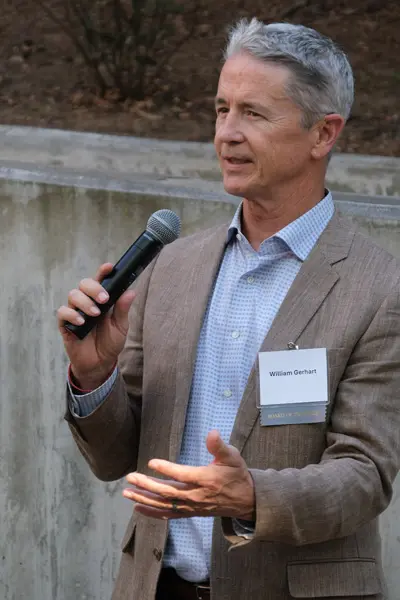
William Gerhart, chair of the Sanford Burnham Prebys board of trustees, delivered welcoming remarks focused on the potential benefits to families of improving the treatment and prevention of addiction and addiction-associated cancers.
“As I have learned more about the research being presented here, I am impressed by just how much of a powerhouse we have on this mesa regarding both cancer and addiction science,” said Brenner.
William Gerhart, chair of the Sanford Burnham Prebys board of trustees; Nicholas Cosford, PhD, co-director of the Cancer Molecular Therapeutics Program; and Michael Jackson, PhD, senior vice president of Drug Discovery and Development at the Conrad Prebys Center for Chemical Genomics (Prebys Center), also provided opening remarks emphasizing the collaborative nature of the featured research as well as the potential benefits to families of improving the treatment and prevention of addiction and addiction-associated cancers.
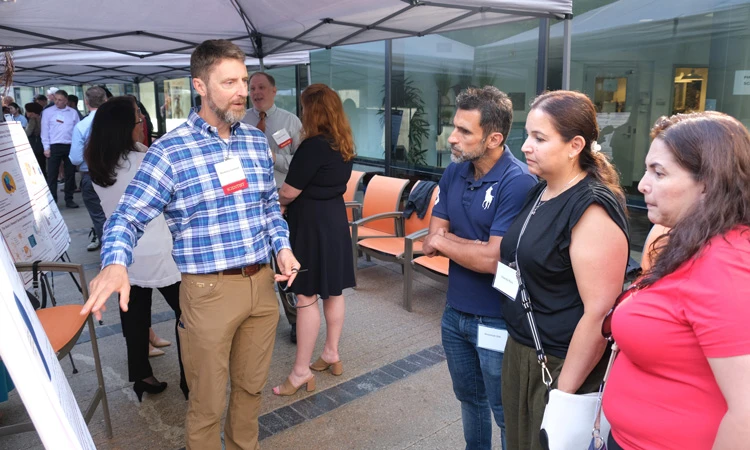
Attendees had the opportunity to learn from and interact with the following scientists at stations featuring posters describing research underway at all three represented institutions:
In addition to his welcoming comments, Cosford also presented an overview of the many links between addiction and cancer.
Douglas Sheffler, PhD, is an associate professor in the Center for Therapeutics Discovery at Sanford Burnham Prebys. Sheffler discussed a drug discovery effort focused on treating nicotine addiction.
Benjamin Mckenna, PhD, is an assistant clinical professor of psychiatry at UC San Diego School of Medicine and staff psychologist at Veterans Affairs San Diego Healthcare System. Mckenna presented on the same drug as Sheffler with an update on phase I clinical trial results regarding safety, optimal dosage and efficacy.
Steven Olson, PhD, executive director of Medicinal Chemistry at the Prebys Center, presented on work being conducted at the center in collaboration with Jackson. Olson described a drug being studied as an alternative to opioids that has shown promising benefits for reducing pain and addiction-related behavior.
Kokila Shankar, PhD, is a postdoctoral associate at Sanford Burnham Prebys working in the Cosford lab. Shankar detailed efforts to find new drugs to treat alcohol use disorder, which is estimated to cause approximately one of every 25 cancer diagnoses.
Bryan Cruz, PhD, is a postdoctoral fellow at Scripps Research working in the lab of Marisa Roberto, PhD, vice chair and Paul and Cleo Schimmel Endowed Chair in the Department of Molecular Medicine. Cruz discussed his research to uncover new ways of treating alcohol use disorder rooted in posttraumatic stress disorder, and thereby reduce cancer cases associated with excessive alcohol consumption.
Valentina Vozella, PhD, is a postdoctoral researcher in the Department of Molecular Medicine at Scripps Research. She also is a member of the Roberto lab. Vozella presented on studies regarding the effect of social isolation on the development of alcohol use disorder during adolescence, as well as on potential methods of treatment and prevention.
Participants were able to tour the Prebys Center, which is the institute’s comprehensive center for drug discovery and chemical biology. Visitors were able to see how the center’s researchers can quickly test the potential effectiveness of hundreds of thousands of compounds to find new prospective treatments. Many scientists at Sanford Burnham Prebys partner with the Prebys Center to conduct drug discovery searches based on new research findings, including several of the event’s poster presenters.
The open house featured a reception with remarks from Robert Anthenelli, MD, a professor in the Department of Psychiatry at UC San Diego School of Medicine. Anthenelli’s research focuses on developing new or improved treatments for cancer-causing tobacco and alcohol use disorders. He shared insights he has gained as a physician-scientist working in this area over the past 30 years.
The reception also included concluding remarks from Helen Eckmann, EdD, an NCI-designated Cancer Center Community Advisory Board member. The board hosts the center’s open house events. Its members strive to bridge the gap between biomedical science and the people who need it most: patients and the families and friends who love and support them.
Scientists and clinicians from three local research institutions converge July 31 to discuss new ways to treat multiple addictions at Sanford Burnham Prebys Open House
The NCI-designated Cancer Center at Sanford Burnham Prebys welcomes San Diego community members to the institute’s campus for an open house focused on addiction research. The Cancer Center team developed the event in partnership with scientists from Scripps Research and the University of California San Diego School of Medicine.
Attendees will meet scientists working to better understand the science behind addiction. Here’s a sneak peek of presenters and topics:
Douglas Sheffler, PhD, is an associate professor in the Center for Therapeutics Discovery at Sanford Burnham Prebys. Sheffler will discuss a drug discovery effort focused on treating nicotine addiction.
Benjamin Mckenna, PhD, is an assistant clinical professor of psychiatry at UC San Diego School of Medicine and staff psychologist at Veterans Affairs San Diego Healthcare System. Mckenna will present on the same drug as Sheffler with an update on phase I clinical trial results regarding safety, optimal dosage and efficacy.
Michael Jackson, PhD, is senior vice president of Drug Discovery and Development at the Sanford Burnham Prebys Conrad Prebys Center for Chemical Genomics and co-director of the Cancer Molecular Therapeutics Program in the institute’s NCI-Designated Cancer Center. Jackson will talk about a drug being studied as an alternative to opioids that has shown promising benefits for reducing pain and addiction-related behavior.
Kokila Shankar, PhD, is a postdoctoral associate at Sanford Burnham Prebys working in the lab of Nicholas Cosford, PhD, co-director of the NCI-Designated Cancer Center’s Cancer Molecular Therapeutics Program. Shankar will detail efforts to find new drugs to treat alcohol use disorder, which is estimated to cause approximately one of every 25 cancer diagnoses.
Bryan Cruz, PhD, is a postdoctoral fellow at Scripps Research working in the lab of Marisa Roberto, PhD, vice chair and Paul and Cleo Schimmel Endowed Chair in the Department of Molecular Medicine. Cruz will discuss his research to uncover new ways of treating alcohol use disorder rooted in posttraumatic stress disorder, and thereby reduce cancer cases associated with excessive alcohol consumption.
Valentina Vozella, PhD, is a postdoctoral researcher in the Department of Molecular Medicine at Scripps Research. She also is a member of the Roberto lab. Vozella will present on studies regarding the effect of social isolation on the development of alcohol use disorder during adolescence, as well as on potential methods of treatment and prevention.
Robert Anthenelli, MD, is a professor in the Department of Psychiatry at UC San Diego School of Medicine. Anthenelli’s research focuses on developing new or improved treatments for cancer-causing tobacco and alcohol use disorders. He will share some of his insights as a physician-scientist working in this area over the past 30 years.
In addition to poster presentations from speakers, guests will have the opportunity to talk with scientists, clinicians and research advocates during an informal evening reception.
The NCI-designated Cancer Center open house events are hosted by the center’s Community Advisory Board. Its members strive to bridge the gap between biomedical science and the people who need it most: patients and the families and friends who love and support them.
Institute News
Pride flag flies proudly at Sanford Burnham Prebys
The Institute marked Pride month by ceremonially raising the Pride flag and discussing progress toward inclusion in the scientific community
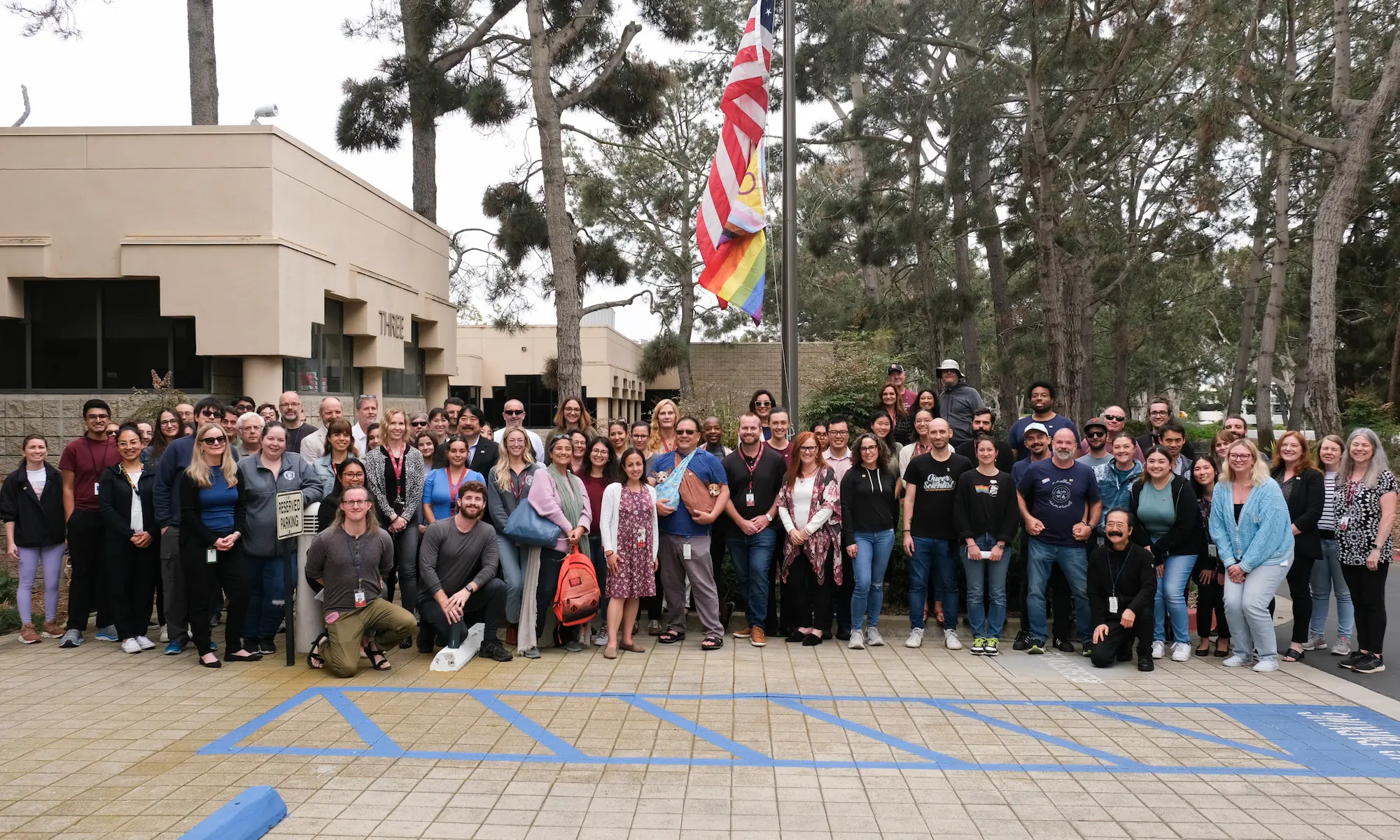
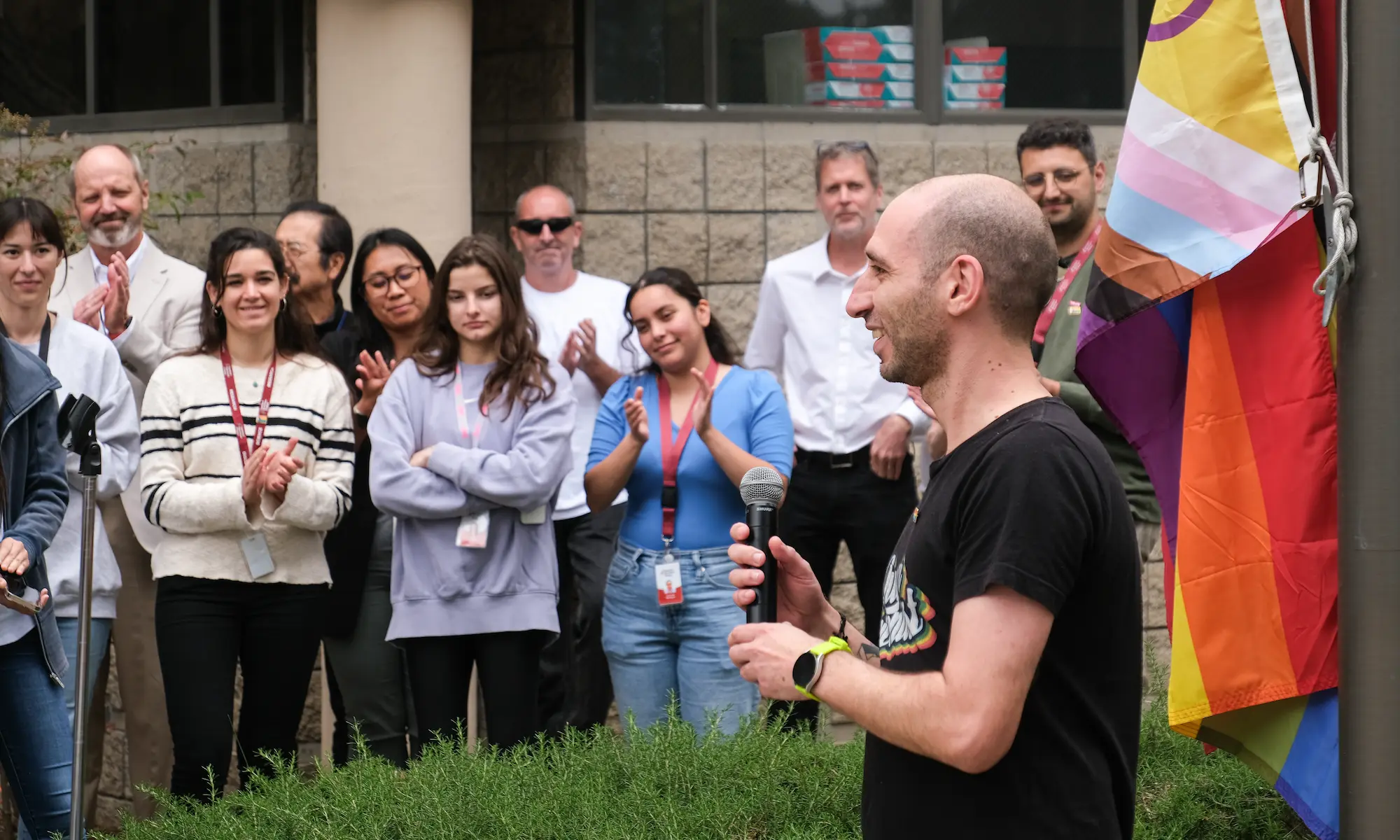
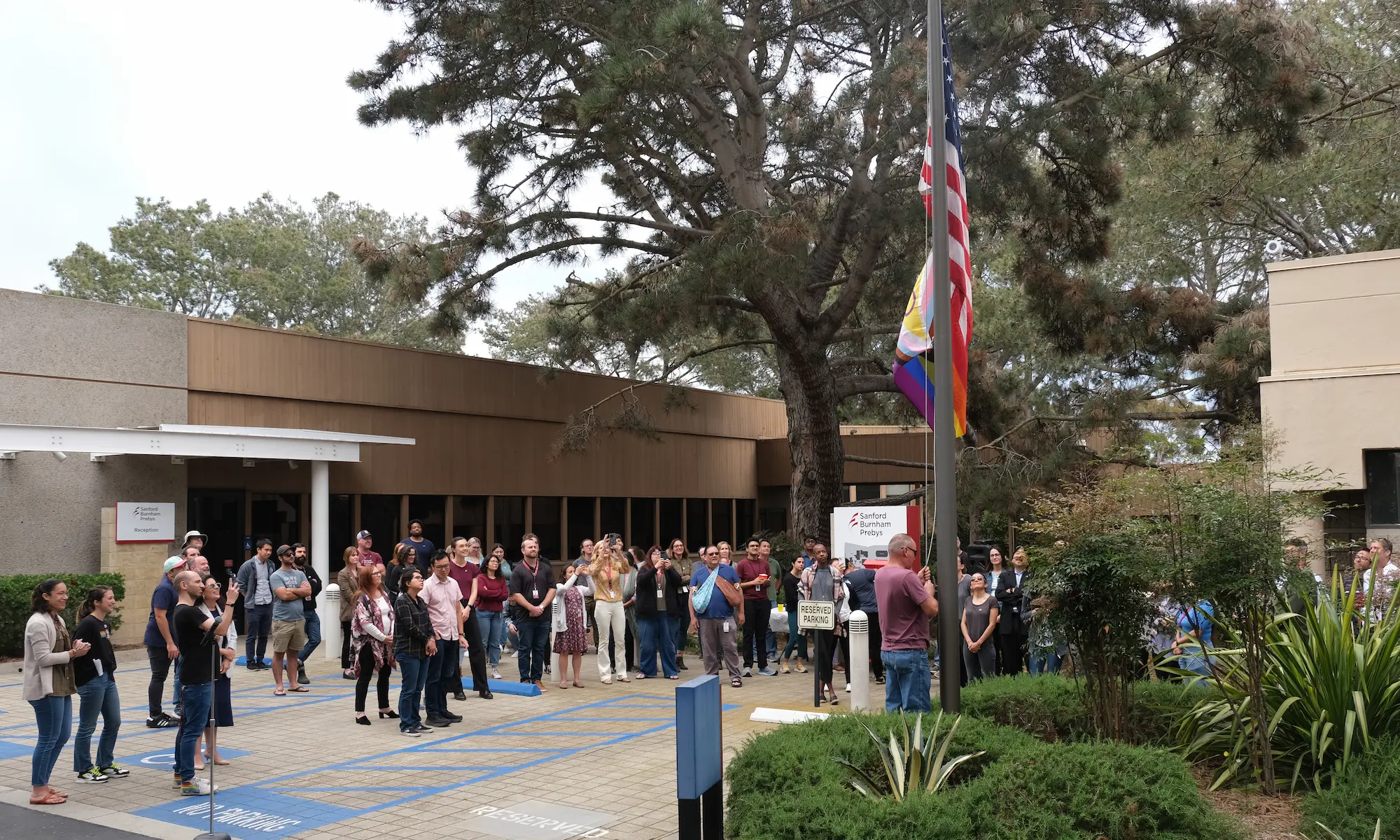
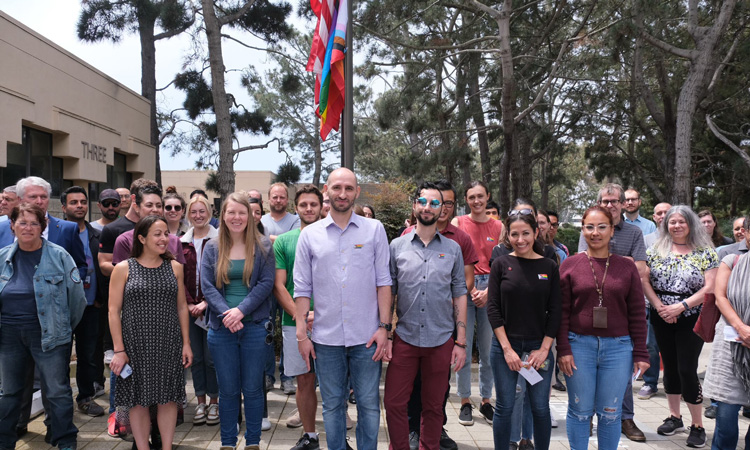
Sanford Burnham Prebys recognized the beginning of Pride month with a Pride flag-raising event on Friday, June 7, 2024. The gathering included an opportunity for speakers in a variety of roles throughout the Institute to share comments on the meaning of the Pride flag in their lives and careers.
David Brenner, MD, president, CEO and Donald Bren Chief Executive Chair at Sanford Burnham Prebys, opened the ceremony, saying, “I’m very proud of everyone for working together to make this a welcoming community.”
Luca Caputo, PhD, postdoctoral associate in the lab of Lorenzo Puri, MD, discussed the mission of the Queer Science Society, which was founded to create a safe space for postdoctoral fellows and other scholars in San Diego. He added, “I’m happy to be here in this inclusive environment.”
Patrick Kearney, PhD, director of medicinal chemistry in the Conrad Prebys Center for Chemical Genomics, added, “After I joined the Institute last year and saw the Pride flag flying for the first time, I was incredibly moved. It was the first time I’d seen this happen in 40 years as a scientist. While it may seem simple, it is far from trivial, and it tells me that things are different here.”
Luca Caputo, PhD, postdoctoral associate in the lab of Lorenzo Puri, MD, discussed the mission of the Queer Science Society, which was founded to create a safe space for postdoctoral fellows and other scholars in San Diego. He added, “I’m happy to be here in this inclusive environment.”
Patrick Kearney, PhD, director of medicinal chemistry in the Conrad Prebys Center for Chemical Genomics, added, “After I joined the Institute last year and saw the Pride flag flying for the first time, I was incredibly moved. It was the first time I’d seen this happen in 40 years as a scientist. While it may seem simple, it is far from trivial, and it tells me that things are different here.”
The Pride flag-raising event was planned by the Institute’s Diversity, Equity, Inclusion and Belonging (DEIB) Council. Lauren Mitchell, MS, program manager for DEIB, expressed gratitude for the meaningful contributions of the volunteers and speakers, as well as the many participants that attended and showed support for DEIB at the Institute.
Designated by the United Nations, the 9thInternational Day of Women and Girls in Science is Sunday, February 11, preceded by two days of meetings, presentations and outreach among global leaders, with a focus on women scientific leadership in sustainable development.
The real work, of course, is what happens afterward. Women continue to be underrepresented in the science, technology, engineering and mathematics (STEM) workforce. In 2021, according to the National Center for Science and Engineering Statistics, 65% of STEM jobs in the United States were held by men, 35% by women. Less than 30% of researchers worldwide are women.
These numbers have long held sway, both in academia and industry. There has been progress, to be sure, but it has been slow and uneven, hindered by stereotypes and biases, a dearth of role models, educational differences and opportunities and sheer inertia. The hurdles to equity and equality are deep and ingrained.
Every female scientist has stories about their own efforts and struggles. We asked scientists at Sanford Burnham Prebys to recount some of theirs, the lessons learned and the challenges yet to be overcome.
A fighting chance
My personal experience can testify to the importance of appreciation of diversity.
As an international scholar, it was not always easy to navigate an entirely new culture. I remember my first few months in America when going to a restaurant felt like a small adventure. Now I look back to those days with fondness and gratitude because my mentor and colleagues showed me what an inclusive community means to a newcomer.
They encouraged my expression, valued my input and always waited with great patience when I needed a second or two to fetch a perfect word for the moment. It was their kindness that helped me through the initial adjustment period.
And then one day, I found the sense of belonging in a roaring ballpark with my lab mates around me, rooting for Giants. I am grateful that I was shown how “diversity” is done because that is exactly how I aspire to build a team in my future lab, a team where uniqueness is not only accepted but even celebrated so everyone can be at ease as themselves and feels free to explore and express no matter where they are from and what they believe.
While it is important to level the playing field for everyone, sometimes it will not suffice for a disadvantaged group until we vigorously advocate for their rights. As a woman scientist, it pains me that I have witnessed over the years so many brilliant young women who had to stop chasing their dreams at one point or another. They let go of their passion and settled for less ambitious career paths for various reasons: lack of mentorship, family responsibilities and even the pressure of conforming to social norms.
I know how hard it is to achieve success in the highly competitive realm of scientific pursuit while managing a functional family because I am too a mother of two young children. Our society asks women to juggle too many balls. It is no wonder that far fewer women reach the promised land of professorship when roughly equal numbers of students of both genders started out on this journey.
I consider it rare fortune that I have been blessed with constant guidance from mentors and unwavering support from family. It will be my mission to pass on this blessing to all the women I have the honor to work with in the future. A fighting chance is all they ask, and I will strive to be the helping hand that delivers that chance.
Mentors make a difference
Even though gender inequities in STEM are slowly improving, we still have a lot of work to do. Several studies have shown that among early career investigators, women experience a one-to-two delay in getting their first grants funded, publish fewer high-impact papers and get credited and cited less frequently for their work, as compared to men. I believe that creating awareness and building a supportive network of mentors and peers is extremely important to navigate and overcome the challenges we face in science.
I have always been fascinated by the complex mechanisms underlying disease, and specifically cancer. I was the first woman in my family to attend university and to pursue a PhD degree in the biomedical sciences.
With few women in leading academic positions that could serve as a role model, I found it difficult to believe that I could someday be successful as a scientist. Fortunately, over the past years I have had the opportunity to work with some incredible female scientists who helped me along the way.
During my master’s program at Utrecht University, I secured an internship in the laboratory of the late-Professor Zena Werb at University of California San Francisco. She had an incredible track record of mentoring early career researchers and was a big advocate for (young) women in science.
For my graduate training, I joined the lab of Professor Karin de Visser at the Netherlands Cancer Institute in Amsterdam. Karin is an incredibly smart and determined principal investigator who taught me to be resilient and persistent, and the importance of always following the data. The mentorship and support of these remarkable women has been instrumental in the decisions I have made to date in my career, and I am grateful for the opportunity to have trained under them.
Kelly Kersten, PhD
Assistant Professor
Cancer Metabolism and Microenvironment Program
We all need some support and encouragement to excel in our scientific journey. It’s never too early to start building your network of mentors, peers and sponsors to support you along the way.
We’re still a minority
During my PhD and postdoctoral training, I have been lucky to have two amazing female scientists as mentors, who made it seem easy to be successful in science. The reality however is that female scientists get less lab space, have a longer path to their first independent research grant and have a more extended review process for their publications than their male peers.
To achieve equitable treatment and full inclusion of women in science, we have to constantly examine and dismantle the barriers that create these disparities. At Sanford Burnham Prebys, we have started to work toward a more welcoming environment for everyone, including women.
The truth is, however, that we’re still a minority here, and we, as women in science, still have to push for fairer policies and to make sure our voices are heard and valued. Personally, I am involved in outreach programs to get young girls excited about science. Seeing their excitement when they learn something new in the lab reminds me why this is so important, and I get excited when I see the next generation of girls who can see themselves as scientists without a second thought.
Caroline Kumsta, PhD
Assistant Professor
Development, Aging and Regeneration Program
Note: On February 14, there will be a roundtable discussion on the topic of women and girls in science from 9:30 a.m. to 10:30 a.m. in Fishman Auditorium. Coffee, pastries and fruit will be served. Click here to RSVP.
Institute News
San Diego Pride is this week. We asked: Why are LGBTQ+ people the “invisible minority” in STEM?
Conversations around diversity and inclusion are abundant in academic institutions, but one group in particular—the LGBTQ+ community—is frequently left out of those conversations.
June is LGBT+ Pride month, but San Diego has made it a local tradition to continue the celebration into July, when the city hosts its annual Pride Festival. This year’s San Diego Pride Festival will be held July 15-16. Pride celebrations around the world give people and institutions alike the opportunity to reflect on the unique struggles of the LGBTQ+ community and consider how we can support these individuals to the benefit of all.
To learn more about the struggles of LGBTQ+ people in the scientific community, we spoke to Sanford Burnham Prebys postdoctoral associate Luca Caputo, PhD Caputo is the cofounder of Queer Science Society San Diego, whose mission is to raise awareness of the concerns of queer scholars in STEM. They are a frequent speaker on LGBTQ+ issues in STEM, most recently at the Fleet Science Center in Balboa Park, where they are included in their New Science exhibition. Caputo is also involved in DEI initiatives here at the Institute, where they helped spearhead our first-ever Pride flag raising last year.
Why is LGBTQ+ considered the “invisible minority” in STEM?
The reason why the LGBTQ+ community is an invisible minority is not because there are no queer scientists or STEM professionals. Rather, it’s because there’s a huge lack of data about queer representation in the scientific community. This community has historically not asked for this data, so queer people are not represented in reports and statistics about minority representation. This is not just a data problem—it can prevent LGBTQ+ people from feeling like they belong in STEM.
Have you personally experienced this?
The lack of representation of queer scientists during my earlier studies had me questioning my belonging in STEM and academia, and the lack of data and discourse around these issues only made it worse. I was lucky and privileged to later encounter great mentors who made me feel welcome and appreciated for everything I am, not only for my pipetting skills. However, not everybody is so lucky.
What needs to happen to correct this problem?
Institutions that track demographic data for scientists and STEM students need to be more inclusive in their methods. This is slowly starting to change—one great example is that the National Science Foundation is finally including questions on sexuality, orientation and gender identity in its Survey of Earned Doctorates, but this is just one small step forward.
There are still major societal problems affecting queer people in academia, such as unfair U.S. immigration laws that don’t acknowledge same-sex partnerships as marriages for visa purposes. These laws keep talent away from the U.S. or pose an unfair economic burden to same-sex couples, as they will need to travel abroad and navigate complex legislation to get married and be recognized.
In the meantime, what can non-queer allies do to support the LGBTQ+ community in STEM?
One important thing is being responsive and listening to what members of the community have to say. An easy example is to normalize and respect the sharing of pronouns in email signatures and in Zoom meetings. This will help create a welcoming atmosphere and an environment that will allow LGBTQ+ individuals to safely come out and be confident and comfortable.
On a more institutional level, many steps can be taken to make workplaces more welcoming, such as having all-gender-inclusive restrooms and honoring Pride months with concrete gestures, like holding Pride events. It’s also important not to wait for members of the LGBTQ+ community to ask for these gestures. These are all approaches that can be translated to being allies to any underrepresented group in STEM, not just the LGBTQ+ community.
How does being more inclusive benefit the scientific community as a whole?
It benefits the community in so many ways. For example, the amount of talent in the scientific community will increase exponentially. Having different point of views will increase our ability to find new cures for diseases and solutions to other real-world problems. Additionally, we have an ethical obligation to make the community inclusive and representative of the whole population, because most basic research is paid for by the entire public via taxes and charitable donations. Finally, increasing inclusivity will also improve the relationship between the scientific community and the general population, as marginalized communities will be able to see their needs and perspectives represented.
Institute News
Padres Pedal the Cause 2023: Team Sanford Burnham Prebys raises $50,000 for cancer research
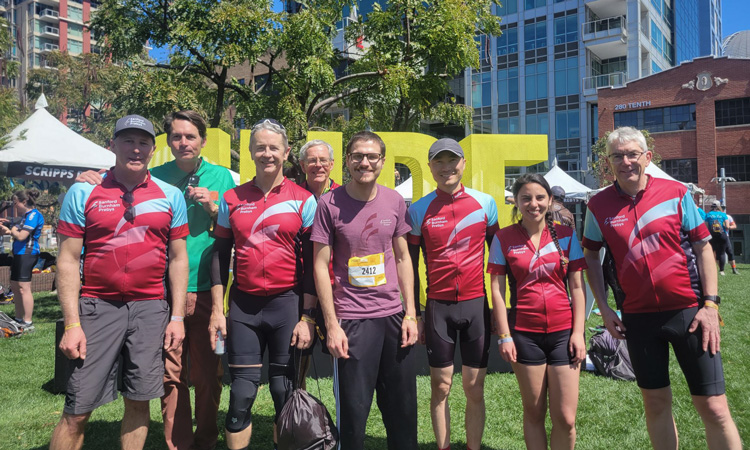
Team Sanford Burnham Prebys hit the pavement this weekend for Padres Pedal the Cause, an annual fundraising event that invites participants to cycle, spin, run or walk to support local cancer research. The funds raised through each year’s race go to seed grants that fund collaborative cancer research projects in San Diego.
“Padres Pedal the Cause is a chance for the cancer community to come together and remember why collaboration is so important in cancer research,” says bike rider Ze’ev Ronai, PhD, director of the Institute’s NCI-designated Cancer Center. “Virtually all of us know somebody who has been impacted by cancer, including me. This is my fifth Padres Pedal the Cause, and every year I’m so proud to be part of our Institute’s team and help contribute to cancer research outside the lab.”
This year’s team was formidable: 56 employees and friends of the Institute signed up to either ride, run, or walk in the event. Team members came from all areas of the Institute, including faculty, staff scientists, administrative staff, postdocs, and even current and former members of the Institute’s Board of Trustees, such as Bill Gerhart and Steve Williams. Other notable names on this year’s team included longtime participants such as Professor Nicholas Cosford, PhD and James Short, associate director of Digital Communications and Design.
“I’ve been with Padres Pedal the Cause since the very beginning, and it’s one of the highlights of my year,” says Short, who has helped lead the Institute’s team for the last 10 years.
The team also included some new members this year, such as Assistant Professor Lukas Chavez, PhD, and Director of Experimental Pharmacology Raghu Ramachandra, PhD, who both joined the Institute late last year.
While Institute employees were well represented on this year’s team, there were also current some of the team’s top fundraisers had a different reason to join team Sanford Burnham Prebys. Kim McKewon is a longtime donor to the Institute and has been participating in Padres Pedal the Cause since its inception in 2013. This year she raised more than $6,000; and to date, she has raised more than $30,000.
“I pedal for my husband, Ray, who is in remission from leukemia because of science and research, the very focus of the grants that are given from the fundraising that comes out of this event,” she writes in her website bio.
It’s not too late to support Team Sanford Burnham Prebys To date, team Sanford Burnham Prebys has raised more than $300,000 through Padres Pedal the Cause since its inception in 2013. And while this year’s ride is over, there is always time to support local cancer research. The fundraising deadline for this year’s Padre’s Pedal the Cause is April 18, and 100% of every dollar raised goes toward lifesaving cancer research. Help team Sanford Burnham Prebys create a world without cancer.
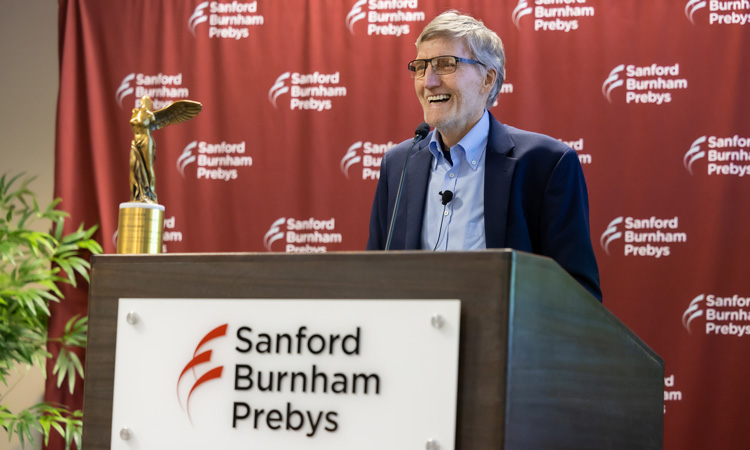
Ruoslahti was also among the first scientists to join the Institute in the late 1970s, where he completed this award-winning research. To celebrate Ruoslahti’s career and accomplishments, Sanford Burnham Prebys hosted a special lecture with the esteemed scientist as well as a celebratory reception afterward.
“Erkki’s illustrious career is one that keeps us all inspired—me, especially, as I follow in his footsteps in leading this Institute,” says David A. Brenner, MD, president and CEO of Sanford Burnham Prebys. “His Lasker Award win is so very much deserved. Not only does it recognize his outstanding influence in the field, but it also elevates the status of our Institute in the research community.”
Ruoslahti, who shares the award with Richard O. Hynes from the Massachusetts Institute of Technology, and Timothy A. Springer from Boston Children’s Hospital and Harvard Medical School, began his presentation with the research that led to his discovery of the integrins—proteins found on the surface of cells that helps them attach to, and communicate with, nearby cells and the extracellular matrix.
Ruoslahti’s road to the discovery of integrins began at the University of Helsinki, where, along with his colleagues, he discovered fibronectin, a protein that helps surround, support and give structure to cells and tissues in the body. However, the biggest breakthroughs were yet to come.
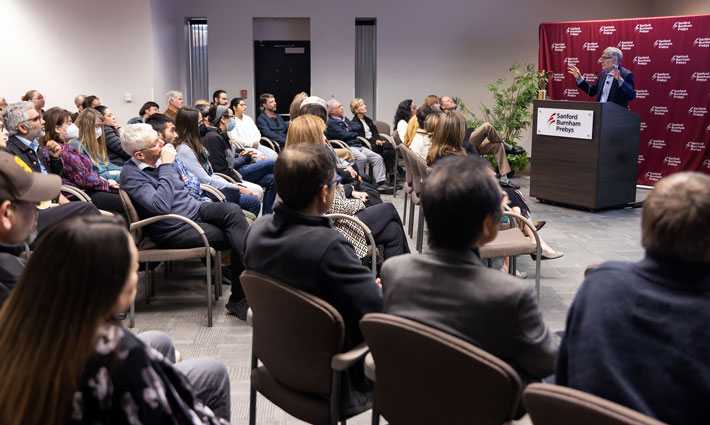
Ruoslahti gave his presentation to a packed house in Fishman Auditorium
“My research on fibronectin and the subsequent discovery of the integrins really got going in my first years at Sanford Burnham Prebys,” says Ruoslahti, who first joined the Institute in 1979, when it was known as the La Jolla Cancer Research Foundation.
The Ruoslahti research team discovered that a simple sequence of three amino acids, called RGD, within fibronectin, attaches directly to cells. They were then able to synthesize RGD and use it as a tool to discover the cell-surface receptors today known as the integrins. This seemingly small discovery created an entirely new subdiscipline of molecular biology.
“The Lasker Award is given for a fundamental discovery that opens up a new area of biomedical science. It is America’s top biomedical research award and is often referred to as ‘America’s Nobel,’” says Brenner. “This is a profound honor, one that is only given to those who have made the greatest impact in our field.”
In 1989, Ruoslahti became president and CEO of the Institute, a position he held until returning to full-time research in 2002. He became a Distinguished Professor Emeritus at Sanford Burnham Prebys in 2020. Ruoslahti has previously received the Japan Prize, the Gairdner Foundation International Award, the G.H.A. Clowes Memorial Award, and the Robert J. and Claire Pasarow Foundation Medical Research Award. He is also a Knight of the Order of the White Rose of Finland, a Commander of the Order of the Lion of Finland and is among the most cited scientists in the world.