Aging research is always timely, and here’s a date: On March 6, the San Diego Nathan Shock Center, a consortium of Sanford Burnham Prebys, Salk and UC San Diego, will hold its second annual Symposium on the Heterogeneity of Aging at the Salk Institute.
The day-long, hybrid program will include scientific presentations from a diverse group of researchers focused on the biology and secrets of aging, including Caroline Kumsta, PhD, co-author of a recently published paper that revealed possible novel functions for various autophagy genes, which may control different forms of disposal including misfolded proteins — and ultimately affect aging.
For more information about the symposium and to register, click here.
Institute News
Speaking of International Day of Women and Girls in Science
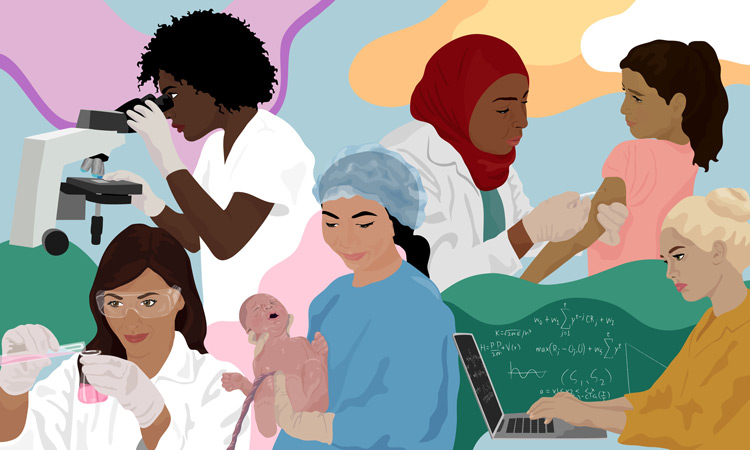
Designated by the United Nations, the 9thInternational Day of Women and Girls in Science is Sunday, February 11, preceded by two days of meetings, presentations and outreach among global leaders, with a focus on women scientific leadership in sustainable development.
The real work, of course, is what happens afterward. Women continue to be underrepresented in the science, technology, engineering and mathematics (STEM) workforce. In 2021, according to the National Center for Science and Engineering Statistics, 65% of STEM jobs in the United States were held by men, 35% by women. Less than 30% of researchers worldwide are women.
These numbers have long held sway, both in academia and industry. There has been progress, to be sure, but it has been slow and uneven, hindered by stereotypes and biases, a dearth of role models, educational differences and opportunities and sheer inertia. The hurdles to equity and equality are deep and ingrained.
Every female scientist has stories about their own efforts and struggles. We asked scientists at Sanford Burnham Prebys to recount some of theirs, the lessons learned and the challenges yet to be overcome.
A fighting chance
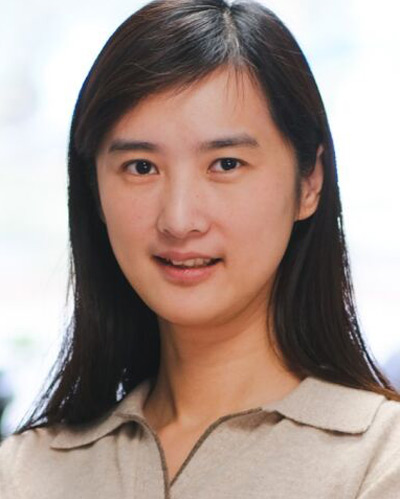
My personal experience can testify to the importance of appreciation of diversity.
As an international scholar, it was not always easy to navigate an entirely new culture. I remember my first few months in America when going to a restaurant felt like a small adventure. Now I look back to those days with fondness and gratitude because my mentor and colleagues showed me what an inclusive community means to a newcomer.
They encouraged my expression, valued my input and always waited with great patience when I needed a second or two to fetch a perfect word for the moment. It was their kindness that helped me through the initial adjustment period.
And then one day, I found the sense of belonging in a roaring ballpark with my lab mates around me, rooting for Giants. I am grateful that I was shown how “diversity” is done because that is exactly how I aspire to build a team in my future lab, a team where uniqueness is not only accepted but even celebrated so everyone can be at ease as themselves and feels free to explore and express no matter where they are from and what they believe.
While it is important to level the playing field for everyone, sometimes it will not suffice for a disadvantaged group until we vigorously advocate for their rights. As a woman scientist, it pains me that I have witnessed over the years so many brilliant young women who had to stop chasing their dreams at one point or another. They let go of their passion and settled for less ambitious career paths for various reasons: lack of mentorship, family responsibilities and even the pressure of conforming to social norms.
I know how hard it is to achieve success in the highly competitive realm of scientific pursuit while managing a functional family because I am too a mother of two young children. Our society asks women to juggle too many balls. It is no wonder that far fewer women reach the promised land of professorship when roughly equal numbers of students of both genders started out on this journey.
I consider it rare fortune that I have been blessed with constant guidance from mentors and unwavering support from family. It will be my mission to pass on this blessing to all the women I have the honor to work with in the future. A fighting chance is all they ask, and I will strive to be the helping hand that delivers that chance.
Mentors make a difference
Even though gender inequities in STEM are slowly improving, we still have a lot of work to do. Several studies have shown that among early career investigators, women experience a one-to-two delay in getting their first grants funded, publish fewer high-impact papers and get credited and cited less frequently for their work, as compared to men. I believe that creating awareness and building a supportive network of mentors and peers is extremely important to navigate and overcome the challenges we face in science.
I have always been fascinated by the complex mechanisms underlying disease, and specifically cancer. I was the first woman in my family to attend university and to pursue a PhD degree in the biomedical sciences.
With few women in leading academic positions that could serve as a role model, I found it difficult to believe that I could someday be successful as a scientist. Fortunately, over the past years I have had the opportunity to work with some incredible female scientists who helped me along the way.
During my master’s program at Utrecht University, I secured an internship in the laboratory of the late-Professor Zena Werb at University of California San Francisco. She had an incredible track record of mentoring early career researchers and was a big advocate for (young) women in science.
For my graduate training, I joined the lab of Professor Karin de Visser at the Netherlands Cancer Institute in Amsterdam. Karin is an incredibly smart and determined principal investigator who taught me to be resilient and persistent, and the importance of always following the data. The mentorship and support of these remarkable women has been instrumental in the decisions I have made to date in my career, and I am grateful for the opportunity to have trained under them.
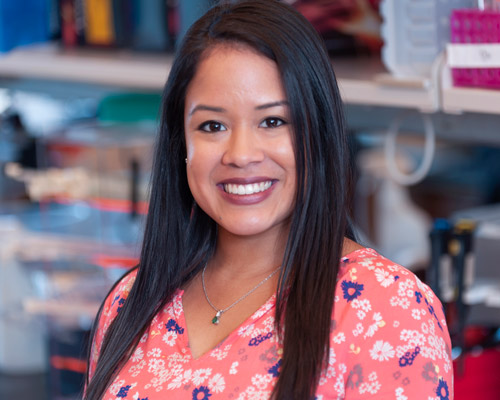
Kelly Kersten, PhD
Assistant Professor
Cancer Metabolism and Microenvironment Program
We all need some support and encouragement to excel in our scientific journey. It’s never too early to start building your network of mentors, peers and sponsors to support you along the way.
We’re still a minority
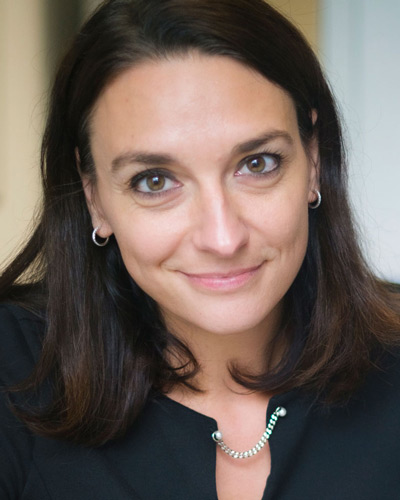
During my PhD and postdoctoral training, I have been lucky to have two amazing female scientists as mentors, who made it seem easy to be successful in science. The reality however is that female scientists get less lab space, have a longer path to their first independent research grant and have a more extended review process for their publications than their male peers.
To achieve equitable treatment and full inclusion of women in science, we have to constantly examine and dismantle the barriers that create these disparities. At Sanford Burnham Prebys, we have started to work toward a more welcoming environment for everyone, including women.
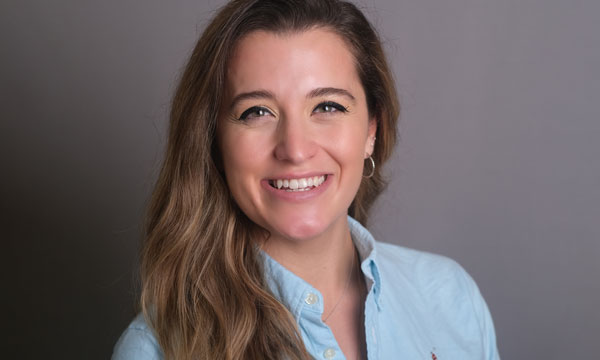
The truth is, however, that we’re still a minority here, and we, as women in science, still have to push for fairer policies and to make sure our voices are heard and valued. Personally, I am involved in outreach programs to get young girls excited about science. Seeing their excitement when they learn something new in the lab reminds me why this is so important, and I get excited when I see the next generation of girls who can see themselves as scientists without a second thought.
Caroline Kumsta, PhD
Assistant Professor
Development, Aging and Regeneration Program
Note: On February 14, there will be a roundtable discussion on the topic of women and girls in science from 9:30 a.m. to 10:30 a.m. in Fishman Auditorium. Coffee, pastries and fruit will be served. Click here to RSVP.
Sanford Burnham Prebys’ latest gala celebrated an old, dear friend, a brand-new vision and a crowd in fab form.
The event began with an evening filled with gratitude, recognition and, well, a look to the future.
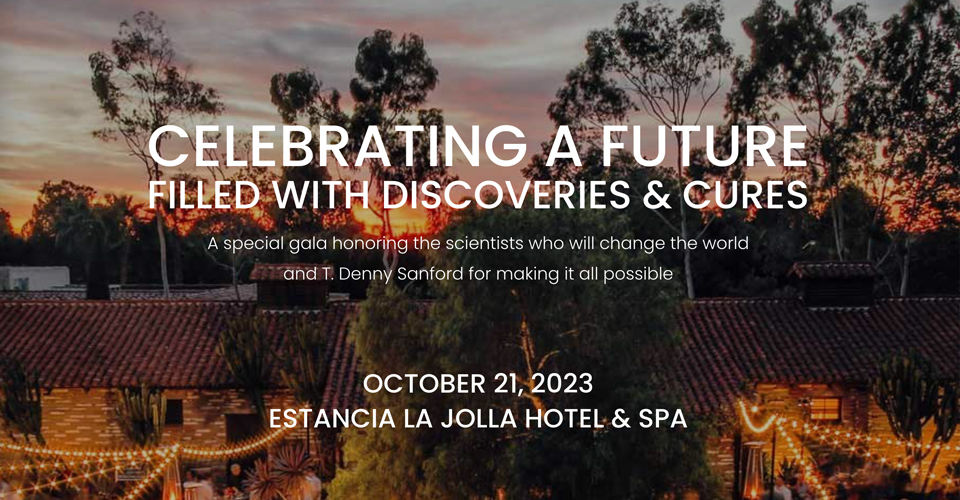
On Saturday night, more than 280 friends, faculty and supporters of Sanford Burnham Prebys gathered at the Estancia La Jolla Hotel & Spa to celebrate the event’s theme: “A Future Filled with Discoveries and Cures.”
But more specifically, attendees paid homage to two men: philanthropist T. Denny Sanford, whose long and enduring support has helped shape and sustain Sanford Burnham Prebys; and David Brenner, MD, the institute’s (newish) president and CEO, who is using Sanford’s most recent gift to implement a bold, new strategic plan.
“Denny has always been a friend, guide and mentor,” said Brenner. “He has made much of what I do—what we will do together—possible.”
It was an evocative evening, with sartorially splendid guests arriving to a scene best described as a 1960s-era “lavish London lounge,” featuring vibrant colors and rich materials, roaming magicians; and a strolling trio of trumpet, trombone and tambourine players.
The festivities formally opened with welcoming remarks from Honorary Trustee Malin Burnham, who noted that “the Institute is at a dramatic time and place—with new faces, a new vision and an old friend.”
Burnham, who has served on the Board since 1982, noted that Sanford, who could not attend the event, was watching a live stream of the event from his home in South Dakota. “He can see and hear us,” Burnham said, waving.
Following dinner, Bill Gerhart, the current chair of the Sanford Burnham Prebys Board of Trustees, stepped up to acknowledge Sanford’s long history of support to the Institute and all of the donors, supporters and staff in the room who “make things happen”; and to introduce Brenner as “a guy who really can make things happen.”
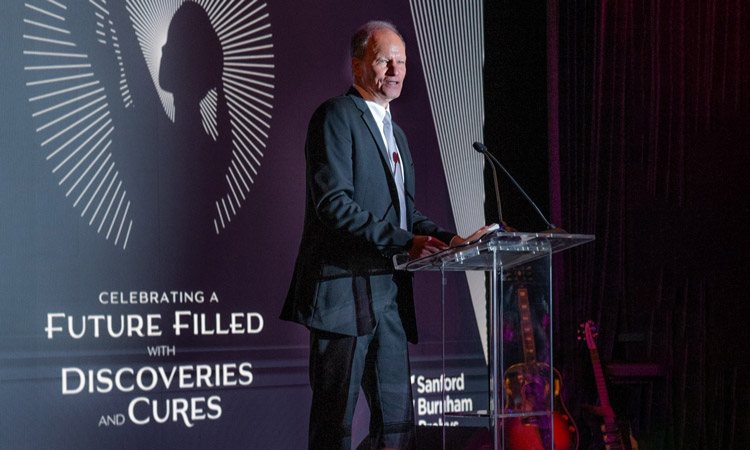
Brenner, who also holds the Donald Bren Chief Executive Chair, spoke eloquently about Sanford before briefly detailing strategic plans for the Institute, one intended to put Sanford Burnham Prebys at the forefront of the current biomedical research revolution.
“Here’s my elevator speech,” Brenner said, inviting attendees to follow along by reading a program insert.
Our Mission
We translate science into health.
Biomedical research is undergoing a revolution, driven by big data, artificial intelligence and other emerging technologies.
We are uniquely positioned to lead because…
We study the toughest diseases: cancer, heart, mind and metabolic. We are forward-looking, unafraid of change or challenge. We are collaborative, flexible, multi-disciplinary and team-focused. We embrace data science. We promote entrepreneurship. We are central to a vibrant, local biomedical community.
A key part of the strategic plan, Brenner said, is embodied in the new cadre of young scientists recently recruited to Sanford Burnham Prebys from “some of the best labs at some of the best institutions in the country.”
Their recruitment (and new hires to follow) are the benefit of a $70 million gift from Sanford to create up to 20 new faculty positions in the next few years in diverse research areas including cancer, neurodegeneration and computational biology.
Four of the six new scientists were in attendance: Sanju Sinha, PhD, from the National Cancer Institute; Sanjeev Ranade, PhD, from Gladstone Institutes; Kelly Kersten, PhD, from UC San Francisco; and Xiao Tian, PhD, from Harvard Medical School.
Sinha joined the Institute in June. Kevin Tharp, PhD, from UCSF, arrives in November. The other four researchers, including Shengjie Feng, PhD, from the Howard Hughes Medical Institute and UCSF, officially join Sanford Burnham Prebys in January 2024.
Brenner then introduced a special four-minute video: a visual thank-you to Sanford and a visionary peek at the Institute’s next steps and aspirations. The video ended with a standing ovation.
With the lights still dim, the entertainment portion of the evening began: a live reimagining of John Lennon’s beloved 1971 song “Imagine,” dedicated to Sanford and the new strategic plan.
“Imagine there’s no illness It’s easy if we try…”
“You may say Denny’s a dreamer But he’s not the only one. We hope someday you’ll join us And the world can be as one.”
Then it was the Beatles’ tribute band “Abbey Road Show,“ a 70-minute set of music and narration chronicling the Fab Four, followed by nightcaps, conversation and thoughts about the next day—when the future begins.
Note: For your own free, handy, wallet-sized mission card or more information about how you can support Sanford Burnham Prebys, please contact the Philanthropy team.
Institute News
Scientific leaders of tomorrow present at 2023 Annual Trainee Symposium
An accomplished group of early-career researchers including postdoctoral scholars, graduate students and staff scientists showcased their work at Sanford Burnham Prebys’ 22nd Annual Trainee Research Symposium on Thursday, September 21st.
After introductory remarks by Sanford Burnham Prebys Professor Guy Salveson, PhD, former dean of the Graduate School of Biomedical Sciences, the scientists gave 20-minute podium presentations about their research, which were judged by a panel of Sanford Burnham Prebys faculty and staff.
After the first session of presentations, a keynote speech for the symposium was given by UC San Diego Professor Gene Yeo, PhD professor at UC San Diego titled, “Challenges and opportunities in RNA biology for understanding and treating human diseases.” Dr. Yeo is a leader in developing technology and algorithms to explore how RNA-binding proteins influence RNA processing and how dysfunction is associated with human disease.
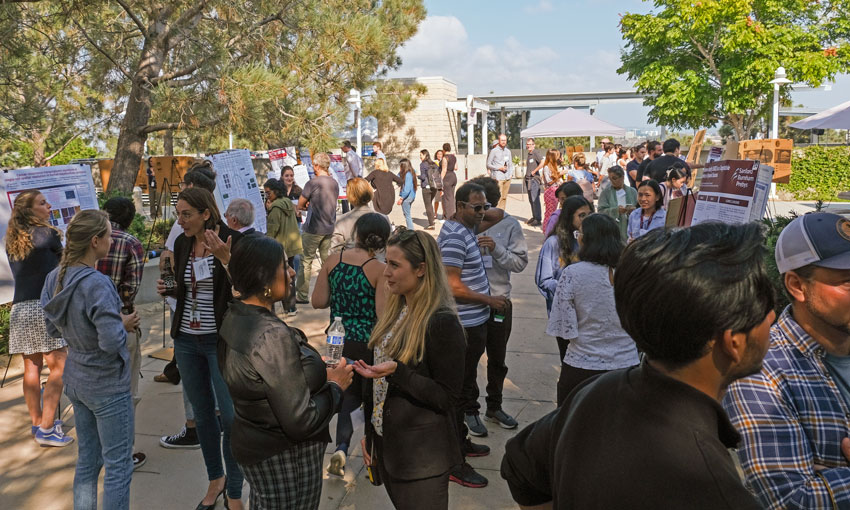
Following closing remarks from Sanford Burnham Prebys CEO David A. Brenner, MD, a poster session was held where more than 25 early-career scientists were given the chance to present their work.
A panel of judges selected the poster of Cynthia Lebeaupin, PhD (Kaufman Lab) for the top prize. Dr. Lebeaupin’s research focuses on how fatty liver disease—an increasingly prevalent health condition—leads to liver cancer.
Winner of the judges’ selection for “Best Podium Talk” was awarded to Michaela Romero for her presentation, “Novel role of proteoglycan sulfation as a barrier to direct cardiac reprogramming.”
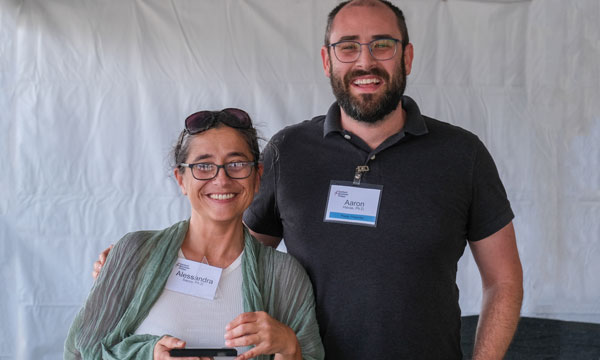
The event also featured the presentation of Sanford Burnham Prebys’ Mentor of the Year Award to Alessandra Sacco, PhD, who was recently named the new dean of the graduate school.
Congratulations to all the participants in this year’s Symposium, and a special thank you to the staff at the Office of Education, Training, & International Services (OETIS) for organizing the event.
Institute News
2023 Fishman Fund Award ceremony celebrates postdoctoral scholars
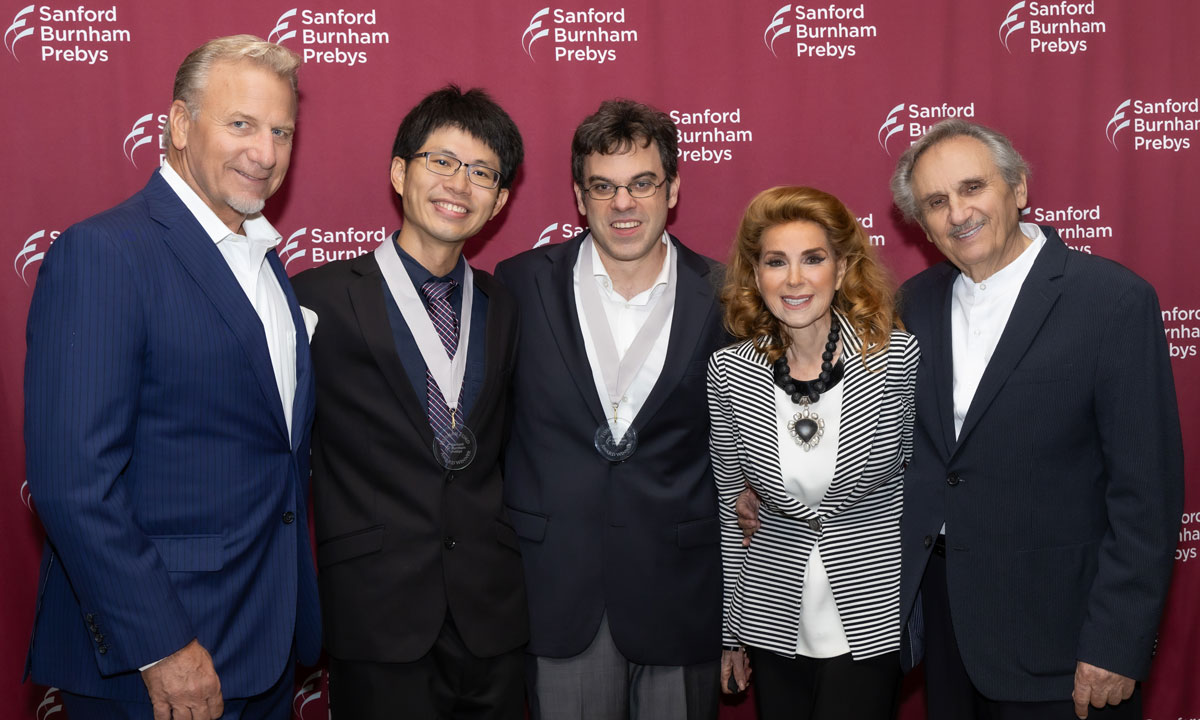
Three talented early-career researchers were presented with prestigious Fishman Fund Awards at the 22nd annual ceremony on September 20.
More than 100 generous benefactors, past award winners, and family and friends joined the celebration held at the Sanford Consortium.
Fishman Fund co-founder Reena Horowitz greeted the audience and shared how she, along with Mary Bradley, established the Fishman Fund Awards in 2001 to honor Dr. William and Lillian Fishman, founders of Sanford Burnham Prebys.
The Fishmans were committed to fostering the careers of young scientists. The award ceremony honors our founders’ dedication to furthering the careers of promising scientists by gathering each autumn to celebrate exceptional postdocs.
Before the awards were presented to the winners, David Brenner, MD, CEO of Sanford Burnham Prebys, described how important postdocs are to scientific discovery and why investing in their careers is a vital step toward improving human health.
“The postdoc experience is important, as it provides more training, experience and skills, before entering a more permanent science career,” said Brenner. “Postdocs represent the next generation of imagination and innovation, which much be recognized, encouraged and emboldened.”
Meet this year’s Fishman Fund Award winners
The Reena Horowitz & Mary Bradley Fishman Fund Founders Prize Cheng-Ju Kuo, PhD, a postdoctoral researcher in the lab of Dr. Caroline Kumsta, is studying the biology of aging. Dr. Kuo is unraveling the molecular mechanisms linked to a cellular recycling process that declines with age. His findings could open up new possibilities to treat age-released diseases. Dr. Kuo’s goal is to establish his own laboratory where he will study aging and train the next generation of scientists.
Jeanne Jones and Kathryn Fishback Fishman Fund Prize Alicia Llorente, PhD, a postdoctoral associate in the lab of Dr. Brooke Emerling, is investigating how breast cancer cells become resistant to therapy. Dr. Llorente combines her expertise in lipid kinases with cancer biology to open possibilities for novel therapeutics for therapy-resistant breast cancer. Her career goal is to combine research with teaching by obtaining a faculty position at a university.
Lenka Finci and Erna Viterbi Fishman Fund Prize Theo Tzaridis, MD, is a postdoctoral associate in the lab of Dr. Peter Adams, where he focuses on aggressive brain tumors. His research led to the identification of a key checkpoint molecule widely expressed in brain tumors, which is a significant step toward improving immunotherapy as a treatment for brain tumors. Dr. Tzaridis plans to become a leader in translating research findings into clinical trials.
Fishman Fund winners undergo a rigorous selection process that includes a personal interview and a presentation to the selection committee. All winners receive a $10,000 career development award that can be used to attend workshops, network and travel to national and international conferences to learn about the latest developments in their research fields.
A special thank-you to the Fishman Fund donors who make these awards possible.
Institute News
Back by popular demand: The Rising Stars Symposium at Sanford Burnham Prebys
The annual event aims to foster greater diversity in biomedical research and shine a spotlight on the next generation of scientific leaders.
Sanford Burnham Prebys recently hosted its second annual Rising Stars Symposium, an event that showcases the biomedical research of exceptional postdoctoral and junior faculty candidates from across the country.
“This was such a valuable learning experience for me,” says Rising Star Laura Menocal, currently a PhD candidate at Weill Cornell Graduate School of Biomedical Sciences. “Participating in the Rising Stars Symposium gave me an important opportunity not only to share my own scientific accomplishments, but also to network and connect with other scientists who share the same passions at an institution that actively fosters inclusivity.”
The 12 Rising Stars were invited, all expenses paid, to the Institute to present their research, network and learn more about postdoctoral and junior faculty opportunities there.
“This year’s Stars shone bright with their promise and dedication to science,” says Angelica Rocha, PhD, diversity officer, head of the DEI Council at Sanford Burnham Prebys and one of the key organizers of the Symposium. “Their work could lead to the scientific breakthroughs that change the way we view and treat disease. They are at a pivotal stage in their careers, and we would be thrilled if they made our Institute their new home.”
The event was hosted by the NCI-designated Cancer Center’s Diversity, Equity and Inclusion (DEI) Team and the Institute’s DEI Recruiting Committee, who strive to create an inclusive workforce through equitable hiring, recruitment, and retention practices.
Laura Menocal, PhD candidate, Weill Cornell Graduate School of Biomedical Sciences
“Many organizations use diversity and inclusion as buzzwords without taking any concrete steps to actually create inclusive systems and environments,” says Menocal. “Sanford Burnham Prebys is breaking this mold by hosting the Rising Stars Symposium, and I am so proud to have been able to participate.”
After a brief introduction from President and CEO David Brenner, MD, UC San Diego professor JoAnn Trejo, PhD, opened the day of presentations with a keynote address discussing her research on cellular signaling and her experience as a first-generation college student. She also spoke about her years of experience promoting diversity in the biomedical scientists and mentoring early-career scientists.
“I didn’t grow up in a family of scientists. I actually grew up in a family of migrant farmworkers,” said Trejo during her talk. “I had no immediate role models and no one to guide me into what I was going to do. It was mentors who helped me get there—crossing paths with the right people, making connections, and getting good advice and guidance.”
In addition to presenting their work, the Stars were the guests of honor at an afternoon reception celebrating diversity in science. They also participated in professional development workshops, toured the laboratories and core facilities of the Institute, and met with faculty to learn more about career opportunities.
Institute News
Where science meets patients: Sanford Children’s Research Center hosts inaugural symposium
The event celebrated 16 years of progress at the Center and connected scientists with the people most impacted by their work.
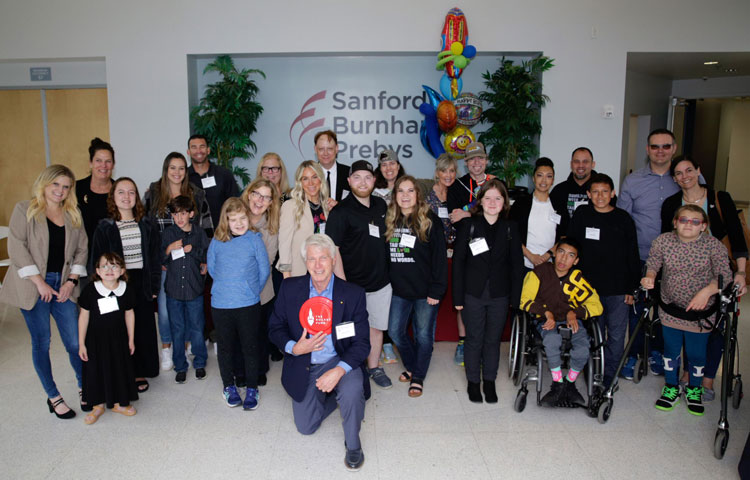
The Sanford Children’s Health Research Center at Sanford Burnham Prebys recently hosted its first-ever Children’s Health Research Symposium, which brought scientists and families together to learn about the latest research tackling childhood diseases.
“We’re all here because we want to improve the health of children,” said President and CEO David A. Brenner, MD, during his opening comments. “But this event also shows the amazing amount of collaboration and collegiality across San Diego, because we have all types of people together from different backgrounds who want to develop therapies and cures for children affected by disease.”
The Sanford Children’s Health Research Center was established in 2008 with the help of a generous gift from Institute namesake T. Denny Sanford. Since then, the Center has been a world leader in children’s health research.
“T. Denny Sanford made an investment in children’s health 15 years ago, and I think that investment has paid off pretty well so far,” said Center director Hudson Freeze, PhD, in his introduction to the first scientific session. Freeze is among the world’s leading experts on congenital disorders of glycosylation (CDG), a rare group of genetic disorders that can cause serious, sometimes fatal, malfunctions of different organs and systems in the body.
“We’ve published over 600 scientific papers, and about half of those are translational studies, which means they’re helping turn scientific discoveries into real treatments for patients,” adds Freeze.
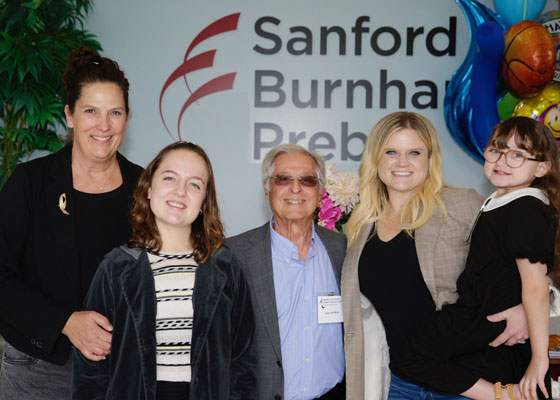
Professor Hudson Freeze with the Omler family
The day included presentations from researchers at Sanford Burnham Prebys, as well as from other research organizations studying childhood diseases. However, the highlight of the event was the afternoon reception, in which scientists had the opportunity to mingle and share a meal with families affected by rare childhood diseases.
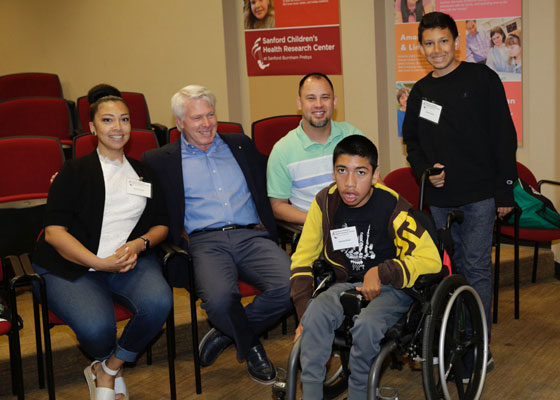
Professor José Luis Millán (center) with the Fischer family (left) and the Britt family (right)
Each researcher briefly introduced the family affected by the illness the scientist studies. This list included many longtime friends of the Institute, such as Damian Omler, who lives with a rare form of CDG; and Morgan Fischer, who was born with soft bone disease. Today, thanks to the help of a drug developed based on the research of Institute professor José Luis Millán, PhD, Morgan is a thriving teenager. This drug is also helping other children living with soft bone disease, including 10-year-old Aubrey Britt, who was in attendance with her family as well.
“Something so important that we keep as a tradition for scientific events at our Institute is to involve families that have been touched by the work of our faculty,” said Freeze. “They’re why we’re all here.”
The full list of talks included:
Sanford Children’s Health Research Center
José Luis Millán, PhD “Developing therapeutics for soft bones and ectopic calcification disorders”
Duc Dong, PhD “From hope for few to drug for many—why rare is precious”
Evan Snyder, MD PhD “A clinical trial using human neural stem cells for neuroprotection in perinatal asphyxia, a major cause of cerebral palsy in kids”
Anne Bang, PhD “Drug screens of human-induced pluripotent stem cell (hiPSC) derived neuronal networks on multi-electrode arrays”
Pamela Itkin-Ansari, PhD “Proinsulin misfolding in diabetes”
Yu Yamaguchi, MD PhD “Multiple hereditary exostoses—from genetics to potential drug targets”
Cancer Center open house connects San Diego community with scientists working toward cancer cures
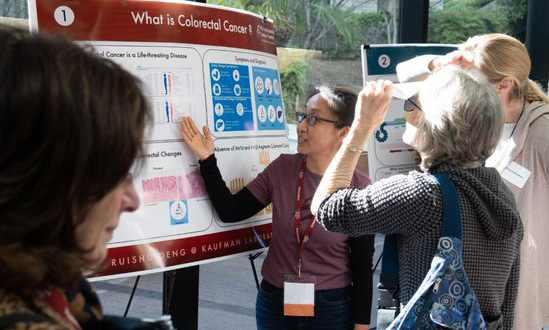
The Institute’s NCI-designated Cancer Center hosted an open house to showcase the latest research advances in cancers of the digestive system. The event was sponsored by the center’s Community Advisory Board (CAB), which provides a link to community networks of people—including patients, survivors and their loved ones.
“These events are especially helpful for people affected by cancer because our researchers can explain the science behind the disease and the approaches we use to find new treatments,” says Associate Professor Cosimo Commisso, PhD, who co-hosted the event with Adjunct Associate Professor Pamela Itkin-Ansari, PhD “As researchers, it’s critical that we have community participation to influence our research—so we benefit as well.”
The open house, which was free to the public, fulfills a key part of the CAB’s mission—to create awareness of the cancer research being done at the Institute and to promote dialogue between its scientists and the community. Guests had the chance to mingle with cancer researchers, and there was also a panelist table, where they could ask questions directly to a panel including two cancer survivors and a clinician.
The theme of the open house was cancers of the digestive system, which includes pancreatic cancer, liver cancer, stomach cancer and colorectal cancer. Although these cancers are very diverse, one thing many cancers of the digestive system have in common is that they take a long time to diagnose and are difficult to treat.
“These are devastating cancers,” says Commisso. “We’ve doubled the survival rates for pancreatic cancer since I started working in this field over a decade ago, but it’s still only around 10%. And that’s just not good enough.”
Attendees also got behind-the-scenes tours of labs, including Commisso’s, where researchers are working to halt pancreatic cancer by blocking nutrients—in essence, starving tumor cells of the fuel they need to grow and proliferate.
“We have a lot of researchers taking different approaches to cancer here at the Institute, and it’s important for people affected by cancer to know that while we’re still a long way off from ending cancer forever, we’re still making progress,” adds Commisso.
Institute News
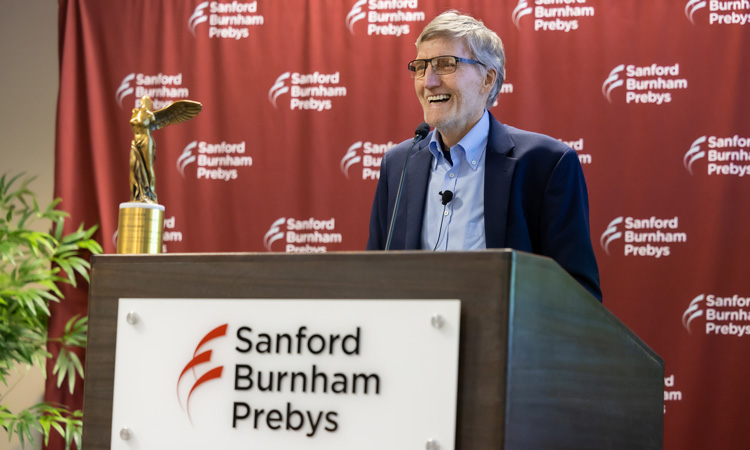
Sanford Burnham Prebys celebrates one of its legends
Ruoslahti was also among the first scientists to join the Institute in the late 1970s, where he completed this award-winning research. To celebrate Ruoslahti’s career and accomplishments, Sanford Burnham Prebys hosted a special lecture with the esteemed scientist as well as a celebratory reception afterward.
“Erkki’s illustrious career is one that keeps us all inspired—me, especially, as I follow in his footsteps in leading this Institute,” says David A. Brenner, MD, president and CEO of Sanford Burnham Prebys. “His Lasker Award win is so very much deserved. Not only does it recognize his outstanding influence in the field, but it also elevates the status of our Institute in the research community.”
Ruoslahti, who shares the award with Richard O. Hynes from the Massachusetts Institute of Technology, and Timothy A. Springer from Boston Children’s Hospital and Harvard Medical School, began his presentation with the research that led to his discovery of the integrins—proteins found on the surface of cells that helps them attach to, and communicate with, nearby cells and the extracellular matrix.
Ruoslahti’s road to the discovery of integrins began at the University of Helsinki, where, along with his colleagues, he discovered fibronectin, a protein that helps surround, support and give structure to cells and tissues in the body. However, the biggest breakthroughs were yet to come.
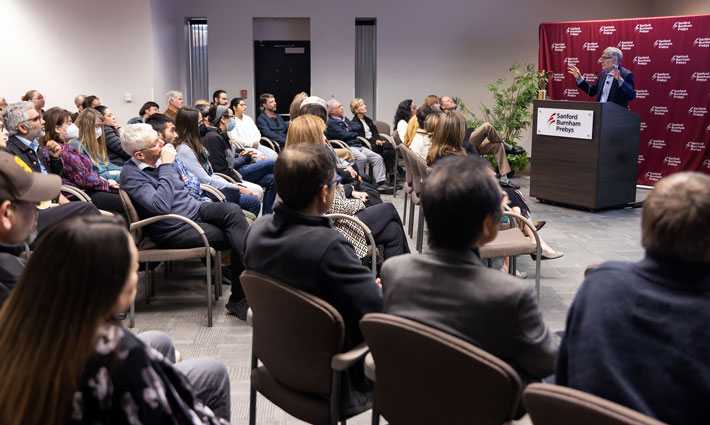
Ruoslahti gave his presentation to a packed house in Fishman Auditorium
“My research on fibronectin and the subsequent discovery of the integrins really got going in my first years at Sanford Burnham Prebys,” says Ruoslahti, who first joined the Institute in 1979, when it was known as the La Jolla Cancer Research Foundation.
The Ruoslahti research team discovered that a simple sequence of three amino acids, called RGD, within fibronectin, attaches directly to cells. They were then able to synthesize RGD and use it as a tool to discover the cell-surface receptors today known as the integrins. This seemingly small discovery created an entirely new subdiscipline of molecular biology.
“The Lasker Award is given for a fundamental discovery that opens up a new area of biomedical science. It is America’s top biomedical research award and is often referred to as ‘America’s Nobel,’” says Brenner. “This is a profound honor, one that is only given to those who have made the greatest impact in our field.”
In 1989, Ruoslahti became president and CEO of the Institute, a position he held until returning to full-time research in 2002. He became a Distinguished Professor Emeritus at Sanford Burnham Prebys in 2020. Ruoslahti has previously received the Japan Prize, the Gairdner Foundation International Award, the G.H.A. Clowes Memorial Award, and the Robert J. and Claire Pasarow Foundation Medical Research Award. He is also a Knight of the Order of the White Rose of Finland, a Commander of the Order of the Lion of Finland and is among the most cited scientists in the world.
Institute News
Sanford Burnham Prebys celebrates 46 years of discoveries
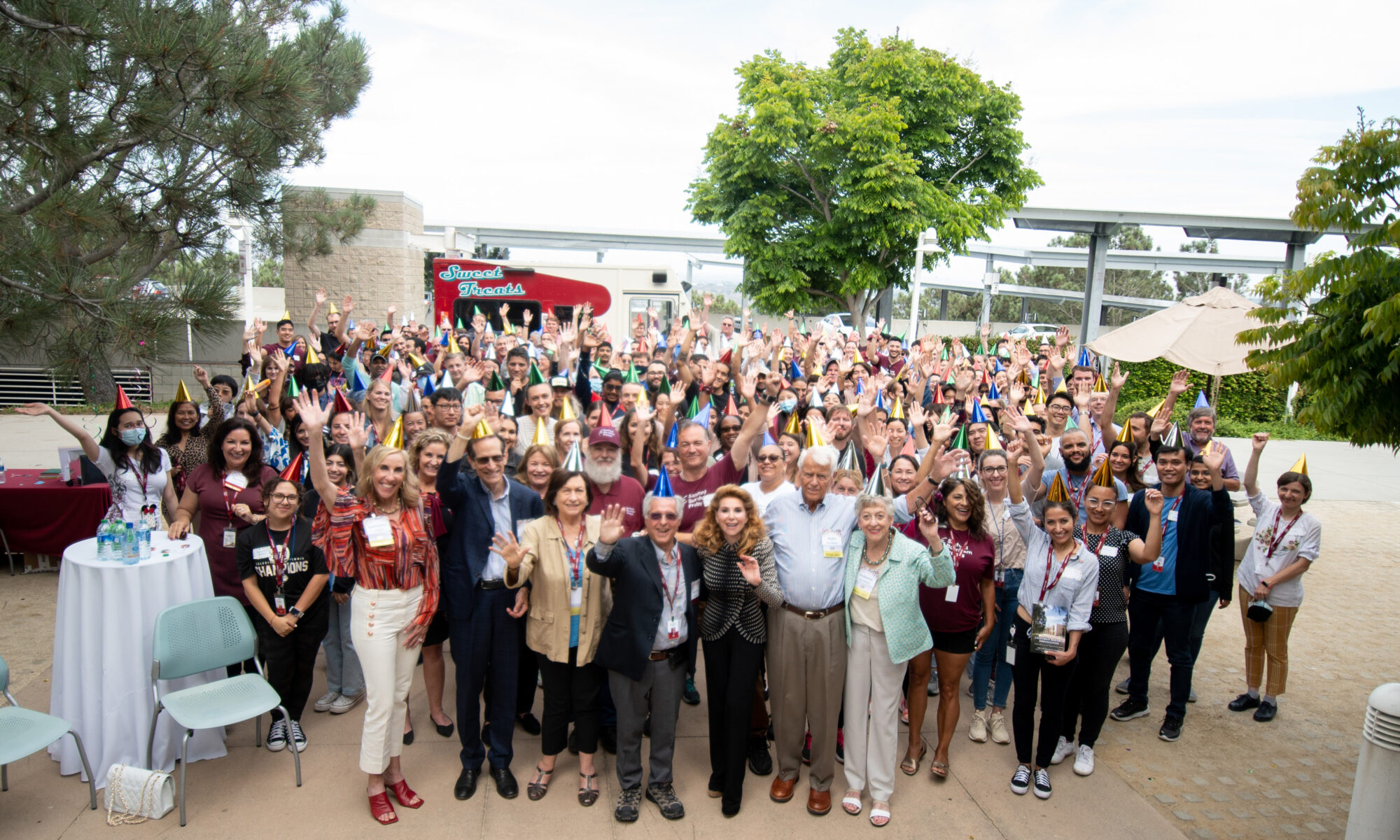
Sanford Burnham Prebys recently hosted a celebration to honor the anniversary of the Institute’s founding. More than 200 scientists, students and staff gathered to commemorate 46 years of world-class biomedical research.
“I’ve seen the Institute grow from just five employees to the more than 500 we have today,” said Institute Professor José Luis Millán, PhD, who emceed the event. Millán joined the Institute in 1977, just one year after its founding. “What is important for the Institute now, as we reach middle age, is to reflect on our successes as we move forward into the next decades of our life.”
Attendees enjoyed an all-you-can-eat ice cream truck and a prize raffle, where guests won Institute hats, mugs and other prizes. Longtime supporters of the Institute also spoke, including Malin Burnham, Nina Fishman, and Debbie Turner, partner of the late Conrad Prebys. The party closed with a recorded birthday song from Institute Professor Hudson Freeze, PhD
Burnham recounted how he met the Institute’s two other namesakes, T. Denny Sanford and Conrad Prebys, reflecting on how these chance meetings helped the Institute grow to become the world-class facility it is today. He also expressed his gratitude to the staff.
“All of you are a part of the family, and that is what I’ve enjoyed as much as anything in my 40 years with this organization,” said Burnham during his comments. “I want to thank each and every one of you for being a part of this organization.”
Decades of discoveries Sanford Burnham Prebys was founded on July 7, 1976, as the La Jolla Cancer Research Foundation. Since then, the Institute has established itself as a world leader in biomedical research, where scientists can work collaboratively to discover cures.
It all started when founder William Fishman, MD, PhD, left his post as professor, director and founder of the Tufts Cancer Research Center in Boston. He, along with wife and career partner, Lillian Fishman, moved west to San Diego with a $180,000 grant from the National Cancer Institute, which they used to start the La Jolla Cancer Research Foundation.
“[The Fishmans] were dedicated to the idea of pure science,” explains Nina Fishman, daughter of William and Lillian. Nina Fishman is a longtime supporter of Sanford Burnham Prebys, and she recently coauthored Development of a California Research Organization, a book chronicling the Institute’s history. “They wanted a place where scientists could focus on their work.”
At that time, the foundation consisted of five employees, a rented office space, and lab equipment pieced together from spare parts. Today, it is a world-class medical research institute with a graduate school and one of only seven NCI-designated basic cancer centers in the country.
“My parents were the founders of the past, but you are the founders of the future,” adds Fishman.