cancer Archives - Page 3 of 11 - Sanford Burnham Prebys
Institute News

Pancreatic cancer symposium celebrates 10th anniversary in San Diego

AuthorGreg Calhoun
Date

May 22, 2024

The 2024 PancWest Symposium brought more than 120 scientists to the Sanford Burnham Prebys campus in San Diego to discuss the latest advances in pancreatic cancer research.

More than 120 pancreatic cancer researchers from the West Coast traveled to San Diego from as far as Vancouver to attend the 2024 PancWest Symposium on May 17. The PancWest Symposium was founded in 2014 to regularly bring the scientific community studying pancreatic cancer together to discuss advances in the field and foster new collaborations.

The PancWest Symposium is held every two years in a different city to showcase expert scientists who are making important contributions to the field of pancreatic cancer research, including tumorigenesis, tumor progression and the discovery of novel therapeutic paradigms, such as immunomodulation and metabolic targeting.

The 2024 event was held on the Sanford Burnham Prebys campus in the Fishman Auditorium and was hosted by Cosimo Commisso, Ph.D., director of, and associate professor in, the Institute’s Cancer Metabolism and Microenvironment Program; and Pamela Itkin-Ansari, Ph.D., adjunct professor in the Institute’s Development, Aging and Regeneration Program.

“While pancreatic cancer accounts for only three percent of cancer cases, it has the highest mortality rate among major cancers and is the third leading cause of cancer-related death in the U.S.,” says Commisso.
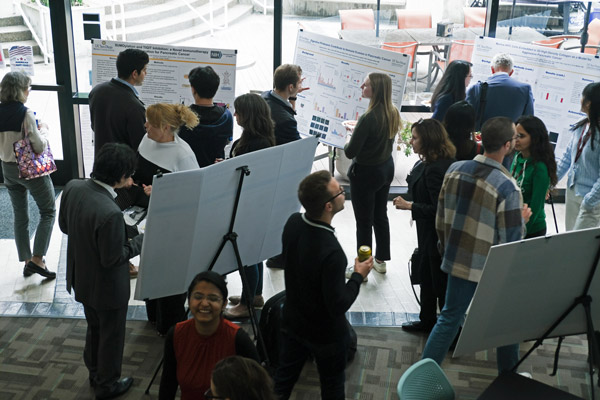
PancWest Symposium poster presentations in Chairmen's Hall

The symposium’s events included a keynote address, 12 featured speakers, a poster session and a series of “power talks” providing attendees a chance to hear two-minute oral presentations from selected poster presenters.

“Unless we find ways to better diagnose and treat this disease, it is projected to become the second most deadly cancer in less than 20 years,” adds Itkin-Ansari. “That is why events such as PancWest are so important to enhance innovation and foster collaboration.”

Rosalie C. Sears, Ph.D., professor of Molecular and Medical Genetics, co-director of the Brenden-Colson Center for Pancreatic Care and Krista L. Lake Chair in Cancer Research at Oregon Health & Science University in Portland, gave the symposium’s keynote address.

Additional events at the symposium included 12 featured speakers, a poster session and a series of “power talks” providing attendees a chance to hear two-minute oral presentations from selected poster presenters.

“Being a part of PancWest has been a transformative experience,” shares Itkin-Ansari. “The exchange of groundbreaking research and innovative ideas among leading experts advanced our scientific understanding.”

“It also paved the way for new therapeutic strategies, ultimately offering hope and improved outcomes for patients battling pancreatic cancer,” adds Commisso.

More information about the symposium and featured speakers is available on the event’s webpage.

Institute News

Seminar Series: extrachromosomal DNA and the metabolic circuits of cancer immune suppression

AuthorScott LaFee
Date

March 25, 2024

The ongoing Sanford Burnham Prebys seminar series will feature a pair of speakers on March 27, from noon to 1p.m., in the Fishman Auditorium. They will be presenting on two topics: extrachromosomal DNA and the tumor microenvironment.

First, Owen Chapman, PhD, a postdoctoral research scientist in the lab of Lukas Chavez, PhD, will discuss clinical and genomic features of circular extrachromosomal DNA (ecDNA) in medulloblastomas, a type of brain tumor.

EcDNA is DNA found off chromosomes, either inside or outside the nucleus of a cell. In a study published last year, Chavez (senior author), Chapman (first author) and colleagues reported that patients with medulloblastomas containing ecDNA are twice as likely to relapse after treatment and three times as likely to die within five years of diagnosis.

The second presentation will be by Kevin Tharp, PhD assistant professor in the Cancer Metabolism and Microenvironment Program. Tharp, who joined Sanford Burnham Prebys in December 2023, studies how tumors manipulate their mitochondria to improve survivability and how those cellular mechanics can be leveraged to create more effective therapies.

Institute News

New genome mapping tool may uncover secrets for treating blood cancers

AuthorGreg Calhoun
Date

February 1, 2024

The outlook for patients with acute myeloid leukemia (AML), a deadly set of blood cancers that is difficult to treat, has remained dire for decades, especially among patients who are not eligible for bone marrow transplantation.

More than 30% of treated patients will never achieve complete remission using current chemotherapies and, even when chemotherapy treatments work, most patients relapse within five years without a transplant.

While prior research has begun to unravel the genetic underpinnings of the disease, more inquiry is needed to understand the genetic variation within the roughly 15 AML subtypes and how that variation might affect treatment strategies.

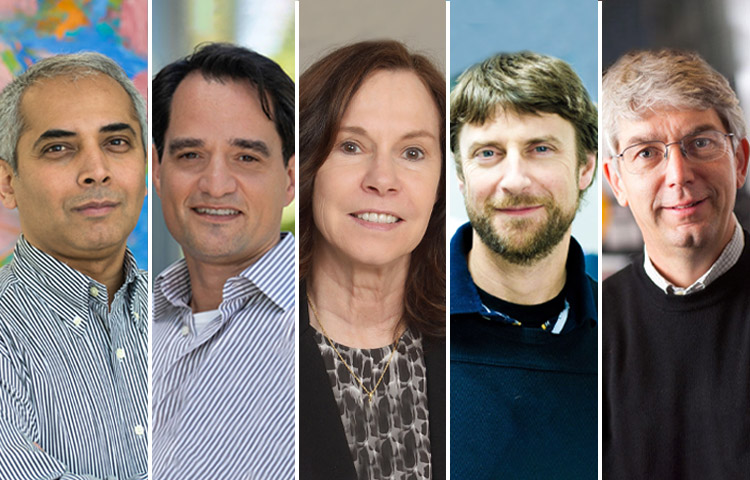
“In addition to the one to eight average genetic mutations in AML patients found in traditional sequencing studies, experiments employing high-resolution optical genomic mapping have found approximately 40 to 80 rare genomic structural variants per patient,” says Kristiina Vuori, MD, PhD, Pauline and Stanley Foster Distinguished Chair and professor in the Sanford Burnham Prebys Cancer Center’s Cancer Molecular Therapeutics Program. “We wanted to take these structural variant findings in AML to the next level by connecting them with patients’ sensitivity or resistance to current cancer treatments.”

Kristiina Vuori, MD, PhD

In a paper published January 18, 2024, in Cancers, a multidisciplinary team of biologists, bioinformaticians and clinicians from Sanford Burnham Prebys, Bionano Genomics Inc. and Scripps MD Anderson were the first to associate genomic structural variants (SVs) in AML patients with drug sensitivities.

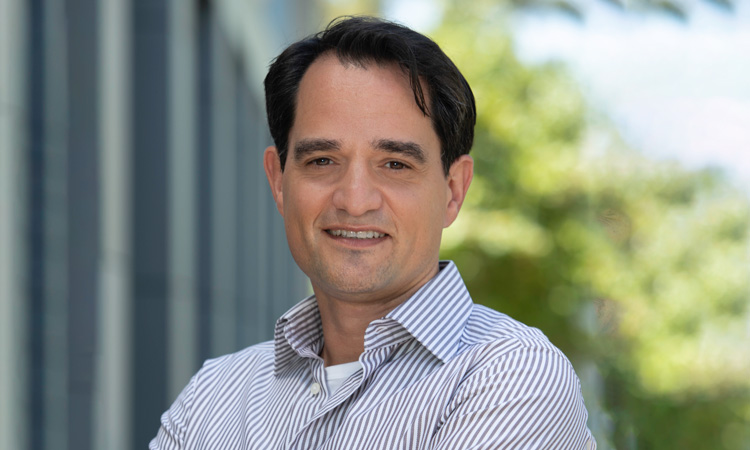
“SVs are changes to the genome in which sections of 50 or more base pairs in a strand of DNA have been errantly deleted, duplicated, inverted or translocated,” explains Darren (Ben) Finlay, PhD, first author on the manuscript and research associate professor in the Sanford Burnham Prebys Cancer Center.

“Such changes amount to different combinations of DNA gains, losses or rearrangements. When cells use these altered instructions in the DNA to make proteins or carry out other functions, it is like a chef trying to cook with a recipe that is missing steps, has them in the wrong order or includes more or less of the key ingredients.”

Darren (Ben) Finally, PhD

Scientists have become more able to find SVs as next-generation genomic analysis technologies and techniques have improved. Research has shown that SVs contribute to the development and progression of cancer, including blood cancers. Of particular concern among SVs are DNA changes that join two otherwise distant genes. This event, called gene fusion, is known to drive certain pediatric and blood cancers.

Finlay, Vuori and colleagues analyzed SVs in samples from 23 AML patients and found their genomes featured 16-45 extremely rare SVs within genes but not seen in healthy volunteers’ samples. The scientists detailed the patients’ SVs using a technique called optical genome mapping. This tool tags DNA in specific locations to create recognizable sequences, unwinds and straightens the genomic DNA for linear scanning, and converts the imaged sequences into digital representations of DNA molecules. Because it directly images DNA rather than relying on algorithmic analyses, optical genome mapping is better than next-generation sequencing at finding SVs throughout the entire genome, especially large SVs, the researchers said.

To begin building the connection between SVs and drug sensitivity, the scientists tested samples from each patient with 120 FDA-approved drugs, and experimental treatments currently in phase III clinical trials. This allowed the researchers to map out how strongly each patient’s sample reacted with each drug.

Next, the investigators used statistical analysis to compare the SVs within the optical genome mapping results with the findings from the drug sensitivity tests. The team found 61 statistically significant interactions between SVs and existing cancer therapies. In one interaction, the group demonstrated that a commonly used AML drug, Idarubicin, and two similar compounds (Daunorubicin and Epirubicin) were more effective in leukemia samples with a specific insertion in a gene that carries the instructions for a signaling enzyme that helps nerves communicate with muscles. These and other examples lend support to the scientists’ hypothesis that optical genome mapping could be used to develop personalized treatment plans that account for patients’ SVs.

“In this pilot study, our hope was to identify structural variants that could be used as new biomarkers for current AML drugs as well as to identify other drugs that could be repurposed to treat leukemia patients,” says Finlay.

“Ensuring patients receive the most effective drugs on the market through personalized treatment and identifying new potential therapies for AML are critically important,” adds Vuori, senior author on the study. “Especially for patients who do not achieve remission with current standard chemotherapies or who are ineligible for bone marrow transplants or clinical trials.”
 

Cancers 2024, 16(2), 418; https://doi.org/10.3390/cancers16020418

Institute News

From postdoc to PI, it’s a journey. Don’t forget to pack some support

AuthorSanju Sinha
Date

December 15, 2023

The journal Nature Cancer asked a dozen early-career investigators to share their thoughts and experiences about starting their own labs in 2023. Among them: Sanju Sinha, PhD, who joined Sanford Burnham Prebys in June. Below is his essay. You can read the rest here.

Don’t forget to pack support 

Against the backdrop of a world emerging from a pandemic, starting my laboratory in 2023 was a whirlwind of excitement and anxiety, against the backdrop of a world emerging from a pandemic.

The goal for my laboratory is to understand cancer initiation and use this knowledge to develop preventative therapies—a goal appreciated by many, yet understudied and underfunded. We are aiming to achieve this by developing computational techniques based on machine-learning and leveraging big data from various sources, such as healthy tissues, pre-cancerous lesions and tumors. This journey has taken several unexpected turns, with its fair share of delights and challenges.

One significant hurdle appeared early: hiring. I recall the advice I received: “Forget it, you can’t hire a postdoc as an early-stage laboratory.” This made me ponder—if I were to choose right now, would I pursue a postdoc? My immediate answer was no. It struck me then: the traditional postdoc route needed a revamp.

Determined to instigate change, I introduced a new role: computational biologist. This position, an alternative to a postdoc, was tailored for transitioning to industry and offered better pay. The response was staggering—more than 400 applications.

Now, I’m proud to lead a fantastic team of three computational biologists from whom I am continually learning. This experience taught me a valuable lesson: crafting roles that serve both the goals of the laboratory and the career aspirations of the applicants can make a world of difference. I urge new principal investigators to shatter norms and design roles that provide fair compensation and smooth industry transition—reflecting the reality of the current job market.

However, the path to establishing a new laboratory was not without setbacks. Rejection is common in this field. I have already experienced a grant rejection and, considering the average grant success rate, I am prepared for many more.

Amid these challenges, my support system proved to be my lifeline. I’m grateful to be part of Sanford Burnham Prebys, which has proved to be more than just a top biomedical research institution. It is a community that provides unparalleled support for early principal investigators through generous startup packages, administrative assistance, hiring and grant-writing guidance, and a network of compassionate peers and mentors.

Equally important is my personal support system—my family, partner and friends who remind me that there is life beyond science, helping me maintain my well-being. This balance, I have realized, is the most crucial tool for anyone on a similar journey—so do not forget to pack support for the ride.

Institute News

The “Eph” system may pave the way for novel cancer therapies

AuthorSusan Gammon
Date

November 27, 2023

Over the past three decades, researchers have been investigating an important cell communication system called the “Eph system,” and the evidence implicating the system in cancer is staggering.

The Eph system is comprised of multiple Eph receptors and their ligands—ephrins—and are involved in contact-dependent communication between cells. They play essential roles in regulating various cellular processes.

Modern studies have shed light on the Eph system’s role in tumor expansion, invasiveness, metastasis, cancer stem cell maintenance and therapy resistance.

This month, Elena Pasquale, PhD, published a review in Nature Reviews Cancer that summarizes the current state of research on the Eph system and its links to cancer progression and drug resistance.

“The Eph system has many critical functions during the development of tissues and organs, but it also has the capacity to either promote or suppress cancer progression and malignancy” says Pasquale. “In cancer, the activities of the Eph system can differ depending on the circumstances—for example, which Eph receptors and ligands are present in a tumor cell, the types of tumor cells in which they function, and the characteristics of these cells.”

“It’s this remarkable versatility that makes the Eph system a compelling but also challenging target for potential therapies,” says Pasquale.

“The aims of this review were to comprehensively survey the large body of data regarding various aspects related to Eph signaling in tumors and to highlight potential strategies for therapeutic targeting,” says Pasquale. “Overall, while significant progress has been made in deciphering the Eph system in cancer, there is much more to learn.

“Gaining a deeper understanding of how the Eph system functions in cancer is challenging but will be essential for the development of targeted therapies and personalized treatment approaches for patients.”

Institute News

How cancer research silos perpetuate inequity in cancer outcomes: An interview with Svasti Haricharan

AuthorMiles Martin
Date

April 18, 2023

The National Institutes of Health recognizes National Minority Health Month each April. This is a time to raise awareness about the importance of reducing the health disparities faced by racial and ethnic minorities.

For our part, we spoke to Assistant Professor Svasti Haricharan, PhD, about her recently published review in Clinical Cancer Research. The paper describes some of the shortfalls of the current research focusing on cancer disparities. It also reveals what needs to happen to solve this problem. 

This paper describes “research silos” in cancer disparities, but what does this term mean?
The cancer research community has made a lot of progress recognizing that cancer research has a data diversity problem. We know that we need more researchers working on cancer disparities—for example, finding explanations as to why some racial and ethnic minorities have worse cancer survival rates than others. We also know that we need to generate more inclusive data in cancer research generally, which means building databases that include data from people of different backgrounds.

However, what we’re talking about in this new paper is a bit more subtle than that. It has more to do with which disparities researchers are studying and how they’re studying them. Cancer-disparities researchers tend to fall into two different categories with two very different approaches. One group focuses more on the societal problems driving disparities, and the other group is looking closely at the biology. But these two paths aren’t intersecting, which is preventing us from truly addressing racial disparities in cancer.

Can you tell us more about those two groups and how this division affects cancer research?
The first group includes researchers who study cancer disparities in the way most people understand them. They focus on social determinants of health, such as socioeconomic status and systemic bias in the healthcare system. The second group looks at the biology directly, focusing on how genetics impacts the molecular biology of cancer. These are both important research areas, and we’ve made a lot of progress independently with each of them.

The problem is that focusing on one or the other ignores something critical that has gained attention in recent years: lifestyle factors have a direct impact on the molecular biology of cancer. Our lived experiences leave a unique footprint in our cells on top of what’s already there because of what we inherited at birth. By keeping these two types of cancer research trapped in silos, we’re missing synergistic leaps that could truly transform our understanding of cancer outcome inequity. Breaking down these silos is the only way to keep moving this type of research forward.

How can we break down these silos? 
Looking at it broadly, funding bodies need to invest more in research that develops datasets using biological samples from underrepresented groups. This will help us learn more about how societal factors can have a different impact on the biology of cancer—depending on the person with the disease. Here in the lab, we need to create experimental systems that better represent the biology of people from racial and ethnic minorities. This could also help us solve an even bigger problem.

Therapeutic strategies for cancer that we find in the lab don’t often make it to the clinic. Improving the diversity of our cancer data will improve this success-to-failure ratio. It will help us identify treatments that work better in some people than in others and choose the best treatments for each patient. In other words, it will help us work toward truly individualized medicine. Ultimately, we can only develop good precision medicine for cancer when we start looking at all patient demographics more equitably.

Institute News

Padres Pedal the Cause 2023: Team Sanford Burnham Prebys raises $50,000 for cancer research

AuthorMiles Martin
Date

March 20, 2023

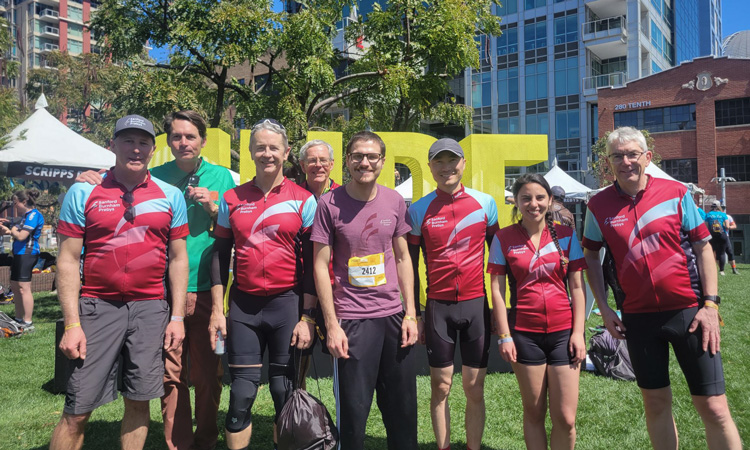
Team Sanford Burnham Prebys hit the pavement this weekend for Padres Pedal the Cause, an annual fundraising event that invites participants to cycle, spin, run or walk to support local cancer research. The funds raised through each year’s race go to seed grants that fund collaborative cancer research projects in San Diego.

“Padres Pedal the Cause is a chance for the cancer community to come together and remember why collaboration is so important in cancer research,” says bike rider Ze’ev Ronai, PhD, director of the Institute’s NCI-designated Cancer Center. “Virtually all of us know somebody who has been impacted by cancer, including me. This is my fifth Padres Pedal the Cause, and every year I’m so proud to be part of our Institute’s team and help contribute to cancer research outside the lab.”

This year’s team was formidable: 56 employees and friends of the Institute signed up to either ride, run, or walk in the event. Team members came from all areas of the Institute, including faculty, staff scientists, administrative staff, postdocs, and even current and former members of the Institute’s Board of Trustees, such as Bill Gerhart and Steve Williams. Other notable names on this year’s team included longtime participants such as Professor Nicholas Cosford, PhD and James Short, associate director of Digital Communications and Design. 

“I’ve been with Padres Pedal the Cause since the very beginning, and it’s one of the highlights of my year,” says Short, who has helped lead the Institute’s team for the last 10 years.

The team also included some new members this year, such as Assistant Professor Lukas Chavez, PhD, and Director of Experimental Pharmacology Raghu Ramachandra, PhD, who both joined the Institute late last year. 

While Institute employees were well represented on this year’s team, there were also current some of the team’s top fundraisers had a different reason to join team Sanford Burnham Prebys. Kim McKewon is a longtime donor to the Institute and has been participating in Padres Pedal the Cause since its inception in 2013. This year she raised more than $6,000; and to date, she has raised more than $30,000. 

“I pedal for my husband, Ray, who is in remission from leukemia because of science and research, the very focus of the grants that are given from the fundraising that comes out of this event,” she writes in her website bio.

It’s not too late to support Team Sanford Burnham Prebys
To date, team Sanford Burnham Prebys has raised more than $300,000 through Padres Pedal the Cause since its inception in 2013. And while this year’s ride is over, there is always time to support local cancer research. The fundraising deadline for this year’s Padre’s Pedal the Cause is April 18, and 100% of every dollar raised goes toward lifesaving cancer research. Help team Sanford Burnham Prebys create a world without cancer.

Support Team Sanford Burnham Prebys


Institute News

Sanford Burnham Prebys researchers awarded Curebound grants

AuthorMiles Martin
Date

March 20, 2023

Each year, Sanford Burnham Prebys joins Padres Pedal the Cause, an annual fundraising event that raises money for Curebound which awards collaborative cancer grants in the San Diego area.

These grants include Discovery Grants, which provide seed funds for high-risk/high-reward research in the earliest phases, and Targeted Grants, which are larger awards ($500K) that help translate promising discoveries into treatments for the clinic.

In the 2022-2023 Curebound Research portfolio, five researchers from Sanford Burnham Prebys were awarded grants: Associate Professor Anindya Bagchi, PhD, Professor Linda Bradley, PhD, Assistant Professor Lukas Chavez, PhD, Professor Nicholas Cosford, PhD, and Professor Michael Jackson, PhD

2022 Discovery Grant: Treating incurable pediatric brain tumors 
Bagchi and Chavez will collaborate to advance a new therapeutic approach for medulloblastoma, the most common childhood brain tumor. They will be focusing on a gene called MYC, found only in the deadliest forms of medulloblastoma. This form of brain cancer is currently untreatable, but Bagchi and Chavez recently discovered a molecule that can help control the activity of the MYC gene and potentially inhibit the growth of medulloblastoma tumors. The researcher holds promise to reveal a new treatment approach for this incurable cancer. 

The grant is titled “Decoding the Role of the Long Non-Coding RNA PVT1 in Medulloblastoma.”

2023 Targeted Grant: Discovering a new immunotherapy drug for melanoma
Bradley will be working with Soo Jin Park, MD, from UC San Diego Health to advance a new immunotherapy approach for malignant melanoma. Despite recent advances, this type of skin cancer still causes thousands of deaths in the U.S. each year. The goal of their project is to develop a new drug for melanoma that can reactivate the tumor-killing properties of the patient’s own immune system. This therapeutic approach has the potential to destroy tumors that are resistant to existing therapies, which could help save lives.

The grant is titled, “Advancing Immune Checkpoint Inhibition of PSGL-1 for Treatment of Malignant Melanoma.
 

2022 Discovery Grant: Developing drugs for bone-metastatic prostate cancer
Cosford will work with Christina Jamieson, PhD, from the University of California, San Diego, to advance a new treatment approach for prostate cancer that has spread to the bones. Bone is the most common place for prostate cancer to metastasize, and this form of cancer is currently incurable. The researchers will look for drugs that can kill tumor cells by inhibiting autophagy, a process that promotes tumor progression. The results of the study could identify a new drug ready for clinical trials.

The grant is titled “Pre-Clinical Development of New Autophagy Targeting Drugs for Bone Metastatic Prostate Cancer.”

2022 Discovery Grant: Repurposing drugs for deadly childhood brain cancer
Jackson and Chavez will collaborate to identify new treatment options for ependymoma, an aggressive pediatric brain tumor and leading cause of death among childhood cancer patients. The researchers will screen patient tumor cells against drugs already approved by the FDA for other conditions, looking for drugs that could be repurposed to fight these tumors. Because FDA-approved drugs are known to be safe for humans, this may prove to be the quickest way to help patients currently living with this cancer. 

The grant is titled “High Throughput-Screen for Inhibitors of Pediatric Ependymoma.”

Institute News

Is cloud computing a game changer in cancer research? Three big questions for Lukas Chavez

AuthorMiles Martin
Date

February 22, 2023

As an assistant professor at Sanford Burnham Prebys and director of the Neuro-Oncology Molecular Tumor Board at Rady Children’s Hospital, Lukas Chavez, PhD, leverages modern technology for precision diagnostics and for uncovering new treatment options for the most aggressive childhood brain cancers.

We spoke to Chavez about his work and asked him how modern technology—particularly cloud computing—is shifting the approach to cancer research.

How are you using new technologies to advance your research?

New technologies are helping us generate a huge amount of data as well as many new types of data. All this new information at our disposal has created a pressing need for tools to make sense of it and maximize their benefits. That’s where computational biology and bioinformatics come into play. The childhood brain cancers I work on are very rare, which has historically made it difficult to study large numbers of cases and identify patterns.

Now, data for thousands of cases can be stored in the cloud. By creating data analysis tools, we can reveal insights that we would never have seen otherwise. For example, we’ve developed tools that can use patient data in the cloud to categorize brain cancers into subtypes we’ve never identified before, and we’re learning that there are many more types of brain tumors than we’ve previously understood. We’re basically transforming the classic histo-pathological approach that people have studied for decades by looking at tumor tissues under the microscope and turning that into data science.

How is cloud computing improving cancer research in general?

Assembling big datasets delays everything, so I believe the main idea of cloud computing is really to store data in the cloud, then bring the computational tools to the data, not the other way around.

My team did one study where we assembled publicly available data, and basically downloaded everything locally. The data assembly process alone took at least two to three years because of all the data access agreements and legal offices that were involved.

And that is the burden that cloud computing infrastructures remove. All of this personalized cancer data can be centrally stored in the cloud, which makes it available to more researchers while keeping it secure to protect patient privacy. Researchers can get access without downloading the data, so they are not responsible for data protection anymore. It’s both faster and more secure to just bring your tools to the data.

Are there any risks we need to be aware of?

Like any new technology, we need to be clear about how we use it. The technology is another tool in the toolbox of patient care. It will never entirely replace physicians and researchers, but it can complement and assist them.

Also, because we use costly and sophisticated tools that are being built and trained on very specific patient groups, we need to be careful that these tools are not only helping wealthier segments of society. Ideally, these tools will be expanded worldwide to help everybody affected by cancer.

Institute News

Brain cancer researcher Jia Zack Shen wins 2022 Eric Dudl scholarship

AuthorMiles Martin
Date

October 18, 2022

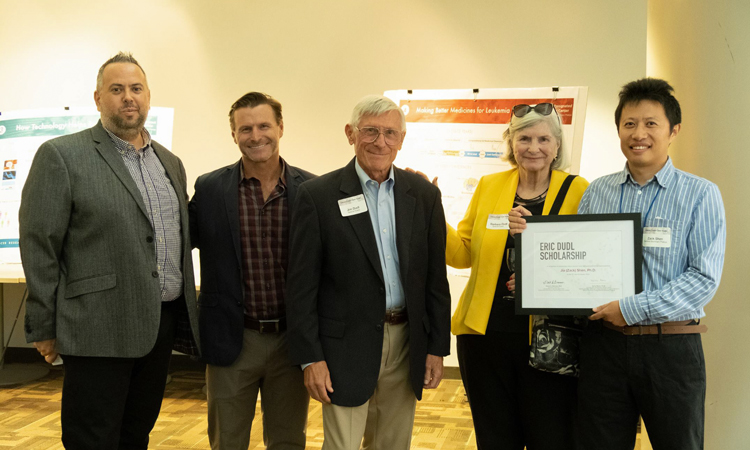
For the first time since the pandemic, Sanford Burnham Prebys presented the Eric Dudl Endowed Scholarship Award in person at last week’s Cancer Center Open House. This year’s recipient, selected by leaders at the Cancer Center, was Jia Zack Shen, PhD, a staff scientist in the lab of Charles Spruck, PhD The award pays tribute to Eric Dudl, a postdoctoral researcher who succumbed to cancer in 2006, when he was just 33.

“Eric was ill at such a young age, but he was also very lucky because he knew exactly what his dream job was and what his life meant,” says Shen. “Eric’s compassion and dedication to cancer research has been inspiring and encouraging for our postdocs here at Sanford Burnham Prebys. Thank you to the Dudl family for helping me continue my career here.”

Honoring Eric Dudl

In 2005, Eric Dudl had just begun his postdoctoral research in a cancer lab at Sanford Burnham Prebys, where he was known as kind, helpful and a fast learner. Then, at age 32, he was diagnosed with non-small cell lung cancer. This only fueled his fiery passion for cancer research.

“Even when he was very ill, Eric wanted to make a contribution in the time he had,” says Jim Dudl, MD, Eric’s father. “One day I looked at Eric and asked, ‘Why don’t you take some time off work? Get your energy back and go back in when you feel better?’ He looked up at me and said, ‘Why would I do that? This is the best job in the world!’”

Tragically, Eric Dudl would pass away in 2006, at age 33. The next year, his parents established the Eric Dudl Endowed Scholarship Fund to support young cancer researchers like their son.
“These talented scientists pick up where Eric had to leave off,” says Barbara Dudl, Eric’s mother.

Eric Dudl

Eric Dudl

“We are so grateful to the Institute for their compassion for Eric during his illness and helping us create this scholarship. The scientists who are now working on new discoveries might one day save the life of someone like Eric.”

The award presentation was emceed by Cosimo Commisso, PhD, and featured comments from Eric’s parents, as well as his brother, Bret.

“This scholarship fund is the best way we can honor Eric, because he was so passionate about education and supporting others,” says Bret. “The fact that he now helps other postdocs further their work to fight cancer is exactly what he would have wanted.”

Meet the recipient: Jia Zack Shen

Shen started at the Institute as a postdoctoral researcher in 2016, winning a Fishman Fund Award that year. He has since transitioned to a permanent role as a staff scientist, and the funding from this award will help continue to support his role.

“Sanford Burnham Prebys has a great, noncompetitive atmosphere, and the resources we have here are excellent,” says Shen. “Combining cancer research with the drug discovery capabilities we have at SBP is my dream.”

Shen’s research focuses on killing cancer stem cells by shutting off their ability to self-renew and by promoting a response from the immune system, delivering what Shen and his colleagues call a “one-two punch.” Shen has been working specifically on glioblastoma, one of the most aggressive brain cancers.

“Glioblastoma is one of the most devastating diseases, and there is a desperate need for better ways to treat it,” says Shen. “I am working hard to leverage the immune system to fight glioblastoma and save thousands of lives.”