education Archives - Page 6 of 10 - Sanford Burnham Prebys
Institute News

Peter Adams named Mentor of the Year at 21st Annual Research Trainee Symposium

AuthorMiles Martin
Date

September 23, 2022

Peter Adams, PhD, has been named Mentor of the Year, a new honor from the Institute’s Office of Education, Training and International Services (OETIS) and the Postdoctoral Training Advisory Group (PTAG).

The award was based on nomination letters submitted by postdocs and graduate students on the Sanford Burnham Prebys campus, and the winner was selected by a committee of PTAG members. The award was announced on September 22 at the 21st Annual Trainee Research Symposium.

“Professor Adams creates an environment that supports his postdocs in pursuing their research projects by motivating his trainees to experience new techniques, take on challenging projects and help them to decide the direction in which they want to move forward,” said postdoctoral associate Marie Berenguer, who presented the award to Adams. “He helps his trainees expand their professional networks and further develop their technical and transferable skills. Every trainee from the Adams lab submitted an abstract for this year’s Annual Trainee Research Symposium, a sign of Peter’s commitment to their training.”

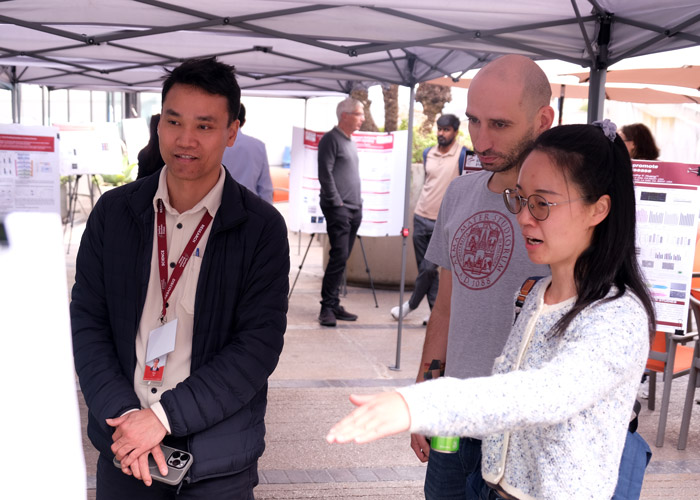
trainees and posters

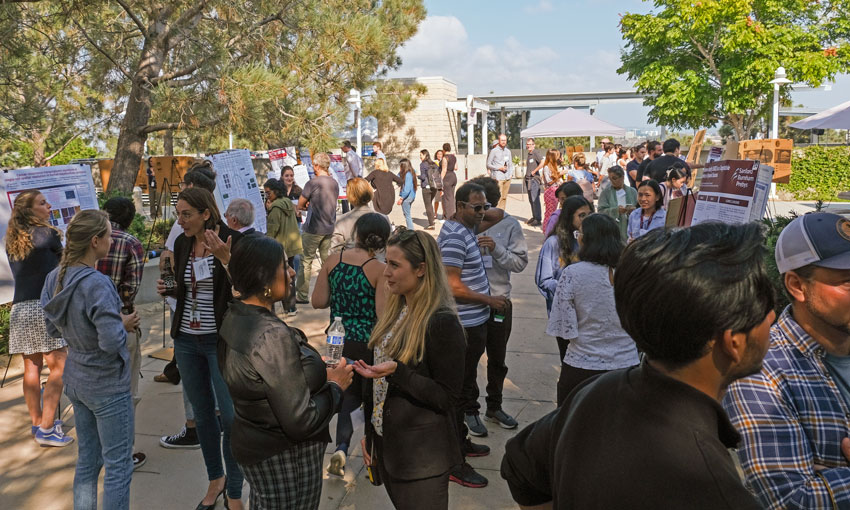
Trainees present their research to peers and faculty at the poster session

Adams Lab

The Adams lab

In his comments when accepting the award, Adams spoke to his mentoring philosophy: “Some of you have asked me, ‘What’s the most important thing in a student or a postdoc?’ What I’ll say is that the most important thing is to take ownership of your project, so my mentoring strategy is, in a way, to put the burden on you. But I can only put that burden on you if you can rise to it and take that on, and clearly you do. You do a great job, so that makes my life very easy.”

Reading from nomination letters submitted by postdocs, Berenguer added, “Your positive vision and passion for science, your willingness to collaborate and help, and your kind personality were highly praised and stated as the major reason that you are a one-of-a-kind mentor who has positively impacted your lab members and also many other researchers across Sanford Burnham Prebys.” 

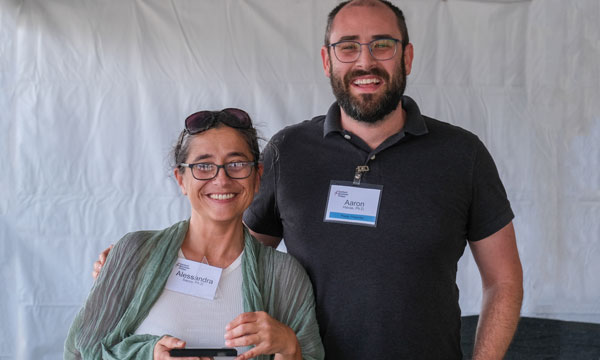
In addition to the award presentation, the day consisted of opening remarks from Hudson Freeze, PhD, and Alessandra Sacco, PhD; presentations by graduate students and postdocs from labs across the Institute; and a keynote presentation from Principal Investigator Karissa Sanbonmatsu, PhD, from Los Alamos National Laboratories, about her work in epigenetics. President and CEO David Brenner, MD, delivered closing remarks, which were followed by a poster session.

“Mentoring is one of the most important things senior faculty can do to advance the careers of their students and postdocs,” said Brenner during his comments. “It’s such a pleasure to join you all for this symposium today.” 

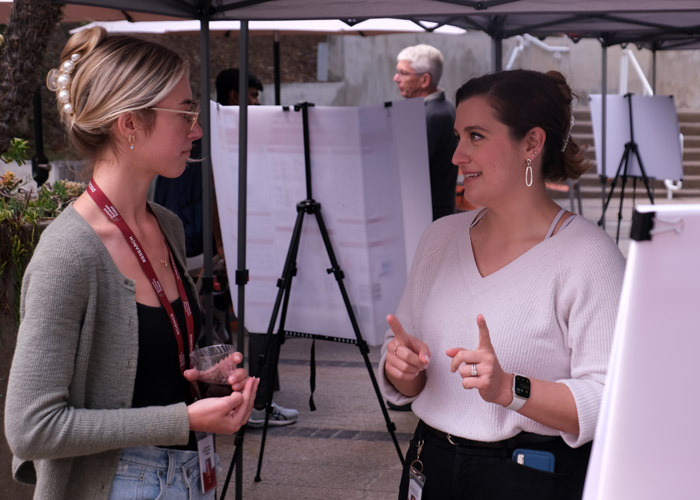
trainees and faculty enjoying refreshments

Trainees and faculty enjoy refreshments during a break

Institute News

New internship program ignites a SPARK

AuthorMiles Martin
Date

August 8, 2022

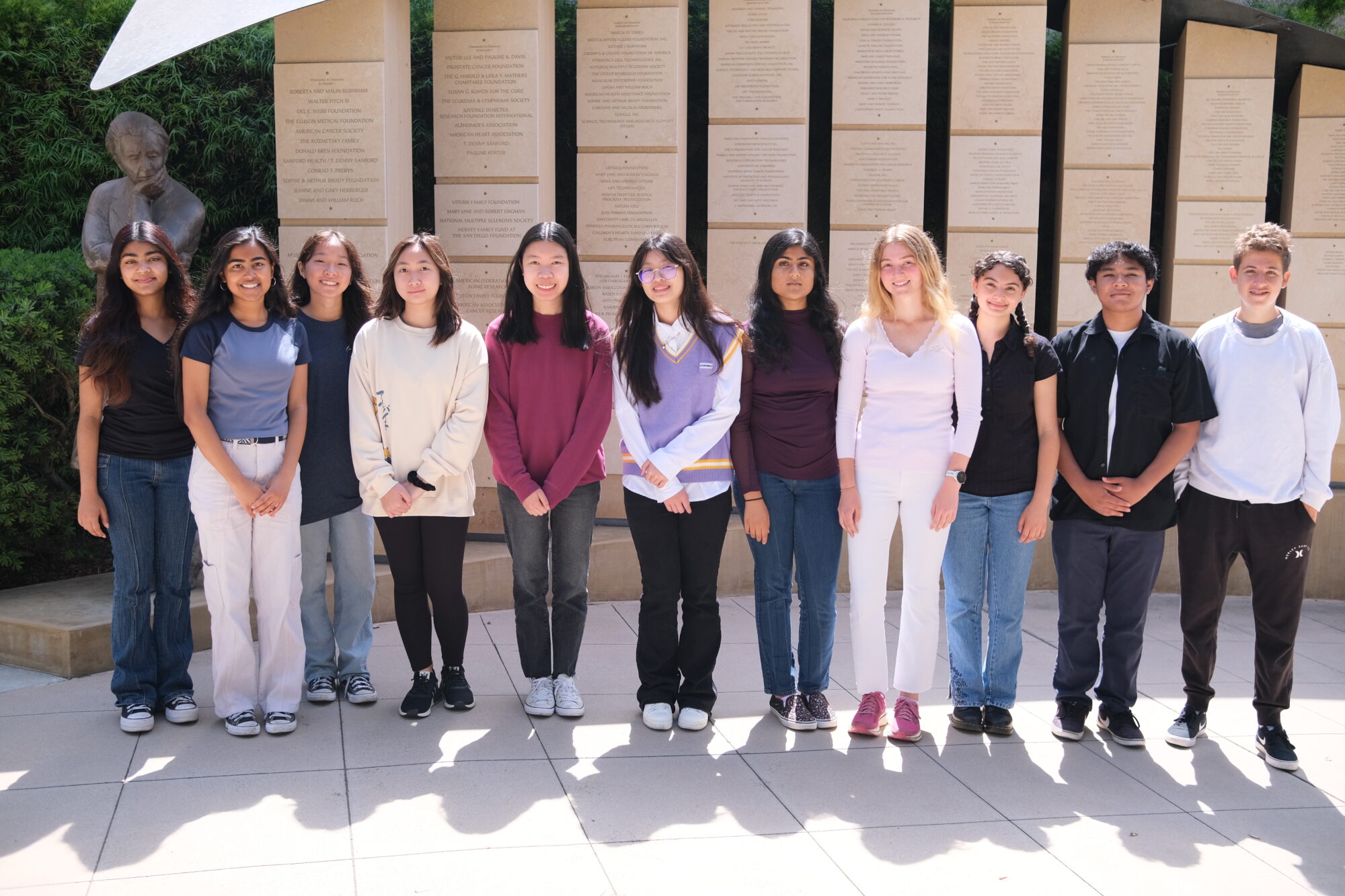
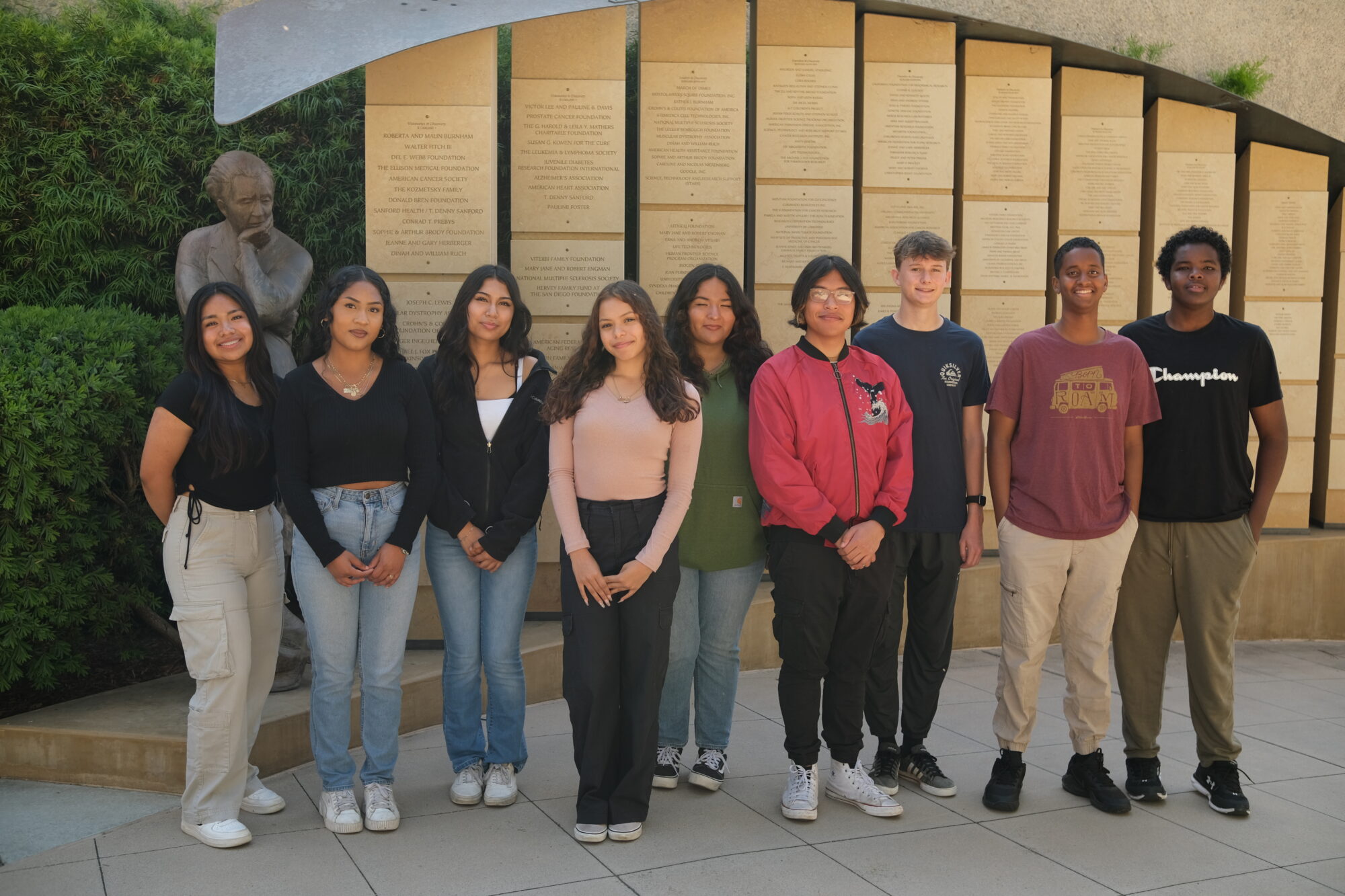
For the first time, Sanford Burnham Prebys hosted high school interns from the SPARK program, an initiative by the California Institute for Regenerative Medicine (CIRM) that provides biomedical research opportunities for underrepresented groups throughout California.

The SPARK interns each completed a six-week project under the supervision of a faculty mentor and presented their results to scientists at the Institute as well as at CIRM’s annual SPARK conference. 

“Our SPARK program selects diverse students from San Diego and Imperial Valley, and we were proud to have these students at Sanford Burnham Prebys as the inaugural class,” says Program Director Paula Checchi, PhD Checchi is an administrator in the Office of Education, Training and International Services at Sanford Burnham Prebys. She developed the educational components of the program and also organized several community outreach events for interns.

SPARK stands for Summer Program to Accelerate Regenerative Medicine Knowledge, and students worked in labs learning the hands-on techniques that scientists use to study degenerative diseases—with the ultimate goal of finding new approaches to treat the millions of people affected by these conditions.

“I had no idea that people even worked on zebrafish in labs,” said SPARK intern Ameera Ali, who used zebrafish as a model to study heart disease in the lab of Karen Ocorr, PhD “Traditionally in science you only hear about lab mice and lab rats, but zebrafish are so much more interesting. I can’t wait to work with them again.” 

For intern Saranya Anandakumar, who studied in the lab of Victoria Blaho, PhD, the best moment was a simple one. She says, “My favorite part of the internship was getting to see human blood under the microscope! Seeing all the different types of cells was the coolest thing ever.”

Ameera Ali presenting her research

SPARK intern Ameera Ali presents her research

Four interns from high schools in Imperial Valley had the added experience of living away from home for the first time. Samantha Alvarez, who completed her internship in the lab of Brooke Emerling, PhD, stayed with a family in the San Diego area.

“I loved it,” says Alvarez. “I got a chance to take a peek at what it’s going to be like in my adult life once I graduate and I’m independent.”

At Sanford Burnham Prebys, the internship program culminated in a final celebration where students had the chance to share the results of their work and what they’ve learned from their time at the Institute. The students then traveled to Northern California August 2–3 for CIRM’s annual SPARK conference, where they presented their work and networked with interns from other Institutions. 

“My biggest takeaway was all the cultural diversity on campus and in the lab,” says Alvarez. “One of my mentors is from Barcelona, and it was so interesting to compare cultures and experiences. Everybody was so nice and welcoming. It was great.”

Institute News

Preuss internship inspires young scientists

AuthorMiles Martin
Date

August 1, 2022

Future first-generation college students gained valuable research experience and learned what it’s like to be a scientist.

Each year, rising high school juniors from the Preuss School come to Sanford Burnham Prebys to try their hands at biomedical research in an intensive three-week internship program. This year, students performed a two-week laboratory course followed by a rotation in six labs at the Institute’s NCI-designated Cancer Center, where they learned about state-of-the-art techniques used in cancer research.

“This experience has been great,” says Preuss intern Brian Pham. “I love that we get to learn from people who are actually doing science instead of just hearing about it in a classroom.” 

Students from the Preuss School, affiliated with UC San Diego, strive to become the first in their families to graduate from college. The Sanford Burnham Prebys Preuss internship program helps train the next generation of scientists by inviting students from the Preuss school to work alongside Institute scientists.

“I got to hear from other first-generation scientists,” says Preuss intern Vickey Martinez. “They didn’t know anything about science or college or anything when they were younger, and that’s kind of my story. It’s nice to know that there are people with similar backgrounds.”

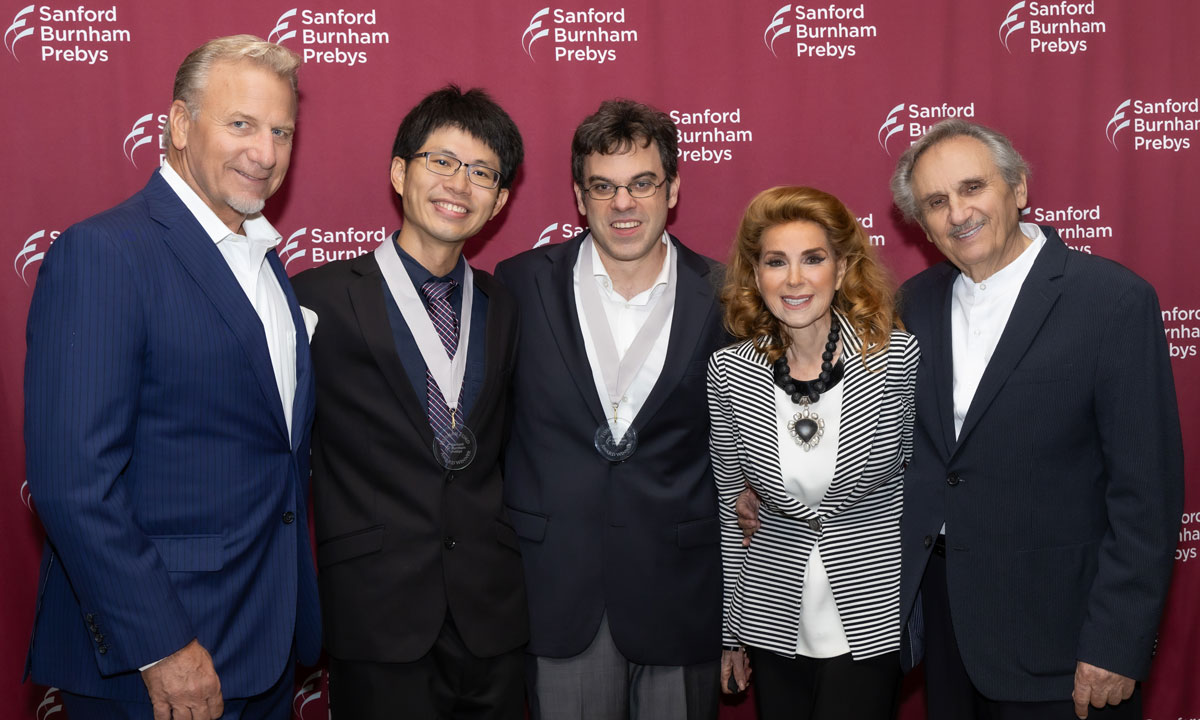
Preuss intern Lilly Hoang with (left to right) Wainwright Fishburn, Malin Burnham and Max D’Angelo, Ph.D

Preuss intern Lilly Hoang receives a certificate of completion. (l-r) Wainwright Fishburn, Lilly Hoang, Malin Burnham and Max D’Angelo, PhD

The students also got to get their hands “wet” by doing real experiments alongside Senior Scientist Marcela Raices, PhD, and graduate student Stephen Sakuma, both researchers in the lab of Maximiliano D’Angelo, PhD.

Preuss students and Marcela Raices

Preuss students with the Laboratory Course Director Marcela Raices, PhD

“We want to teach the students practical skills that will come up in their research careers so they can get a taste of what scientists actually do day-to-day, and have the satisfaction of getting results,” says Raices. “We also wanted to make it clear that anybody can be a scientist—it’s just about putting in the work and learning the skills.”

Topics for the lab workshops included separating proteins with gel electrophoresis and performing Western blot tests with fluorescent proteins. Understanding the proteins involved in the development and growth of cancer is an important approach to finding new treatments.

“The students have been so enthusiastic, and we hope that carries over into their future careers,” says Sakuma.

The internship program culminated in a celebratory luncheon with students, researchers and Institute staff, where students had the opportunity to share the results of their experiments and what they’ve learned from their experience.

“This internship was eye-opening for me,” says Preuss intern Angelina Solis. “As a first-generation student, it’s really hard to imagine yourself in different careers because you don’t even know what’s possible. It’s like an unexplored area of life.”

The 2022 Preuss High School summer internship program was carried out by Sanford Burnham Prebys’ NCI-designated Cancer Center under the direction of Maximiliano D’Angelo, PhD, associate professor and associate director of Education and Training.

Preuss interns Bryan Pham and Vivana Espino work with Marlenne Perales

Preuss interns Bryan Pham and Vivana Espino work with Marlenne Perales, a research assistant in th lab of Ani Deshpande, PhD

Institute News

Fishman Fund Fellowship awarded to Cynthia Lebeaupin for liver cancer research

AuthorMiles Martin
Date

June 8, 2022

Cynthia Lebeaupin, PhD was recently awarded the 2022 Fishman Fund Fellowship, a postdoctoral award unique to Sanford Burnham Prebys.

The award provides a boosted stipend to exceptional postdocs from the Institute who have a demonstrated research track record and whose work shows significant potential for future breakthroughs.

“It’s an honor to have been selected for such a prestigious award from the Institute, says Lebeaupin, who works in the lab of Randal J. Kaufman, PhD “The resources and people at Sanford Burnham Prebys are incredible and I’m happy to be able to continue my research here.”

Sanford Burnham Prebys introduced the Fishman Fund Awards in 2001 to honor of the Institute’s founders, Dr. William and Lillian Fishman. The fund was established by Reena Horowitz and the late Mary Bradley, longtime supporters of the Institute.

“The Fishmans created an Institute that fosters a collaborative, inspirational atmosphere for postdoc students,” said Horowitz at the 2021 Fishman Fund Awards. “The Fishmans understood that support for new science is a brilliant research investment.”

Lebeaupin has been at the Institute since 2018, and this is not her first honor from the Fishman Fund. In 2021, she was awarded a Fishman Fund Career Development Award, a smaller prize offered to several postdocs each year. She also completed an internship at the Institute’s former Lake Nona campus in 2014.

“I’ve had an affinity for Sanford Burnham Prebys for a long time,” says Lebeaupin. “I knew once I met Dr. Kaufman and everybody on campus that this was the best place to complete my postdoc.”

Lebeaupin’s research focuses on a growing and pressing problem in medicine – liver cancer. One of the major risk factors for developing liver cancer is fat accumulation in the liver, known as fatty liver disease. Increases in obesity rates over the last several decades have led to a dramatic increase in fatty liver disease.

Fatty liver disease is increasing at an alarming rate, and unfortunately, it’s here to stay,” says Lebeaupin. “My research is figuring out how fatty liver disease progresses to liver cancer, so we can use this knowledge to help prevent it.” 

In particular, Lebeaupin is working on exploring how cells respond to fatty liver disease over time. She discovered that a molecule that helps liver cells protect themselves from short-term stress can promote cancer in the long-term. She has now moved into studying the system in human tissues.

“This research is exciting because we aim to translate our discoveries from the bench to the bedside,” says Lebeaupin. “What I hope to do in the future is use new technologies on liver samples from patients so we can identify what’s actually going on in liver diseases.”

Institute News

Sanford Burnham Prebys hosts inaugural Rising Stars Symposium

AuthorMiles Martin
Date

May 10, 2022

“I had an exceptionally memorable experience,” says Rising Star Myron Keith Gibert Jr., a PhD candidate at the University of Virginia.

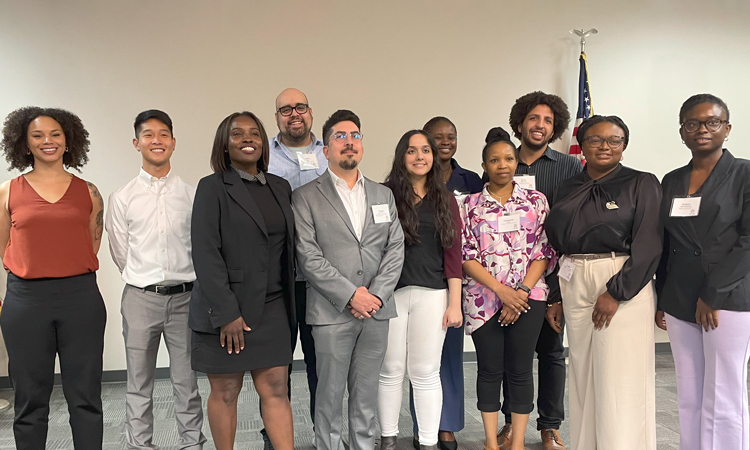
Sanford Burnham Prebys recently hosted the first-ever Rising Stars Symposium, a three-day postdoctoral recruitment event that provided professional development, leadership training, networking opportunities and mentorship sessions for 12 early-career researchers who were selected based on their academic achievements and research scholarship. Faculty and staff were invited to attend a full day of presentations by the Rising Stars.

“It was an honor to host our inaugural Rising Stars!“ says Angelica Rocha, Ph.D , diversity officer at Sanford Burnham Prebys. Rocha adds, “They are emerging scientific leaders from across the country who impressed us with their work and inspired us with their dedication to equity and inclusion. I would be ecstatic if they joined our Institute.”

The event was an institute-wide diversity, equity and inclusion (DEI) initiative hosted by the DEI Recruitment Committee, one of the three subcommittees at the Institute. The Recruitment Committee promotes an inclusive workplace through recruiting strategies that are equitable and result in increased representation for underrepresented groups.

After a brief introduction from President Kristiina Vuori, MD PhD, Assistant Professor Svasti Haricharan, PhD opened the day of presentations with a keynote address discussing her research on the genetic differences in breast cells of Black women and the consequences for health disparities, as well as the disparities in representation among academic researchers conducting this work.

Young male researcher giving presentation

For example, in 2019, less than 6% of doctorates were earned by Black people, despite making up about 14% of the population. Even fewer progress to faculty positions.

Outdoor reception

“Events like the Rising Stars Symposium provide opportunities to capture the leaks in the science training pipeline and continue to provide career development for scientists from diverse backgrounds,” adds Gibert.

In addition to presenting their work, the Stars were the guests of honor at a reception, which also included poster presentations by researchers from Sanford Burnham Prebys. The event concluded with networking and mentorship sessions between each of the Stars and faculty at the Institute, with whom they could potentially conduct research in the future.

“The Symposium opened my eyes to the exciting research taking place at Sanford Burnham Prebys,” says Rising Star Sedelia Dominguez, a PhD candidate at Washington State University. “I gained confidence in myself as a researcher and was able to find a potential place for my next career step.”

Institute News

New CIRM grant to fund research internships for underrepresented high school students

AuthorMiles Martin
Date

January 25, 2022

Thanks to a new grant awarded to Sanford Burnham Prebys by the California Institute for Regenerative Medicine (CIRM), 57 California high school students from underrepresented groups will have the chance to complete a paid internship at the Institute for the next five consecutive summers.

The $509,000 grant was awarded to Paula Checchi, PhD, Alessandra Sacco, PhD, and Evan Snyder, MD, PhD

The mission of CIRM is to accelerate stem cell research and provide treatment to patients with unmet medical needs. And although CIRM directly funds faculty, many of their initiatives also focus on training the next generation of stem cell researchers. Late last year, Sanford Burnham Prebys received $5 million from CIRM to fund new training programs aimed at PhD students and postdoctoral researchers.

“One of the benefits of a program like this is that we’ll be able to inspire students early to pursue biomedical research,” says Checchi, a principal investigators on the grant and longtime educator of high school and undergraduate students. “A lot of students might not even realize that pursuing a STEM degree is an option for them, and that’s something we want to change.” 

The new grant was awarded as part of CIRM’s SPARK Training Program, a diversity, equity and inclusion (DEI) initiative that targets high school students without access to summer research internship opportunities due to socioeconomic constraints. This grant is one of 11 awarded by CIRM to research institutions across California.

“At the high school level, a lot of research internships are unpaid, which can alienate a lot of students, especially if they’re also part of a group that isn’t represented well in scientific research to begin with,” says Checchi. “Programs like this help flip that script and will contribute to increased diversity in science over the long term.”

In addition to getting hands-on research experience, interns will also participate in community outreach, patient advocacy and other educational activities under the mentorship of experienced professors.

“The research element is obviously important, but programs like this also help students develop into confident, capable young scientists who are able to inspire those around them,” says Checchi. “We’re trying to plant the seed for these bright young minds to flourish.” 

Institute News

Early-career scientists showcase their work at the 20th Annual Trainee Research Symposium

AuthorMiles Martin
Date

October 5, 2021

The scientific leaders of tomorrow gathered to showcase their work at the 20th Annual Trainee Research Symposium on September 23rd. The talented group of presenters included postdoctoral researchers, graduate students, and staff scientists from labs across Sanford Burnham Prebys. 

After introductory remarks by Sanford Burnham Prebys Student Network co-chairs Stephen Sakuma and Marie Berenguer, PhD, as well as president Kristiina Vuori, MD, PhD, the young scientists gave 20-minute podium presentations about their research, which were judged by a panel of Sanford Burnham Prebys faculty and staff. Speakers included:

•    Nirmalya Dasgupta, PhD (Postdoctoral Fellow, Adams lab)
•    Ceda Stamenkovic (Graduate Student, Sacco Lab)
•    Cynthia Lebeaupin, PhD (Postdoctoral Associate, Kaufman lab)
•    James Kezos, PhD (Postdoctoral Fellow, Ocorr Lab)
•    Zhijie Xia, PhD (Postdoctoral Fellow, Freeze lab)
•    Valeria Guglielmi, PhD (Postdoctoral Associate, D’Angelo lab)
•    Victoria Recouvreux, PhD (Staff Scientist, Commisso lab)
•    Jonatan Matalonga Borrel, PhD (Postdoctoral Associate, Dong lab)
•    Chiara Nicoletti, PhD (Postdoctoral Associate, Puri lab)

Cynthia Lebeaupin, PhD and Valeria Guglielmi, PhD were respectively awarded first and second place by the judges for their presentations, for which they’ll each receive a cash prize to go towards career development activities. Lebeaupin’s research focuses on the progression of fatty liver disease to liver cancer, and Guglielmi studies the role of nuclear pores the development of bone marrow cells. 

After the first two sessions of presentations, the keynote speech for the Symposium was given by Katherine Thompson-Peer, PhD, an assistant professor of developmental & cell biology at the University of California at Irvine.

Following the last podium presentation was a poster session where 30 early-career scientists were given the chance to present their work. A panel of judges selected the top three posters—presented by Shaun Lim from the Kumsta and Hansen labs, Aleksandr Arzamasov from the Osterman lab, and Michaela Lynott from the Colas lab—and they will also receive a cash prize. The day was capped off with closing remarks from Sanford Burnham Prebys CEO C. Randal Mills, Ph.D.

Congratulations to all the participants in this year’s Symposium, and a special thank you to the staff at the Office of Education, Training, & International Services (OETIS) for organizing the event. 
 

Institute News

2021 Fishman Fund Award ceremony celebrates postdoctoral scholars

AuthorSusan Gammon
Date

September 28, 2021

The Fishman Fund Awards were presented on September 23, 2021, in a virtual ceremony that honored the enduring legacy of our Institute’s founders, Dr. William and Lillian Fishman.

The three exceptional winners were welcomed by Fishman Fund co-founder Reena Horowitz; co-founder designee Jeanne Jones; and 2018 award recipient Laura Martin-Sancho, who commented, “A Fishman Fund Award is more than the money—it means that someone believes in you and believes in your goals.”

Longtime supporter, Institute trustee and namesake Malin Burnham reflected on his first meeting with the Fishmans more than 40 years ago when they were setting the stage for Sanford Burnham Prebys. “The Fishmans were creating a collaborative, inspirational atmosphere for postdocs—the lifeblood of scientific enterprise. This award pays tribute to their vision that young, talented scientists hold the key to curing disease.”

Sanford Burnham Prebys CEO Randy C. Mills thanked our supporters and shared, “Fishman Fund Award winners are on a journey not only to make their mark through scientific discovery, but also to define themselves as scientific leaders. I’m excited to see the vision of better science that they will translate into reality for the benefit of patients in need.”

Reena Horowitz and the late Mary Bradley established the Fishman Fund Awards in 2001 to honor the Fishmans and advance the careers of promising young scientists. Ever since the fund was launched 20 years ago, more than 70 awards have been conferred—now worth $10,000—to support career-development activities. 

This year’s awards were presented to:

Cynthia Lebeaupin, PhD
The Lenka Finca and Erna Viterbi Fishman Fund Prize

“I’m especially grateful to be affiliated with a community that supports its postdoctoral researchers, helping us transition into the great leaders of tomorrow.”

Dr. Lebeaupin is studying how fatty liver disease progresses to liver cancer. Fatty liver disease is rapidly increasing in the U.S. and around the world—and there is no cure. Studying how cells respond to stress conditions may open new avenues to target those responses and prevent cancer. Dr. Lebeaupin, a postdoctoral associate in the lab of Randal J. Kaufman, PhD, aims to become a professor of biology in academia.

Valeria Guglielmi, PhD 
The Reena Horowitz and Mary Bradley Fishman Fund Founders Award

“Now more than ever, we need people like you who trust scientists and believe science can really make a difference in our lives.”

Dr. Guglielmi is researching nuclear pore complexes and their role in the development and activity of immune cells. This research may lead to novel treatments for health conditions caused by dysregulated immune-cell production and function. Guglielmi is a postdoctoral associate in the lab of Maximiliano D’Angelo, PhD, and her goal is to become an independent investigator to further research on the immune system.

Paulina Sosicka, PhD 
The Jeanne Jones and Kathryn Fishback Fishman Fund Prize 

“I’m very grateful and honored to receive this Fishman Fund Career Development Award. Thank you to the founders and donors who made this possible.” 

Dr. Sosicka is investigating the application of dietary supplementation to treat debilitating genetic conditions called CDGs, which are rare diseases—mainly affecting children—caused by defects in the human enzymes and proteins responsible for adding sugar molecules onto proteins and lipids. The research may also provide insights into new approaches to treat obesity and cancer. A postdoctoral associate in the lab of Hudson Freeze, PhD, Dr. Sosicka aspires to become a professor in academia in the field of glycobiology.


Event recording


Institute News

Graduate student awarded American Heart Association Fellowship

AuthorSusan Gammon
Date

April 14, 2021

The heart is the core of life, and for PhD graduate student Katja Birker, it’s the foundation for the beginning of a career.

Birker recently received a prestigious predoctoral fellowship from the American Heart Association (AHA) to continue her research on hypoplastic left heart syndrome (HLHS), a congenital heart disease that affects between two and four of every 10,000 babies born. As of today, the only cure for HLHS is three open-heart surgeries that begin two weeks after birth.

“I’m very grateful to the AHA for supporting my research,” says Birker. “I’ve embarked on a career to study the genes that contribute to HLHS, and this award will help me continue my work that may eventually lead to targeted prevention of HLHS as well as other congenital heart diseases.”

Birker is collaborating with the Mayo Clinic to identify and test whether genes found in HLHS patients—or “candidate” genes—have similar consequences in the hearts of fruit flies—a model organism for cardiovascular research. The research aims to identify novel gene functions and pathways that are likely to contribute to HLHS.

“Many believe that HLHS is a genetic disease, but the genes that are involved are not well known,” says Birker. “The fruit fly is a very good genetic system to model disease because it has many similar genes to humans and a short life span. I’m able to film videos of fly hearts to understand the impact of the candidate genes on heart function.

“My goal is to find genes that can be used in the future for the diagnosis and treatment of HLHS in babies. The research approach could also be used to screen for genes that might be involved in many other types of heart disease,” adds Birker.

The AHA supports early-career scientists with passion, commitment and focus by providing fellowships that fund their pursuit of cardiovascular research. Birker, a graduate student in the lab of Rolf Bodmer, PhD, professor and director of the Development, Aging and Regeneration Program, received her first AHA fellowship in 2018.

Institute News

Alumni adventures: Catching up with student intern Daniel Million

AuthorMonica May
Date

March 23, 2021

Million reflects on how a summer internship at Sanford Burnham Prebys accelerated his scientific career.

Daniel Million was always fascinated by biology. But, like most high school students, he wasn’t sure what life as a scientist was really like. That all changed when he had the opportunity to complete a summer internship at Sanford Burnham Prebys.

“We thought it would be a strict environment where we were all very serious, with nobody talking,” says Million. “But my mentors both made the work in the research lab exciting. They taught me early on that you can have fun while doing great science.”

For six weeks during the summer of 2013, he and nine other classmates from the Preuss School at UC San Diego—a charter school for students who would be the first in their families to graduate from college—gained valuable laboratory skills while working directly with cancer researchers.

“Now that I’ve had the opportunity to do biological research in college and grad school, I look back and am amazed at what we were able to accomplish while in high school,” says Million. “We were doing PCRs, gel electrophoresis—techniques you usually don’t get to experience until college. They gave us a great preview of what it’s like to work in science.”

Million believes that this experience gave him a leg up that led to his acceptance to the University of Southern California, and to his receipt of a prestigious GATES Millennium scholarship, which covered all of his college costs through graduation. The benefits also extended to when he arrived on campus to start his degree.

“When you go into a research lab, that can be an intimidating place,” says Million. “If I didn’t get the chance to build my confidence in the research setting, I don’t feel that I would have performed as well when I got to college.”

Today, Million is wrapping up his master’s degree in infectious disease at Keck Graduate Institute. Whatever his future holds—perhaps medical school, or a master’s degree in public health—he remains a supporter of the internship program.

“This experience not only changed my life but changed a lot of students’ lives at Preuss,” says Million. “For a student who is going to be a first-generation college student, and who is already going to have a lot of barriers entering higher education, this is the extra push and extra knowledge they need to be successful.”

This internship was funded by the National Cancer Institute’s Continuing Umbrella of Research Experiences (CURE) program, which supports training and career-development opportunities from middle school through junior investigator levels with the goal of increasing diversity in the cancer research workforce.