cancer Archives - Page 6 of 11 - Sanford Burnham Prebys
Institute News

How to help children survive—and thrive—after a brain cancer diagnosis

AuthorMonica May
Date

January 13, 2020

Lynne Selinka knew in her heart that something was seriously wrong with her 10-year-old son, Travis. For months he had experienced dizziness, vomiting and headaches, despite his doctor’s best efforts to find a cause. A visit to Rady Children’s Hospital-San Diego revealed a heartbreaking diagnosis: Travis had a malignant brain tumor. He was operated on the next day and then endured two months of radiation treatment followed by six rounds of chemotherapy.

“That year, Travis asked Santa, ‘Can I please be done with chemo before Christmas?’” Lynne said. “It was by far the hardest year of our life.”

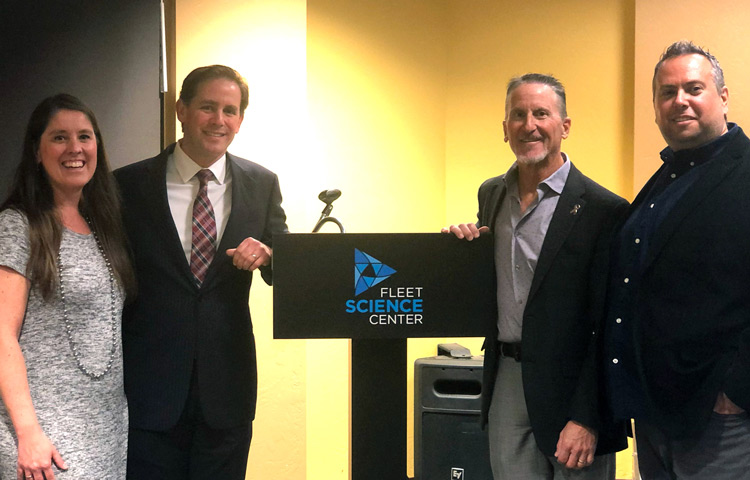
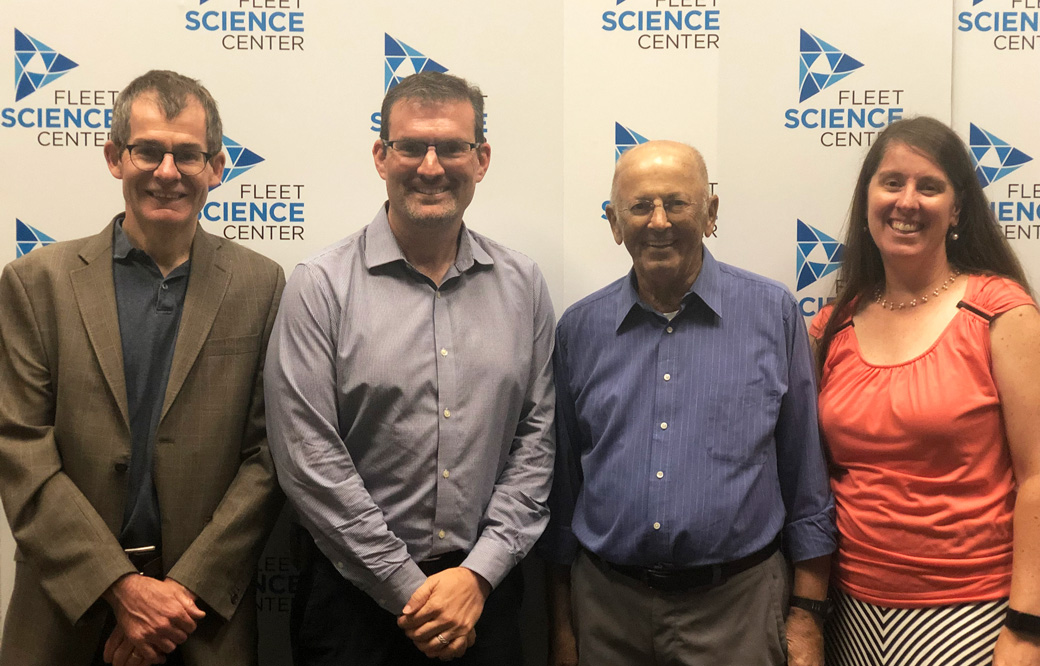
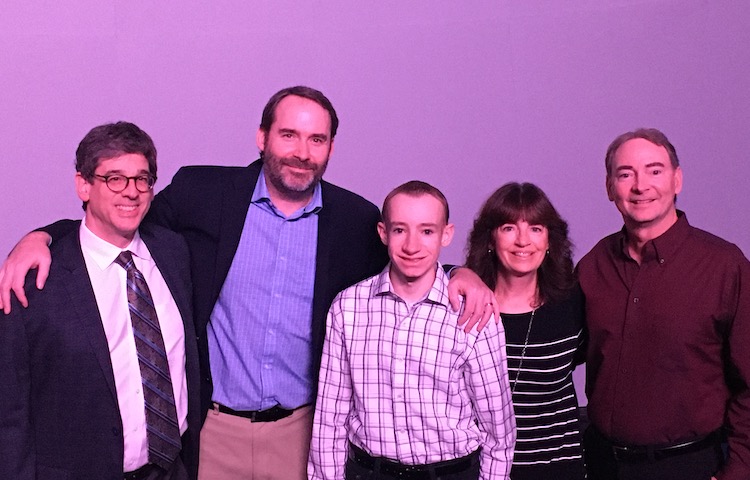
Brain tumors are the most common cause of cancer-related death in children—recently surpassing leukemia. To help the public learn about the latest efforts to develop better treatments for pediatric brain cancer, our Institute teamed up with the Fleet Science Center to host a panel discussion on Sunday, December 8. Travis and his parents, Lynne and Tony, shared their story alongside the clinician who treated Travis, John Crawford, MD, director of Pediatric Neuro-Oncology at Rady Children’s Hospital-San Diego; and a scientist working on personalized treatments for pediatric brain cancer, Robert Wechsler-Reya, PhD, of Sanford Burnham Prebys and Rady Children’s Institute for Genomic Medicine. 

As the speakers explained, while aggressive therapies have improved outcomes for children with brain tumors (today Travis is a junior in high school), one in four children with a malignant brain tumor does not survive. Children who do survive have an increased risk of severe long-term side effects from undergoing aggressive treatment at such a young age, including developing additional cancers or experiencing intellectual disability. Six years after he was declared cancer-free, Travis was diagnosed with chronic myeloid leukemia, a type of blood cancer caused by his previous chemotherapy. So far, his new treatment is working.

Wechsler-Reya hopes his work to develop personalized therapies based upon an individual’s tumor could help spare children from this painful experience. By analyzing patient tumor samples—obtained from Rady Children’s Hospital—his team works to understand the cancer at a molecular level, studying the tumor’s DNA mutations, changes in gene expression, responses to drugs, and much more. Armed with this information, the scientists then work to find therapies that are customized to a child’s specific tumor—and may be more effective and less toxic.

“For pediatric brain cancer, success doesn’t just mean better treatments. It also means developing treatments with fewer long-term side effects,” says Wechsler-Reya. “If successful, this work might help more children not only survive brain cancer, but also live a long, healthy life after treatment.

Travis and his family welcome this work with open arms.  

“We try to look for a silver lining in every day. Travis has become an amazing public speaker and now shares his story with other children fighting brain cancer. But each part of our journey has been so hard—from receiving the diagnosis, seeing Travis go through a painful surgery and then chemo, not knowing if the treatments would work, and then being diagnosed with another cancer almost six years later,” said Lynne. “We are so grateful for the efforts of researchers who are working toward a world where a child doesn’t have to go through what Travis did—or at least is spared from some of the hardest parts of the journey.”

This event was the last of our five-part “Cornering Cancer” series at the Fleet Science Center. Read about our past discussions focusing on lung, blood, breast and pancreatic cancers.
Institute News

Prestigious Forbeck Scholar Award granted to Sanford Burnham Prebys cancer researcher

AuthorMonica May
Date

December 23, 2019

Breast cancer expert Brooke Emerling, PhD, an assistant professor at Sanford Burnham Prebys, has been named a Forbeck Scholar by the William Guy Forbeck Research Foundation.

This prestigious award recognizes early-career cancer researchers for their achievements, research and dedication to the field. As an award winner, Emerling receives rare access to several three-day “think tank” events featuring the world’s top cancer clinicians and scientists.

“My goal is to create therapies that help more breast cancer patients survive cancer,” says Emerling. “The opportunity to discuss my ideas and research with the absolute leaders in my field is incredible and only accelerates my work toward that end.”

Emerling is working to find treatments for triple-negative breast cancer, which is treatable only with standard surgery, chemotherapy and radiation. The lack of specific treatments means that it has a mortality rate three times higher than the other types of breast cancer. Emerling is working to find a personalized medicine that blocks several proteins she identified that allow the triple-negative breast cancer to grow, called PI5P4Ks.

The William Guy Forbeck Research Foundation was established in 1985 by George and Jennifer Forbeck in honor of their son, who succumbed to a rare childhood cancer at age 11. Today the foundation promotes advances in cancer research through collaboration. The foundation began the Forbeck Scholar award as a way to recognize early-career cancer researchers with great future promise. Past Forbeck Scholar award winners hail from Dana-Farber Cancer Institute, the Broad Institute, Cold Spring Harbor Laboratory and other top-tier institutes.

Institute News

A year in review: Our top 10 discoveries of 2019

AuthorMonica May
Date

December 4, 2019

At Sanford Burnham Prebys, we uncover the origins of disease and launch bold new strategies that lay the foundation for achieving cures. This year our scientists made significant progress—revealing new insights into how we treat some of the deadliest cancers, address neurological disorders such as Parkinson’s and amyotrophic lateral sclerosis (ALS, or Lou Gehrig’s disease) and more.

Read on to learn more about our top 10 discoveries of the year. To receive more frequent updates on our discoveries, subscribe to our monthly newsletter at the bottom of this page.

  1. One-two punch drug combination offers hope for pancreatic cancer therapy. Ze’ev Ronai, PhD, identified a combination of two anti-cancer compounds that shrank pancreatic tumors in mice—supporting the immediate evaluation of the drugs in a clinical trial. The study was published in Nature Cell Biology.
  2. Targeted treatment shrinks deadly pediatric brain tumors. Robert Wechsler-Reya, PhD, reported that a targeted therapy that blocks a protein called LSD1 shrank tumors in mice with a form of pediatric brain cancer known as medulloblastoma. LSD1 inhibitors are currently under evaluation in clinical trials for other cancers, which could speed their potential path to children. The study was published in Nature Communications.
  3. Epigenetic change causes fruit fly babies to inherit diet-induced heart disease. Rolf Bodmer, PhD, showed that reversing an epigenetic modification or over-expressing two genes protected fruit fly children and grandchildren from the negative heart effects of their parents’ fatty diet. These findings help explain how obesity-related heart failure is inherited and uncover potential targets for treatment. The study was published in Nature Communications.
  4. Amyotrophic lateral sclerosis (ALS) research reveals new treatment approach. Huaxi Xu, PhD, extended the survival of mice with ALS-like symptoms by elevating levels of a protein called membralin using a gene therapy approach. The study was published in the Journal of Clinical Investigations.
  5. How prostate cancer becomes treatment resistant. Jorge Moscat, PhD, and Maria Diaz-Meco, PhD, identified how prostate cancer transforms into an aggressive, treatment-resistant subtype called neuroendocrine prostate cancer (NEPC) following treatment with anti-androgen therapy. Their findings uncover new therapeutic avenues that could prevent this transformation from occurring and reveal that an FDA-approved drug holds promise as an NEPC treatment. The study was published in Cancer Cell.
  6. Boosting muscle stem cells to treat muscular dystrophy and aging muscles. Alessandra Sacco, PhD, uncovered a molecular signaling pathway that regulates how muscle stem cells decide whether to self-renew or differentiate—an insight that could lead to muscle-boosting therapeutics for muscular dystrophies or age-related muscle decline. The study was published in Nature Communications.
  7. Functional hair follicles grown from stem cells. Alexey Terskikh, PhD, created natural-looking hair that grows through the skin using human induced pluripotent stem cells (iPSCs), a major scientific achievement that could revolutionize the hair growth industry. Stemson Therapeutics has licensed the technology.
  8. Potential targeted treatment for acute myeloid leukemia identified. Ani Deshpande, PhD, showed that a protein called BMI1 is a promising drug target for an AML subtype in which two normally separate genes fuse together. The findings, published in Experimental Hematology, provide a rationale for evaluating a BMl1-inhibiting drug that is currently in clinical development as a potential treatment for this subtype.
  9. Antimicrobial protein implicated in Parkinson’s disease. An immune system protein that usually protects the body from pathogens is abnormally produced in the brain during Parkinson’s disease, Wanda Reynolds, PhD, reported in Free Radical Biology & Medicine. The discovery indicates that developing a drug that blocks this protein, called myeloperoxidase (MPO), may help people with Parkinson’s disease.
  10. Digestion-aiding herbs alter gut microbiome. Scott Peterson, PhD, found that four herbs—turmeric, ginger, long pepper and black pepper—promoted strong shifts in the gut bacteria that are known to regulate metabolism, providing insights that could help us protect our health. The study was published in Evidence-Based Complementary and Alternative Medicine.
Institute News

Starving the “world’s toughest cancer”

AuthorMonica May
Date

November 18, 2019

Russell Gold is lucky to be alive. Only 9% of people with pancreatic cancer survive longer than five years—making it one of the deadliest cancers. This January, he will be a six-year survivor. 

To help the public better understand what makes pancreatic cancer so lethal—and how we can develop medicines so there are “more of me,” as Gold said—our Institute teamed up with the Fleet Science Center to host a panel discussion on Sunday, November 17. Gold was joined by a clinician and a scientist who both work on pancreatic cancer: Darren Sigal, MD, of Scripps Health; and Cosimo Commisso, Ph.D., an assistant professor at Sanford Burnham Prebys’ National Cancer Institute (NCI)-designated Cancer Center, respectively. 

As the speakers explained, pancreatic cancer is often difficult to diagnose because symptoms—such as pain in the abdomen, yellow skin and eyes, and weight loss—do not typically occur until the disease is advanced. As a result, pancreatic cancer is the 11th most common cancer but the second-leading cause of cancer death. More than 56,000 Americans are expected to receive a pancreatic cancer diagnosis in 2019, according to the American Cancer Society. 

Commisso, who was recently named a NextGen Star by the American Association for Cancer Research, is hopeful that his research will lead to effective treatments for pancreatic cancer. Commisso’s research focuses on how rapidly growing pancreatic tumors scavenge nutrients using an alternative supply route, called macropinocytosis. His lab has found that blocking this process, often described as “cellular drinking,” causes pancreatic tumors to shrink—indicating that the approach could lead to tumor-starving drugs. 

This event was the fourth of our five-part “Cornering Cancer” series. Register today to join us for a discussion on pediatric brain cancer in December.

Institute News

Sanford Burnham Prebys joins the fight to end cancer at Padres Pedal the Cause fundraiser

AuthorMonica May
Date

November 18, 2019

Nearly everyone knows someone who has been affected by cancer: One in three Americans will be diagnosed in their lifetime. In San Diego, it’s the number one cause of death.

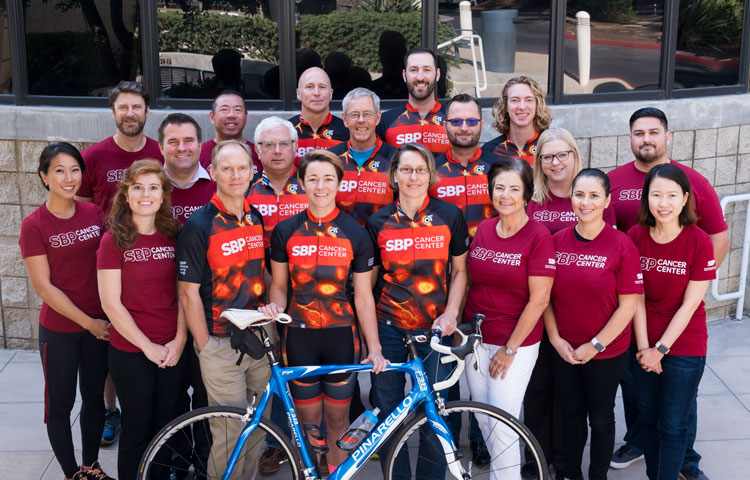
With the goal of improving these statistics, on November 16, 2019, more than 50 scientists, staff and supporters of Sanford Burnham Prebys joined thousands of fellow cancer fighters—including former Padre Tony Gwynn Jr. and San Diego Mayor Kevin Faulconer—at the seventh annual Padres Pedal the Cause (PPTC) fundraiser. Together, team Sanford Burnham Prebys raised more than $30,000 to accelerate collaborative cancer research taking place in San Diego.

Launched in 2013, the annual fundraiser has since expanded from a cycling-only event to include a 5K run or walk and stationary spin classes. To date, the event has raised more than $10 million to accelerate cancer cures, with 100% of the proceeds funding collaborative research taking place at four San Diego research institutes, including Sanford Burnham Prebys. Past PPTC grants have advanced our Institute’s research into cancers of the breast, skin, brain, colon, pancreas and more.

This year’s event had an ambitious goal of raising $3.3 million. Fundraising will continue until December 7, 2019; the final amount raised will be revealed on January 30, 2020, at a special check-presentation ceremony.

Want to help Padres Pedal the Cause meet its fundraising goal? Donate today.

Institute News

On the path to personalized breast cancer treatments

AuthorMonica May
Date

October 24, 2019

Ruth Claire Black wasn’t entirely surprised when she was diagnosed with breast cancer six and a half years ago. Her mother had died at age 52 of breast cancer, only two years after she was first diagnosed, Black explained at our recent Fleet Science Center event. New treatments have allowed Black’s story to differ from her mother’s—but as breast cancer experts from Sanford Burnham Prebys and UC San Diego Health explained, there is still a long way to go. 

“There is a great misconception that breast cancer is extremely easy to treat and is always cured. But the truth is that one in three women with early-stage breast cancer will relapse and eventually die from the disease,” said speaker Rebecca Shatsky, MD, a breast cancer oncologist at UC San Diego Health. “We are learning there aren’t one or two kinds of breast cancer—there are up to 30 different subtypes. To cure breast cancer, we need to look at treatments through a personalized lens.” 

Breast cancer is the second most common cancer in American women. One in eight women will be diagnosed with breast cancer in her lifetime, and more than 40,000 women die each year from the cancer. Targeted treatments—such as those that block the HER2 receptor—and hormone-based therapies have extended survival. However, 30% of people with estrogen-positive breast cancer, the most common form, eventually stop responding to standard-of-care treatments, for reasons that are largely unknown.

Speaker Svasti Haricharan, PhD, assistant professor at Sanford Burnham Prebys, is working to change these realities. Her work centers on a breast cancer subtype caused by defects in DNA repair machinery—a genomic “spell check” that normally corrects DNA copy errors during cell division. Nearly 20% of people who do not respond to breast cancer treatment have mutations in this machinery. Working with Shatsky, Haricharan’s team identifies breast cancer samples that have DNA damage repair defects. Then she tests these samples against thousands of FDA-approved treatments—with the goal of finding an effective treatment. 

For people like Black, these advances can’t come soon enough. 

“We have so much information about breast cancer. We have great diagnostics. Because of these tests, I know I’m a carrier of the BRCA2 mutation. I also know that it’s only a matter of time until my cancer returns,” said Black, who is a member of Sanford Burnham Prebys’ Community Advisory Board. “But doctors don’t know what to do with all of this information. That’s why I’m so supportive of the work taking place at Sanford Burnham Prebys. They are taking this information and doing something with it.” 

This event was the third of our five-part “Cornering Cancer” series. Register today to join us for discussions on pancreatic cancer in November and pediatric brain cancer in December. 
 

Institute News

Scientists discover new survival strategy for oxygen-starved pancreatic cancer cells

AuthorMonica May
Date

October 23, 2019

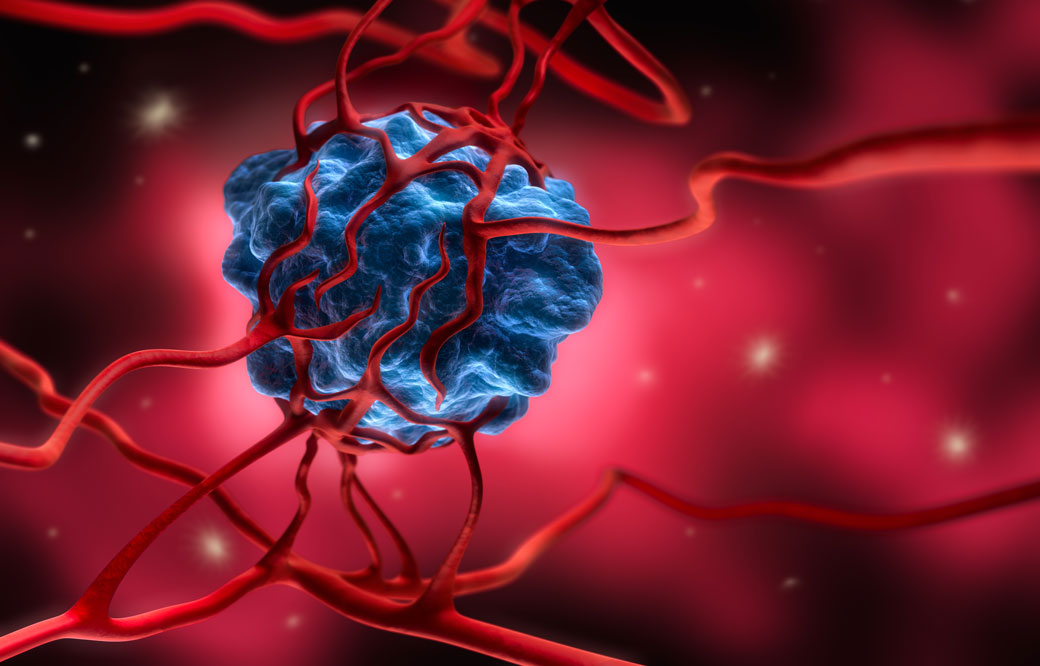
Oxygen is essential to life. When fast-growing tumor cells run out of oxygen, they quickly sprout new blood vessels to keep growing, a process called angiogenesis. 

By blocking pancreatic cancer’s oxygen-sensing machinery—the same field of research studied by the winners of the 2019 Nobel Prize in Medicine—Sanford Burnham Prebys scientists have uncovered a new way that tumors turn on angiogenesis in an animal model. The discovery, published in Cancer Research, could lead to a treatment that is given with an anti-angiogenetic medicine, thereby overcoming drug resistance. 

“Treatment resistance is a major challenge for cancer treatments that block blood vessel growth,” says Garth Powis, D.Phil., professor and director of Sanford Burnham Prebys’ National Cancer Institute (NCI)-designated Cancer Center and senior author of the study. “Our research identifies a new way angiogenesis is activated, opening new opportunities to find medicines that might make existing cancer treatments more effective.” 

Many cancer treatments work by blocking angiogenesis, which rarely occurs in healthy tissues. However, these medicines eventually stop working, and the cancer returns, sometimes in as little as two months. Scientists have been researching why this treatment resistance occurs so it can be stopped.

In this study, the scientists focused on pancreatic cancer, which is notoriously desperate for oxygen and also difficult to treat. Fewer than 10% of people diagnosed with pancreatic cancer are alive five years later. 

To see how a pancreatic tumor responds to a disruption in its oxygen supply, the Sanford Burnham Prebys researchers used a mouse model to block an oxygen-sensing protein called HIF1A—which should cripple the tumor’s growth. Instead of dying, however, after about a month the cells multiplied—indicating they had developed a new way to obtain oxygen. 

Further work revealed that the cancer cells were clear and swollen with the nutrient glycogen (a characteristic also seen in some ovarian and kidney cancers). In response to the excess glycogen, special immune system cells were summoned to the tumor, resulting in blood vessel formation and tumor survival. Each of these responses represents a new way scientists could stop pancreatic tumors from evolving resistance to treatment.

“Our team’s next step is to test tumor samples from people with pancreatic cancer to confirm this escape mechanism occurs in a clinical setting,” says Powis. “One day, perhaps we can create a second medicine that keeps anti-angiogenic drugs working and helps more people survive pancreatic cancer.”


Research reported in this press release was supported by the U.S. National Institutes of Health (NIH) (5F31CA203286, CA216424 and P30CA030199). The content is solely the responsibility of the authors and does not necessarily represent the official views of the NIH. The study’s DOI is 10.1158/0008-5472.CAN-18-2994. 

Institute News

Sanford Burnham Prebys scientists win two American Cancer Society awards

AuthorMonica May
Date

October 1, 2019

Innovation and Collaboration of the Year Awards

The San Diego cancer community—including oncologists, oncology nurses, radiologists, cancer researchers and their friends and family—gathered on September 22 to celebrate progress made in reducing cancer deaths and recognize exceptional individuals and institutions at the inaugural American Cancer Society’s Celebration of Cancer Care Champions in San Diego.

More than 40 finalists were selected, including Sanford Burnham Prebys professors Robert Wechsler-Reya, PhD, who received the Innovation of the Year award for his team’s creation of a new model for studying a brain tumor that commonly arises in infants; and Jorge Moscat, PhD, and Maria Diaz-Meco, PhD, who received the Collaboration of the Year award for their partnership with clinicians at Scripps Clinic who uncovered a novel way to potentially identify a deadly form of colorectal cancer.

Nominations were reviewed by an independent review committee composed of representatives from 10 leading healthcare and research institutions, including Celgene, Kaiser Permanente, Rady Children’s Hospital, Scripps MD Anderson Cancer Center, Moores Cancer Center at UC San Diego Health and more. (Note: Members of the review committee did not score nominations for their own institutions.)

Read on to learn more about our award-winning research:

Innovation of the Year: A new model for studying brain tumors that strike infants
Robert Wechsler-Reya, PhD, a professor at Sanford Burnham Prebys and program director of the Joseph Clayes III Research Center for Neuro-Oncology and Genomics at the Rady Children’s Institute for Genomic Medicine, was honored for his development of a novel mouse model of a pediatric brain tumor called choroid plexus carcinoma. This tumor most commonly arises in infants under the age of one who are too young to undergo radiation treatment. Until now, drug development has been hindered by the lack of models that could help researchers better understand the cancer. Wechsler-Reya and his team have already used the model to identify potential drug compounds that may be therapeutically useful.

Collaboration of the Year (tie): Novel biomarkers to help detect a deadly colorectal cancer 
Sanford Burnham Prebys professors Jorge Moscat, PhD, and Maria Diaz-Meco, PhD; and Scripps Clinic clinicians Darren Sigal, MD, and Fei Baio, MD, were recognized for their successful collaboration. Together, the researchers revealed that loss of two genes drives the formation of the deadly serrated form of colorectal cancer—yielding promising biomarkers that could identify the tumor type. This insight could lead to the development of a diagnostic test to identify serrated colorectal cancer, a hurdle that previously limited our understanding of this deadly cancer type and the development of effective treatments. The research also identified a combination treatment that has treated the cancer in mice.

Institute News

5 things to know about immunotherapy and breast cancer

AuthorSusan Gammon
Date

September 30, 2019

If you follow news about medical breakthroughs, you have undoubtedly heard about immunotherapy to treat cancer.

This form of therapy is designed to prime the body’s own immune system to fight the disease head-on. For some cancers, such as melanoma and lung cancer, immunotherapy has helped patients who once had only a life expectancy of months now live for years. But does it work for other cancers?

We sat down with Svasti Haricharan, PhD, assistant professor at Sanford Burnham Prebys and recipient of a Susan G. Komen Career Catalyst Award to discuss where we are with immunotherapy and breast cancer. Here are five things she wants us to know.

  1. As scientists, our job is to understand the biology of why immunotherapy works for some cancers but not others. Our goal is to develop approaches to expand the benefits of immunotherapy to as many patients as possible. With breast cancer, we are still in the early days, but there has been some success. Earlier this year a type of immunotherapy called an “immune checkpoint inhibitor” was approved to treat certain types of metastatic breast cancer. But immunotherapy doesn’t work—yet—for all breast cancers.
  2. No two breast cancers are alike. Even though two women with breast cancer may have the same size tumor, the individual characteristics of the tumor—the receptors, the genetics, even the way the tumor cells gather fuel to grow, can differ. Just as importantly, the way each woman’s body reacts to the growing cancer is predicated by her immune history: her exposure to immunological challenges, the strength of the immune response her body is capable of mounting, and how long she can sustain an immune response. These factors strongly influence the likelihood that a patient will respond to a specific therapy. The more we drill down on breast tumors, and the tricks they use to evade the immune system, the closer we get to outsmarting them.
  3. Today, immunotherapy seems to work best for triple negative breast cancer. Triple negative means three types of receptors—estrogen receptor, progesterone receptor and HER2—are not expressed on the cancer cells. Cancers that express these receptors are easier to treat because these receptors can be targeted directly. We believe part of the reason why immunotherapy is effective for triple negative breast cancer is because these cells can grow rapidly and produce more neoantigens—altered tumor proteins that have not previously been recognized by the immune system. So, these tumors may already have immune cells infiltrating the tumor, and when unleashed via immunotherapy, they can readily attack the cancer. 
  4. Immunotherapy—at least the immune checkpoint agents that are used today—target a protein called PD-1 found on T cells, which are the immune cells that roam the body looking for disease. PD-L1 is another protein found on some normal and some cancer cells. When PD-1 attaches to PD-L1, T cells are queued to leave the cell alone and not attack it. We believe cancer cells use PD-L1 to protect themselves from the immune system, and that cancers with large amounts of PD-L1 are the most likely to respond to checkpoint inhibitors. It’s possible that testing breast tumors for PD-L1 levels will help identify more women likely to benefit from these drugs. 
  5. Collaboration is key. Although we like to think of scientists as having “Eureka” moments, the reality is that much of the progress we make is incremental. We painstakingly plan, control and execute experiments—gathering and analyzing data to open new avenues that can be tested in the clinic. Working alongside professionals who are responsible for patient outcomes is an important part of the research spectrum. Their input provides direction for our goal of achieving cures—and a means to evaluate if what started in the lab will work in the clinic. There are nearly 300 clinical trials currently ongoing that are testing immunotherapeutic approaches for breast cancer. The information we gather from these trials helps guide the future of what we do next in the laboratory. Advances will be made, and progress is on the horizon.
     
Institute News

“We are desperate for new therapies”

AuthorMonica May
Date

September 23, 2019

Experts discuss AML during the Sanford Burnham Prebys community lecture series 

Bill Veljovich had never been sick in his life. “Not even joint pain,” shared the 80-year-old retired engineer at our recent Fleet Science Center discussion about acute myeloid leukemia (AML), a life-threatening type of blood cancer. He was joined by experts from Sanford Burnham Prebys and UC San Diego Health.
 
However, his doctor noticed that his white blood cells counts were off during a routine blood test. He was diagnosed with a blood cancer called myelodysplastic syndrome (MDS), which progressed to AML (this occurs in one out of three people with MDS). Fortunately, Veljovich responded well to a then off-label treatment that only recently was approved for older patients with AML. 

“The truth is, we are desperate for new therapies,” said speaker Rafael Bejar, MD, PhD, a clinician at UC San Diego who specializes in blood cancers. “AML typically occurs in people over the age of 60, who often aren’t able to tolerate intensive chemotherapies.” 

Until two years ago, the treatments for AML remained the same as those used in the 1970s: a chemotherapy combination and perhaps a bone marrow transplant. Only 24% of adults with AML remained alive five years after treatment. 

Now, thanks to foundational research that revealed the underlying genetic drivers of AML, eight new drugs have been approved in the past two years. Several more targeted therapies are nearing potential FDA approval. 

However, AML, which usually arises in cells that turn into white blood cells, is an incredibly complex and fragmented disease. Genome sequencing has revealed that more than 30 genes drive the cancer. Many different treatment types will be needed to truly conquer AML.

Peter Adams, PhD, a professor in Sanford Burnham Prebys’ National Cancer Institute (NCI)-designated Cancer Center, hopes to find a treatment that works for a broader AML population. He focuses on a protein called p53, often called the “guardian of our genome.” This protein senses DNA damage and kills the faulty cell—protecting us from developing cancer. However, to scientists’ surprise, 90% of people with AML have a normal p53 gene. 

“Emerging research suggests that AML inactivates p53 through other means,” said Adams. “My team is working to develop a drug combination that could reactivate the protective powers of p53—and thus fight AML.”

New research advances can’t come soon enough for people living with the cancer. 

“I’ve always taken the approach of learning as much as possible—and then fixing the problem,” said Veljovich, who designed and tested rocket engines before he retired. “I have learned that blood cancers are extremely complex. I wish there was a simple solution, but there isn’t. I’m grateful that we have smart folks like Dr. Bejar and Professor Adams who are working on these tough problems to find better medicines for AML.”

This event was the second of our five-part “Cornering Cancer” series. Join us for discussions on breast cancer (October 20), pancreatic cancer (November 17) and pediatric brain cancer (December 8). Register today.